Blue Origin Breaks Ground on $80 Million Cape Canaveral Payload Facility
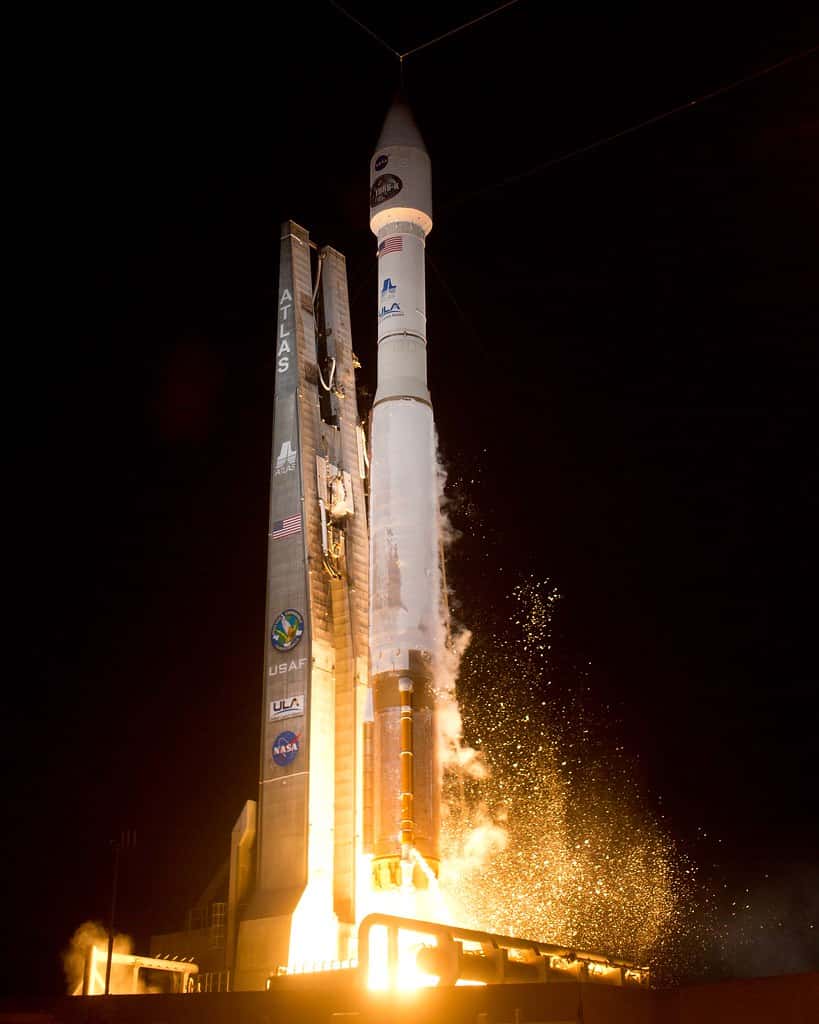
Blue Origin has broken ground on a payload processing facility at Cape Canaveral Space Force Station, a 120,000-square-foot building designed to handle up to 16 missions a year for national security, commercial and NASA customers. The company has put the value of the facility at $80 million, with reporting indicating the total project cost reaches roughly $160 million split evenly between Blue Origin and the U.S. government. Completion is targeted for December 2027, and the project adds a new piece of ground infrastructure to a Space Coast that has become the busiest launch site in the world.
What is being built
The facility will include four large payload processing bays, two encapsulation bays and four additional bays for multi-manifest processing. That configuration is worth unpacking, because payload processing is a specific and demanding function that most people do not associate with rocket launches.
Before a satellite reaches a rocket, it has to be received, unpacked, tested, fueled and mated to its adapter, all inside a controlled cleanroom environment. Encapsulation is the step where the payload is enclosed in the rocket's fairing, the protective nose cone. Multi-manifest processing refers to preparing several payloads that will ride on a single launch, an increasingly common arrangement.
Sizing the facility for 16 missions a year signals the launch cadence Blue Origin is planning for. That is a substantial number for a heavy-lift vehicle, and it implies a manufacturing and operations tempo well beyond what the company has demonstrated to date.
Why the government is paying half
The reported cost-sharing arrangement, with roughly half the funding coming from the U.S. government, reflects how national security space launch works. The Space Force contracts with multiple providers to ensure assured access to orbit, and it has an institutional interest in more than one company being capable of launching sensitive payloads.
National security payloads carry handling requirements that commercial satellites do not: classified processing areas, personnel clearances, and physical and information security controls. Building a facility that can accommodate those requirements costs more than a commercial-only cleanroom, and government cost-sharing on infrastructure that serves government missions is a longstanding practice.
For the Space Force, the strategic logic is straightforward. A launch provider without adequate payload processing capacity is constrained regardless of how many rockets it can build, and processing bottlenecks have historically been a limiting factor on national security launch schedules.
The New Glenn context
The investment signals that Blue Origin is preparing to handle larger payloads for its New Glenn rocket, the heavy-lift vehicle the company has been developing for years, and it could support plans for the low-Earth-orbit satellite constellation known as Amazon LEO.
A constellation program changes the processing math entirely. Deploying hundreds or thousands of satellites requires processing them in batches at a cadence that a facility built for occasional single-payload missions cannot support. The multi-manifest bays in the new building address exactly that requirement.
Blue Origin has also outlined plans for dual pad operations at Cape Canaveral, which would let the company work two launch campaigns in parallel rather than sequentially. Dual pads and expanded processing capacity are complementary investments, and neither delivers its full value without the other.
What it means for Brevard County
The facility is expected to create new jobs, with earlier reporting on the company's Cape Canaveral plans citing roughly 23 positions at average salaries near $115,000 for one related project component. Aerospace employment on the Space Coast pays substantially above the Brevard County median, which is why these announcements carry weight locally beyond the headcount.
Construction employment comes first and is larger, though temporary. An $80 million building on a secure federal installation requires contractors with facility clearances and specialized cleanroom construction experience, which tends to draw from a regional pool that has grown considerably as the Space Coast has expanded.
The broader pattern matters more than any single project. Brevard County has spent the past decade converting from a region dependent on a single government program into one supporting multiple commercial launch companies with permanent industrial infrastructure. That diversification is what protects the local economy from the boom-and-bust cycles that followed the end of Apollo and the retirement of the Space Shuttle.
The Space Coast's position
Cape Canaveral and Kennedy Space Center together host the highest launch cadence of any site on Earth, driven overwhelmingly by SpaceX but increasingly supplemented by United Launch Alliance, Blue Origin and smaller providers. That concentration creates its own pressures: range scheduling, airspace and maritime closures, road capacity and workforce housing.
Brevard County has absorbed significant population growth as a result, with the attendant strain on schools, roads and housing affordability. Local governments have been working through the infrastructure implications of an industry that adds high-wage jobs faster than the county adds housing.
Florida has actively courted this growth through Space Florida, the state's aerospace development authority, which offers financing and infrastructure support to attract launch and manufacturing operations. Facilities like this one are the intended result of that policy.
What it means for Floridians
For Brevard residents, the near-term effects are construction activity and, on completion, permanent aerospace jobs at wages well above the regional median. For the county's tax base, a large industrial facility on federal property has a complicated assessment picture, but the surrounding economic activity is straightforwardly positive.
For Floridians statewide, the Space Coast represents one of the few genuinely high-wage, export-oriented industry clusters in an economy otherwise weighted toward tourism, health care, construction and agriculture. Diversifying away from tourism dependence has been a stated goal of Florida economic policy for decades, and aerospace is where it has actually happened.
For the state's education pipeline, sustained industry growth creates demand that flows back to Florida Tech, Embry-Riddle, UCF and the state college system. Those institutions have built programs specifically aligned to Space Coast employers, and facilities like this one are what makes those programs worth building.
Why payload processing is the hidden bottleneck
Public attention on launch companies focuses almost entirely on rockets, but the constraint on launch cadence is frequently ground infrastructure rather than vehicles. A company can build rockets faster than it can process the payloads that ride on them if its facilities are inadequate.
Payload processing requires cleanroom environments with controlled particulate levels, temperature and humidity, because contamination on a satellite's optics or thermal surfaces can degrade or destroy a mission. It requires hazardous propellant loading capability, since most satellites carry their own maneuvering fuel and are fueled on the ground before encapsulation. It requires overhead lifting capacity to handle multi-ton spacecraft.
Each of those capabilities is expensive and none can be improvised. A facility with four processing bays, two encapsulation bays and four multi-manifest bays can work multiple missions in parallel at different stages, which is what a 16-mission annual cadence actually requires. Building fewer bays would cap the launch rate regardless of rocket availability.
The New Glenn program's position
Blue Origin's heavy-lift vehicle has had a difficult development path, which is the honest context for a large ground infrastructure investment. The program has taken considerably longer than originally projected, and the company experienced a New Glenn vehicle loss during 2026 that drew significant attention.
Setbacks of that kind are not unusual in launch vehicle development. SpaceX lost multiple vehicles during the Falcon 1 and early Falcon 9 eras, and the industry generally treats early failures as part of the development cost rather than as disqualifying. What matters is the pace of the return to flight and whether the failure's root cause was addressable.
Committing $80 million to a processing facility during that period is a statement about confidence in the program's trajectory. Companies do not build 120,000-square-foot buildings sized for 16 annual missions unless they expect to fly at something approaching that rate. Whether the expectation proves accurate is a question for 2028 and beyond, and Florida has a substantial economic stake in the answer.
What's next
Construction runs toward the December 2027 target, with completion timing subject to the usual variables on a large industrial project on a secure installation. Reporting has noted some variation in the projected completion date, with early 2028 also cited.
The facility's value depends on Blue Origin achieving the launch cadence it is building toward. A processing building sized for 16 missions a year is an expression of intent, and the company's actual New Glenn flight rate over the next two years will determine whether the capacity gets used or sits partially idle.
For the Space Coast, the more meaningful measure is cumulative. Each permanent facility, launch pad, processing building and manufacturing plant, raises the cost of any company leaving and deepens the region's position as the center of American launch activity. That accumulation, more than any individual groundbreaking, is what has changed Brevard County's economic trajectory.
Watch the hiring notices as much as the construction schedule. Ground infrastructure of this kind requires a permanent operations staff once it opens, and those postings are the earliest reliable signal that a facility is approaching activation. In Brevard County, where aerospace payroll has become the backbone of the local economy, those listings are followed closely by residents who have watched the region cycle through federal program endings before.
The Space Coast has spent a decade converting itself from a place that launched government rockets into a place that manufactures, processes and launches for a range of customers. A payload facility is not the glamorous end of that transformation. It is the part that makes the rest of it repeatable, and repeatability is what turns a launch site into an industry.
For now, the visible result is earthmoving equipment on a stretch of Cape Canaveral Space Force Station and a projected opening more than a year away. That is what most infrastructure looks like in its first months, and it is the least interesting phase of a project whose significance is measured in what it enables afterward.
Spotted an issue with this article?
Have something to say about this story?
Write us a letterComments
No comments yet. Be the first to weigh in.
Related Coverage

Cook Political Report Moves FL-25 Toward Jared Moskowitz as Scott Singer Race Draws $14 Million in GOP Spending
1h ago

Fed Beige Book: Florida tourism cools and more homes sell below asking as Southeast growth stays modest
23h ago

Byron Donalds says states must work with ICE, but a dozen states don't and courts have backed them
1d ago
Artemis II astronaut Christina Koch leaves flight status to become NASA's acting deputy chief engineer
1d ago