Six Months After Artemis II Flew, the Space Coast Is Running the Busiest Launch Economy in the Country
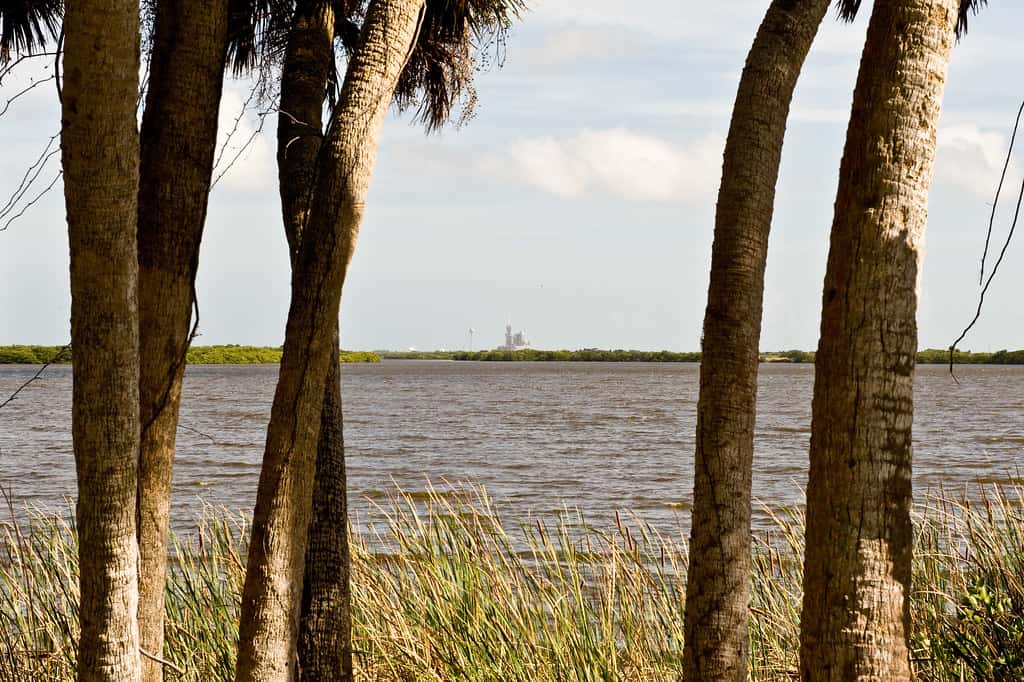
Florida's Space Coast is having the kind of year that would have been hard to imagine two decades ago, when the shuttle program's end raised real questions about whether Brevard County would keep its aerospace economy. Artemis II launched from Kennedy Space Center's Launch Complex 39B on April 1 and returned its four-person crew to a Pacific splashdown on April 10, and the commercial launch cadence from Cape Canaveral has continued through the summer and into September.
Artemis II sent NASA astronauts Reid Wiseman, Victor Glover, and Christina Koch, along with Canadian Space Agency astronaut Jeremy Hansen, on a lunar flyby covering roughly 690,000 miles over just over nine days. The flight carried humans farther from Earth than any crew had traveled before, surpassing the distance record set by Apollo 13 in 1970, and it was the first crewed mission around the Moon since Apollo 17 in 1972.
For Floridians, the significance is economic as much as historic. The Space Coast supports a large and growing technical workforce, and Kennedy Space Center has evolved from a single-agency facility into a multi-user spaceport operating with roughly 100 private-sector partners and nearly 250 partnership agreements.
What Artemis II accomplished
The mission was a crewed test flight, the second in the Artemis program and the first with people aboard. Its purpose was to validate the Space Launch System rocket and the Orion spacecraft with a crew, including life support, communications, navigation, and the heat shield performance required for lunar-return reentry.
Orion reentered Earth's atmosphere at speeds approaching 25,000 miles per hour, roughly 32 times the speed of sound. That reentry velocity is the defining engineering challenge of lunar return, because a spacecraft coming back from the Moon arrives far faster than one returning from low Earth orbit, and the thermal load on the heat shield is correspondingly greater.
The crew splashed down in the Pacific off Southern California and was reported stable following recovery. The astronauts returned to Houston the following day.
Mission managers were candid at the post-flight briefing that the test flight was not flawless, identifying several elements requiring close inspection. That is what test flights are for. Identifying issues on a flyby, with no lunar landing attempted, is precisely the risk posture a crewed test program is designed around.
Why the launch happened in Florida
Kennedy Space Center's location is not sentimental. Launching eastward over the Atlantic means a failure drops debris into open water rather than over populated areas, and the site's latitude provides a velocity assist from Earth's rotation that reduces the fuel required to reach orbit.
The infrastructure advantage compounds the geography. Launch Complex 39B, used for Artemis, and Launch Complex 39A, leased by SpaceX since 2014, are among the few facilities in the world built for vehicles of that class. The Vehicle Assembly Building, crawler transporters, and the launch control center represent capital investment that cannot be replicated quickly.
The workforce is the third factor and the hardest to move. Brevard County has generations of families working in aerospace, and the technicians, engineers, and specialists who process rockets and spacecraft represent accumulated expertise that exists in few other places.
Kennedy's transition to a multi-user spaceport was the strategic response to the shuttle program's retirement. Rather than operating solely as a NASA facility, the center now hosts commercial operators under partnership agreements, which spreads the cost of maintaining infrastructure across more users and keeps the facility busy between agency missions.
The commercial cadence
Most launches from Florida are commercial, and the pace has become routine enough that individual launches rarely draw statewide attention. The most recent launch from Launch Complex 39A came on August 30, when a Falcon Heavy carried the Nancy Grace Roman Space Telescope, a flagship NASA astrophysics observatory.
The cadence from Cape Canaveral Space Force Station's Space Launch Complex 40 has been steady. A Falcon 9 lifted off on September 13 carrying three O3b mPOWER satellites for SES, a Luxembourg-based satellite operator, on a southeasterly trajectory to medium Earth orbit.
That mission profile illustrates the range of business Florida's launch complexes handle. A European operator's communications satellites, a NASA space telescope, and a crewed lunar test flight all departed from the same stretch of coast within months of each other.
Other operators are building out capacity as well. Blue Origin, United Launch Alliance, and additional providers maintain Florida launch and processing facilities, and Space Florida works to attract aerospace investment to the state. The result is a launch site with multiple competing users rather than a single tenant.
What it means economically
Aerospace employment on the Space Coast covers a wide range of skill levels. Engineers and scientists occupy the visible positions, but the larger employment base consists of technicians, machinists, quality inspectors, avionics specialists, and the logistics workforce required to move and process hardware.
Those are well-paid technical jobs that typically require a credential rather than a four-year degree, which is why Florida's workforce education policy connects directly to the aerospace sector. Governor Ron DeSantis announced Florida's initial list of programs eligible for the new federal Workforce Pell Grant on September 18, and advanced manufacturing and industrial maintenance credentials of the kind aerospace employers hire on fall squarely within the categories the program targets.
The supply chain extends beyond Brevard County. Machine shops, composite fabricators, electronics suppliers, and specialty manufacturers across Central Florida serve the launch industry, and Florida has actively recruited aerospace manufacturing to locate near the launch sites.
Tourism adds a separate revenue line. The Kennedy Space Center Visitor Complex draws substantial annual attendance, and launch viewing has become a scheduled attraction, with hotels and restaurants along the Space Coast building around launch calendars.
The risks in the model
An economy built on launch activity carries concentration risk. Federal budget decisions determine NASA program funding, and a program cancellation or a major schedule slip affects Brevard County employment directly. The gap between the shuttle's retirement and the commercial crew program's maturity was a difficult period for the region.
Commercial launch demand introduces a different exposure. Satellite constellation deployment has driven much of the recent launch volume, and that demand depends on the business models of a relatively small number of operators. A shift in the satellite market would affect launch rates.
Competition among launch sites is real. Texas, California, Virginia, and international sites all compete for launch business, and SpaceX's Starship program operates from Starbase in Texas, with Starship Flight 14 scheduled no earlier than September 18 from that facility. Florida's advantages are substantial but not exclusive.
Weather is the operational constraint. Florida's afternoon thunderstorms and hurricane season both affect launch scheduling, and launch windows are frequently missed for weather. That is a cost of the location rather than a threat to it.
The Artemis timeline ahead
Artemis III, planned as a crewed lunar landing, is scheduled for June 2027 from Kennedy Space Center. That mission depends on multiple systems maturing, including the human landing system, and schedule slips have been a consistent feature of the program.
The findings from Artemis II feed directly into that timeline. Items mission managers flagged for close inspection after the flight have to be understood and addressed before a crew attempts a landing, and the review process is deliberately slow.
For Florida, the Artemis timeline determines a substantial share of Kennedy Space Center activity through the rest of the decade. Each Artemis mission requires extended vehicle assembly and processing at Kennedy, which means sustained employment regardless of how often the missions fly.
How to watch a launch
Launch viewing is accessible from public areas along the Space Coast, and residents and visitors do not need a ticket to see most launches. Beaches and causeways in Brevard County provide viewing, and the Kennedy Space Center Visitor Complex sells packages for closer viewing on some missions.
Launch times change frequently. Weather, technical issues, and range conflicts all cause delays, and a launch scheduled for a specific evening may slip by hours or days. Checking a launch schedule the same day is essential.
The authoritative sources are the operators and the range. NASA publishes mission schedules and coverage, launch providers announce windows, and independent launch schedule trackers consolidate the information. Traffic on the Space Coast during high-profile launches is substantial, and residents plan around it.
What the multi-user spaceport model changed
Kennedy Space Center spent its first five decades as a facility built around one customer's programs, from Apollo through the shuttle. When the shuttle retired, that model left the center with enormous infrastructure and no flight program to use it, and Brevard County lost thousands of jobs in a short period.
The response was to open the facility to commercial operators. Roughly 100 private-sector partners now hold nearly 250 partnership agreements at the center, which range from launch pad leases to processing facilities to research collaborations. The arrangement spreads maintenance costs across more users and keeps the site active between agency missions.
SpaceX's lease of Launch Complex 39A, in place since 2014, was the most consequential of those arrangements. A pad built for Saturn V and shuttle launches now supports Falcon 9 and Falcon Heavy, including the August 30 Falcon Heavy flight that carried the Nancy Grace Roman Space Telescope.
The model has produced a more resilient regional economy than the single-customer arrangement it replaced. When one program slips, others continue flying, and the workforce has multiple employers rather than one. That diversification is the structural lesson of the post-shuttle decade on the Space Coast.
What's next
The commercial launch cadence continues through the fall, with Falcon 9 missions from Cape Canaveral and additional providers operating from their own complexes. Individual launches are now frequent enough that they function as routine infrastructure activity rather than events.
Artemis III in June 2027 is the next crewed milestone, and the intervening period will be occupied by hardware processing, review of Artemis II findings, and progress on the landing system. Florida's role in that program is fixed by infrastructure that exists nowhere else.
The broader question for the Space Coast is whether the current launch rate is a peak or a baseline. The answer depends on satellite demand, federal budgets, and competition from other launch sites, and none of those is settled.
Spotted an issue with this article?
Have something to say about this story?
Write a letter to the editor