DeSantis Awards $10 Million in Police Recruitment Bonuses as Sheriffs Warn of a Budget Squeeze
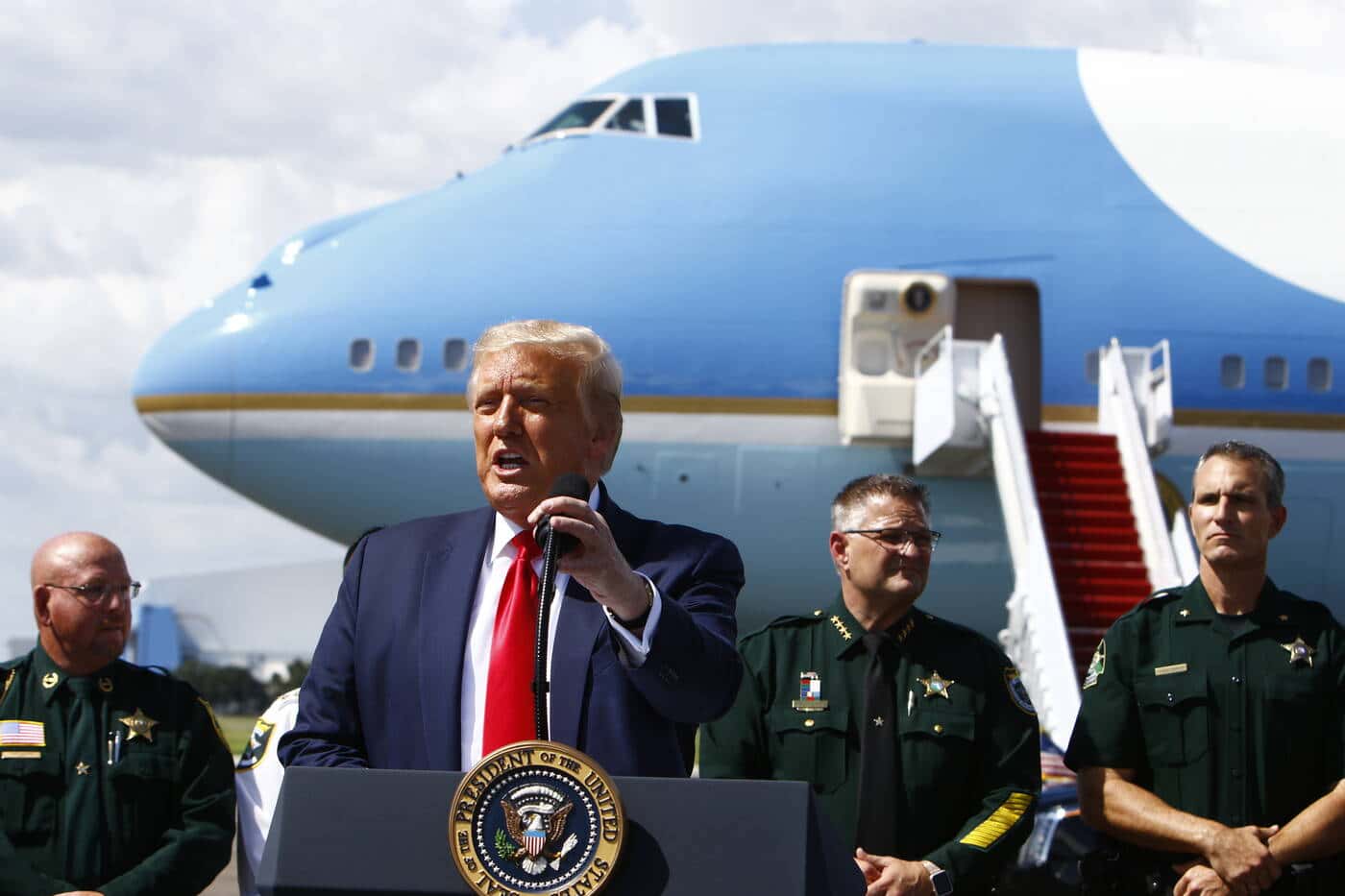
Governor Ron DeSantis awarded more than $10 million in recruitment bonuses to 1,506 new Florida law enforcement officers on Tuesday, appearing at the Pasco Sheriff's Office training facility near Land O' Lakes to hand out checks under a program his administration has used as a centerpiece of its public safety record. Each recruit receives $5,000, and because the state covers the tax liability, the officers keep the full amount. The announcement pushed the Florida Law Enforcement Recruitment Bonus Payment Program past $83 million awarded to nearly 12,500 officers since it launched in 2022.
The event landed at an awkward moment for Florida's sheriffs. Several agencies across the state have spent the late summer warning county commissions that their budgets are tightening, driven by rising personnel costs, insurance premiums and equipment replacement cycles that have outpaced revenue growth. The bonus checks are state money that flows directly to individual recruits, not to agency operating budgets, which means a sheriff can welcome the recruitment help while still facing a gap in the money needed to keep those officers equipped, trained and supervised over the long term.
For Floridians, the program matters less as a political milestone than as a test of whether the state can staff its police agencies at a moment when the population continues to grow and law enforcement recruitment remains difficult nationwide. Florida has leaned harder on financial incentives than almost any other state, and the results of that bet are now becoming measurable.
What the state announced
The bonus program pays a one-time $5,000 award to newly employed law enforcement officers in Florida, including those who relocate from other states and those who complete academy training in Florida for the first time. According to the governor's office, the payments announced this week bring the cumulative total to more than $83 million distributed to nearly 12,500 officers over roughly four years.
At the Pasco County event, 38 local recruits were among those eligible for the payment. The governor framed the program as a recruiting tool that has helped Florida attract officers from states where, in his telling, law enforcement has faced tougher political headwinds. That framing has been consistent since the program began, and the state has paired it with relocation assistance and adoption benefits for officers who move to Florida.
The state also used the appearance to note that officers who take the bonus are required to remain employed with a Florida agency for a defined period, a condition intended to prevent the payment from functioning as a signing bonus that an officer can collect and then leave. The structure is designed to keep the money tied to retention as well as recruitment.
DeSantis, who is in the final stretch of his second term, urged that the program be preserved by whoever succeeds him. That request is a meaningful signal. Recruitment bonuses are funded through the annual state budget rather than a permanent statutory entitlement, which means each future governor and each future Legislature will decide whether the line item survives.
The Florida context
Florida's push on law enforcement recruitment began during a period when agencies nationwide reported shrinking applicant pools, rising retirement rates and difficulty filling academy classes. Rather than approach the problem through pay scales set at the county level, which the state does not directly control, Florida chose a mechanism it could fund from Tallahassee and deliver statewide.
The approach has produced a number the state can point to. Nearly 12,500 bonuses in four years is a substantial share of the new officers hired in Florida over that stretch. What the number does not capture is how many of those officers would have joined a Florida agency anyway, and how many were genuinely drawn across state lines by the payment.
Florida is also unusual in the degree to which it has tied local law enforcement to state priorities. The Legislature has required all 67 county sheriff's offices to participate in federal 287(g) immigration enforcement agreements, and the state has funded recruitment, training and equipment programs that flow through the governor's office. Sheriffs in Florida are independently elected constitutional officers, but the financial relationship with Tallahassee has grown steadily closer.
Pasco County, where the event took place, sits in one of the fastest-growing corridors in the Tampa Bay region. The county's population has expanded rapidly along the State Road 54 and State Road 56 corridors, and its sheriff's office has had to scale staffing to match subdivisions that did not exist a decade ago. That growth dynamic repeats across much of the Interstate 4 corridor and Southwest Florida.
Why sheriffs are warning about money
Several Florida sheriffs have told county commissions in recent budget cycles that their cost structures are rising faster than the property tax revenue that funds them. The pressure points are consistent from county to county: health insurance premiums for deputies and their families, pension contributions, vehicle replacement costs, and the price of body-worn camera programs and the data storage they require.
A $5,000 state bonus paid to an individual recruit does not address any of those line items. It helps an agency compete for a candidate who might otherwise take a job in another county or another state, but it does not fund the patrol car that recruit will drive, the supervisor who will evaluate them or the dispatch infrastructure that will send them to calls.
There is also a timing mismatch. Recruitment incentives produce their benefit at the front end of a hire, while the cost of that officer accumulates for decades through salary, benefits and eventual pension obligations. Counties carry that long tail. A program that accelerates hiring can therefore accelerate the growth of a county's fixed costs, which is why some commissions have asked for more careful long-range staffing plans alongside aggressive recruitment.
None of this makes the bonus program unwelcome to sheriffs. Agencies that cannot fill positions run mandatory overtime, which is expensive and contributes to burnout. The complaint from the county level is generally not that the state is doing too much, but that state help is concentrated in one visible category while the less visible costs remain local.
What it means for Floridians
For residents, the practical question is response time and coverage. An agency running below authorized strength stretches its patrol zones, lengthens the wait for a non-emergency call and leans on overtime to fill shifts. Recruitment incentives are aimed squarely at that problem, and in counties where academy classes have filled more consistently, agencies have been able to restore staffing on evening and overnight shifts that are hardest to cover.
There is a second effect that is harder to see. Officers recruited from out of state arrive without local knowledge, local relationships or familiarity with Florida statutes and case law. Agencies absorb that through field training, which consumes veteran officers' time. A surge of new hires is a net positive for staffing but a short-term drain on training capacity, and agencies that hire quickly generally need a few years before the cohort is fully seasoned.
Taxpayers are funding the program through the state general revenue fund rather than a dedicated tax, which means it competes each year against education, health care, transportation and every other budget priority. In a year of large surpluses, that competition is manageable. In a leaner year, a discretionary recruitment line is the kind of item that gets trimmed first.
The national recruitment picture
Florida's program exists because law enforcement hiring became genuinely difficult across the country. Agencies nationwide reported shrinking applicant pools beginning around 2020, accelerated retirements among experienced officers, and academy classes that failed to fill.
The causes are contested. Departments cite public criticism of policing, the demands of the job and competition from private sector employers offering better hours. Researchers point to the same demographic and labor market forces affecting other public sector employers, including teaching and nursing, where recruitment has been similarly strained.
What is not contested is the effect. Agencies operating below authorized strength run more mandatory overtime, which drives fatigue and attrition, which deepens the staffing shortfall. That cycle is self-reinforcing, and breaking it requires either hiring faster or reducing the number of positions an agency is trying to fill.
Florida chose to hire faster and to fund the effort from Tallahassee. Other states have taken different approaches, including raising statewide minimum salaries, funding academy tuition, or expanding lateral entry pathways for officers certified elsewhere. Florida has done some of each, with the bonus program as the most visible element.
Local impact across the state
The effect of the program varies considerably by region. In large metropolitan agencies such as the Jacksonville Sheriff's Office, the Hillsborough County Sheriff's Office and the Miami-Dade Sheriff's Office, a $5,000 bonus is one factor among many in a competitive market where salary, assignment options and specialty units also drive recruitment.
In smaller and rural counties, the same $5,000 carries more weight relative to the starting salary an agency can offer. Those agencies have historically served as training grounds whose officers are then hired away by larger departments, and a state-funded incentive can help them hold a candidate long enough to get value from the investment.
Fast-growing suburban counties sit in between. Pasco, Osceola, St. Johns, Lake and Manatee counties have all added population quickly, and their sheriff's offices have expanded accordingly. For those agencies, the bonus program helps with volume hiring at a moment when the number of positions to fill is climbing every budget year.
Coastal counties face an additional complication that recruitment money does not solve. Housing costs in Monroe, Collier, Palm Beach and parts of Sarasota County have risen to the point where an entry-level officer may struggle to live within a reasonable commute of the agency that employs them. Several counties have explored workforce housing programs specifically for public safety employees.
What's next
The program's future depends on the next state budget and the next governor. DeSantis leaves office after the 2026 election, and his explicit request that the recruitment bonuses be preserved suggests his office expects the question to be live. Legislative leaders have generally supported the program, but the 2027 session will set spending priorities in a very different political environment.
County budget hearings continue through the fall, and sheriffs will be making their case for operating dollars in parallel with the state's recruitment push. Those two conversations are related but separate, and residents watching their county commission will likely hear both the recruitment numbers and the funding warnings in the same meeting.
The longer-term measure will be retention rather than recruitment. The state has data on how many officers received bonuses. The more useful figure, and the one that will determine whether the investment paid off, is how many of those officers are still wearing a Florida badge in five years.
Spotted an issue with this article?
Have something to say about this story?
Write a letter to the editor