Florida Attorney General James Uthmeier Sues Pfizer and CEO Albert Bourla Over COVID-19 Vaccine Claims
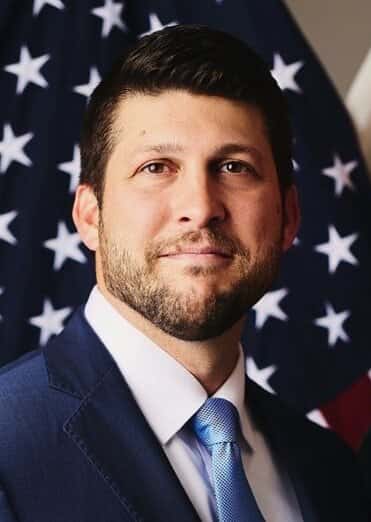
Florida Attorney General James Uthmeier sued Pfizer Inc. and its chairman and chief executive, Albert Bourla, on Thursday, accusing the drugmaker of deceiving Floridians about the safety and effectiveness of its COVID-19 vaccine. The complaint, filed in circuit court in St. Lucie County, alleges violations of the Florida Deceptive and Unfair Trade Practices Act and asks a judge to order the company to stop the alleged conduct, give up profits tied to it and pay civil penalties.
The lawsuit is the most aggressive legal step Florida has taken against a COVID-19 vaccine manufacturer, and it puts the state's top lawyer squarely behind arguments that Gov. Ron DeSantis and Surgeon General Joseph Ladapo have pressed for years. Pfizer rejected the allegations and said its public statements about the vaccine were accurate and grounded in science.
For Florida residents, the case does not change access to vaccines or any medical guidance on its own. It is a civil consumer protection action, and none of the allegations has been tested in court. But it sets up what could be a long legal fight over how a pharmaceutical company marketed one of the most widely distributed medical products in modern history.
What the state alleges
According to the attorney general's office and published accounts of the complaint, Florida alleges that Pfizer told consumers its vaccine posed no material safety risks while failing to disclose potential links to myocarditis, a form of heart inflammation, and other adverse events. The state also points to reports of miscarriage risk in its filing, according to coverage of the complaint.
A second central claim targets the company's messaging about protecting others. The state argues that Pfizer encouraged people to get vaccinated in order to protect family members and the public even though, according to the complaint, the company had not tested whether the shot stopped transmission of the virus.
The lawsuit frames those statements as unfair and deceptive trade practices under Florida law, rather than as a product liability or medical malpractice claim. That distinction matters, because consumer protection law focuses on what a company told the public and whether those representations were misleading, not on whether any individual patient was injured.
Bourla is named as a defendant in his own right. Naming a chief executive personally is an unusual step in a state consumer protection case and signals that the attorney general intends to argue that the alleged misrepresentations came from the top of the company.
Penalties and relief Florida is seeking
Florida is asking the court for an injunction barring the conduct it describes, disgorgement of profits connected to the alleged violations and civil penalties. Under the state's deceptive trade practices law, penalties can reach $10,000 for each violation, rising to $15,000 for each violation that harms a senior citizen or a person with a disability.
Because penalties under the statute are calculated per violation, the potential exposure in a case like this depends heavily on how a court ultimately counts individual violations. Coverage of the lawsuit noted that global sales of Pfizer's COVID-19 vaccine have reached roughly $80 billion, a figure the state cites to underscore the scale of the product's commercial success.
No dollar amount for a total judgment has been established, and any penalty would require either a court ruling in the state's favor or a negotiated settlement. Cases of this kind frequently take years to resolve and often turn on early motions over jurisdiction, federal preemption and whether a state court is the proper venue.
How Florida's consumer protection law works
The Florida Deceptive and Unfair Trade Practices Act, found in Chapter 501 of the Florida Statutes, is the state's main consumer protection law. Background: It prohibits unfair methods of competition, unconscionable acts and unfair or deceptive acts or practices in the conduct of any trade or commerce, and it is modeled in part on the Federal Trade Commission Act.
The attorney general's office and the state's elected state attorneys can enforce the law on behalf of the public. In enforcement actions, the state does not need to prove that any specific consumer relied on a misleading statement or suffered a particular injury in the way a private plaintiff might. Instead, the focus is on whether the practice was likely to mislead a reasonable consumer.
Florida courts have generally interpreted the act broadly, and the attorney general has used it against companies across many industries. The law also allows courts to order restitution and other equitable relief, which is why the state's complaint pairs its penalty request with a demand that Pfizer give up profits connected to the alleged conduct.
Applying that framework to a vaccine that was authorized and later approved by the U.S. Food and Drug Administration is more complicated. Pfizer is expected to argue that its statements tracked the information federal regulators reviewed, a defense that will test how far a state consumer protection law can reach into federally regulated medical products.
Pfizer's response
Pfizer has denied wrongdoing. In a statement reported by multiple outlets, the company said the representations it has made about its COVID-19 vaccine have been accurate and science-based, and that it stands behind the vaccine's safety and efficacy.
The company has fought similar lawsuits brought by other Republican-led states. Background: Texas Attorney General Ken Paxton sued Pfizer in 2023 over its vaccine marketing, and a Texas judge dismissed that case in 2024. Kansas filed its own consumer protection suit against the company in 2024. Pfizer has argued in those cases that federal law and the emergency authorization process governing pandemic countermeasures limit what states can pursue.
Those defenses are likely to surface in Florida as well. Federal law provides broad liability protections for manufacturers of covered pandemic countermeasures, and how far those protections extend to state consumer protection claims is a question courts have not uniformly answered.
A long-running Florida fight over COVID vaccines
The lawsuit is the latest chapter in a years-long dispute between Florida's state government and federal health authorities over COVID-19 vaccines. Background: In December 2022, DeSantis asked the Florida Supreme Court to impanel a statewide grand jury to investigate alleged wrongdoing related to COVID-19 vaccines, and the court approved the request. The grand jury issued its final report in early 2025 without returning criminal indictments against vaccine manufacturers.
Ladapo, the state's surgeon general, has repeatedly broken with federal recommendations. In 2022 he issued guidance recommending against mRNA COVID-19 vaccines for men ages 18 to 39, citing concerns about cardiac risk, and in early 2024 he called for halting the use of mRNA COVID-19 vaccines altogether. Federal health officials and major medical organizations disputed his analyses at the time.
Uthmeier, appointed attorney general by DeSantis in 2025 after serving as the governor's chief of staff, has made high-profile litigation a hallmark of his tenure. His office has sued a range of companies and organizations this year, and the Pfizer case aligns with the administration's broader skepticism of pandemic-era public health policy.
The timing also carries political weight. Uthmeier is on the November 3 general election ballot seeking a full term as attorney general, and the lawsuit lands about a month before Election Day.
Why the case was filed in St. Lucie County
The complaint was filed in state circuit court in St. Lucie County on Florida's Treasure Coast rather than in Leon County, where many state legal actions are brought. The attorney general's office has broad discretion in where it files consumer protection cases, which can be brought in any county where alleged violations occurred.
Keeping the case in state court is likely to become an early battleground. Defendants in state consumer protection suits frequently attempt to move cases to federal court, particularly when federal law and federal regulatory approvals are at the center of the dispute. If Pfizer seeks removal, a federal judge would first decide whether the case belongs there.
For now, the complaint represents the state's allegations only. Pfizer has not yet filed a formal response in court, and no hearing dates have been publicly announced.
What it means for Floridians
The lawsuit does not restrict the sale or administration of COVID-19 vaccines in Florida. Pharmacies and doctors can continue to offer the shots under existing federal authorization and approval, and individual patients can continue to make their own decisions with their health care providers.
Floridians who believe they experienced an adverse event after vaccination have separate avenues that are unaffected by this case, including the federal Vaccine Adverse Event Reporting System and the federal Countermeasures Injury Compensation Program, which handles claims involving pandemic countermeasures. The state's lawsuit seeks penalties and relief on behalf of the state, not individual damages for specific patients.
Public health experts have long warned that legal and political fights over vaccines can affect public confidence in immunization more broadly. Florida's own vaccine policy debate widened in 2025, when Ladapo announced plans to end state vaccine mandates, including some school-entry requirements, and how residents interpret a high-profile lawsuit against a major manufacturer could ripple into decisions about other vaccines as respiratory virus season approaches.
What's next
Pfizer will have an opportunity to respond to the complaint in St. Lucie County circuit court, and the company is expected to contest the claims vigorously, as it has in other states. Early motions are likely to address whether the case can proceed in state court and whether federal law shields the company from the state's claims.
The attorney general's office has not indicated whether it expects to pursue settlement talks. Any discovery in the case, including internal company documents about clinical trial data and marketing, would likely be contested and could take months or years to unfold.
Florida voters will also weigh in indirectly on November 3, when the attorney general's race appears on the general election ballot. Whoever holds the office in 2027 will inherit the case and decide how hard to press it.
Spotted an issue with this article?
Have something to say about this story?
Write a letter to the editorComments
No comments yet. Be the first to weigh in.
Related Coverage

Dengue Warnings Spread to Central Florida as Orange, Polk Confirm Local Cases
3d ago

Florida Heads Into Open Enrollment as the Nation's Biggest Test of Expired ACA Subsidies
3d ago

Florida Health Officials Issue Dengue Advisories in Polk and Orange Counties After Locally Acquired Cases
5d ago

Florida Moves to Drop Four Vaccine Requirements in a Year of Record Measles Activity
5d ago