Record Cruise Demand Keeps Florida's Ports at the Center of the Industry
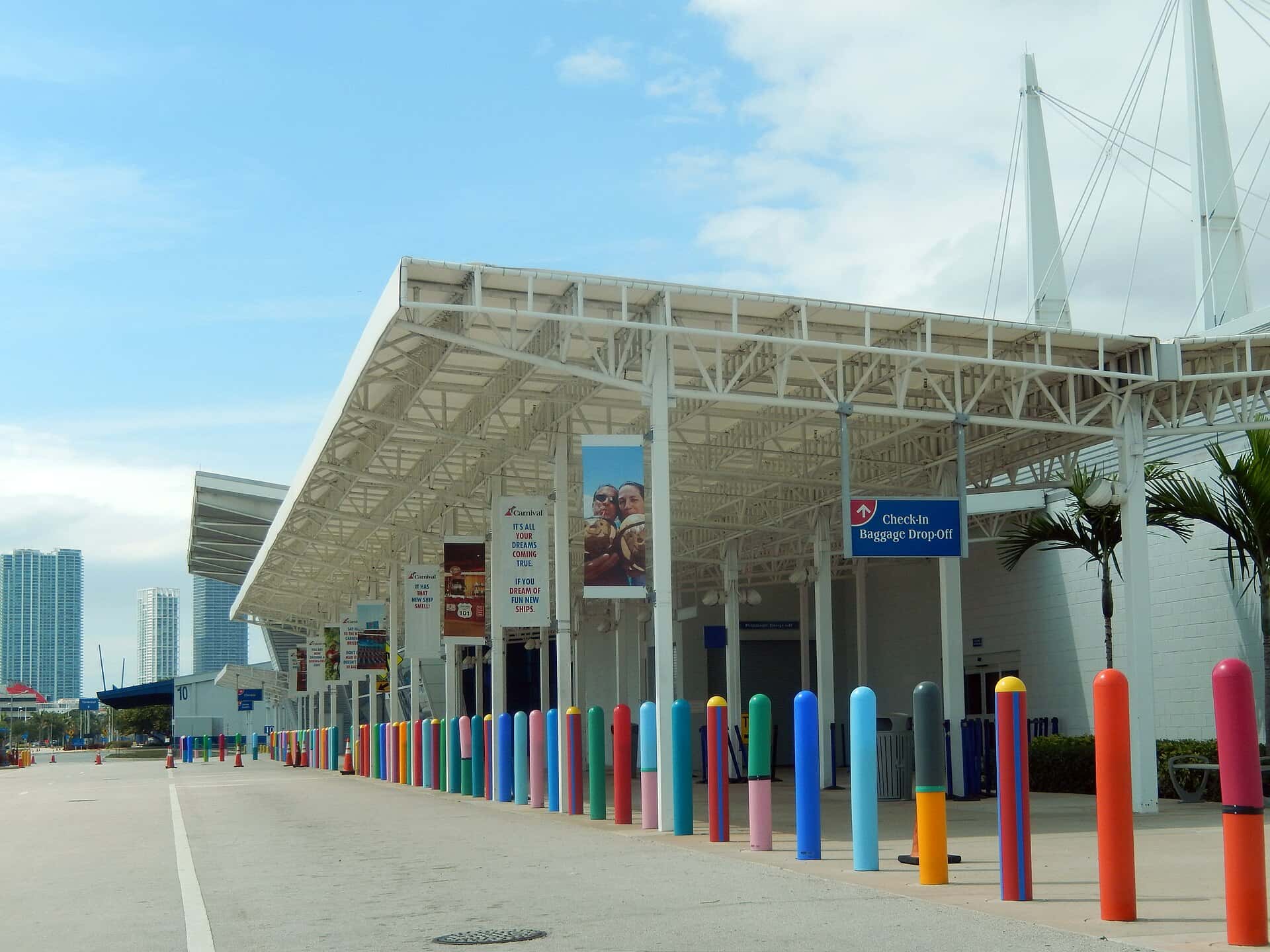
The cruise industry has posted its strongest financial results on record in 2026, and Florida's ports remain the physical center of the business. Carnival Corporation, headquartered in Miami, reported global revenue of roughly $26.2 billion for 2026, an increase of about 7.15% over the prior year, including record second-quarter revenue of about $6.7 billion.
Royal Caribbean Group, also based in Miami, reported revenue of approximately $17.4 billion for 2026, up roughly 8.6%. The company generated about $4.54 billion in the first quarter with adjusted earnings per share of $3.60.
The industry-wide picture matches the company results. Global cruise passenger volume is expected to exceed 38 million travelers in 2026, a record, and the recovery from the pandemic-era shutdown is effectively complete. PortMiami has been the world's busiest cruise port, handling more than 8.2 million passenger movements in 2024.
Why Florida is the industry's home
Florida's dominance in cruising is not accidental and is not easily replicated. It rests on a combination of geography, infrastructure, and corporate presence that took decades to assemble.
Geographically, Florida ports sit within a convenient sailing distance of the Caribbean, which remains the industry's largest destination region. A ship departing Miami or Port Canaveral can reach multiple Caribbean itineraries within the constraints of a seven-day cruise, which is the format that dominates the market.
Infrastructurally, PortMiami, Port Everglades, Port Canaveral, and Port Tampa Bay have invested heavily in terminals capable of handling the largest ships afloat. Modern cruise vessels carrying more than 5,000 passengers require berth length, terminal throughput, ground transportation capacity, and provisioning logistics that few ports anywhere can provide.
Corporately, both Carnival Corporation and Royal Caribbean Group are headquartered in Miami, along with Norwegian Cruise Line Holdings. That concentration means the executive, financial, marketing, and technical workforce of the global industry is largely located in South Florida.
What the numbers mean locally
Cruise operations generate economic activity across a broad chain. Passengers fly into Florida airports, stay in hotels before and after sailings, eat at restaurants, and rent cars. Ships provision from Florida suppliers, take on fuel, and undergo maintenance at Florida facilities.
Port revenues from cruise operations fund port infrastructure and, in some cases, contribute to county budgets. Employment includes terminal operations, longshore work, ground transportation, ship agency services, and provisioning.
Record industry revenue therefore translates into measurable local activity, though the relationship is not one-to-one. Cruise lines are internationally incorporated for tax purposes, which means the corporate profits are not taxed the way a Florida-domiciled company's would be. The local benefit runs through employment and spending rather than through corporate tax receipts.
The demand picture
The industry's booking data has been the more interesting story than its revenue. Carnival has reported new bookings reaching historic highs for 2026 and 2027, which means the strength is forward-looking rather than a recovery artifact.
Several factors have supported that. Cruise pricing has historically offered value relative to land-based vacations of comparable duration, particularly for families, because accommodation, meals, and entertainment are bundled. In a period when consumers have been sensitive to travel costs, that bundling has been an advantage.
The industry has also expanded its private destination strategy, developing exclusive islands and beach clubs that let operators capture more onboard and onshore spending while controlling the guest experience. Several of those developments serve itineraries originating in Florida.
Demographics have helped as well. The cruise customer base has broadened beyond the older travelers who defined it for decades, with multigenerational family travel and younger first-time cruisers representing meaningful growth segments.
The pressures underneath
Record results do not mean an absence of risk. The industry carries substantial debt from the period when ships sat idle and revenue stopped, and servicing that debt is a continuing claim on cash flow.
Fuel costs are a major variable expense, and cruise ships consume enormous quantities. Environmental regulation, including emissions requirements in various jurisdictions, adds compliance costs and has driven investment in liquefied natural gas propulsion and exhaust treatment systems.
Destination relationships are another pressure point. Several Caribbean and Mediterranean destinations have raised concerns about the volume of cruise passengers relative to local capacity, and some have imposed passenger caps or arrival fees. Florida's ports are the origin points, but itineraries depend on destinations being willing to receive ships.
Weather is the persistent operational risk. Hurricane season overlaps with a substantial portion of the Caribbean cruise calendar, and itinerary changes, port skips, and occasional cancellations are routine features of the fall schedule.
The federal policy angle
Cruise operations sit at an intersection of federal jurisdictions in ways that make national policy consequential for Florida. The Coast Guard regulates vessel safety and inspects ships calling at U.S. ports. Customs and Border Protection processes passengers. The Centers for Disease Control has historically had authority over public health measures affecting cruise operations.
The Passenger Vessel Services Act, which restricts foreign-flagged vessels from carrying passengers between U.S. ports without an intervening foreign call, shapes itinerary design in ways that have practical consequences for which routes are possible from Florida.
Tax treatment has periodically drawn congressional attention. Cruise lines incorporated abroad pay minimal U.S. corporate income tax on shipping income under longstanding provisions, an arrangement that has been raised in policy discussions without resulting in change.
What Florida travelers should know
For Floridians, proximity is the practical advantage. Residents within driving distance of a cruise port avoid the airfare that constitutes a substantial share of the total cost for most cruise passengers.
Florida resident fares are commonly offered, particularly on shorter itineraries and during shoulder seasons. Those rates can be substantially below the standard published pricing.
Travel insurance deserves attention during hurricane season. Cruise lines generally reserve the right to alter itineraries for weather without compensation, and passengers who need schedule certainty should understand what their booking terms actually provide.
The four ports and what distinguishes them
Florida's cruise capacity is concentrated in four facilities, and each occupies a different position in the market.
PortMiami has the largest passenger volume and hosts the newest and largest ships, supported by terminals built specifically for individual operators. Its advantage is proximity to Miami International Airport and to a hotel inventory large enough to absorb pre-cruise and post-cruise demand.
Port Everglades in Fort Lauderdale competes directly, with the advantage of proximity to Fort Lauderdale-Hollywood International Airport and a shorter transfer for many passengers. It also handles substantial petroleum and container traffic, which diversifies its revenue base in ways a purely cruise-focused port cannot match.
Port Canaveral serves the Orlando market, drawing passengers who combine a cruise with theme park visits. That combination is a genuinely distinctive product and it has driven the port's growth.
Port Tampa Bay operates under a physical constraint the others do not face. The Sunshine Skyway Bridge limits the air draft of vessels that can reach the port, which means the largest modern ships cannot call there. That constraint has shaped the port's fleet mix toward smaller vessels.
What cruising means for Florida employment
The workforce supporting cruise operations in Florida is larger and more varied than the terminal operations most passengers see.
Shipboard crew are largely foreign nationals employed under maritime arrangements, and their wages generally do not flow into the Florida economy. The shoreside workforce is different: terminal staff, longshore labor, provisioning companies, ship agents, marine services, and the corporate offices of the major lines.
Those corporate offices matter disproportionately. Headquarters functions employ finance, marketing, revenue management, itinerary planning, information technology, and marine operations professionals, and those are well-compensated positions concentrated in Miami-Dade and Broward counties.
Shipyard and repair work represents another segment, though much major refit work occurs at yards outside the United States. Florida facilities handle a share of maintenance and conversion work, and the industry has periodically discussed expanding domestic capacity.
Aviation is the connecting tissue. A substantial share of cruise passengers fly into Florida, and cruise demand supports airline capacity into the state's airports, which in turn benefits every other Florida traveler through more frequent service and more competitive fares.
The environmental ledger
Cruise operations carry environmental consequences that have drawn increasing regulatory and public attention, and Florida's ports are where much of the resulting activity concentrates.
Air emissions from ships at berth have been the most direct local concern, since a docked vessel typically runs generators continuously to power hotel systems. Shore power connections, which allow ships to draw electricity from the grid instead, eliminate those emissions but require substantial port infrastructure investment and vessels equipped to use it.
Wastewater discharge is regulated under international conventions and federal law, with restrictions on what may be discharged and where. Enforcement actions against operators for discharge violations have occurred, and compliance monitoring is an ongoing regulatory function.
Fuel is the largest variable. International rules limiting sulfur content in marine fuel drove the industry toward either cleaner fuel or exhaust gas cleaning systems, and newer vessels have increasingly been designed for liquefied natural gas propulsion, which reduces several categories of emissions.
Coral reef impacts have been a specifically Florida concern, since dredging projects to accommodate larger vessels have affected reef systems near port entrances. Those projects require federal environmental review, and their consequences have been documented and litigated.
What's next
The industry heads into the fall with record forward bookings and into a period when weather is the dominant operational variable. Quarterly earnings reports from the major operators will provide the next read on whether demand strength continues.
Port infrastructure projects across Florida continue, with terminal expansions and improvements at multiple facilities responding to larger ships and higher volumes.
The structural question for Florida is whether the concentration continues. Other regions have invested in cruise infrastructure, and operators have expanded homeporting elsewhere. Florida's advantages are substantial and durable, but the industry's growth is increasingly global, and the state's share of it is not fixed.
Spotted an issue with this article?
Have something to say about this story?
Write us a letterComments
No comments yet. Be the first to weigh in.
Related Coverage

Trump Revives Cuba Intervention Talk at Florida Rally, Saying Warships Returning From Iran Could Stop Off the Island
2h ago

Federal organ donation crackdown nears as Florida groups await rankings and Tampa nonprofit appeals court loss
8h ago

Air defense systems deployed at Mar-a-Lago as intelligence memo to Rubio warns of advanced Iranian plots
8h ago

South Florida Federal Judge Enters $668,390 Penalty Against Honduran Woman Who Ignored Deportation Order
1d ago