Federal Reserve Holds Rates Steady as Florida's Housing Market Cools, Insurance Costs Bite
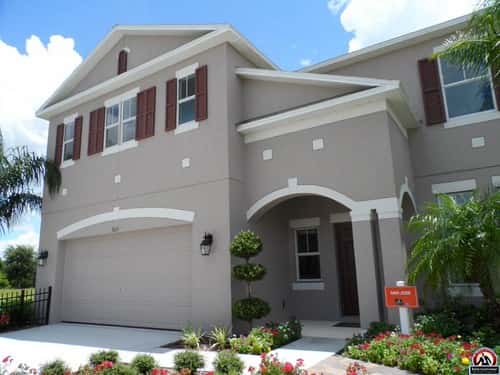
The Federal Reserve has kept its benchmark interest rate in a range of 3.5 percent to 3.75 percent since early 2026 and has paused further cuts, a decision that keeps borrowing costs elevated for Florida families trying to buy or sell a home. Central bankers have pointed to stubborn inflation, including rising energy costs, and to mixed economic data with weaker than expected job growth, as reasons to wait rather than ease policy further. For the millions of Floridians who watch mortgage rates before making a move, the message is that relief will be gradual, if it comes at all this year.
The practical effect shows up in the numbers that matter most to buyers. The average 30-year fixed mortgage rate stood at about 6.55 percent as of July 16, 2026, according to Freddie Mac, up from roughly 6.49 percent the prior week. Other trackers have placed the figure anywhere from about 6.39 percent to 6.85 percent depending on the week and the borrower, so the precise rate a Florida household sees will vary with credit, down payment, and property type. What is consistent is that rates have stayed near the mid-6 percent range for much of the year.
For Florida, the stakes run deeper than a single monthly payment. The state's housing market is cooling after years of frenzied growth, inventory is rising, and affordability is improving modestly even as property insurance costs and condominium assessments weigh on buyers. The combination of a cautious Fed and a normalizing market is reshaping what it takes to close a deal from Pensacola to Key West.
Why the Fed Is Standing Pat
The Federal Reserve's decision to hold rates reflects a balancing act between two risks. On one side sits inflation, which has proved more persistent than officials hoped, driven in part by higher energy prices. On the other sits a labor market that has shown signs of softening, with job growth coming in below expectations in recent reports. Cutting too soon could reignite price pressures, while holding too long could deepen a slowdown, and the central bank has chosen caution.
According to accounts of the Fed's recent meetings, policymakers revised their inflation outlook upward as the year progressed, a shift that undercut earlier expectations for a series of rate cuts. The central bank's preferred inflation gauge has run well above its 2 percent target, giving officials little room to ease. That backdrop has left the benchmark rate parked in the same range it has occupied since the start of 2026.
Florida does not set monetary policy, but few states feel its effects more directly. The Fed's benchmark rate does not move mortgage rates one for one, yet it shapes the broader cost of credit and the expectations that ripple through the bond market, where long-term mortgage rates are ultimately set. When the central bank signals patience, mortgage rates tend to hold rather than fall, and that is the pattern Florida buyers have lived with all year.
Where Mortgage Rates Sit for Florida Buyers
Mortgage rates have spent much of 2026 near 6.5 percent, and forecasters expect that to hold. Fannie Mae has projected the 30-year rate near 6.4 percent for the rest of 2026, while the Mortgage Bankers Association has projected around 6.5 percent for the third and fourth quarters. Both forecasts point to a market that has largely priced in the Fed's caution, with no sharp drop on the horizon.
For a Florida household, the difference between a 6 percent rate and a 6.55 percent rate translates into real money over the life of a loan. On a typical mortgage, that spread can add tens of thousands of dollars in interest across three decades, and it raises the monthly payment enough to push some buyers out of the price range they had targeted. The result is a market where would-be buyers wait, hoping for lower rates that may not arrive on their timeline.
That hesitation is visible in the data. Purchase-application demand across Florida has weakened as buyers sit on the sidelines, a sign that elevated rates are cooling activity even in a state that draws steady streams of new residents. Sellers, in turn, are finding that homes sit longer before they trade, a shift from the rapid sales of the pandemic boom.
Rate forecasts carry real uncertainty, and Floridians weighing a purchase should treat any single projection as a snapshot rather than a promise. The figures attributed to Fannie Mae and the Mortgage Bankers Association describe expectations, not guarantees, and the actual path will depend on inflation data and the Fed's response in the months ahead.
A Cooling Market Takes Shape
After years in which listings vanished within days, Florida's housing inventory has been rising. The state had well over 150,000 active listings in the spring of 2026, according to market trackers, and the supply of single-family homes has climbed to roughly four to five months in many areas, moving closer to the six-month level that economists consider balanced. That shift hands buyers more choices and more room to negotiate than they have had in years.
Prices, meanwhile, have stabilized rather than crashed. Statewide, home values have shown only modest growth, and in some markets they have softened, a normalization that follows the extraordinary run-up of the boom years. Analysts have described the current environment as a cooling and rebalancing market, not a collapse, with affordability improving at the margins even as it remains a challenge.
The cooling is not uniform across the state. Fast-growing metros in Central Florida, Tampa Bay, and the Southwest coast have seen inventory build more quickly in some segments, while coastal markets carry their own pressures tied to insurance and construction costs. Buyers in different regions face different math, and the statewide averages mask that variation.
The Insurance Squeeze on Affordability
Mortgage rates are only part of the affordability equation in Florida, where property insurance has become a defining cost of homeownership. Homeowners insurance premiums in the state average thousands of dollars a year, far above the national norm, and they climb sharply along the coast where hurricane risk is highest. For many buyers, the insurance bill rivals the property tax bill as a make-or-break line in the budget.
The insurance burden interacts with mortgage rates in a way that compounds the strain. A buyer who could once absorb a higher rate may be priced out once insurance, taxes, and association fees are added to the monthly payment that lenders use to qualify borrowers. That total cost of ownership, rather than the mortgage rate alone, increasingly determines who can buy in Florida and who cannot.
There are signs of stabilization. State officials and industry analysts have pointed to recent reforms that have drawn new insurers into the Florida market and begun to slow the pace of rate increases. Whether that translates into meaningful relief for households remains to be seen, and premiums remain high enough to shape purchasing decisions across the state.
For sellers, the insurance picture cuts the other way. A home that carries a steep or hard-to-obtain policy can sit on the market longer or fetch a lower price, as buyers factor the ongoing cost into their offers. In coastal counties, the insurability of a property has become as important to its value as its square footage or its view.
The Condo Market's Special Pressures
Florida's condominium market faces a distinct set of forces that set it apart from the single-family sector. Under state law, condo buildings of three stories or higher must complete milestone structural inspections and fully fund their reserves, requirements that followed the tragedy of a building collapse and that took full effect at the start of 2026. Those rules have improved safety, but they have also raised costs for owners.
The financial consequence has been a wave of special assessments, some of them large, levied on condo owners to cover inspections, repairs, and newly required reserves. Older buildings, especially those near the coast, have faced the steepest bills, and the added cost has cooled demand for units that once sold briskly. Buyers now scrutinize a building's reserve status and assessment history before committing.
Insurance compounds the condo squeeze. Many associations, particularly for older coastal buildings, face enormous insurance costs that flow through to owners in the form of higher dues or fresh assessments. The combination of assessments, insurance, and elevated mortgage rates has left parts of the condo market notably softer than the single-family market, with more inventory and longer sale times in some coastal towers.
In-Migration Keeps a Floor Under Demand
Even in a cooling market, Florida retains a structural advantage that many states lack: people keep moving in. The state has drawn steady in-migration for years, pulled by its climate, its lack of a personal income tax, and its job growth, and that inflow keeps a floor under housing demand even when higher rates sideline some local buyers. New arrivals, some of them cash buyers less sensitive to mortgage rates, help absorb the rising inventory.
That demand does not fall evenly. Retirees, remote workers, and families relocating from higher-cost states continue to seek homes across Florida, and their arrival supports prices in the markets they favor. At the same time, affordability pressures have begun to slow the pace of growth in some areas, a reminder that even Florida's magnetism has limits when the total cost of owning a home climbs.
For the statewide market, in-migration is the counterweight to the Fed's caution. Elevated rates suppress demand, but a steady stream of newcomers replenishes it, producing the rebalancing rather than the downturn that some had feared. The interplay between those two forces will shape how quickly the market clears its rising inventory.
What's Next
The near-term outlook hinges on the Federal Reserve. If inflation cools and the labor market weakens further, the central bank could resume cutting rates later in 2026, which would gradually pull mortgage rates lower and ease the pressure on Florida buyers. If inflation stays elevated, the current pause could extend, keeping rates near the mid-6 percent range that has defined the year. Neither path points to a dramatic swing.
For Florida households, the practical guidance is to plan around the full cost of ownership rather than the mortgage rate alone. Insurance premiums, property taxes, and condominium assessments will continue to shape what is affordable, and buyers who account for those costs upfront will be better positioned than those who fixate on the headline rate. Sellers, for their part, will need to price realistically in a market where inventory is rising and buyers have regained leverage.
The coming months will test whether Florida's cooling market settles into a durable balance. Rising inventory, modest price growth, and steady in-migration point toward normalization, but the Fed's next moves and the trajectory of insurance costs remain the wild cards. Floridians watching the market should track the central bank's decisions and their own local conditions, because the statewide averages will not tell every buyer or seller what they need to know.
Spotted an issue with this article?
Have something to say about this story?
Write a letter to the editorComments
No comments yet. Be the first to weigh in.
Related Coverage

Rick Scott and Ashley Moody file bill to shield Eglin Gulf test range from offshore drilling
2h ago

Miami Federal Judge Rules Federal Ban on Noncitizen Voting Unconstitutional in Broward Case
5h ago
Former Miami Congressman David Rivera Sentenced to 10 Years in Secret Venezuela Lobbying Case
7h ago

Federal judge strikes down ICE immigration courthouse arrest policy: what it means for Florida
10h ago