Bucs Manage Injuries as Baker Mayfield Enters a Contract Year
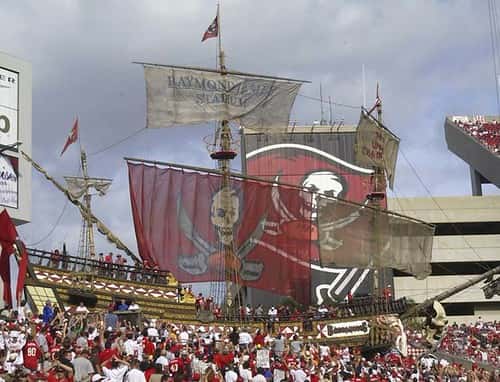
The Tampa Bay Buccaneers are working through the health questions that will define their September as training camp winds down at the AdventHealth Training Center, with left tackle Tristan Wirfs returning in limited fashion and two wide receivers still on day-to-day status.
Head coach Todd Bowles said after Tuesday's practice that Wirfs returned on a limited basis and that the staff is ramping him up gradually while monitoring how much workload he can handle through the week. Wirfs is among the highest-graded offensive tackles in the league and his availability shapes the entire protection scheme.
Wide receivers Jalen McMillan and Emeka Egbuka are both day-to-day, with Bowles indicating Egbuka's timeline could extend week-to-week and that his availability for Week 1 remains uncertain. Cornerback Zyon McCollum is dealing with a groin injury.
The Mayfield question
Baker Mayfield enters the final year of the three-year, $100 million contract he signed with Tampa Bay. Extension talks between the quarterback and the team ended without a new deal, which means Mayfield will play out the season and reach unrestricted free agency in 2027 if nothing changes.
Contract-year situations at quarterback carry a specific set of dynamics. The player has maximum incentive to perform, the team retains the franchise tag as a mechanism to prevent departure, and negotiations frequently resume during or immediately after the season.
Mayfield's arrival in Tampa Bay followed a circuitous career path through Cleveland, Carolina and Los Angeles, and his production with the Buccaneers exceeded what most projections anticipated when he signed. That track record is the basis on which any future negotiation would proceed.
Injury management heading into September
The distinction between day-to-day and week-to-week matters for how a coaching staff plans. Day-to-day generally indicates a player who could return within the practice week; week-to-week signals a longer runway and often means the player will miss games.
Bowles' characterization of Egbuka's status as possibly stretching week-to-week places his Week 1 availability in question. For a receiving corps already managing McMillan's status, that concentrates responsibility on the healthy members of the group.
Wirfs' gradual ramp reflects standard practice for returning offensive linemen, where conditioning and the ability to sustain repeated contact matter as much as the underlying injury status. Teams typically build workload across practices before clearing a lineman for a full game load.
Preseason plans
Tampa Bay's starters are scheduled to play in the second week of the preseason against the Kansas City Chiefs. Coaching staffs across the league have converged on a pattern of holding starters out of the first preseason game, playing them briefly in the second, and resting them again in the third.
That approach reflects the shortened three-game preseason and the widespread adoption of joint practices, which give starters competitive reps against another roster in a more controlled setting than a game provides.
The Buccaneers have also drawn attention for a uniform decision, with the franchise reviving all-pewter alternate uniforms for the 2026 season. Alternate uniform programs operate under league approval and typically appear in a designated number of games.
What it means for Tampa Bay
The Buccaneers have been the most consistent team in the NFC South in recent seasons, and the division has historically been winnable with a modest record. Health at quarterback and along the offensive line has been the differentiator in most of those seasons.
Wirfs' status carries outsized weight because left tackle protection directly affects the quarterback's ability to work through progressions. Teams that lose a starting left tackle typically see measurable declines in passing efficiency.
The receiver situation is more absorbable in the short term, since offenses can adjust personnel groupings and distribute targets differently. Sustained absences at the position, however, compress what a play caller can do.
Local impact across the state
Tampa Bay is one of three NFL markets in Florida, alongside Miami and Jacksonville, and the three franchises share a regional media environment while competing for attention across an eight-month calendar that also includes college football.
Raymond James Stadium hosts the Buccaneers' home schedule and also serves as a venue for college and international events. Gameday operations bring substantial economic activity to the surrounding area on home Sundays.
The AdventHealth Training Center serves as the team's year-round facility, and camp practices there draw fans under the access schedule the team publishes. Practice attendance policies vary by session.
Why left tackle matters more than most positions
Tristan Wirfs has been among the highest-graded offensive tackles in the NFL since Tampa Bay drafted him, and his move to the left side made him responsible for protecting the quarterback's blind side on most dropbacks.
The position's value is straightforward. A right-handed quarterback dropping back cannot see pressure coming from his left, which means he cannot react to it. Pressure from that side produces sacks, strip fumbles and hurried throws at a higher rate than pressure from anywhere else.
Teams that lose a starting left tackle typically see measurable declines in passing efficiency, and the effect compounds because offensive coordinators respond by keeping additional players in to block. That reduces the number of receivers running routes and makes coverage easier for the defense.
Wirfs' gradual return is therefore the most consequential health question on the roster. The staff monitoring how much workload he can handle through the week reflects standard practice for a returning lineman, where the ability to sustain repeated contact matters as much as the injury itself.
Contract years and how they usually resolve
Mayfield's situation is common enough to have a predictable set of outcomes. A quarterback in the final year of a contract without an extension typically either signs a new deal during or after the season, receives the franchise tag, or departs in free agency.
The franchise tag gives the team a one-year mechanism to retain a player at a salary derived from the top of the position's market. For quarterbacks that figure is substantial, which is why teams generally prefer a negotiated extension to repeated tag applications.
Ending extension talks before a season is not necessarily a rupture. Teams and agents frequently pause negotiations when the sides are far apart on valuation, with the understanding that another season of production will clarify what the player is worth.
Mayfield's career trajectory makes the valuation question genuinely difficult. His production in Tampa Bay exceeded what his earlier stops in Cleveland, Carolina and Los Angeles would have projected, and both sides face the question of which portion of his career the next contract should be priced against.
The NFC South and the schedule ahead
Tampa Bay has been the most consistent team in the NFC South in recent seasons, in a division that has frequently been won with a modest record. That structure means the Buccaneers control their own path more directly than teams in stronger divisions.
Divisional games account for six of 17 regular season contests, and their outcomes carry additional weight through tiebreaker procedures. A team that sweeps its division typically wins it regardless of how the rest of the schedule breaks.
Injury availability is the variable that has most often determined Tampa Bay's ceiling. In seasons where the offensive line and receiving corps stayed healthy, the team has performed near the top of the conference. In seasons where they did not, results have followed.
The receiver situation with McMillan and Egbuka is therefore worth watching into September, when practice participation reports become formal and the team must submit game status designations under league rules.
How teams use the preseason now
The NFL preseason has shrunk to three games from four, and coaching staffs have simultaneously reduced how much they use starters in those games. The combination has changed what the preseason is for.
Joint practices have absorbed much of the function preseason games once served. They allow scripted work against unfamiliar opponents, with coaching staffs controlling the situations and stopping play to correct technique, which a game does not permit.
Preseason games now serve primarily as evaluation for roster spots at the back end. Players competing for the final positions on a 53-man roster, and for practice squad slots, get the bulk of the snaps and produce the film that determines those decisions.
Tampa Bay's plan to play starters in the second preseason week against Kansas City follows the conventional pattern of a brief appearance in the middle game, with the first and third reserved for evaluation of depth.
The Buccaneers' recent trajectory
Tampa Bay has sustained a competitive run in the NFC South that outlasted the roster turnover following its Super Bowl era. The franchise retained enough talent through those transitions to remain the division's most consistent team.
Todd Bowles, who moved from defensive coordinator to head coach, has maintained a defensive identity built on pressure and coverage flexibility. That approach has kept the team competitive even in seasons where the offense fluctuated.
The organization's approach to the quarterback position, signing Mayfield to a bridge contract after Tom Brady's departure and getting production that exceeded projections, is the kind of outcome that determines whether a transition period is short or long.
Raymond James Stadium has hosted the team since 1998 and has undergone renovations over that period. The venue also serves as a site for college games and other events, and gameday operations generate substantial economic activity in the surrounding area.
What's next
The Buccaneers face the roster reduction deadline on August 30 along with the rest of the league, after which the initial 53-man roster and practice squad take shape.
Injury designations become formal once the regular season begins, when clubs must submit practice participation reports and game status designations under league rules. Those reports provide clearer information than camp-period characterizations.
Tampa Bay's regular season opens in September, and the team's full schedule is available through the franchise and league websites.
Spotted an issue with this article?
Have something to say about this story?
Write a letter to the editorComments
No comments yet. Be the first to weigh in.
Related Coverage
No. 4 Miami Takes Unbeaten Record to Clemson in Saturday Night Showdown for ACC Lead
19h ago
Magic Open Training Camp Under Sean Sweeney, Months After Collapse Against Pistons Cost Mosley His Job
21h ago

Lightning Open Season With 5-1 Loss at Madison Square Garden as Shesterkin Scores Into Empty Net
22h ago
Gustav Forsling Scores With 4.3 Seconds Left as Panthers Spoil Hurricanes' Banner Night 1-0
1d ago