FEMA Has Sent More Than $1.5 Billion to Florida Recovery Projects in 2026
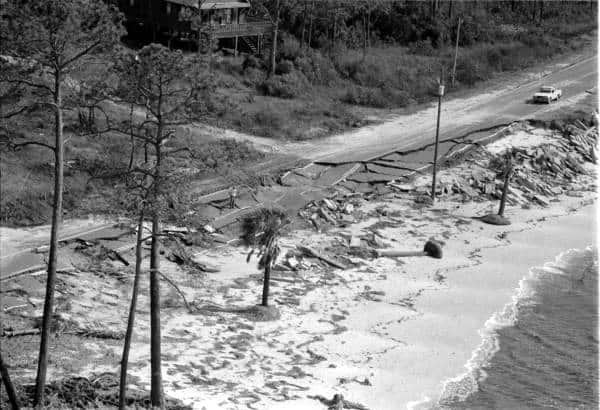
The Federal Emergency Management Agency has obligated more than $1.5 billion in 2026 for over 2,300 disaster recovery and hazard mitigation projects across Florida, the bulk of it flowing to communities still rebuilding from Hurricanes Helene and Milton in 2024 along with earlier declared disasters.
The pace has been concentrated. In a 90-day window ending in July, FEMA provided the state more than $1.2 billion supporting 70 disaster recovery and hazard mitigation projects. Individual announcements through the year have included $480 million in January, nearly $97 million in April, $89 million in June, more than $47 million in early July, and nearly $55 million in late July.
The money moves through the Public Assistance program, which reimburses state and local governments and certain nonprofits for debris removal, emergency protective measures, and the repair or replacement of damaged public infrastructure, and through the Hazard Mitigation Grant Program and Building Resilient Infrastructure and Communities program, which fund work intended to reduce damage from future events.
What the money actually pays for
Public Assistance is the largest category and the least visible. It covers the unglamorous work of disaster recovery: rebuilding damaged water treatment facilities, repairing roads and bridges, replacing destroyed public buildings, restoring wastewater systems, and reimbursing the emergency response costs local governments incurred during the storm itself.
Those costs are enormous and fall on local budgets that cannot absorb them. A county that spends tens of millions on debris removal after a hurricane would face insolvency without federal reimbursement, and the Public Assistance program exists to prevent local governments from being destroyed financially by events outside their control.
Hazard mitigation is the forward-looking category. It funds elevating structures above flood levels, hardening critical facilities, acquiring and demolishing repeatedly flooded properties, upgrading stormwater systems, and burying or strengthening utility infrastructure.
The economics of mitigation are unusually favorable. Studies of federal mitigation spending have consistently found that each dollar invested avoids several dollars in future disaster losses, which makes it among the better-returning categories of federal infrastructure spending.
The Swift Current program and what changed
FEMA made $600 million available in fiscal year 2026 through the Flood Mitigation Assistance Swift Current funding opportunity, a program designed to move money quickly to states that have recently experienced severe flooding disasters.
Swift Current came with programmatic changes intended to reduce administrative burden on applicants and speed delivery. Among them, FEMA removed project scoping activities as an eligible project type, a technical change that shortens the path from application to construction.
That matters because the standard federal mitigation grant process has been slow enough to undermine its own purpose. A community that applies for funding to elevate flood-prone homes after a storm may wait years for approval, during which the properties flood again. Programs designed for speed address a real failure mode.
Swift Current specifically targets properties with repetitive flood loss under the National Flood Insurance Program, which is a rational allocation because a small number of properties account for a disproportionate share of NFIP claims. Buying out or elevating those properties reduces future program losses.
Why Florida receives so much
Florida's share of federal disaster spending reflects its exposure. The state has more coastline than any state except Alaska, an enormous concentration of property value in hurricane-vulnerable locations, and a landfall frequency that produces major federal disaster declarations in most years.
Hurricanes Helene and Milton in 2024 were the proximate driver of the current spending wave. Helene struck the Big Bend and caused catastrophic flooding well inland and into other states. Milton followed weeks later and crossed the peninsula, causing extensive wind and flood damage across Central Florida and Tampa Bay, including the destruction of the Tropicana Field roof.
Recovery from events of that scale runs for years. Public Assistance obligations for a 2024 hurricane are still being made in 2026 because the process requires damage documentation, engineering assessment, procurement, and construction, each of which takes time.
The 2026 hurricane season has so far added nothing to that burden. The Atlantic basin reached its climatological peak without producing a single hurricane, which means no new Florida disaster declarations from tropical systems this year.
What it means for Florida communities
For residents of counties still rebuilding, the federal obligations are what fund the restoration of public infrastructure they use daily. Water systems, roads, schools, and public buildings damaged in 2024 are being repaired substantially with these dollars.
For local property tax payers, the reimbursements prevent the alternative, which would be local governments raising taxes or issuing debt to cover recovery costs. That is the practical significance of Public Assistance for households that never file an individual claim.
For homeowners in repetitive-loss properties, the mitigation programs offer options that did not previously exist, including elevation assistance and in some cases acquisition. Those programs run through local governments rather than directly to homeowners, so residents should contact their county emergency management office or floodplain administrator to learn what is available.
For Florida's insurance market, mitigation spending has a compounding effect. Property that has been elevated or hardened generates smaller claims in future events, which over time supports lower rates. Florida homeowners are already seeing rate relief in 2026, with Citizens Property Insurance reducing multiperil rates by an average of 8.8 percent.
The federal funding environment
Disaster spending has drawn increasing congressional scrutiny as the frequency and cost of declared disasters has grown. The Disaster Relief Fund, which finances most of this activity, requires periodic supplemental appropriations when major events exhaust it.
Congress passed a stopgap funding measure in early September extending federal funding through December 11, which also reauthorized the National Flood Insurance Program through that date. Disaster funding and flood insurance are related but distinct programs, and both depend on congressional action on similar timelines.
For Florida, which receives more federal disaster assistance than most states in most years, the stability of that funding stream is a recurring policy interest for the state's congressional delegation, which has historically worked across party lines on disaster and coastal issues.
How the money reaches a community
Federal disaster funding does not go directly to individuals in the Public Assistance program. It flows from FEMA to the state, which acts as the grantee, and then to local governments and eligible nonprofits, which act as subgrantees. That structure means a county reads about an obligation announcement months or years before the work it funds is complete.
The process begins with damage assessment. Local officials document damage, FEMA validates it, and the parties agree on a scope of work and a cost estimate for each project. Only then is funding obligated, which is the step the announcements describe.
Construction follows, subject to procurement rules that require competitive bidding for most work. Reimbursement is generally made as costs are incurred rather than as a lump sum in advance, which means local governments must have cash on hand to front the work.
Cost share is the piece residents most often misunderstand. Public Assistance typically covers 75 percent of eligible costs, with the remaining 25 percent split between state and local governments, though the federal share can be increased for particularly severe disasters. A county receiving a large obligation is still responsible for its portion.
Individual Assistance, which does go directly to households, is a separate program with its own application process and caps, and it addresses uninsured losses rather than replacing insurance.
Mitigation as an insurance strategy
Florida's property insurance market and its federal mitigation spending are more connected than the separate policy conversations suggest. Insurance rates reflect expected losses, and expected losses fall when the built environment is more resilient.
Wind mitigation is the most direct example. Florida building code changes after Hurricane Andrew in 1992 produced housing stock that performs dramatically better in high wind, and homes built to current code generate smaller claims. That improvement is a large part of why Florida rates have begun falling in 2026, with Citizens Property Insurance reducing multiperil homeowners rates by an average of 8.8 percent.
Flood mitigation works the same way but through the National Flood Insurance Program rather than the private market. Elevating a repeatedly flooded structure removes it from the pool of properties generating claims, which improves the program's finances and, over time, its rate structure.
The Swift Current program's focus on repetitive-loss properties reflects that math. A relatively small number of properties generate a disproportionate share of NFIP claims, and addressing those specific structures produces outsized savings.
The catch is that mitigation requires capital now to avoid losses later, which is a difficult sell in any budget process. Federal grant programs exist precisely because local governments cannot generally fund that trade themselves.
What's next
FEMA continues obligating funds for Helene and Milton recovery on a rolling basis, with announcements typically arriving monthly. Recovery from disasters of that magnitude generally runs five or more years from the event.
Local governments with pending mitigation applications should watch for Swift Current and Building Resilient Infrastructure and Communities award announcements, and residents interested in elevation or acquisition assistance should work through county floodplain management offices.
The quiet 2026 hurricane season means Florida enters the fall without new federal disaster obligations from tropical systems, which allows recovery from prior events to proceed without competing for the same administrative capacity. Three months of season remain.
For Florida residents watching these announcements accumulate, the useful frame is that federal disaster money is not a windfall. It is reimbursement for damage already done and, increasingly, investment intended to reduce the size of the next bill. The state's exposure is not going to shrink on its own, which makes the mitigation half of the spending the part most worth tracking.
Spotted an issue with this article?
Have something to say about this story?
Write us a letterComments
No comments yet. Be the first to weigh in.
Related Coverage

SpaceX Launches Bandwagon-5 Rideshare From Cape Canaveral, Lighting Up a Brief Space Jellyfish Over Florida
17m ago

Kathy Castor and Mike Beltran enter final stretch of a tight race in a redrawn, Trump-leaning Tampa district
4h ago

G20 Summit at Trump National Doral Will Bring Road Closures and a Secret Service Security Zone to Miami-Dade in December
6h ago

Florida's Brazilian voters head back to the polls for Oct. 25 presidential runoff as corruption dominates the race
7h ago