Florida Board of Governors Bars Undocumented Students From Public Universities
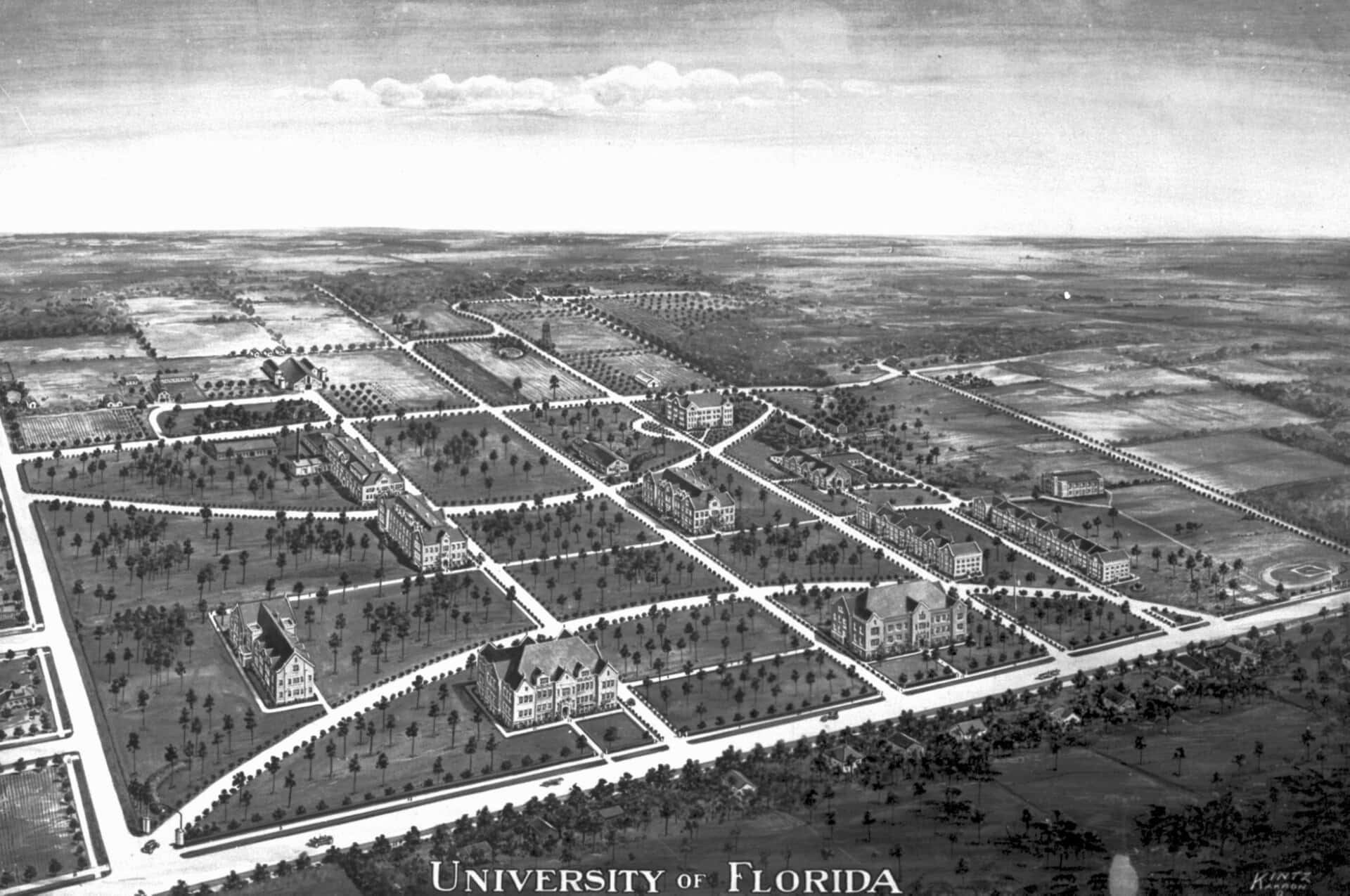
Florida's State University System Board of Governors voted unanimously last week to bar students who are unlawfully present in the United States from enrolling at any of the state's 12 public universities, a change scheduled to take effect with the 2027-2028 academic year. The rule applies system-wide, covering institutions from the University of Florida and Florida State University to Florida International University and Florida A and M University. It is one of the most consequential admissions policy changes the board has adopted in years, and it arrives after a legislative session in which lawmakers had already eliminated the in-state tuition waiver that some undocumented Florida high school graduates had relied on.
What the board approved
The rule adopted by the board establishes immigration status as an eligibility condition for enrollment in the State University System. Under the language reported from the meeting, a person who is present in the United States unlawfully is not eligible to enroll, regardless of how long they have lived in Florida or whether they graduated from a Florida high school.
The vote was unanimous among board members present. The board governs the 12 public universities in Florida and sets system-wide policy on admissions, tuition, accountability metrics and academic program approval. Its rules bind individual university boards of trustees, which retain authority over campus-level implementation.
The effective date, the 2027-2028 academic year, gives universities roughly two years to build verification procedures into their admissions workflow. It also means the policy does not disturb students already enrolled in the current academic year, at least not immediately.
Board members framed the change as bringing university admissions into alignment with state law and with the direction the Legislature has taken on immigration over the past two sessions. No board member spoke against the measure during the vote, according to accounts of the meeting.
How Florida got here
For roughly a decade, Florida allowed certain undocumented students who attended Florida high schools for at least three consecutive years to receive an out-of-state tuition waiver, effectively paying in-state rates at public colleges and universities. The waiver was enacted in 2014 with bipartisan support and signed into law by then-Governor Rick Scott.
That waiver was repealed as part of a broader immigration package the Legislature passed in early 2025. The repeal did not by itself bar undocumented students from enrolling. It changed what they paid, raising the cost from in-state to out-of-state rates, a difference that at most Florida universities runs to tens of thousands of dollars per year.
The rule the board adopted goes further. It removes eligibility to enroll at all rather than adjusting the price of enrollment. That distinction matters legally and practically, and it is the reason the vote drew attention well beyond Florida.
Florida is not alone in tightening rules in this area, but the combination of a repealed tuition waiver and an outright enrollment bar puts the state among the most restrictive in the country on undocumented student access to public higher education.
Who is affected
The population directly affected is difficult to size precisely, because universities have not historically collected immigration status as an admissions data point in a way that produces a public count. Advocacy organizations have estimated that several thousand undocumented students were enrolled across Florida's public colleges and universities before the tuition waiver repeal, with enrollment falling afterward as costs rose.
Many of those students arrived in the United States as children and completed their entire K-12 education in Florida public schools. Under longstanding federal law, public school districts must educate all children regardless of immigration status. The new rule creates a sharp discontinuity at the end of that pipeline: a student can complete a Florida public high school diploma and then be ineligible for a Florida public university.
Students with lawful status of any kind, including permanent residents, visa holders and recipients of deferred action, are not covered by a rule that applies to people unlawfully present. The precise treatment of students with pending applications or contested status is the kind of detail that typically gets resolved in implementing guidance rather than in the rule text itself.
Private colleges and universities in Florida are not governed by the Board of Governors and are not covered by this rule. Neither are the state's 28 public colleges, which fall under the State Board of Education rather than the Board of Governors, though observers expect pressure for a parallel policy there.
Reaction across the state
Immigrant advocacy groups criticized the vote as closing off a path to higher education for young people who have known no other home. Several organizations that had campaigned against the tuition waiver repeal indicated they were reviewing legal options, though no challenge had been filed publicly at the time of the vote.
Supporters of the rule have argued that public university seats and state subsidies should be reserved for lawfully present residents, and that the policy is a matter of state sovereignty over its own institutions. That argument has carried consistent majorities in the Legislature and on the board.
Faculty groups at several campuses raised concerns about the administrative burden of verification and about the chilling effect on applications from mixed-status families, where some siblings have status and others do not. University administrators have said relatively little publicly, which is typical when a system-level rule is adopted and campuses are still awaiting implementation guidance.
Business organizations have generally stayed quiet on this specific rule, though Florida employers in construction, agriculture and hospitality have been vocal in other forums about workforce constraints tied to immigration policy.
The legal questions ahead
Whether the rule survives a court challenge is an open question. The Supreme Court held in Plyler v. Doe in 1982 that states may not deny a free public K-12 education to children based on immigration status, but that ruling has not been extended to higher education, which courts have treated as a benefit rather than an entitlement.
States have historically been given latitude to set residency and eligibility conditions for their public universities. At the same time, federal law preempts state action that conflicts with federal immigration policy, and litigation in this area often turns on whether a state rule regulates immigration itself or merely allocates state benefits.
Any challenge would likely be filed in federal district court in Florida and could ultimately reach the Eleventh Circuit Court of Appeals, which covers Florida, Georgia and Alabama. That court has been an active venue for immigration-related disputes involving Florida over the past two years.
The two-year runway before implementation gives potential plaintiffs time to develop a case, and gives the state time to build a record supporting the rule. It also means the practical effects will not be felt on campus until well after the November 2026 elections.
What it means for Florida campuses
For admissions offices, the immediate task is procedural. Universities will need a method for determining eligibility that is consistent across 12 institutions, defensible if challenged, and workable at the scale of hundreds of thousands of applications each cycle.
For enrollment planning, the effect is likely to be modest in aggregate but concentrated. Institutions in South Florida and in agricultural regions with large immigrant populations are more likely to see application declines than campuses in other parts of the state. Florida International University and Miami Dade area feeder patterns are the most obvious pressure points.
There is also a signaling effect. Admissions decisions are made by families weighing several offers, and policies that make a state feel less welcoming can influence applicants who are not themselves affected by the rule. University leaders in other states have documented that dynamic after high-profile policy changes.
Against that, the state university system continues to post record applications and rising academic profiles, and Florida's public universities remain among the least expensive in the nation for in-state students. The system's overall trajectory is unlikely to be reversed by this single rule.
Comparisons to other states
State approaches to undocumented student access vary widely. Roughly half the states offer in-state tuition to undocumented students who meet residency and high school attendance criteria, and several extend state financial aid as well. Others restrict tuition benefits without barring enrollment.
Outright enrollment prohibitions have been rarer historically, though several states have adopted or considered them. Where such rules exist, they have generally applied to specific selective institutions rather than to an entire public university system.
Florida's rule is notable for its breadth. It covers all 12 public universities in the State University System, including the flagship research institutions and the regional comprehensive campuses that serve place-bound students with fewer alternatives.
The policy environment has also shifted at the federal level, where enforcement priorities and program eligibility rules have changed. States adopting restrictive rules have often cited alignment with federal direction as part of their rationale.
The K-12 pipeline question
Florida's public school districts educate every child who enrolls, as federal law requires. Miami-Dade County Public Schools, Broward County Public Schools, Hillsborough, Orange and Palm Beach districts are among the largest in the country, and each serves substantial immigrant populations.
Those districts invest heavily in English language acquisition, college readiness programming and dual enrollment. A rule that ends the pathway at high school graduation raises a practical question about the return on that public investment, which is an argument opponents have made explicitly.
School counselors are frequently the first people to encounter the consequences of policy changes like this, because they advise students on college applications without necessarily knowing each student's immigration status. Districts will need guidance on how to counsel affected students.
Private institutions, out-of-state options and the workforce remain available. Florida's technical centers and apprenticeship programs, which the state has been expanding, operate under a different governance structure than the university system.
What's next
The Board of Governors will need to issue implementing guidance, and individual universities will update their admissions materials for the 2027-2028 cycle, which opens in the fall of 2026 for some early programs and in 2027 for most.
The board meets again later this month, with out-of-state undergraduate enrollment levels also on its agenda. That is a separate issue, but it lands in the same broader conversation about who gets a seat in a Florida public university and on what terms.
Watch for three things over the coming year: whether a legal challenge is filed and where, whether the State Board of Education adopts a parallel rule for the 28 public colleges, and whether the Legislature codifies the policy in statute during the session that begins in January. Statutory codification would make the rule harder to reverse and would shift any legal fight from administrative rulemaking grounds to constitutional ones.
For Florida families with a student in the pipeline, the practical advice from counselors has not changed: verify status early, understand which institutions are covered, and treat the 2027-2028 date as the line that matters.
Spotted an issue with this article?
Have something to say about this story?
Write us a letterComments
No comments yet. Be the first to weigh in.
Related Coverage

Under State Pressure, Palm Beach County Schools Pull and Review More Than 1,800 Library Books
18h ago

OCPS Rejects Special Magistrate's Plan as School Board Takes Up Teacher Contract Impasse
1d ago
Judge Recommends Reprimand, Not Suspension, for Gainesville High Teacher Targeted by State Officials Over 'Dictator' Superlative
1d ago

Appeals Court Rules Escambia School Board Members Can Be Deposed Over Library Book Removals
2d ago