Crew-13 Launch From Kennedy Space Center Delayed by Dragon Oxidizer Leak
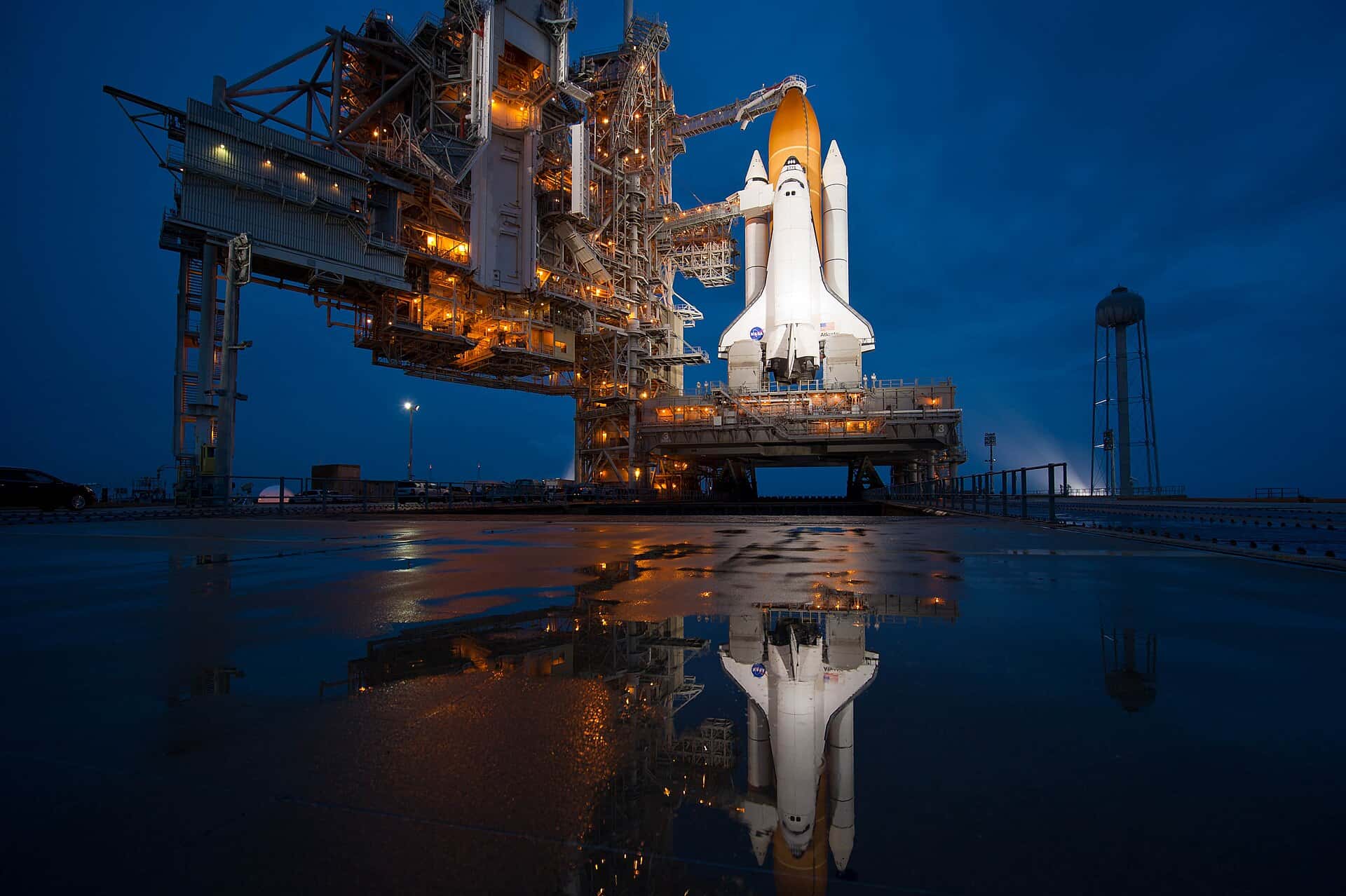
NASA and SpaceX have delayed the launch of the Crew-13 mission to the International Space Station after teams identified an oxidizer leak in the Dragon spacecraft's propulsion system during standard prelaunch processing. The mission had been targeted for September 12 from Florida's Space Coast, and no new launch date has been announced.
The agencies said teams are conducting additional testing and reviewing spacecraft data, and that any repairs or other required work will be completed before Dragon is cleared to fly. Mission managers are assessing upcoming launch opportunities, a process constrained by orbital mechanics, space station traffic and the availability of range assets on the Eastern Range.
Crew-13 carries NASA astronauts Jessica Watkins and Luke Delaney as commander and pilot, flying alongside Canadian Space Agency astronaut Joshua Kutryk and Roscosmos cosmonaut Sergey Teteryatnikov as mission specialists. The crew will join the ongoing expedition aboard the orbiting laboratory once the mission proceeds.
What an oxidizer leak means
An oxidizer is the chemical component that enables fuel to burn within a rocket or spacecraft propulsion system. Unlike an aircraft engine, which draws oxygen from the atmosphere, a spacecraft must carry its own oxidizer because it operates where no atmosphere exists. Dragon's propulsion system uses hypergolic propellants, meaning the fuel and oxidizer ignite spontaneously upon contact without requiring an ignition source.
That chemistry is what makes the system reliable in orbit, since there is no ignition mechanism to fail, and it is also what makes leaks serious. Hypergolic propellants are highly corrosive and toxic, and a leak represents both a hazard to ground personnel handling the vehicle and a potential loss of the propellant margin the spacecraft needs for maneuvering, rendezvous and the deorbit burn that brings the crew home.
Dragon's propulsion system serves multiple functions across a mission. It performs the orbital adjustments required to reach and dock with the station, provides the abort capability that would carry the crew clear of a failing rocket during ascent, and executes the deorbit burn at mission's end. Each of those functions depends on the system operating within specification, which is why a leak identified during processing halts the sequence entirely.
Why NASA delays rather than proceeds
The decision to stand down from a launch date is routine in human spaceflight and reflects a safety culture built substantially in response to past failures. Both space shuttle accidents were preceded by circumstances in which schedule pressure contributed to decisions that, examined afterward, appeared to have discounted engineering concerns.
The institutional response to those findings was a formal flight readiness process in which engineering organizations must affirmatively certify readiness rather than merely fail to object. Under that framework, an unresolved technical issue defaults to a delay, and the burden falls on those who would proceed to demonstrate that the concern has been resolved.
Commercial Crew Program missions operate under that same framework, with NASA retaining certification authority over the vehicle while SpaceX operates it. That arrangement means both organizations must be satisfied before a launch proceeds, and either can halt the sequence.
The launch window problem
Rescheduling a mission to the International Space Station is not simply a matter of picking another day. The station orbits at roughly 17,500 miles per hour in a plane fixed relative to the stars, and a spacecraft launching from Florida can only reach it efficiently when the launch site rotates beneath that orbital plane. That produces brief daily windows rather than open-ended opportunities.
Additional constraints narrow the options further. Lighting conditions affect abort scenarios and recovery operations. Weather must be acceptable both at the launch site and along the ascent corridor and abort landing zones in the Atlantic. Other missions scheduled on the Eastern Range compete for the same infrastructure and airspace closures.
Station operations impose their own requirements. Docking ports must be available, crew handovers must be sequenced, and visiting vehicle traffic including cargo missions and other partners' spacecraft must be deconflicted. Mission planners weigh all of those factors when identifying the next viable opportunity.
What Crew-13 will do on orbit
Commercial Crew missions to the space station typically last approximately six months, during which the crew conducts scientific research, performs station maintenance and, in some rotations, conducts spacewalks for external assembly and repair work. The research portfolio spans biology, materials science, fluid physics, Earth observation and human physiology.
Microgravity research remains the station's central scientific justification. Certain processes, including crystal growth, combustion behavior and cellular development, proceed differently in the absence of buoyancy-driven convection and sedimentation, and studying them in orbit produces results unobtainable on the ground.
Human physiology research carries additional weight as space agencies plan missions beyond low Earth orbit. Bone density loss, muscle atrophy, fluid redistribution, vision changes and radiation exposure are all areas where station research informs the countermeasures that longer-duration missions will require.
The Space Coast economy
Brevard County's economy is tied closely to launch activity, and the cadence of missions from Kennedy Space Center and Cape Canaveral Space Force Station affects employment, tourism and business activity across the region. The area supports a workforce spanning NASA civil servants, contractor engineering staff, launch operations personnel and the supply chain that serves them.
Launch frequency from the Space Coast has increased dramatically over the past decade, driven principally by commercial activity. What was once a facility conducting a handful of launches annually now supports a schedule that at times approaches multiple launches per week, a transformation that has reshaped the local economy and the region's identity.
Tourism connected to launches has grown correspondingly. Viewing locations along the Indian River and beaches in Titusville, Cocoa Beach and Cape Canaveral draw visitors for high-profile missions, and the Kennedy Space Center Visitor Complex operates as a substantial attraction in its own right within Central Florida's tourism market.
Delays and the local ripple effect
A launch delay has practical consequences beyond the mission itself. Visitors who traveled to watch a crewed launch face decisions about whether to extend stays or return home, and hotels, restaurants and tour operators in Brevard County experience the resulting volatility in bookings.
For the workforce, a delay generally means extended processing operations rather than idle time, since the vehicle must be inspected, repaired and retested. Those activities involve specialized personnel and facilities, and they proceed on timelines determined by the technical work rather than by the calendar.
The broader launch manifest also absorbs the disruption. Other missions scheduled from the same pads and range must be resequenced, which can cascade across weeks of the schedule. Range operators manage that deconfliction continuously as a normal part of operations.
The commercial crew model
Crew-13 flies under NASA's Commercial Crew Program, an arrangement in which the agency purchases transportation services from private providers rather than owning and operating the vehicles itself. The program was established following the space shuttle's retirement to restore American capability to launch astronauts from American soil.
The model represented a significant departure from how NASA had previously procured human spaceflight. Under traditional contracting, the agency specified requirements in detail and owned the resulting hardware. Under the commercial approach, providers retain ownership and design authority while NASA certifies the vehicle against safety requirements and purchases seats.
Proponents point to reduced per-seat costs and to the emergence of a commercial market serving customers beyond NASA. Critics have questioned whether the certification framework provides the same insight into design decisions that the traditional model afforded. Both positions have been examined in oversight reviews, and the program has now conducted a substantial number of crew rotations.
Florida's role in human spaceflight
Every American crewed orbital mission has launched from Florida's Space Coast, a continuity spanning from the Mercury program through the present. The geography that made the location attractive originally remains relevant: launching eastward over the Atlantic places uninhabited ocean beneath the ascent path, and the site's relatively low latitude provides a modest velocity benefit from Earth's rotation.
The infrastructure built around that geography represents decades of investment. Launch complexes, processing facilities, tracking and range safety systems, and a workforce with accumulated operational expertise are difficult and expensive to replicate elsewhere, which is why the concentration has persisted through multiple changes in national space policy.
State economic development efforts through Space Florida have worked to expand the sector beyond launch operations into manufacturing, satellite services and research. The objective has been to reduce the region's exposure to the boom and bust cycles that historically accompanied the transition between major NASA programs.
How processing problems get found
The leak was identified during standard prelaunch processing, which is precisely the point of that process. Before a crewed vehicle is cleared to fly, it moves through a sequence of inspections, functional tests and propellant loading operations designed to surface exactly this category of problem while the spacecraft is on the ground and the crew is not aboard.
Propulsion systems receive particular scrutiny because they are pressurized, because they contain hazardous fluids and because their failure modes on orbit range from mission-limiting to catastrophic. Leak checks involve pressurizing the system and monitoring for pressure decay, along with sensor-based detection of the specific chemicals involved, and the thresholds that trigger a stand-down are set conservatively.
Finding a problem at this stage is generally regarded within the spaceflight community as the system working rather than failing. The alternative, discovering the same issue after launch, would present a crew with a degraded propulsion system in an environment where repair options are limited and where propellant margin governs both rendezvous and return.
A busy manifest on the Eastern Range
The Crew-13 delay unfolds against a launch schedule from Florida's Space Coast that has become extraordinarily dense. Beyond crewed missions, the range supports commercial satellite deployments, national security payloads, cargo resupply flights to the space station and a continuing cadence of constellation launches, all sharing the same airspace, tracking assets and safety infrastructure.
That density is what makes rescheduling complex. Each launch requires closures of airspace and maritime areas, allocation of range tracking and safety systems, and coordination with air traffic control across a busy corridor of Florida's east coast. A mission that slips must find an opening in a manifest where openings are scarce.
The infrastructure has been expanded to accommodate the growth, with multiple active pads at Cape Canaveral Space Force Station and Kennedy Space Center operating in parallel and range modernization efforts aimed at shortening the interval required between launches. Those investments are what allow the current cadence, and they continue as the manifest grows.
What's next
NASA and SpaceX will announce a new target launch date once the technical work on Dragon's propulsion system is complete and the vehicle has been cleared to fly. That announcement depends on the findings of the ongoing testing and on the scope of any repairs required.
Station operations continue in the interim, with the current expedition crew aboard. Crew rotation schedules include margin for delays of this kind, and mission planners adjust handover timing as launch dates shift.
The Florida Press will report the new launch date when NASA announces it, along with continued coverage of launch activity from Kennedy Space Center and Cape Canaveral Space Force Station.
Spotted an issue with this article?
Have something to say about this story?
Write a letter to the editor


