FEMA Has Sent More Than $1.5 Billion to Florida Recovery Projects This Year
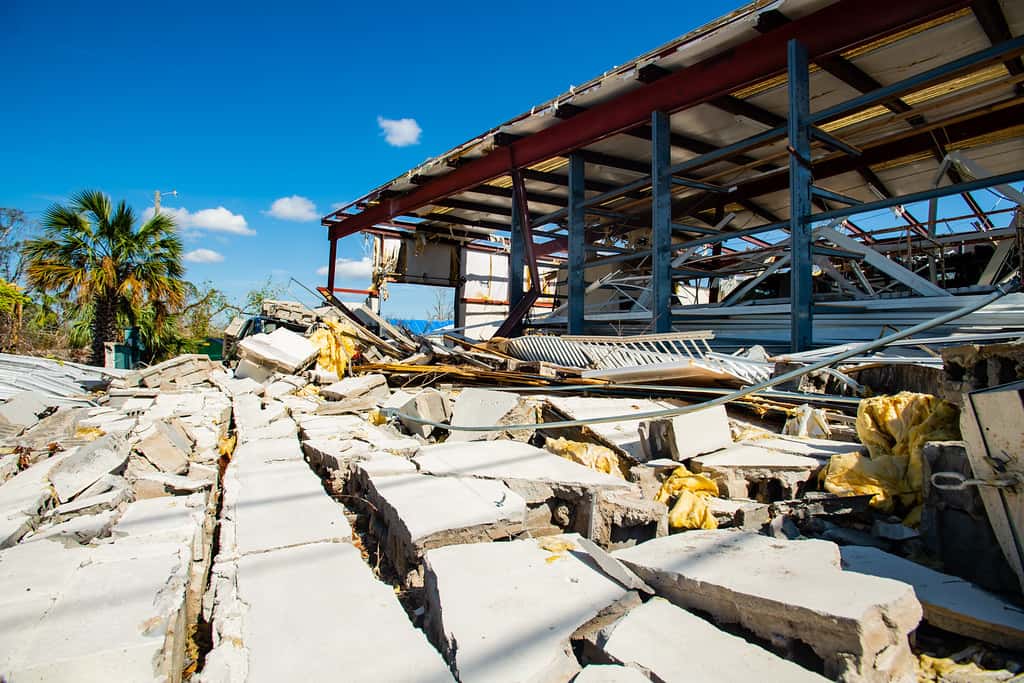
The Federal Emergency Management Agency has provided more than $1.5 billion in funding for 2,368 disaster recovery and hazard mitigation projects across Florida during 2026, a figure that reflects the long tail of storm recovery work continuing years after the hurricanes that caused the damage.
The money has arrived in tranches through the year. FEMA approved nearly $97 million for Florida recovery in late April, announced more than $47 million in early July and nearly $55 million later that month, with additional regional announcements covering Florida alongside other Southeast states. The funds flow through three principal programs: Public Assistance, the Hazard Mitigation Grant Program and Building Resilient Infrastructure and Communities.
For Floridians, this spending is the mechanism by which damaged public infrastructure gets rebuilt. Roads, bridges, water treatment plants, schools, emergency operations centers, beaches and drainage systems damaged in federally declared disasters are repaired substantially with federal dollars, and the local governments that own those assets could not fund the work from their own revenues.
How the programs work
Public Assistance is the largest of the three programs and the most directly tied to a specific disaster. It reimburses state and local governments and certain nonprofits for debris removal, emergency protective measures and repair or replacement of damaged public facilities. The federal cost share is typically 75 percent, though it can be increased for catastrophic events.
The Hazard Mitigation Grant Program funds projects designed to reduce future damage rather than repair past damage. It becomes available after a major disaster declaration, with funding calculated as a percentage of the disaster's total assistance. Typical projects include elevating flood-prone homes, hardening critical facilities, burying utility lines and improving stormwater capacity.
Building Resilient Infrastructure and Communities operates on a different logic. Rather than following a disaster, it funds mitigation on a competitive nationwide basis, allowing communities to build resilience before damage occurs. The program has been the subject of significant policy change at the federal level, and reporting this year indicated roughly $300 million previously directed to Florida hurricane and flooding resilience work was withdrawn as part of broader program changes.
Each program carries its own application, documentation and audit requirements, which is why the money arrives years after the storms. Local governments must document damage, procure contractors under federal procurement rules, complete environmental and historic preservation reviews, and submit for reimbursement, a process that routinely takes three to five years for large projects.
What the money is buying
Among the projects funded this year is $11.2 million to Collier County for beach renourishment and erosion prevention following Hurricanes Helene and Milton. Beach renourishment involves dredging sand from offshore and placing it on eroded beaches, and it serves both as storm protection for inland property and as maintenance of the tourism asset that drives coastal economies.
Beach and dune systems function as the first line of coastal defense. A wide beach with healthy dunes dissipates wave energy before it reaches structures, and the loss of that buffer during a storm increases damage in subsequent storms. Renourishment is therefore both recovery and mitigation, which is why it draws funding from multiple programs.
Nearly $39 million was directed to Florida under the Public Assistance program in one of the recent announcements, covering the range of eligible categories from debris removal through permanent repair of public facilities.
Water and wastewater infrastructure consistently accounts for a substantial share of Florida disaster spending. Storm surge and flooding damage lift stations, treatment plants and collection systems, and failures in those systems produce sewage discharges that create public health and environmental problems extending well past the storm.
Why Florida receives so much
Florida's exposure is structural rather than incidental. The state has more coastline exposed to Atlantic and Gulf hurricanes than any other, its population is concentrated near that coastline, and its elevation is low enough that storm surge penetrates far inland in many areas.
Recent seasons have compounded the effect. Hurricanes Helene and Milton, both of which affected Florida, generated damage that continues to drive recovery spending, and prior storms including Ian remain in the recovery pipeline as well. Multiple overlapping recoveries are the normal state of affairs for Florida emergency management.
Population growth increases the value of assets at risk. Florida has added residents faster than almost any state, and each new subdivision, road and utility extension adds infrastructure that a future storm can damage. The state's disaster costs have risen partly because there is simply more built environment in the path.
Construction cost inflation has also increased the dollar value of equivalent damage. Rebuilding the same facility today costs substantially more than it did five years ago, which means disaster spending rises even when physical damage does not.
The politics of disaster funding
Disaster spending is among the few categories of federal expenditure that has historically attracted bipartisan support, on the reasoning that any state can be struck and that the federal government is the only entity capable of absorbing catastrophic losses.
That consensus has come under strain. Debates over whether disaster aid should be offset by cuts elsewhere, over the appropriate federal cost share, and over how much responsibility states should bear for their own resilience have all recurred in recent Congresses.
The mitigation side has drawn particular scrutiny. Research consistently finds that mitigation spending returns multiples of its cost in avoided future damage, which makes it attractive on cost-benefit grounds, but the benefits accrue over decades while the costs are immediate, which makes it politically vulnerable.
Florida's congressional delegation has substantial stake in these decisions given the state's share of national disaster spending. Both Senate seats and the state's large House delegation carry direct constituent interest in appropriations and program design.
What it means for Floridians
Most of this funding goes to governments rather than to individuals, which is a distinction property owners frequently misunderstand. Public Assistance rebuilds public infrastructure. Individual Assistance, a separate program, provides direct help to households, and it is available only for specific declared disasters and typically covers a fraction of actual losses.
Insurance remains the primary financial protection for individual property owners. Flood damage requires separate coverage through the National Flood Insurance Program or a private carrier, since standard homeowners policies exclude it, and new NFIP policies generally carry a 30-day waiting period.
Residents benefit from this spending indirectly but substantially. Repaired roads, functioning water treatment, hardened power infrastructure and renourished beaches all determine how quickly a community returns to normal after a storm and how much damage the next one causes.
Property owners in participating communities may also be eligible for individual mitigation assistance through their local government's hazard mitigation program, including home elevation and wind retrofit grants. Those programs are administered locally, and county emergency management offices are the point of contact.
Why the money takes years to arrive
The gap between a hurricane and the federal reimbursement that pays to repair what it damaged routinely runs three to five years, and the reasons are procedural rather than a matter of bureaucratic indifference. Every step in the process exists because federal money carries accountability requirements.
Damage assessment comes first, with applicants documenting what was damaged, when, and by which event. That documentation must distinguish disaster damage from pre-existing deterioration, which is frequently contested and which requires engineering evaluation for complex facilities.
Procurement rules follow. Local governments spending federal money must competitively bid contracts under federal procurement standards, which take longer than emergency purchasing but which protect against the contract fraud that has followed past disasters. Environmental and historic preservation reviews add further time, particularly for projects affecting wetlands, coastal zones or historic structures.
Cash flow is the practical burden this places on local governments. Public Assistance is generally a reimbursement program, meaning the local government spends its own money first and is repaid afterward. Small municipalities without substantial reserves have at times borrowed to bridge that gap, and the state provides some advance funding mechanisms to ease it.
What's next
Hurricane season runs through November 30, and the Atlantic has been quiet, with NOAA maintaining a below-normal seasonal outlook and no hurricanes recorded in the basin as of late August. A quiet season would reduce new disaster obligations while existing recovery work continues.
FEMA publishes its Disaster Relief Fund status in a monthly report to Congress, which shows obligations, expenditures and the fund's remaining balance. That report is the authoritative indicator of whether the fund is approaching a level that would require supplemental appropriations.
Local governments with pending projects continue moving through the reimbursement process, and county commission agendas across Florida routinely include Public Assistance project approvals and grant acceptances that show where the money is going locally.
Residents seeking information about mitigation grant availability should contact their county emergency management office, since those programs are administered at the local level and application windows are limited.
Individual homeowners seeking mitigation assistance should also know about Florida's own programs, which operate alongside the federal ones. The My Safe Florida Home program has provided free wind mitigation inspections and matching grants for improvements including roof upgrades, opening protection and roof-to-wall connections, subject to available appropriations each year.
Those improvements carry a double benefit. They reduce the likelihood of damage in a storm, and Florida law requires insurers to provide premium discounts for documented wind mitigation features, which means the investment can pay back through lower premiums even absent a storm.
Program availability and application windows vary by legislative appropriation, and the program has at times exhausted its funding partway through a cycle. Homeowners interested in participating should monitor the program's official announcements rather than assuming applications are open.
Residents should also be alert to fraud, which follows every disaster. FEMA does not charge fees for applications or inspections, and legitimate inspectors carry identification that can be verified. Contractor fraud after Florida storms has been extensive enough that the state maintains licensing verification tools, and homeowners should confirm licensure and avoid large upfront payments before work begins.
Spotted an issue with this article?
Have something to say about this story?
Write a letter to the editorComments
No comments yet. Be the first to weigh in.
Related Coverage

UN Security Council Extends Haiti Gang Suppression Force Through March 2027 as Florida Diaspora Watches
1h ago

Senate Passes Protect College Sports Act With Ashley Moody Amendment Backed by Miami, FSU and USF
2h ago
Rick Scott Renews Push to Send ACA Subsidies to Consumers as Florida Reels From Coverage Losses
4h ago
New Treasury Cuba Sanctions Rules Take Effect, Ending Group and Educational Travel Licenses
5h ago