FHP Charges Orlando Driver With DUI Manslaughter in International Drive Crash
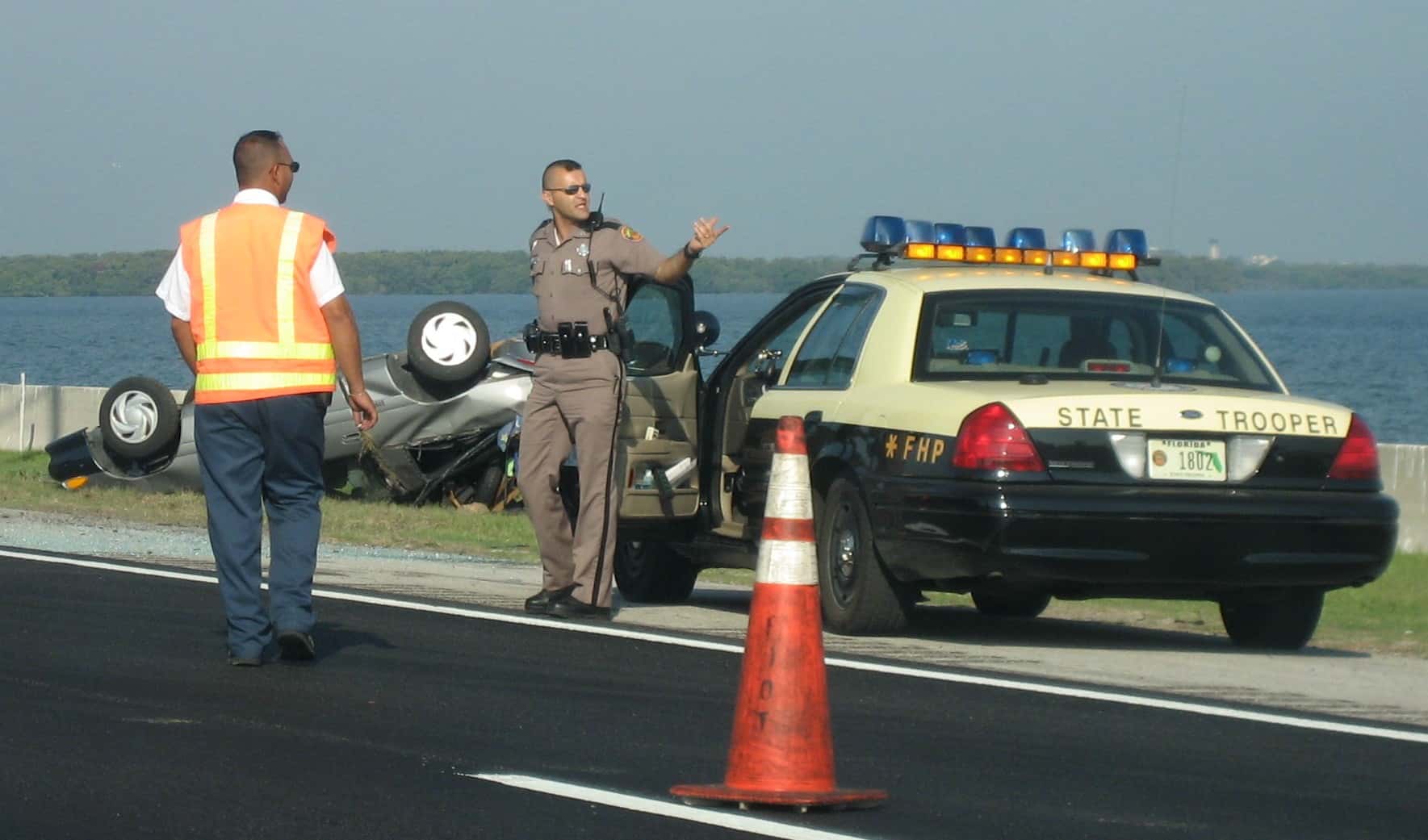
A 19-year-old Orlando man has been charged with DUI manslaughter and leaving the scene of a crash involving death after Florida Highway Patrol troopers say he ran a red light on International Drive early on the morning of Aug. 30, struck another vehicle and fled the scene on foot. A 29-year-old man from Connecticut died in the collision, and a woman traveling with him was hospitalized with serious injuries. Christopher Laureda was located and detained by Orange County deputies a short time later and was arrested by FHP. He has not been convicted, and the charges represent allegations that will be tested in court.
What troopers say happened
According to a Florida Highway Patrol crash report, the collision occurred shortly after 2:45 a.m. on Sunday, Aug. 30, and involved a Ford F-250 pickup and a Volkswagen Jetta. Troopers say Laureda was driving westbound on Central Florida Parkway when he ran a red light and struck the left side of a southbound Jetta on International Drive.
The Connecticut man died as a result of the crash. His girlfriend, who was in the vehicle with him, was taken to a hospital with serious injuries. FHP reported that the driver of the pickup left the scene on foot after the collision.
Orange County deputies located and detained Laureda a short time later, and the Florida Highway Patrol placed him under arrest on charges of leaving the scene of a crash involving death and DUI manslaughter. The investigation remains with FHP, and the case now moves into the Ninth Judicial Circuit court system covering Orange and Osceola counties.
What the charges mean
DUI manslaughter is a second-degree felony in Florida. It requires the state to prove that the defendant was driving or in actual physical control of a vehicle while impaired by alcohol or a controlled substance, or with a blood or breath alcohol level at or above the legal limit, and that the impairment caused or contributed to causing the death of another person.
Leaving the scene of a crash involving death is a first-degree felony in Florida and carries a mandatory minimum prison sentence. The Legislature elevated the penalty specifically to remove the incentive a suspected impaired driver would otherwise have to flee, wait out the metabolization of alcohol, and face a lesser charge.
Both counts are allegations at this stage. A criminal charge is the state's accusation, not a finding of guilt, and the defendant is presumed innocent unless and until the state proves each element beyond a reasonable doubt to a jury or the defendant enters a plea.
The stages ahead
An arrest begins a sequence of steps that people often conflate. Following arrest, a defendant appears at a first appearance hearing within 24 hours, where a judge reviews probable cause and addresses pretrial release conditions.
The State Attorney's Office then makes a charging decision. Prosecutors are not bound by the charges an arresting agency lists and may file an information charging different or additional offenses, may reduce charges, or may decline to file. Formal charges lead to arraignment, where the defendant enters a plea.
From there the case proceeds through discovery, pretrial motions and either a negotiated resolution or trial. The overwhelming majority of Florida felony cases resolve by plea rather than by verdict. Cases involving a death and serious injuries typically take many months to reach resolution.
The evidence in impaired driving cases
Prosecutions of this type generally rest on several categories of evidence. Blood alcohol testing is central, and Florida law provides for blood draws in crashes involving serious bodily injury or death under specified conditions. The chain of custody and the testing methodology are frequent subjects of defense challenge.
Crash reconstruction is the second pillar. FHP maintains traffic homicide investigators who document scene evidence including skid marks, debris distribution, vehicle damage patterns and, increasingly, data from vehicle event data recorders that capture speed, braking and throttle position in the seconds before impact.
Signal timing data is specifically relevant to a red light allegation. Traffic signals in Orange County are centrally controlled and log their phase timing, which allows investigators to establish the state of the signal at a precise moment rather than relying solely on witness recollection. Surveillance video from International Drive businesses is another common evidence source in that corridor.
The International Drive corridor
International Drive is one of the busiest tourism corridors in the United States, running through the concentration of hotels, restaurants, attractions and convention facilities that surround the Orange County Convention Center. It carries heavy pedestrian traffic and heavy vehicle traffic at all hours.
The corridor's traffic safety profile has been a recurring subject of local government attention. High-volume arterials with numerous commercial driveways, visitors unfamiliar with the road network, and substantial late-night activity around bars and entertainment venues combine into a demanding safety environment.
The 2:45 a.m. timing of this crash falls within the window when impaired driving risk peaks nationally. Late-night and early-morning hours on weekends account for a disproportionate share of alcohol-involved fatal crashes, a pattern that holds across jurisdictions and that shapes how enforcement resources are deployed.
What it means for Floridians
Florida consistently ranks among the states with the highest total traffic fatalities, a function partly of population and vehicle miles traveled and partly of road design, and impaired driving remains a significant contributing factor in fatal crashes statewide.
The practical implications for drivers are unchanged and worth restating. Rideshare and taxi services are available throughout the International Drive corridor at all hours. The cost of a ride is trivially small compared with the consequences of an impaired driving crash, for the driver and for everyone else on the road.
For anyone involved in a crash, Florida law requires stopping at the scene, remaining there and rendering aid. Leaving is a felony independent of any other charge, and in crashes involving death it carries a mandatory minimum sentence. The legal exposure created by fleeing generally exceeds the exposure the driver was fleeing from.
Other recent FHP cases
This is one of several fatal crash investigations Florida Highway Patrol has pursued recently. Troopers have reported separate cases including a Lutz crash in which a driver was charged with DUI manslaughter after two people died, and cases in Sarasota and Brevard counties involving crashes in which multiple people were killed.
Each of those remains a separate proceeding with its own facts and its own defendants, all of whom are presumed innocent. The pattern across them is that FHP's traffic homicide investigators handle a steady volume of these cases and that charging decisions follow a reconstruction process that takes time.
Fatal crash investigations frequently produce charges days or weeks after the crash itself, as toxicology results return and reconstruction is completed. An arrest on the day of a crash, as occurred here, generally indicates that investigators had sufficient evidence at the scene to establish probable cause immediately.
Why leaving the scene carries a mandatory minimum
Florida's penalty structure for leaving the scene of a fatal crash was strengthened deliberately, and the reasoning addresses a specific perverse incentive that prosecutors identified in impaired driving cases.
An impaired driver who remains at the scene will be tested, and the results will support a DUI charge. An impaired driver who flees and is located hours later may have metabolized enough alcohol that testing no longer establishes impairment at the time of the crash, leaving the state unable to prove the more serious offense.
The Legislature closed that gap by making leaving the scene of a crash involving death a first-degree felony carrying a mandatory minimum term. The effect is that fleeing no longer improves a driver's legal position, because the flight itself carries exposure comparable to or exceeding what the driver was avoiding. That structure is why both charges appear together in cases like this one.
Where these cases actually turn
Prosecutions of this kind rarely turn on whether a collision occurred. They turn on causation and on the reliability of impairment evidence, and defense strategy is generally organized around those two points.
On causation, the state must establish that impairment caused or contributed to causing the death. A defense may argue that the crash would have occurred regardless, or that another factor, another driver's conduct, road conditions, a mechanical failure, was the operative cause. Crash reconstruction is the evidence that answers those questions, which is why traffic homicide investigations are as thorough as they are.
On impairment, the challenges are technical: the timing of the blood draw relative to the crash, whether statutory conditions for the draw were satisfied, chain of custody, laboratory procedure and the science of retrograde extrapolation used to estimate alcohol concentration at the time of driving rather than at the time of testing. Those issues are litigated in pretrial motions and can determine whether evidence reaches a jury at all. None of that has been resolved in this case, which remains at its earliest stage.
What's next
The case proceeds through the Ninth Judicial Circuit, with the State Attorney's Office making the formal charging decision. Pretrial release conditions, if any, are set by the court based on the charges and the statutory criteria governing bond.
Toxicology results, if not already complete, typically take weeks to return from the laboratory and are central to a DUI manslaughter prosecution. Defense counsel will have the opportunity to review testing procedures, the crash reconstruction and all other discovery.
The Connecticut man's family and the injured woman are the people at the center of this case, and their circumstances will not be resolved by any court proceeding. The legal process will determine criminal responsibility. It will not restore what the crash took.
Spotted an issue with this article?
Have something to say about this story?
Write us a letterComments
No comments yet. Be the first to weigh in.
Related Coverage

Former Congressional Candidate Elijah Manley Charged With Written Threats Over Post Backing Angie Nixon
1h ago

Putnam County jury convicts Caylen Deller of murder, rejecting self-defense claim
22h ago
Florida Supreme Court tosses Henry Lee Jones's death sentence in 2003 Melbourne motel killing, orders new trial
1d ago

Michelle Parker's ex-fiance Dale Smith Jr. charged with murder nearly 15 years after Orlando mom vanished
1d ago