Flock Surveillance Cameras Become a Flashpoint in Florida's Governor Race
License plate reading cameras made by Flock Safety have moved from local government agendas into the center of Florida's 2026 race for governor, with the leading candidates in both parties calling for new limits on how law enforcement agencies use them. The debate sharpened this week as candidates staked out positions ahead of the August 18 primary, and it follows a series of county and city votes across the state in which local officials have paused, trimmed or eliminated their contracts entirely. The result is an unusual alignment in which the sharpest calls for restriction are coming from the Republican side of the ballot.
What the cameras do
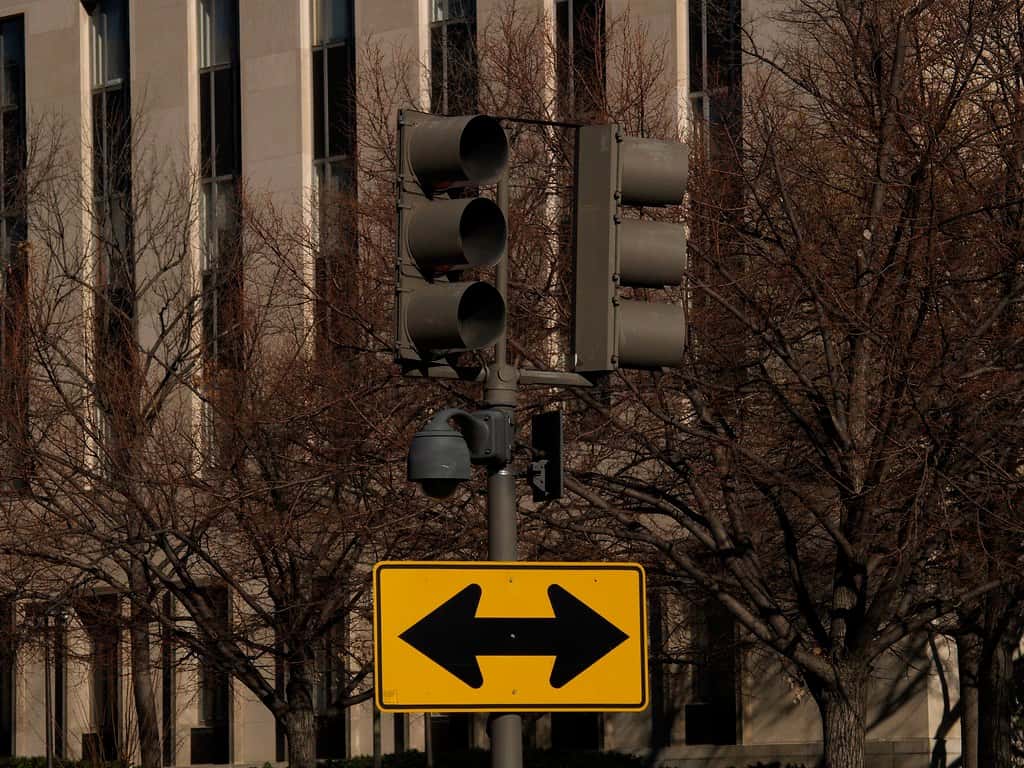
Flock Safety cameras are automated license plate readers, generally mounted on poles at intersections, highway on-ramps and neighborhood entrances. They photograph passing vehicles, convert the plate to text using optical character recognition, and log the time and location of each read. Agencies can search that log for a specific plate, set alerts for plates on hot lists, and in many configurations query a shared network that extends well beyond the jurisdiction that paid for the hardware.
That last feature is what has driven most of the controversy. A camera purchased by a Florida city can contribute to, and draw from, a database spanning thousands of agencies nationwide, which means a vehicle's movements can be reconstructed across state lines without a warrant. Supporters describe the technology as a force multiplier for understaffed agencies working stolen vehicle cases, Amber alerts, missing person searches and violent crime investigations, and they can point to specific cases where a plate read produced a break.
Critics describe the same capability as warrantless location tracking of people who are not suspected of anything. A person's daily driving pattern reveals where they worship, whom they visit, what medical providers they see and what political meetings they attend. The dispute is less about whether the cameras solve cases and more about who can search the data, for how long it is retained, what audit trail exists, and what oversight applies to misuse.
Where the candidates stand
Republican U.S. Representative Byron Donalds, the leading GOP candidate for governor, issued a statement last month calling for a full pause on Flock camera contracts, citing concerns about violations of constitutional rights. That position places the Republican frontrunner on the restrictive side of a technology question that law enforcement agencies across Florida have generally embraced, and it puts him at odds with some sheriffs who have defended the systems.
Democratic frontrunner David Jolly, a former Republican congressman from Pinellas County who changed his registration in April 2025, has taken a more measured line. Jolly has agreed that the cameras need greater limitation, without endorsing an outright halt. The overlap between the two positions is notable in a race where the candidates have found little else to agree on, and it suggests both campaigns have read the same polling on how voters feel about ambient surveillance.
Republican candidate James Fishback has also called for eliminating or pausing the cameras. The result is a rare configuration in Florida politics, with the surveillance question cutting across rather than along party lines. Privacy skepticism draws from libertarian-leaning Republicans who distrust expanded government monitoring and from civil liberties Democrats who worry about disparate enforcement, and those two constituencies rarely find themselves on the same side of a ballot question.
The local votes that set the stage
The statewide argument grew out of a run of local decisions. Leon County commissioners voted unanimously in July to defund their Flock camera program after a packed public hearing, a decision that drew attention precisely because it was unanimous rather than narrowly split. Unanimity on a contested technology question generally signals that public testimony moved the room.
In St. Petersburg, the city's spending on Flock cameras has become a campaign issue in its own right, with reporting on a $730,250 outlay that critics say moved forward without substantive council debate. Similar arguments have surfaced in other municipalities, generally following the same pattern: a contract approved on a consent agenda as a routine procurement item, followed months later by public objection once residents notice the hardware appearing on poles in their neighborhoods.
Those local fights created a ready-made template for the governor's race. Candidates did not have to invent the issue or explain it from scratch, because residents in a growing number of Florida communities had already been to a hearing about it, read a local news story about it, or seen a neighborhood group organize around it. An issue that arrives pre-explained is far easier to campaign on than one requiring education.
What Florida law currently allows
Florida does not have a comprehensive statute governing automated license plate readers comparable to the frameworks some other states have adopted. Agencies operate under a patchwork of local policies, vendor terms of service and general public records law, which produces significant variation from one county to the next in retention periods, audit requirements, permitted search purposes and the scope of data sharing.
Public records law adds a Florida-specific wrinkle. Records held by state and local agencies are presumptively open unless specifically exempted, and how that principle applies to a commercial vendor's cloud-hosted plate database is not fully settled. Different agencies have answered public records requests about camera data differently, and the resulting inconsistency has itself become an argument for statewide standards.
Courts have addressed related questions in other contexts. The United States Supreme Court has held that prolonged, comprehensive tracking of a person's movements can implicate Fourth Amendment protections even when each individual observation occurs in public. Whether and how that reasoning extends to a shared network of fixed plate readers is a question that has not been definitively resolved in Florida.
What a governor could actually change
A governor cannot rewrite the statutory framework alone. Any durable statewide rule would require legislation passing both chambers of the Florida Legislature, which means the practical significance of the candidates' positions lies in what they would push lawmakers to pass and how much political capital they would spend on it.
Executive authority does provide some levers. State agencies including the Florida Highway Patrol and the Florida Department of Law Enforcement operate under gubernatorial appointees, and a governor can direct policy for those agencies without legislation. That reaches state-level use of the technology but not the county and municipal deployments that make up the bulk of Florida's installed base.
Budget influence offers another route. State grant programs that help local agencies purchase equipment can carry conditions, and a governor's line-item veto authority over the state budget is among the strongest in the country. Those tools shape behavior indirectly rather than through prohibition.
What it means for Floridians
For residents, the immediate question is whether the cameras in their neighborhood stay, and under what rules. In the near term that decision rests with city councils and county commissions, not with the next governor, which is why the wave of local hearings is likely to continue through the fall regardless of the primary outcome. Residents who want a say have more leverage at a commission meeting than at the ballot box on this particular question.
For law enforcement agencies, the uncertainty is budgetary as well as operational. Contracts are typically multi-year, and agencies that built investigative workflows around plate reader alerts would need to adjust if a pause or repeal took effect. Sheriffs and police chiefs have generally defended the technology while acknowledging that clearer statewide rules would help, since ambiguity exposes agencies to litigation and to public records disputes.
For the campaigns, the issue offers something unusual in a polarized cycle: a policy question where a candidate can appeal beyond the party base. In a general election decided by voters in the middle, a position that draws support from both civil libertarians and privacy-conscious independents has obvious strategic value.
How other states have legislated
Several states have adopted statutory frameworks governing automated license plate readers, and those laws generally address the same set of questions: how long data may be retained, who may query it, what purposes qualify, whether an audit log is required, and what penalties apply to misuse.
Retention periods vary widely across jurisdictions, from a matter of days to years, and the length of retention largely determines how much a system reveals. A short retention window supports the immediate investigative uses agencies cite while limiting the ability to reconstruct a person's movements over months.
Audit requirements have proven consequential elsewhere. Systems that log every query with the identity of the searcher and a stated purpose create accountability and have surfaced misuse in other states, including searches conducted for personal rather than official reasons.
What the vendor relationship complicates
A significant part of the Florida debate concerns the fact that the data lives on a commercial vendor's servers rather than on government systems. That arrangement raises questions about who controls access, what the vendor may do with aggregated data, and how public records obligations apply to information held by a contractor.
Contract terms rather than statute currently govern much of that relationship in Florida. Agencies negotiating individually with a vendor have varying leverage and varying sophistication about the provisions that matter, which produces the inconsistency that has become an argument for a statewide standard.
The network effect is the feature that makes the question distinctive. A local agency's decision to join a shared database extends the reach of every other participating agency into its jurisdiction, which means a single city council vote has consequences for residents well beyond the city limits.
What's next
Florida's closed primary is Tuesday, August 18, with early voting August 8 through August 16. Voters had to be registered with a party by July 20 to participate in that party's primary, which narrows the electorate deciding each nomination and typically produces a more ideologically committed set of voters than a general election.
Expect the surveillance question to persist into the general election campaign. The candidates who emerge from the primaries will face a November electorate that includes independents, and the cross-partisan appeal of the privacy argument makes it unlikely either nominee abandons the issue after securing a nomination.
Local governments, meanwhile, will keep working through their own contract cycles, and each renewal decision creates a new opportunity for public comment. The Florida Press will continue following both tracks, including votes by individual commissions and any legislation filed ahead of the 2027 legislative session in Tallahassee.
Spotted an issue with this article?
Have something to say about this story?
Write a letter to the editor