Florida Fentanyl Deaths Drop 46 Percent and Are Down 62 Percent From 2021 Peak, DeSantis Announces
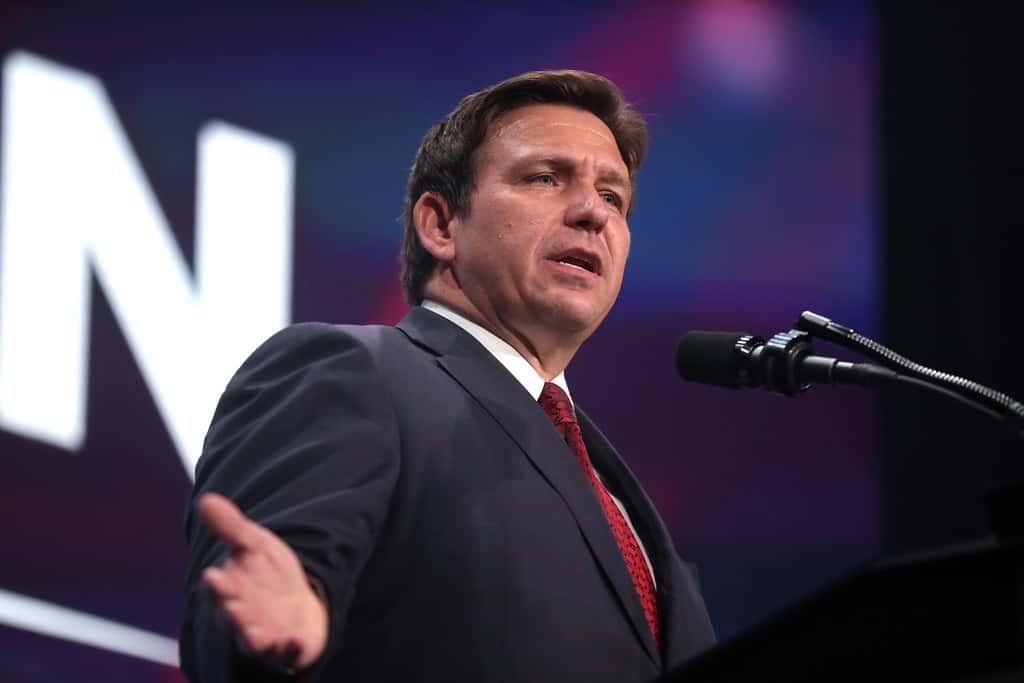
Florida officials announced a dramatic decline in drug overdose deaths at a press conference in Titusville on May 13, 2026, presenting data showing that fentanyl fatalities had fallen 46 percent statewide and that deaths from opioids, cocaine, and methamphetamine had all decreased significantly over the most recent reporting period. Gov. Ron DeSantis and a group of state law enforcement and agency leaders highlighted the figures as evidence that Florida's multi-year strategy of investing in law enforcement, targeting drug trafficking networks, and strengthening border security had produced measurable results for public health across the state.
The announcement marked one of the most positive drug mortality updates Florida officials have been able to deliver in years, following a period when the fentanyl crisis pushed overdose deaths to levels that overwhelmed emergency rooms, medical examiners, and public health systems in communities across the state. According to the data presented at the Titusville event, fentanyl deaths have declined 46 percent, opioid deaths are down 42 percent, cocaine-related deaths have decreased 24 percent, and methamphetamine deaths have fallen more than 31 percent. Overall drug-related deaths statewide are down 19 percent compared to the prior measurement period.
From Crisis Peak to Measurable Progress
To understand the magnitude of the decline, it is necessary to look back at the depth of the crisis Florida faced just a few years earlier. In 2021, fentanyl killed 5,791 Floridians, a staggering toll that made it the deadliest year on record for fentanyl-related fatalities in the state. That peak year placed Florida among the hardest-hit states in the nation during the synthetic opioid surge that reshaped the American overdose landscape beginning in the mid-2010s and accelerating sharply after 2019.
The most recent data presented at the Titusville press conference shows approximately 1,500 fentanyl deaths, a figure that represents a 62 percent decrease from the 2021 peak. That trajectory, from nearly 5,800 deaths in a single year to roughly 1,500, is a change of a scale rarely seen in public health statistics for a crisis of this severity. Public health researchers generally note that even a 10 to 15 percent reduction in overdose deaths in a single year represents a significant achievement, making a 46 percent annual decline and a 62 percent reduction from peak a result that, if sustained and verified through standard epidemiological reporting, would place Florida among the most successful states in the country in addressing the fentanyl epidemic.
State officials at the press conference attributed the declines to a combination of law enforcement actions, policy decisions, and investments made over several years. The governor's office cited the state's drug task forces, which have conducted thousands of trafficking arrests and seized large quantities of fentanyl and fentanyl analogues from distribution networks operating in and through Florida. Florida's geographic position as a major point of entry for goods and people, both internationally through its ports and airports and domestically through interstate highways, has historically made it a significant transit and distribution point for illicit drugs, including fentanyl and its chemical precursors.
Officials and Agencies at the Titusville Announcement
Joining DeSantis at the May 13 press conference were several of the state officials most directly involved in Florida's anti-drug efforts. Florida Department of Law Enforcement Commissioner Mark Glass attended the announcement, reflecting FDLE's central role in coordinating statewide drug trafficking investigations and working with local law enforcement agencies on major cases. FDLE has jurisdiction over complex multi-agency investigations and provides forensic, intelligence, and investigative support to county sheriff's offices and municipal police departments across the state.
Dave Kerner, executive director of the Florida Department of Highway Safety and Motor Vehicles, also participated in the press conference. The DHSMV's presence at a drug mortality announcement reflects the agency's role in roadway safety, including its oversight of the Florida Highway Patrol, which encounters drug trafficking during traffic stops and participates in anti-drug operations along Florida's major highway corridors. Drug-impaired driving is a component of the broader substance abuse problem, and highway safety and drug enforcement are intersecting priorities for state officials.
Department of Corrections Secretary Ricky Dixon rounded out the law enforcement and agency presence at the announcement. The Florida Department of Corrections manages one of the largest prison systems in the country, and the intersection of drug offenses, trafficking charges, and addiction treatment within the corrections population makes DOC a key stakeholder in any strategy to reduce drug deaths. The incarceration of drug traffickers, combined with programming designed to address substance use disorders among the incarcerated population, is part of the statewide approach officials described at the press conference.
Law Enforcement Investment and Border Operations
DeSantis used the Titusville announcement to highlight the financial investments Florida has made in the law enforcement agencies responsible for drug interdiction and trafficking enforcement. The governor's proposed budget includes $13.5 million in pay increases for sworn law enforcement officers, a commitment designed to address recruitment and retention challenges that have affected agencies across Florida and the broader country in recent years. The proposed budget also includes $11 million for a Florida Highway Patrol career development plan, which the governor's office described as an investment in the professional development and long-term retention of FHP troopers.
Those proposed investments in law enforcement compensation come in the context of a broader debate in Tallahassee over the state budget, with the Legislature in a special session working to resolve billions of dollars in spending differences before the July 1 start of the new fiscal year. The law enforcement funding proposals represent one part of a much larger negotiation, and their final form will depend on the outcome of the ongoing budget conference.
State officials have also described investments in border security and anti-cartel drug trafficking operations as central to the strategy that has produced the declines in overdose deaths. Fentanyl's chemical precursors are primarily manufactured in China and shipped to Mexican cartels, which synthesize the drug and move it across the United States-Mexico border and through distribution networks that reach into every state, including Florida. Florida's anti-cartel operations, conducted in coordination with federal partners including the Drug Enforcement Administration and Customs and Border Protection, have targeted the financial and logistical networks that sustain drug trafficking in the state.
Drug task forces operating throughout Florida have made thousands of arrests for trafficking offenses in recent years and seized significant quantities of fentanyl, fentanyl analogues, and other controlled substances. Those seizures remove drugs from circulation and disrupt the supply chains that deliver fentanyl to end users, theoretically reducing availability and contributing to the decline in overdose deaths. Criminologists and public health researchers note that supply disruption is one factor among several, alongside expanded naloxone access and treatment programs, in driving overdose death declines.
Public Health Context and Continuing Challenges
While the decline in fentanyl deaths is a significant positive development, public health professionals caution that the fentanyl crisis is not over. Fentanyl is now ubiquitous in the illicit drug supply, contaminating not just heroin but also counterfeit pills designed to mimic prescription opioids, stimulants including cocaine and methamphetamine, and other substances. The pervasive presence of fentanyl in the drug supply means that people who use drugs face a risk of exposure even when they believe they are using a different substance, a dynamic that has been a major driver of overdose deaths across demographic groups that historically had lower rates of opioid use.
The availability of naloxone, the opioid reversal medication marketed under names including Narcan, has expanded significantly in Florida and nationally over the past several years, driven by both policy changes that made the medication available without a prescription and distribution programs operated by public health agencies, pharmacies, and community organizations. Naloxone cannot save every overdose victim, particularly when fentanyl's rapid onset causes respiratory depression before help can arrive, but its expanded availability is widely credited by public health researchers as contributing to declines in overdose death rates nationally.
Medication-assisted treatment for opioid use disorder, using medications including buprenorphine and methadone that reduce cravings and withdrawal symptoms, has also expanded in Florida over the past several years. Access to treatment remains uneven across the state, with rural communities and areas without established healthcare infrastructure facing more significant barriers than urban centers. The state's investment in treatment capacity, alongside its law enforcement strategy, represents a dual approach to the overdose crisis that public health experts generally support as more effective than enforcement alone.
The decline in cocaine and methamphetamine deaths, while less dramatic than the fentanyl reduction, is also notable. Cocaine-related deaths fell 24 percent and methamphetamine deaths fell more than 31 percent. Those declines suggest that the broader drug mortality trends in Florida are not limited to the opioid category and may reflect changes in drug supply, use patterns, or both. The intersection of stimulant use with fentanyl contamination, which has driven stimulant-related overdose deaths in other states, will be an important area for ongoing monitoring by state public health officials.
What the Numbers Mean for Florida Communities
Behind each of the statistics presented at the May 13 press conference is a human reality: the lives of Floridians who did not die of a drug overdose in the most recent reporting period and the grief of families who lost loved ones in prior years when the numbers were far higher. At the 2021 peak, fentanyl alone was killing an average of nearly 16 Floridians every day. The most recent data, reflecting roughly 1,500 annual fentanyl deaths, still represents more than four lives lost per day, a toll that remains unacceptably high by any public health standard even as it represents dramatic progress from the worst of the crisis.
For communities that bore the heaviest burden of the fentanyl epidemic, including many working-class neighborhoods, rural counties, and areas where economic dislocation and limited healthcare access compounded the risks of addiction and overdose, the declining death toll represents a genuine change in lived experience. Emergency rooms, first responders, and medical examiners who spent years managing an unprecedented surge in overdose calls and deaths are seeing case volumes that, while still elevated, are substantially lower than the peak. That reduction in crisis load frees resources for other medical and public safety needs and represents a real improvement in the operating conditions for Florida's healthcare and emergency response infrastructure.
Florida officials at the Titusville press conference did not describe the declining death toll as a signal to reduce investment in anti-drug efforts. The governor's office and agency leaders framed the results as validation of a strategy that should be continued and, where possible, expanded. The proposed law enforcement pay increases and Florida Highway Patrol career development funding are presented as part of a sustained commitment to the enforcement side of the equation, while the state's public health infrastructure continues to work on treatment access and naloxone distribution in communities across Florida.
Spotted an issue with this article?
Have something to say about this story?
Write us a letterComments
No comments yet. Be the first to weigh in.
Related Coverage

DeSantis Says Florida Has Cut 220 Medicaid Providers and Sent 150 Fraud Referrals as Crackdown Expands
1d ago
Tampa General takes over DeSoto County's only hospital, renaming it TGH DeSoto
2d ago
Florida on pace for record child drownings as families seek swim lessons
6d ago
Florida Attorney General James Uthmeier Sues Pfizer and CEO Albert Bourla Over COVID-19 Vaccine Claims
Oct 2