Florida Lawmakers Set the 2027 Session Calendar With Committee Weeks Starting in November
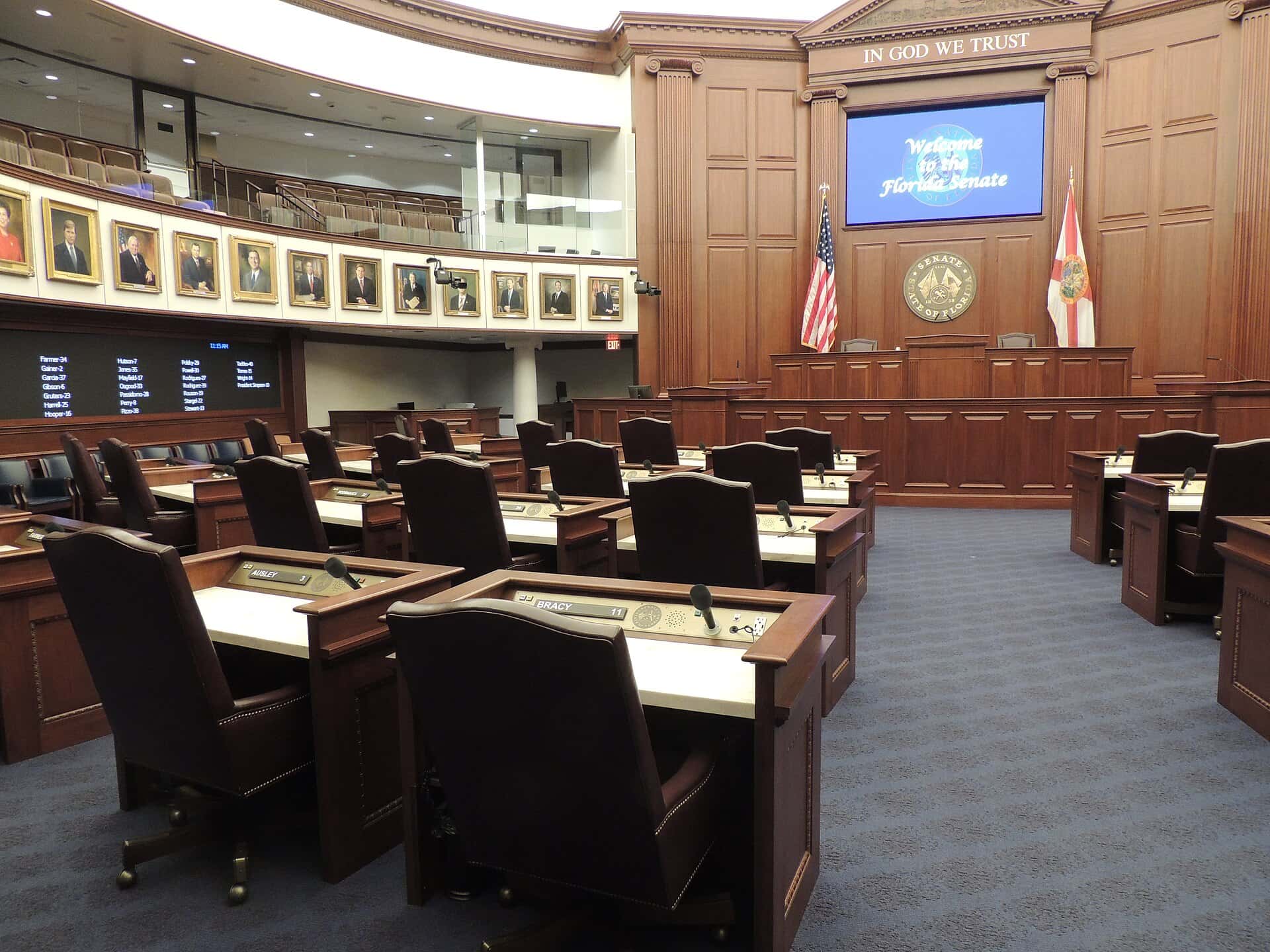
The Florida Legislature has locked in the calendar that will carry it from November through the opening of the 2027 regular session. Lawmakers will hold seven interim committee meeting periods spread across late 2026 and early 2027, with the regular session convening Tuesday, March 2, 2027.
The published schedule runs as follows: November 17 to 19 for senator training, November 30 to December 3, January 4 to 7, January 11 to 14, February 1 to 4, February 8 to 11, and February 15 to 18. No committee meetings are scheduled for September or October 2026.
That gap is deliberate and reflects the election calendar. Every seat in the Florida House and roughly half the Senate is on the November 3 ballot, and legislative leaders have historically kept the pre election weeks clear of committee business.
How the calendar works
Florida's regular legislative session runs 60 consecutive days, which makes the interim period the phase where most substantive policy development actually happens. Bills are drafted, filed and referred to committees, and committee chairs decide which measures get agenda time.
Interim committee weeks serve several functions. Agencies present updates and budget requests, committees take presentations on emerging issues, and members begin moving bills through the referral chain. A bill that has cleared two of its three committee references before session opens is far better positioned than one that has not been heard.
The November training period for senators reflects the arrival of a new class of members after the election. New legislators receive orientation on ethics rules, the appropriations process, chamber procedure and constituent services before the substantive work begins.
What is likely on the agenda
The single largest variable is the November 3 ballot. If voters approve the proposed constitutional amendment raising the homestead exemption to $250,000 in stages, the Legislature faces an immediate implementation workload, including questions about state assistance for fiscally constrained counties that lose a large share of their non school property tax base.
Property insurance will return regardless of the election outcome. Rates have declined in most Florida counties in 2026 and Citizens Property Insurance has cut personal lines rates, but the market's stability depends on a hurricane season that has so far been quiet. Legislators will be watching whether the recovery holds.
The Hope Florida grand jury report, which surfaced publicly in late August and described the misappropriation of $10 million connected to a Medicaid settlement, has already generated commitments from Senate Democrats to file legislation on settlement proceeds, direct support organization oversight and political committee disclosure.
Public health rules are a third area. The Department of Health's proposal to remove four vaccines from school entry requirements moved through administrative rulemaking rather than legislation, and lawmakers on both sides have signaled interest in addressing the question by statute.
The budget clock
The one thing the Legislature must do is pass a balanced budget. Florida's constitution requires it, and the General Appropriations Act is the only bill that must pass in any given session.
The budget process begins well before session. Agencies submit legislative budget requests in the fall, the governor releases a recommended budget ahead of session, and the two chambers develop their own proposals before reconciling them in conference. A session that opens March 2 would ordinarily conclude at the end of April, with the 72 hour cooling off period before a final budget vote built into that timeline.
The fiscal picture entering this cycle includes substantial reserves. The governor has pointed to a reserve fund that has grown to the point where constitutional limits restrict further deposits, an argument that has been central to the property tax debate.
What it means for Floridians
Interim committee weeks are the most accessible point of entry for a member of the public who wants to influence legislation. Committee meetings accept public comment, agendas are published in advance, and the rooms are smaller and less rushed than they are during session.
The Florida Senate and Florida House both publish committee schedules, agendas, bill texts, staff analyses and archived video on their websites. Staff analyses in particular are among the most useful public documents in state government, summarizing current law, the proposed change and the fiscal impact in plain terms.
Constituents who want to weigh in should identify which committee has jurisdiction over an issue and contact members of that committee, not only their own legislator. Committee chairs control agendas, and a bill that never gets heard never gets voted on.
Local impact across the state
Local governments treat the interim period as their primary advocacy window. Counties and cities adopt legislative priority lists in the fall and send delegations to Tallahassee during committee weeks, and this cycle those priorities are dominated by the property tax question.
School districts follow the same rhythm, tracking bills on funding formulas, teacher compensation, testing requirements and student device policies. Several districts, particularly in the Tampa Bay region, have moved on their own to restrict wearable recording devices in classrooms and may seek a statewide standard.
Rural counties face the sharpest stakes on property taxes because their median homesteaded values sit closer to the proposed exemption threshold, meaning a larger share of their tax base could be exempted. Sheriff's offices in those counties have been among the most vocal participants in the debate.
Who will be in the room
The composition of both chambers changes on November 3. Term limits, retirements and members seeking other offices produce turnover every cycle, and the incoming class arrives at the November training session.
The next governor also takes office in January, which means the budget recommendation that anchors the 2027 session will come from a new administration. That transition adds uncertainty to what would otherwise be a predictable process.
Cabinet offices, including attorney general and chief financial officer, are also on the ballot, and those officials sit on boards that oversee state investments, insurance regulation and law enforcement policy.
How a bill actually moves
A Florida bill begins as a request to the chamber's bill drafting service, typically from a member's office working with an outside stakeholder, an agency or constituents. The drafted bill is filed, given a number and referred by the presiding officer to committees.
Committee references are where most bills die. A measure referred to three committees must clear all three before reaching the floor, and each chair controls whether it gets agenda time. Chairs are appointed by the Senate President and the House Speaker, which makes leadership preferences the single most important variable in a bill's survival.
Companion bills in the opposite chamber are essential. A bill that passes one chamber without a companion moving in the other has nowhere to go, and identical language between the chambers avoids the conference process that a 60 day session leaves little time for.
Amendments reshape bills throughout the process, sometimes substantially. A bill that emerges from its final committee can bear little resemblance to what was filed, and strike all amendments that replace the entire text are a routine legislative tool in Tallahassee.
The lobbying environment
Florida requires registration and quarterly compensation reporting for legislative and executive branch lobbyists, and those filings are public. The reports provide the clearest available picture of which interests are spending what on influencing state government.
The largest sustained lobbying presences in Tallahassee include the health care sector, the insurance industry, utilities, the gaming industry, agriculture, local government associations and the education sector. Each maintains year round representation rather than session only presence.
Interim committee weeks are when much of that work happens. With fewer bills moving and more time available, committee weeks provide access that the compressed session schedule does not, and the relationships built during the interim determine which measures get heard in March.
Citizens have the same formal access. Committee meetings accept public testimony, appearance forms are available at each meeting, and members' offices take constituent meetings. The asymmetry is in time and expertise rather than in formal rights.
Reading a staff analysis
Every bill that receives a committee hearing gets a staff analysis prepared by nonpartisan committee staff. These documents are among the most useful public records Florida government produces and are available free on both chambers' websites.
A staff analysis follows a consistent structure. It describes present situation, meaning current law and the problem the bill addresses, then explains the effect of the proposed changes section by section, then assesses fiscal impact on state government, local government and the private sector.
The fiscal impact section is often the most revealing. Bills that appear straightforward can carry costs that were not part of the public discussion, and the Revenue Estimating Conference process produces official estimates for measures affecting state revenue.
Analyses also flag constitutional issues, conflicts with existing law and implementation questions. A member reading only the bill text is working with less information than a citizen who reads the analysis.
Both chambers archive analyses for prior sessions, which makes it possible to trace how an idea evolved across multiple years of filings before it passed or died.
What's next
Between now and mid November, the political focus stays on the campaign. Bill filing for the 2027 session opens under chamber rules during the interim period, and the first tranche of filed legislation typically becomes public in the fall.
Agency legislative budget requests are the other document to watch. They provide the earliest concrete indication of what state departments intend to ask for and where they expect pressure.
The full published interim schedule and the 2027 session calendar are available through the Florida Senate and Florida House websites, which remain the authoritative source if dates change.
Spotted an issue with this article?
Have something to say about this story?
Write us a letterComments
No comments yet. Be the first to weigh in.
Related Coverage

Broward judge rules Tamarac Commissioner Morey Wright off the Nov. 3 ballot, sparking clash at City Hall
1h ago

Appeals court lets Florida enforce HB 3, its social media ban for children under 14
1h ago

Florida Voters Return More Than 500,000 Mail Ballots for November Election as Democrats Take Early Lead
23h ago
HUD Mapping Error Fixed: St. Petersburg Gets $173 Million in Hurricane Milton Recovery Money
2d ago