Florida Set to Carry Out Its 13th Execution of 2026 as the State's Pace Sets Modern Records
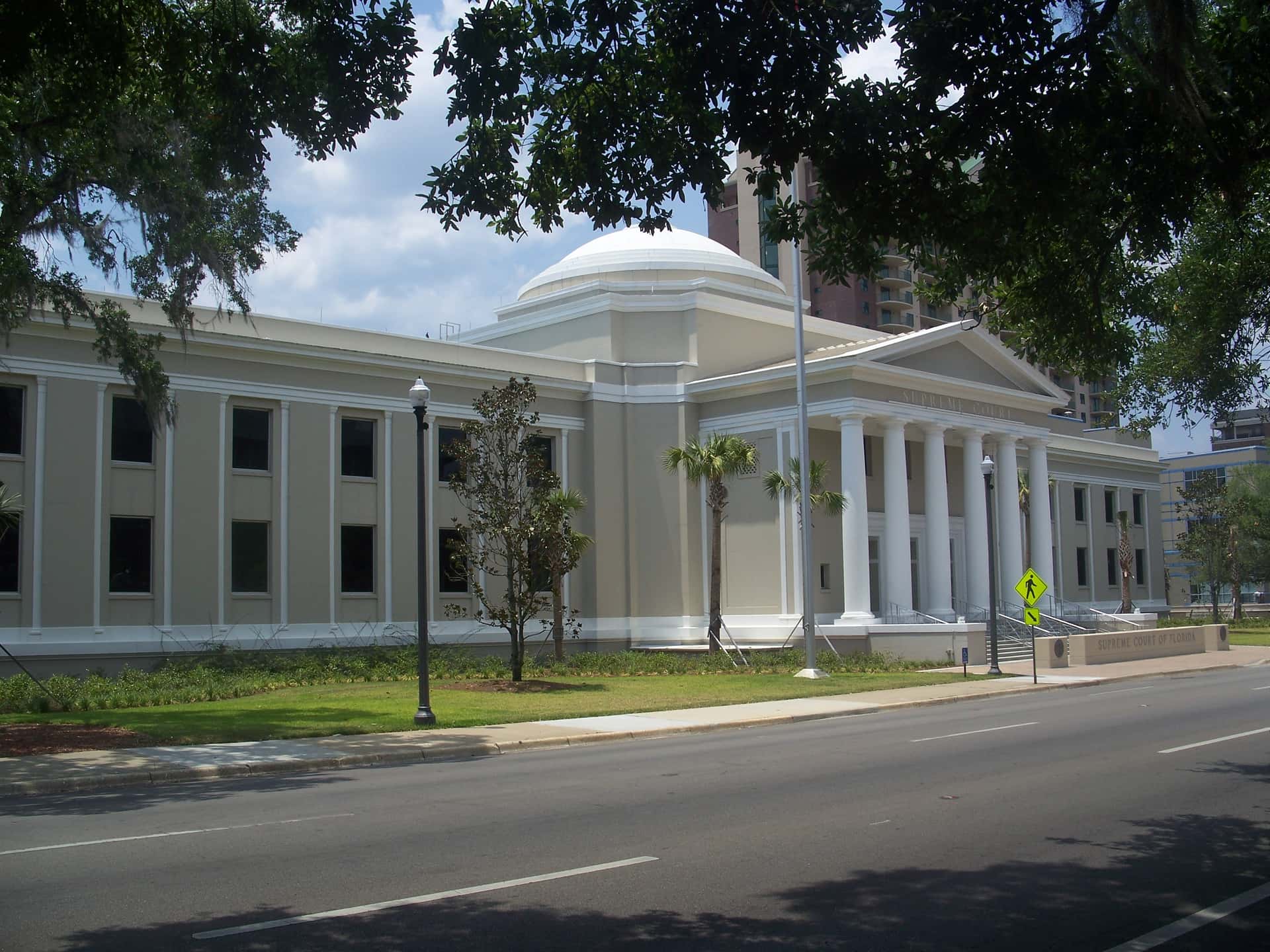
Florida is scheduled to carry out its 13th execution of 2026 on Tuesday evening, continuing a pace of capital punishment that has no precedent in the state's modern death penalty era.
William Frances Silvia Jr. is set to be executed at 6 p.m. Tuesday, August 18, at Florida State Prison for the 2006 murder of Patricia Silvia. Gov. Ron DeSantis signed the death warrant on July 17, 2026.
The Florida Supreme Court on August 12 upheld a lower court ruling and denied Silvia's request to pause the execution, rejecting his final state appeal.
The case
According to court records, Silvia was fired from his job and, on the same day, purchased a 12-gauge shotgun and drove to a family cookout at his mother-in-law's home, where he opened fire.
He killed Patricia Silvia and severely wounded her mother, Betty Woodard, who survived a shotgun blast to the face.
Silvia was convicted and sentenced to death following a jury recommendation of 11 to 1. Florida law at the time of his sentencing permitted a death sentence on a non-unanimous jury recommendation, a framework that has since been altered and then altered again by both court rulings and legislative changes.
Anti-death-penalty organizations, including the Catholic Mobilizing Network and Floridians for Alternatives to the Death Penalty, have circulated clemency petitions in the case. Clemency in Florida rests with the governor, acting with the Board of Executive Clemency.
An unprecedented pace
Florida set a modern record for executions in 2025, when death warrants signed by DeSantis led to 19 executions in a single year. The previous modern record was eight, set in 2018.
Silvia's execution would be the 32nd carried out in Florida in roughly 20 months, and the 13th of 2026. Additional executions have been scheduled beyond August, which would push the year's total higher.
The acceleration is a function of executive action rather than of any change in the underlying crime rate or in the number of people on death row. A death sentence in Florida does not proceed to execution until the governor signs a warrant, and warrants can be signed years or decades after appeals conclude.
Florida's death row population has been among the largest in the country for decades, which means the pool of cases with exhausted appeals is substantial. The pace therefore reflects a decision about how quickly to move through that pool.
How Florida's system works
Capital cases in Florida move through a defined sequence. A conviction and death sentence are followed by a mandatory direct appeal to the Florida Supreme Court. Postconviction proceedings in state court follow, addressing claims that could not be raised on direct appeal, including ineffective assistance of counsel and newly discovered evidence. Federal habeas corpus review follows in the federal district court, the Eleventh Circuit and, potentially, the United States Supreme Court.
Once those avenues are exhausted, the case is eligible for a death warrant. The governor's signature starts a compressed timeline, typically about 30 days, during which the condemned person can file successive postconviction motions in state court and emergency petitions in federal court. Those filings are reviewed on an expedited schedule.
Florida law provides for execution by lethal injection or, at the inmate's election, by electrocution. The state has also enacted authority for execution by other methods under specified circumstances.
Executions are carried out at Florida State Prison in Raiford. State law provides for witnesses, including representatives of the victim's family, media witnesses and representatives designated by the condemned person.
The debate in Florida
Support for and opposition to capital punishment in Florida runs along familiar lines, but the recent pace has intensified the argument on both sides.
Supporters point to the age of the underlying crimes. Silvia's case involves a murder committed in 2006, and two decades between crime and execution is common in Florida capital cases. Prosecutors and victims' families have argued that indefinite delay compounds harm and that a sentence lawfully imposed and repeatedly upheld should be carried out.
Opponents raise several distinct objections. Florida leads the nation in death row exonerations, a record that critics cite as evidence of error in the system. The non-unanimous jury recommendation framework under which many current death row prisoners were sentenced has been the subject of extended litigation. Questions about mental illness, intellectual disability and the quality of trial-level defense representation recur across cases.
Cost is a separate argument. Capital prosecution and the mandatory appellate process are substantially more expensive than seeking life without parole, a point raised by fiscal conservatives as often as by death penalty opponents.
What it means for Floridians
Capital punishment is a policy the state carries out in the name of its residents, funded by state appropriations and administered by the Florida Department of Corrections.
The pace of executions has drawn national attention to Florida, and the state now accounts for a substantial share of executions carried out nationwide. That prominence makes the state's procedures, including its warrant practice, its clemency process and its method-of-execution statutes, subjects of ongoing legal scrutiny.
For the families involved in individual cases, the process is neither abstract nor policy-driven. Victims' families wait decades through appellate proceedings, and the families of the condemned face their own timeline.
How Florida's death penalty law has changed
The legal framework governing capital sentencing in Florida has been rewritten repeatedly over the past decade, and the sequence explains much of the current litigation landscape.
For decades, Florida allowed a judge to impose a death sentence following a jury recommendation that did not have to be unanimous. In 2016, the United States Supreme Court held in Hurst v. Florida that the state's sentencing scheme violated the Sixth Amendment because it gave the judge rather than the jury the role of finding the facts necessary to impose death.
Florida responded with legislation and the Florida Supreme Court issued decisions interpreting the ruling, initially requiring jury unanimity for a death recommendation. That requirement stood for several years.
In 2023, the Legislature enacted a change permitting a death sentence on a jury recommendation of at least eight to four, ending the unanimity requirement. Florida became one of the few states allowing a non-unanimous jury to recommend death.
The result is a death row population sentenced under several different legal regimes, which generates continuing litigation over which prisoners are entitled to relief based on which framework applied at the time of their sentencing and which subsequent rulings apply retroactively.
Florida's exoneration record
Florida has recorded more death row exonerations than any other state, a figure that both sides of the capital punishment debate cite for different purposes.
Opponents treat the number as evidence of systemic error, arguing that the same processes that produced wrongful convictions in the exonerated cases presumably operated in cases where no exonerating evidence emerged.
Supporters read the same number as evidence that appellate review works, since the exonerations resulted from the review process rather than from its failure.
The underlying causes identified in exoneration cases nationally are consistent: mistaken eyewitness identification, false or coerced confessions, unreliable informant testimony, forensic evidence later shown to be flawed and inadequate defense representation at trial.
Florida's capital defense system includes regional counsel offices and capital collateral regional counsel offices that handle postconviction representation, funded through state appropriations. Resource levels for those offices have been a recurring subject of legislative debate.
The national context
Executions nationwide have declined substantially from their peak in the late 1990s, when the country carried out roughly 98 in a single year. The number fell into the teens and twenties for much of the past decade.
The decline reflects several converging factors: fewer death sentences imposed, difficulty obtaining lethal injection drugs after pharmaceutical manufacturers restricted their sale for that purpose, litigation over execution methods and a reduction in the number of states actively carrying out executions.
A handful of states account for the large majority of executions in any given year, and Florida's recent pace has placed it at or near the top of that group. That concentration means national execution totals now move substantially based on decisions made in a small number of governors' offices.
Several states have abolished capital punishment or imposed moratoriums in recent years, while others have expanded their statutes. Florida has moved in the latter direction, including through the 2023 jury unanimity change and through legislation expanding the categories of offenses eligible for capital punishment.
Those expansions have themselves generated constitutional questions, since the United States Supreme Court has previously held that the death penalty is disproportionate for certain offenses that do not result in death.
The cost question
Capital punishment carries fiscal implications that surface periodically in legislative debate, generally from directions that cut across the usual political alignment.
Capital prosecutions are substantially more expensive than non-capital murder prosecutions. Jury selection takes longer because of the death qualification process. Trials are bifurcated into guilt and penalty phases. Both sides retain expert witnesses on mental health, mitigation and forensic questions. Defense representation is provided at state expense in nearly all cases.
The appellate process compounds the cost. Direct appeal to the Florida Supreme Court is mandatory. Postconviction proceedings in state court are handled by capital collateral regional counsel offices funded through state appropriations. Federal habeas review follows.
Incarceration on death row differs from general population housing in security and staffing requirements, which carries its own cost differential across what is frequently a multi-decade period.
Studies in multiple states have found the total cost of a capital case, from prosecution through execution, exceeds the cost of prosecution and lifetime incarceration for a sentence of life without parole. Those findings have prompted fiscal arguments for abolition in some legislatures independent of the moral debate.
What's next
The execution is scheduled for 6 p.m. Tuesday. Emergency filings in federal court remain possible in the hours before a scheduled execution, and the United States Supreme Court can issue a stay at any point.
Additional executions have been scheduled in Florida for the weeks and months following, and the governor's office announces death warrants as they are signed.
The Florida Department of Corrections maintains public records on death row population and on executions carried out, and the Florida Commission on Offender Review administers clemency proceedings.
Spotted an issue with this article?
Have something to say about this story?
Write a letter to the editorComments
No comments yet. Be the first to weigh in.
Related Coverage
Polk Jury Convicts TJ Wiggins in 2020 Frostproof Triple Murder; Death Penalty Phase Begins
5h ago

Four Charged With Murder in Attempted Robbery Shooting Near Fort Walton Beach
9h ago

Jury Selection Begins in Manslaughter Trial of Ex-Okaloosa Deputy in Death of Airman Roger Fortson
2d ago

Florida Set to Execute Curtis Beasley, 77, Tonight for 1995 Polk County Hammer Killing
2d ago