Florida Universities Move Toward Statewide Campus Safety Rules Under New Regulation
Florida's public universities are moving toward a common set of campus safety requirements under a regulation the state Board of Governors has been developing to implement a new state law, extending to higher education a framework that has governed Florida's K-12 schools for years.
The proposed regulation, identified as Regulation 3.0015, would create a consistent statewide approach to campus safety across the State University System. It covers threat assessment processes, mental health resources and the question of whether trained faculty and staff could serve as armed guardians on campus.
The regulation implements House Bill 757, which expanded to public universities safety provisions that previously applied to school districts. Under the framework taking shape, universities would be required to conduct annual risk assessments and to stand up threat management teams under the ARMOR Act by January 2027.
For roughly 440,000 students enrolled across Florida's 12 public universities, plus faculty, staff and the families who send students to them, the regulation would standardize what has until now been a patchwork of institution-by-institution policies developed independently on each campus.
What the regulation would require
Annual risk assessment is the foundational requirement. Under the framework, each university would evaluate its physical security, its emergency communication systems, its access controls and its readiness procedures on a recurring schedule rather than in response to individual incidents.
Threat management teams are the second pillar. These are multidisciplinary groups, typically drawing from campus police, student affairs, counseling services, human resources and legal counsel, charged with receiving reports of concerning behavior, evaluating them against established criteria and coordinating a response.
The behavioral threat assessment model these teams use originated in federal research following school and workplace attacks. It rests on the finding that people who commit targeted violence generally display observable warning behaviors beforehand, and that structured evaluation of those behaviors can support intervention before violence occurs.
The model depends on reporting. A threat management team can only act on what reaches it, which is why implementation typically includes campus-wide education about what to report and through what channel, along with protections that encourage reporting rather than discourage it.
The armed guardian question
The provision drawing the most attention is the possibility of trained faculty and staff serving as armed guardians. Florida's K-12 guardian program, created after the 2018 Marjory Stoneman Douglas High School shooting in Parkland, allows designated school personnel who complete specified training to carry firearms on campus.
Extending an analogous concept to university campuses raises questions that differ from the K-12 context. University campuses are larger, more open and populated by adults, and many host public events, athletic venues and medical facilities with their own security arrangements.
Most Florida public universities operate their own sworn police departments with full law enforcement authority, which is not the case in most school districts. That difference shapes the argument about whether a guardian program adds meaningful capability or introduces complexity into an environment that already has armed officers.
Faculty organizations have generally opposed arming instructional personnel, arguing it changes the classroom relationship and places responsibilities on faculty that belong with trained law enforcement. Supporters argue that response time is the decisive variable in an active assailant event and that additional trained personnel reduce it.
The Parkland inheritance
Florida's current school safety architecture traces directly to Parkland. The Marjory Stoneman Douglas High School Public Safety Act, passed weeks after the February 2018 shooting, created the guardian program, established the requirement for a safe-school officer at every public school, and created a state commission to investigate and make recommendations.
Subsequent legislation built on that foundation, adding requirements for threat assessment teams in school districts, mandating reporting systems, and creating the FortifyFL anonymous reporting application. The ARMOR Act, referenced in the university regulation's timeline, continued that legislative line.
Applying the framework to higher education closes a structural gap. A student who moves from a Florida high school with a mandated threat assessment team to a Florida university without one crossed a boundary in the safety system at exactly the age when several risk factors peak.
The gap also created practical information problems. Records and concerns documented in a K-12 threat assessment process did not necessarily have a receiving counterpart at the university level, and privacy law governs what can transfer between educational institutions in the first place.
Mental health resources on campus
The regulation's mental health component addresses a pressure that predates it. Counseling centers at large public universities have faced demand growth that has outpaced staffing for well over a decade, producing waitlists that in some cases stretch weeks into a semester.
Threat assessment and mental health care are related but distinct functions, and conflating them is a known failure mode. Most people experiencing mental health crises pose no danger to others, and a threat management process that operates as a mental health referral system will both stigmatize care and miss actual threats.
The practical challenge is building a system where a concerned roommate or professor reports a worrying change in behavior and the response is proportionate: care when care is what is needed, and a security response only when the behavioral indicators warrant it.
Staffing ratios are where policy meets capacity. A requirement to provide mental health resources without funding to hire clinicians produces a regulation that is satisfied on paper and unmet in practice, a distinction students experience directly when they try to schedule an appointment.
What it means for the 12 universities
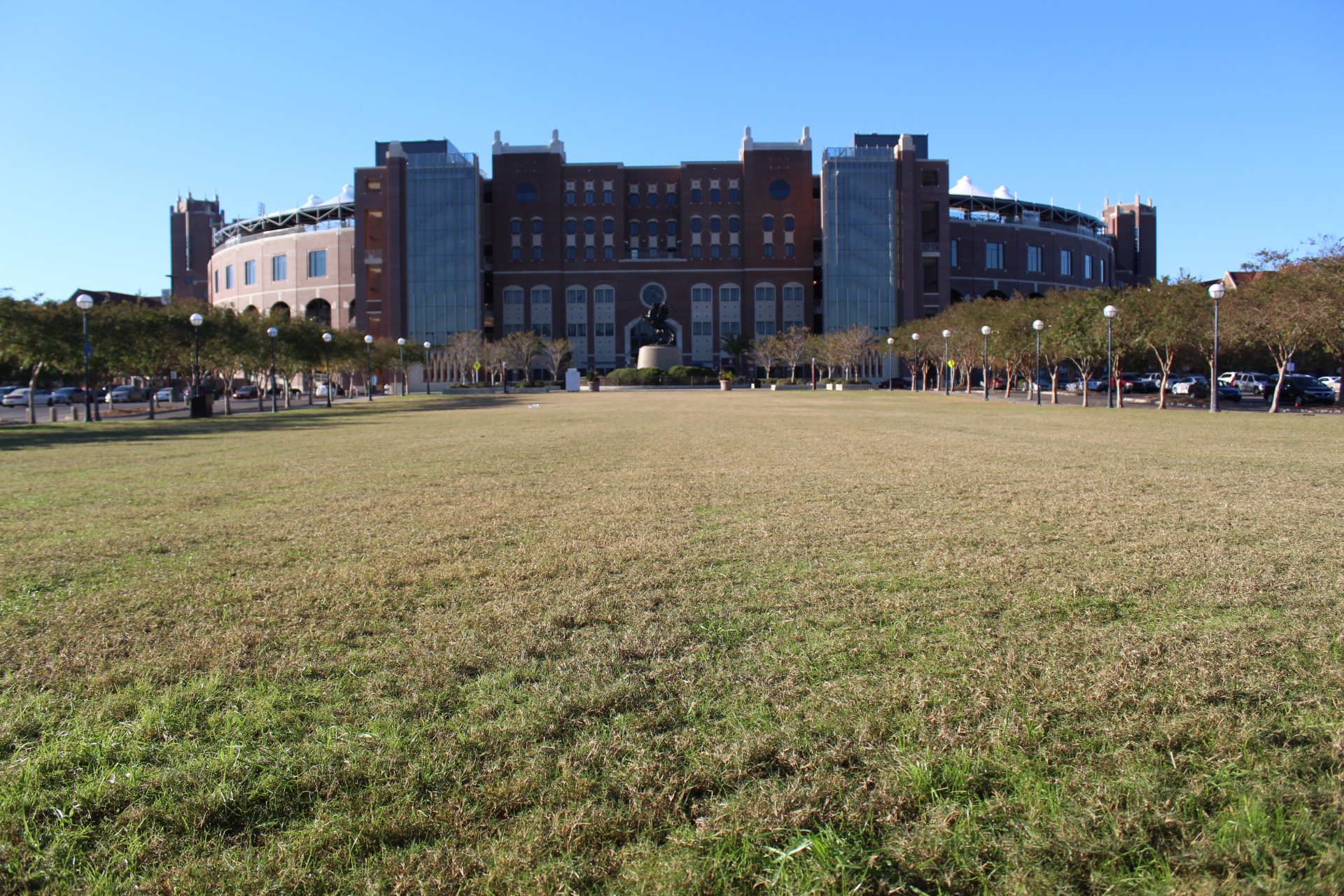
The State University System's institutions vary enormously in scale and setting. The University of Florida in Gainesville and Florida State University in Tallahassee are large residential campuses that function as small cities. The University of Central Florida in Orlando is among the largest universities in the country by enrollment.
Others operate very differently. Florida International University and the University of South Florida serve large commuter populations across multiple campuses. New College of Florida in Sarasota enrolls fewer than a thousand students. Florida A&M University, Florida Atlantic University, the University of North Florida, the University of West Florida and Florida Gulf Coast University each have distinct profiles.
A regulation designed for consistency has to accommodate that range. What constitutes an adequate threat management team at a university with 70,000 students and a sworn police force differs from what is adequate at an institution with fewer than a thousand students and a contracted security arrangement.
Implementation cost is a real consideration. Universities absorbing a January 2027 compliance deadline will be building or expanding programs within existing budgets unless the Legislature appropriates specific funding, and campus safety competes with every other institutional priority for the same dollars.
A busy period for the Board of Governors
The safety regulation has moved through the board during a stretch of consequential higher education policy decisions. On September 3, the Board of Governors voted unanimously to bar students who are present in the United States unlawfully from initial enrollment at Florida's 12 public universities beginning in the 2027-28 academic year.
The Florida Department of Education has separately proposed statewide guidelines for artificial intelligence use in public colleges and universities, and the State Board of Education took up AI policies for Florida College System institutions at its September 16 meeting.
These are unrelated policies that happen to be moving simultaneously, and the volume of regulatory activity has drawn attention to the board's expanding role in setting system-wide policy where institutions previously exercised more independent judgment.
The centralizing direction is consistent across the items. Whether the subject is safety protocols, admissions eligibility or technology use, the pattern has been toward uniform system-wide regulation rather than institutional discretion.
What students and families should know
Families evaluating Florida public universities can ask specific questions now rather than waiting for the regulation to take effect. Does the campus have a threat assessment team, and how is a concern reported? What is the current wait time for a first counseling appointment? Is there a sworn police department or a contracted security provider?
Campus crime statistics are already public. The federal Clery Act requires every institution receiving federal financial aid to publish an annual security report with three years of crime statistics, a description of security policies and emergency response procedures. Those reports are available on each university's website.
Emergency notification enrollment is worth confirming at the start of each term. Most Florida campuses operate text and email alert systems, and students frequently arrive enrolled through a default that uses an address or number they no longer check.
FortifyFL, the state's anonymous reporting application, remains available and covers concerns about potential threats. Its effectiveness depends on people using it, and awareness tends to be higher among students who came through Florida's K-12 system than among out-of-state or international students.
What's next
The regulation continues through the Board of Governors process, which involves notice, public comment and formal adoption. Universities face a January 2027 deadline for the threat management team requirement under the ARMOR Act timeline, which gives institutions roughly a year to build or document compliance.
Legislators return to Tallahassee for the 2027 regular session, and campus safety funding is among the items institutions will raise. Whether the Legislature appropriates money specifically for university threat assessment and mental health staffing will determine how much of the regulation translates into new capacity rather than reallocated effort.
The armed guardian provision is likely to generate the most public comment during the adoption process, and how it is ultimately structured, whether as a requirement, an option for institutions, or a framework with local discretion, remains the open question.
Students, faculty and families who want to weigh in can follow the Board of Governors agenda and meeting materials, which are published in advance of each meeting and include the regulation text and any staff analysis accompanying it.
Spotted an issue with this article?
Have something to say about this story?
Write a letter to the editor