Florida's AI Data Center Boom Runs Into Local Resistance in More Than 20 Communities
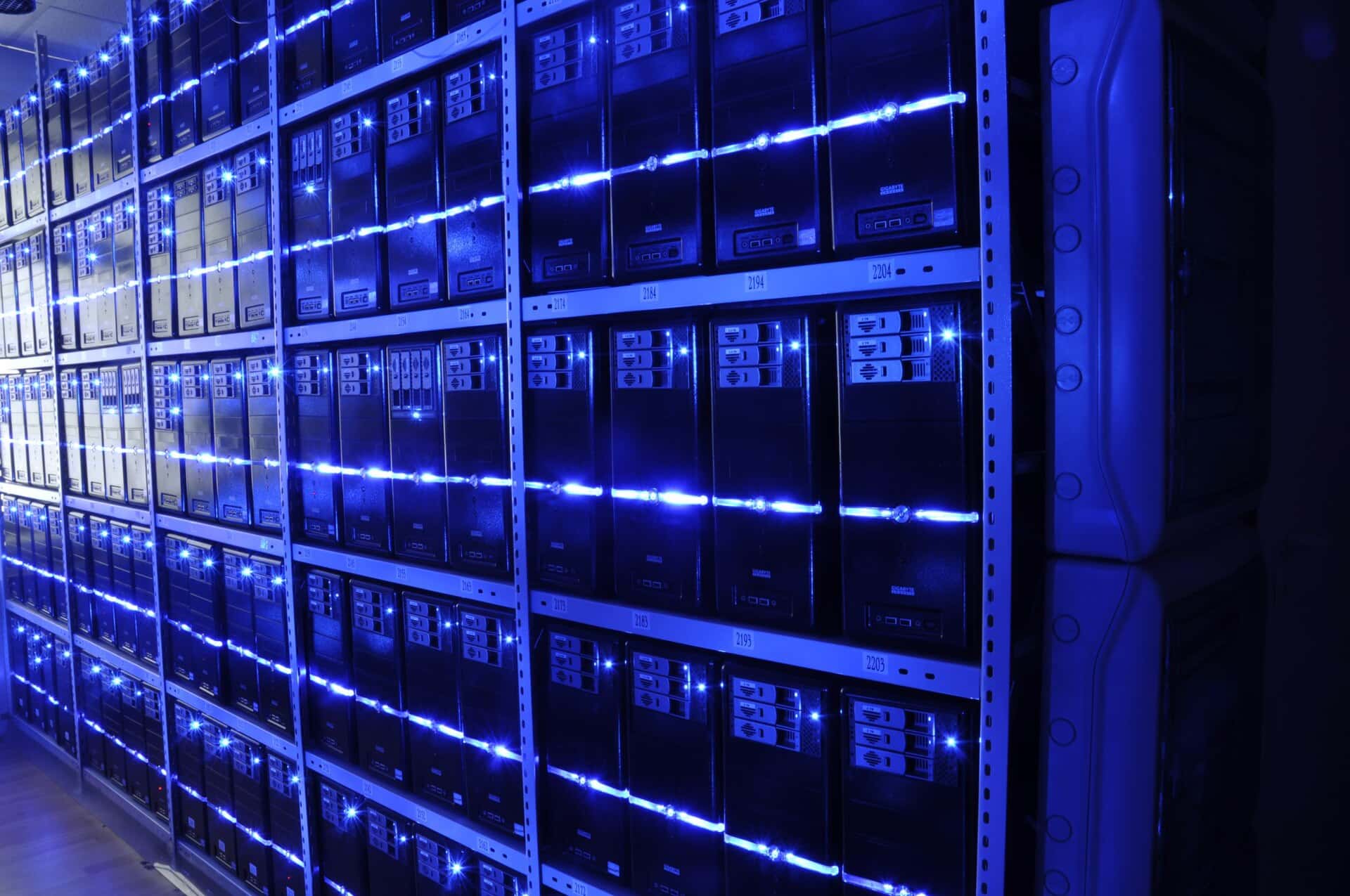
The rapid expansion of artificial intelligence data centers into Florida has collided with local government resistance, with more than 20 counties and cities across the state moving to reject, pause or restrict proposed projects over concerns about electricity demand, water consumption and the effect on residential utility bills.
The friction has escalated from a series of isolated zoning disputes into a statewide policy question, one that surfaced in the Republican and Democratic primaries for governor ahead of Tuesday's election and prompted legislation in Tallahassee earlier this year.
The underlying tension is straightforward. Hyperscale data centers require enormous, continuous power and, for many cooling designs, substantial water. Florida's population growth already strains both. Local officials asked to approve a facility have found themselves weighing tax base and construction jobs against infrastructure demands that fall on ratepayers and municipal water systems.
How the opposition organized
The pattern has repeated across the state. A developer approaches a county or city with a proposal, often under a code name and with limited public detail about the eventual tenant. Residents learn about the scale of the power and water requirements during the permitting process. Public comment periods fill. Officials pause or reject the application.
Nassau County, in Northeast Florida, became one of the more visible test cases. A proposed hyperscale facility drew organized opposition from residents who mobilized online and at public meetings, and local officials placed the project on hold. A separate proposal known publicly as Project Tango generated extended debate over what would be among Florida's first hyperscale AI data centers.
Polling has reflected the local sentiment. A University of North Florida survey found that more than two-thirds of Florida voters did not want a data center located in their own area, a figure that spans partisan lines and helps explain why the issue has proven awkward for candidates in both parties.
The objections cluster around a few themes: the possibility that grid expansion costs get spread across all utility customers, the strain on regional water supply in a state already managing aquifer withdrawals, noise from cooling equipment and backup generators, and the limited number of permanent jobs a completed facility supports relative to its physical footprint.
What the Legislature did
Lawmakers addressed part of the cost question during the 2026 regular session. Gov. Ron DeSantis signed Senate Bill 484 in May 2026, legislation designed to require that AI data centers pay the full cost of the electricity infrastructure they require.
The law is aimed at cost shifting. When a large industrial customer connects to the grid, the utility typically must build new generation capacity, substations and transmission lines. If those capital costs enter the general rate base, they are recovered from all customers, including residential ratepayers and small businesses that receive no benefit from the new load.
SB 484 is intended to prevent that outcome by keeping the infrastructure cost with the customer that creates the need. Florida Power and Light has stated publicly that data center companies fund the full cost of new power generation required to serve them.
The law addresses electricity but does not resolve the local land use questions, the water supply questions or the noise and siting concerns that have driven most of the county-level opposition. Those remain matters of local zoning authority, which is why the fight has played out county by county rather than in Tallahassee.
The issue in the governor's race
Data center policy became an unexpected point of differentiation among gubernatorial candidates ahead of Tuesday's primary.
Democratic candidate David Jolly has supported a moratorium on new data center construction pending a broader assessment of the state's power and water capacity.
Among Republicans, U.S. Rep. Byron Donalds has proposed requiring data centers to supply their own power and water rather than drawing on public utilities, an approach that would push developers toward on-site generation. Lt. Gov. Jay Collins has called for stricter oversight aimed specifically at preventing utility costs from reaching consumers.
The convergence across party lines on the cost-shifting question, if not on the remedy, reflects the polling. Utility bills are a cost-of-living issue in a state where summer air conditioning load already produces high summer electric bills, and candidates in both primaries have treated data center power demand as a consumer protection matter rather than purely an economic development one.
The case for the projects
Data center developers and some economic development officials argue that Florida risks losing a generational infrastructure investment to states with more accommodating permitting environments.
The facilities generate substantial property tax revenue relative to their service demands on schools and public safety, since they house equipment rather than residents. Construction phases employ large numbers of skilled trades workers over multi-year timelines. And proponents argue that the computing capacity itself has become economic infrastructure, comparable to ports or fiber networks, that anchors downstream industries.
Supporters also note that Florida's utilities have added significant solar generation capacity in recent years and that large industrial customers can be structured to support rather than strain grid investment when the contracts are written correctly, which is what SB 484 attempts to codify.
What it means for Floridians
For most residents, the practical stake is the monthly electric bill and the reliability of local water supply. SB 484 addresses the first directly, though its effectiveness will depend on how the Florida Public Service Commission applies it in individual rate proceedings.
Water is the less settled question. Cooling requirements vary substantially by design, and closed-loop and air-cooled systems consume far less water than evaporative designs. Local water management districts, not the state Legislature, hold permitting authority over large withdrawals, which places the decision with regional boards that receive less public attention than Tallahassee.
For residents of counties considering projects, the practical avenue remains local. Zoning hearings, comprehensive plan amendments and special exception applications all carry public comment requirements, and the pattern across the 20-plus jurisdictions that have paused projects suggests that organized local participation has been decisive.
What the facilities actually require
The scale of a hyperscale data center is difficult to convey without the numbers, and the numbers are what drive the local opposition.
A single large facility can require electrical capacity comparable to that consumed by a mid-sized city, delivered continuously rather than following the daily and seasonal curves that residential and commercial demand produce. That constant baseload is attractive to a utility in some respects, since it improves capacity factor, and problematic in others, since it requires firm generation available at all hours.
Water requirements depend on cooling design. Evaporative cooling systems, which are efficient in terms of electricity, consume substantial water that is lost to evaporation rather than returned. Closed-loop and air-cooled designs consume far less water but require more electricity to achieve the same cooling. The tradeoff between the two is the central engineering decision, and it determines which local resource a facility stresses.
Florida's specific vulnerability is the aquifer. The Floridan aquifer supplies drinking water across much of the state, and withdrawals are permitted by regional water management districts that have been tightening allocations as population growth has increased demand. Adding a large industrial withdrawal in a district already managing constrained supply is a genuine allocation question rather than a hypothetical one.
The jobs question
Local officials weighing these proposals confront a consistent asymmetry between construction employment and permanent employment.
Construction phases are substantial. Building a hyperscale facility employs large numbers of electricians, mechanical contractors, concrete workers and general trades over a multi-year period, and those are well-paid positions that support local contractors and suppliers.
Permanent employment is comparatively small. A completed facility runs largely automated, with staffing concentrated in security, facilities maintenance, network operations and a limited technical complement. The permanent headcount per acre is far lower than for a manufacturing plant or a distribution center of comparable footprint.
The offsetting argument is tax base. A facility filled with expensive equipment generates significant property tax revenue while placing minimal demand on schools, emergency medical services and the residential service load that housing development creates. For a county government, that ratio is favorable in a way that residential growth is not.
Whether that tradeoff is attractive depends heavily on the specific jurisdiction. A county with a thin commercial tax base and pressure on its budget evaluates the proposition differently than a county with substantial existing commercial value.
Where the decisions get made
The layered structure of Florida land use and utility regulation means no single body decides whether a data center gets built.
Local zoning authority sits with county commissions and city councils, which control land use designations, special exceptions, conditional use permits and site plan approval. That is where the public hearings occur and where organized opposition has been most effective.
Water withdrawal permits are issued by the regional water management districts, five agencies whose boards are appointed by the governor and whose meetings receive comparatively little public attention despite their authority over the state's water supply.
Electric utility matters run through the Florida Public Service Commission, which regulates investor-owned utilities including Florida Power and Light, Duke Energy Florida and Tampa Electric. The commission approves rate structures, reviews capacity planning and would apply the cost allocation requirements of Senate Bill 484 in individual proceedings.
Municipal utilities and rural electric cooperatives operate under different oversight, which means a data center connecting to a municipal system involves a different decision-making body than one connecting to an investor-owned utility.
What's next
The outcome of Tuesday's primary and the November general election will determine who oversees state energy and water policy for the next four years, including appointments to the Public Service Commission, which regulates investor-owned utilities and approves the rate structures that determine who pays for grid expansion.
Several projects remain in various stages of local review across the state, and additional counties are expected to take up moratoriums or restrictive ordinances during fall commission meetings. The Legislature returns for its 2027 regular session in the winter, where further data center legislation is considered likely given the volume of local activity.
Residents can track pending applications through county planning and zoning departments and can review utility rate filings through the Florida Public Service Commission's docket system.
Spotted an issue with this article?
Have something to say about this story?
Write a letter to the editorComments
No comments yet. Be the first to weigh in.
Related Coverage

USF and Tampa Electric Build Digital Twin of Power Grid With $3.8 Million Grant
1d ago
Orange County Moves Toward a One-Year Pause on AI Data Centers Over Water and Power Concerns
Sep 23

University of Florida Research Spending Hits Record $1.34 Billion as State Universities Expand Their Labs
Sep 21

Gene-Edited Rootstock Gives Florida Citrus Growers a New Weapon Against Greening
Sep 19