Florida's Jobless Rate Falls to 4.5% in August, Third Straight Monthly Decline
Florida's unemployment rate fell to 4.5 percent in August, the third consecutive month of a one-tenth of a percentage point decline, according to figures the Florida Department of Commerce released on September 18. The improvement follows nearly a year of rising joblessness in the state. Even with three months of declines, Florida's rate remains above the national average of 4.1 percent and half a percentage point higher than it was a year ago.
What the numbers show
The August figure represents about 502,000 unemployed Floridians out of a workforce of roughly 11.1 million. That is 12,000 fewer unemployed residents than in July, the change that drove the headline rate from 4.6 percent down to 4.5 percent.
The year-over-year comparison is less favorable. In August 2025, Florida's workforce stood at about 11.08 million with roughly 444,000 residents counted as unemployed. The state has added roughly 58,000 people to its unemployment count over twelve months while the workforce grew only modestly.
That combination is what makes the current trend worth watching rather than celebrating. Three consecutive monthly declines suggest the deterioration that ran through late 2025 and early 2026 has stopped. It does not mean the state has recovered the ground it lost.
The gap with the national rate is the other notable feature. Florida spent much of the post-pandemic period with unemployment below the national average, often by a meaningful margin. The state is now running four-tenths of a point above it, a reversal of the pattern that dominated recent years.
How the regions compare
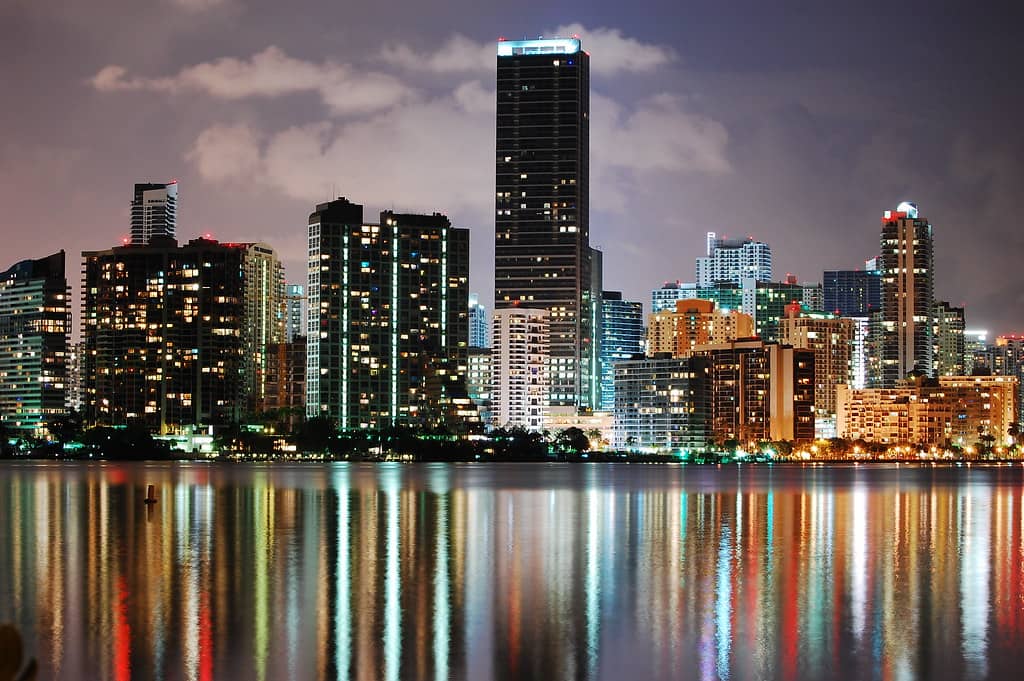
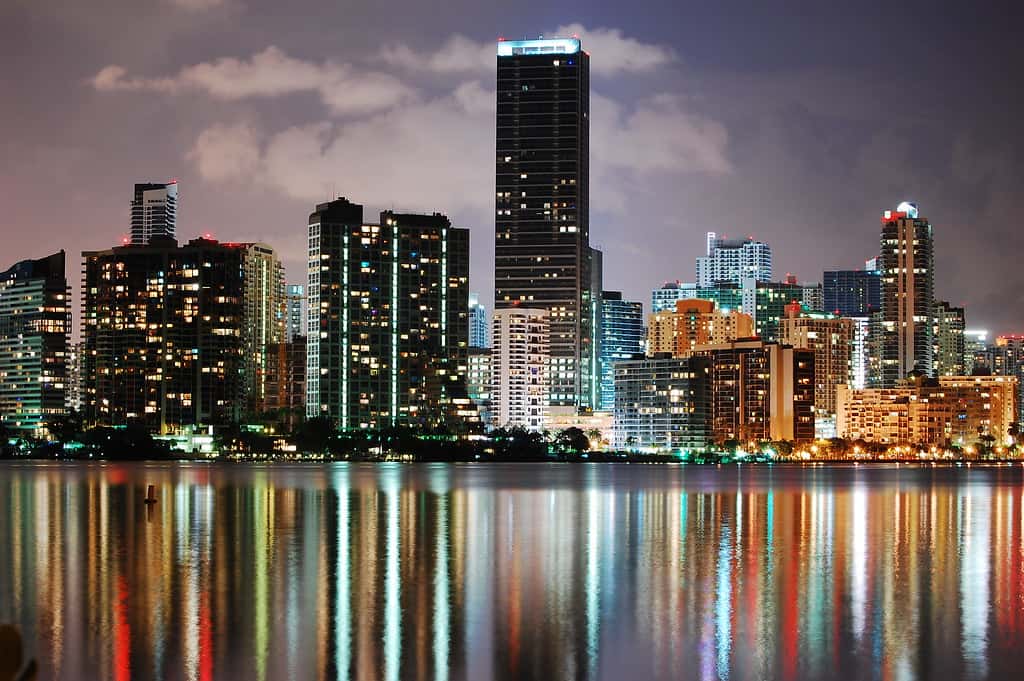
South Florida continues to post the state's strongest labor market. The Miami, Fort Lauderdale, and West Palm Beach metropolitan area registered 3.7 percent unemployment in August, unchanged from July and well below both the state and national figures.
That regional strength reflects the area's concentration in finance, trade, health care, and tourism infrastructure, sectors that have held up through the broader slowdown. The tri-county market also absorbed substantial in-migration during recent years, which expanded both the workforce and the employment base.
Jacksonville's rate also dipped in August, continuing a pattern seen across several Florida metros. The northeast Florida economy leans on logistics, port activity, financial services back-office operations, and a substantial military presence, a mix that has proved relatively stable.
Regional variation within Florida is substantial, and statewide figures can obscure it. Metro areas with diversified employment bases have generally fared better than regions dependent on construction and seasonal tourism, both of which are sensitive to interest rates and discretionary spending.
What is driving the trend
The reversal from rising to falling unemployment has coincided with a national environment of elevated but stabilizing conditions. The Federal Reserve raised its benchmark interest rate by a quarter point on September 16 to a target range of 3.75 to 4 percent, citing elevated inflation.
Higher rates work against Florida's interest-sensitive sectors. Construction, real estate, and the financial services tied to both have historically been among the state's largest employment drivers, and they respond quickly to borrowing costs. The 30-year fixed mortgage rate has climbed above 7 percent, which slows housing activity and the employment attached to it.
Florida's housing market showed signs of leveling off in August, with closed sales dipping slightly while tight inventory held prices firm. A market that is flat rather than falling supports existing construction and real estate employment without generating new hiring.
Tourism and hospitality present a mixed picture. Cruise activity has reached record levels, with PortMiami welcoming its 10 millionth passenger of fiscal year 2026 in September. Orlando's theme park market, by contrast, has shown softness that one major operator has publicly acknowledged.
The workforce participation question
A declining unemployment rate can reflect either more people finding work or fewer people looking. The August data shows the number of unemployed residents falling by 12,000 while the workforce total remained near 11.1 million, which points toward the first explanation rather than the second.
Florida's workforce has grown over the past year, from about 11.08 million to roughly 11.1 million. That growth is modest by the standards of the state's recent in-migration boom, and it suggests the flow of new arrivals into the labor force has slowed considerably.
Slower workforce growth cuts both ways for the unemployment rate. Fewer new job seekers makes the rate easier to bring down, but it also signals reduced economic momentum, since in-migration has been one of the primary engines of Florida demand for housing, retail, and services.
Demographic factors also matter in a state with Florida's age profile. Retirements remove people from the workforce entirely rather than moving them into the unemployed category, which affects both the participation rate and the denominator of the unemployment calculation.
What it means for Floridians
For workers currently employed, a stabilizing labor market reduces the risk of layoffs but does not necessarily improve bargaining power on wages. Employers facing softer demand have less pressure to raise pay to retain staff.
For job seekers, the picture varies sharply by sector. Skilled trades, logistics, health care support, and public safety continue to report hiring difficulty, which is part of why the state has moved to extend federal Workforce Pell Grant aid to short-term training in exactly those fields.
For households, the combination of a 4.5 percent unemployment rate and a 30-year mortgage above 7 percent defines the current affordability squeeze. Employment is reasonably secure for most workers, but the cost of entering the housing market has risen faster than wages.
The state's below-national performance also carries fiscal implications. Florida's revenue depends heavily on sales tax collections, which track consumer spending. A labor market that is stabilizing rather than expanding supports steady collections without the growth that funded recent budget surpluses.
Which sectors are hiring
The statewide rate masks considerable variation by industry. Health care and social assistance have continued adding positions across Florida markets, driven by an aging population that generates steady demand regardless of the interest rate environment.
Logistics and warehousing employment tracks port and freight volumes, which have held up in Florida's major trade corridors. Jacksonville, Tampa, and the Miami area all support substantial distribution employment tied to goods moving through the state's ports and along its interstate corridors.
Construction has been the sector most exposed to the rate environment. Residential building responds directly to mortgage rates, and commercial development responds to financing costs and vacancy trends. With the 30-year fixed mortgage above 7 percent, new residential starts face significant headwinds.
Leisure and hospitality remains Florida's largest private employment category and its most seasonal. Employment in the sector typically dips in late summer before recovering into the winter tourist season, which means August figures reflect the annual trough rather than underlying strength or weakness.
What employers are saying
Business groups have generally described the current market as one where finding skilled workers remains difficult even as overall hiring slows. That combination, elevated unemployment alongside unfilled skilled positions, points to a mismatch between available workers and available roles rather than a simple shortage of jobs.
State policy has moved in response. The recent launch of federal Workforce Pell Grant funding for short-term training in welding, commercial driving, aviation maintenance, firefighting, and emergency medical services targets exactly the credentialed occupations where employers report the most difficulty.
Whether that intervention moves the numbers will take time to establish. Training pipelines operate on timelines of months to years, and the effect of removing a financial barrier shows up in completion data well after the enrollment decision.
In the meantime, the labor market Florida employers face is one of stabilized but elevated unemployment, slower workforce growth than in recent years, and continued difficulty in the skilled roles that drive much of the state's industrial and public safety capacity.
Context for the national comparison
The national unemployment rate stood at 4.1 percent in August. Florida's 4.5 percent places it among the states running above that benchmark, a position it did not hold for most of the preceding three years.
Part of the shift reflects Florida's earlier outperformance rather than current weakness. The state's post-pandemic recovery was unusually fast, driven by in-migration and a rapid reopening, which produced rates well below the national figure. Convergence toward the national average was expected at some point.
The question is whether the current level represents a new equilibrium or a stop on the way somewhere else. Three consecutive monthly declines argue for stabilization. The half-point year-over-year increase argues that the state has not returned to its prior trajectory.
How the data is measured
Florida's monthly unemployment figures come from the federal Local Area Unemployment Statistics program, which combines household survey data with state unemployment insurance records and employment counts. The state agency publishes the results, but the methodology is federal and consistent across states.
The survey counts someone as unemployed only if they are without a job, available for work, and have actively looked for work in the prior four weeks. People who have stopped searching are not counted as unemployed, which is why the participation rate is a necessary companion to the headline number.
Monthly figures are seasonally adjusted to remove predictable annual patterns, which is what makes August comparable to July rather than to previous Augusts. Without that adjustment, Florida's heavy seasonal tourism employment would swamp the underlying signal.
Revisions are routine. Initial estimates are refined as more complete administrative data arrives, and a one-tenth of a point move can change in either direction on revision. Three consecutive declines are more meaningful than any single month precisely because revisions are less likely to reverse a sustained pattern.
What's next
The Florida Department of Commerce releases state employment data monthly, with the September figures expected in mid-October. A fourth consecutive decline would strengthen the case that the labor market has turned.
Federal policy will shape the next several months. A large majority of Federal Reserve officials favored at least one additional rate increase in 2026 according to the projections released with the September decision. Further tightening would extend pressure on Florida's rate-sensitive sectors.
Watch the regional breakdowns as much as the headline number. South Florida at 3.7 percent and weaker inland and coastal markets elsewhere describe two different economies inside one state figure, and the statewide rate will move with whichever diverges further.
Spotted an issue with this article?
Have something to say about this story?
Write a letter to the editor