Florida's Housing Market Levels Off in August as Sales Slip and Prices Hold Firm

Florida's housing market leveled off in August after nearly a full year of steadily improving sales, according to data released by Florida Realtors, with closed transactions slipping modestly while prices held firm on the strength of shrinking inventory. Closed sales of existing single-family homes statewide totaled 21,497, a decline of 1.4% from August 2025, and existing condo and townhouse sales totaled 7,291, down 1.8% year over year.
Prices moved in the opposite direction. The statewide median sale price for existing single-family homes reached $415,000 in August, up 1.2% from a year earlier, while the median for condo and townhouse units hit $298,000, a 2.8% increase. That combination, softer volume alongside firmer pricing, points to a market cooling at the margins rather than one under genuine distress.
The dynamic holding prices up is supply. Florida's housing inventory fell by double digits in August, tightening the pool of available listings and giving sellers enough leverage to resist meaningful price concessions even as buyer activity eased. In a market where inventory contracts faster than demand, prices tend to hold.
What the August numbers actually show
A 1.4% decline in single-family closings is a small move, and month-to-month readings in Florida real estate carry substantial noise. The more meaningful signal is the break in trend. Florida had posted improving year-over-year sales for close to a year heading into August, and the reversal ends that run.
Condo and townhouse sales, down 1.8%, continue to lag the single-family segment on a relative basis, a pattern that has persisted across Florida since the Surfside collapse reshaped the economics of older buildings. Structural reserve requirements and milestone inspection mandates have pushed assessments and monthly fees higher in aging inventory, which weighs on transaction volume independent of mortgage rates.
The price side deserves a caveat. Median sale price measures the midpoint of what actually sold, not the change in value of any particular home. When higher-priced properties make up a larger share of closings, the median rises even if individual home values are flat. In a thinning market, that composition effect can be significant.
The mortgage rate problem
Financing costs are the clearest drag on the market. Mortgage rates held between 6% and 7% through much of 2025 and into 2026, a range that never restored affordability but at least offered stability that buyers and sellers could plan around. That stability has now broken.
The Federal Reserve raised its benchmark rate by a quarter percentage point in mid-September to a target range of 3.75% to 4%, its first increase since 2023, in response to inflation driven substantially by rising oil prices. The 30-year fixed mortgage rate had already climbed above 7%, and one widely tracked measure put the average 30-year purchase rate at roughly 7.37% in mid-September.
Mortgage rates do not move mechanically with the federal funds rate, because they track long-term Treasury yields and lender spreads rather than the Fed's overnight target. But the direction of travel matters to buyer psychology. Rates now stand more than a full percentage point above where they were a year ago, and August's sales figures reflect a market absorbing that shift.
Why tight inventory is doing the heavy lifting
Inventory falling by double digits in August runs counter to the narrative that has dominated Florida housing coverage for the past two years, which emphasized rising listings and returning buyer leverage. The August contraction suggests sellers are stepping back rather than cutting prices.
The lock-in effect explains much of it. Homeowners holding mortgages originated at 3% or 4% face a punishing arithmetic in trading up, because moving means financing a new purchase at more than 7%. The higher rates go, the more powerful the incentive to stay put, which removes listings from the market at precisely the moment buyers need more of them.
That produces an unusual equilibrium: fewer buyers competing for fewer homes, with prices roughly stable and transaction volume grinding lower. It is not a crash dynamic, but it is not a healthy market either, because low turnover constrains mobility, reduces commission-dependent employment and starves local governments of transaction-based revenue.
How the carrying costs stack up
For Florida buyers, the mortgage payment is only part of the monthly obligation. Property insurance premiums add several hundred dollars a month for many households, and in condo buildings, association fees have risen sharply to fund structural reserves now required under state law.
The insurance picture has improved at the margin. Citizens Property Insurance Corporation approved rate recommendations reducing average personal lines rates for the first time since 2015, with a statewide average decrease of 2.6% and roughly three of five policyholders seeing an average premium reduction of 11.5%, or about $359. Citizens has also shed policies aggressively, falling from a peak above 1.4 million to a far smaller book.
Those reductions matter, but they arrive from a high base. A household facing a 7.37% mortgage rate, a five-figure annual insurance premium and rising association dues confronts a total monthly cost that bears little resemblance to the sticker price of the house. That gap between price and carrying cost is the defining feature of Florida housing in 2026.
Regional variation across the state
Statewide medians conceal enormous divergence. South Florida's market has behaved differently from the Gulf coast, with Miami-area brokerages reporting continued strength and a surge in luxury transactions into mid-September, a segment far less sensitive to mortgage rates because a large share of high-end buyers pay cash or finance through private arrangements.
Southwest Florida has faced a harder adjustment. Coastal Lee and Collier counties absorbed severe storm damage in recent years, and the resulting insurance repricing and elevated inventory left buyers with more negotiating room than almost anywhere else in the state. Condo inventory in that region has been especially slow to clear.
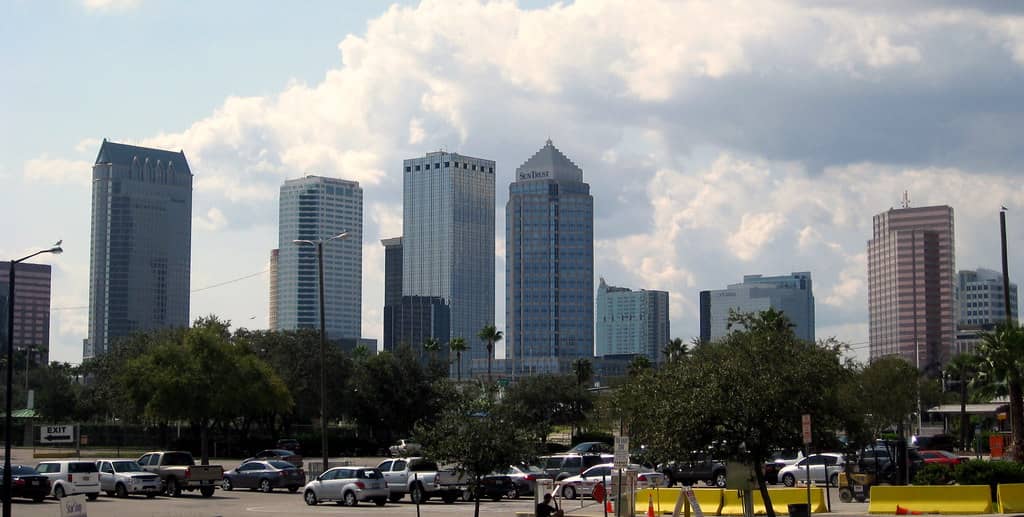
Central Florida and the Tampa Bay region occupy a middle position, supported by employment growth and in-migration that continues to generate genuine housing demand. Tampa Bay's for-sale inventory has trended differently from the statewide figure at various points, and the metro's price performance has generally tracked slightly ahead of the state median.
What it means for Floridians
For buyers, the August data cuts both ways. Fewer competing bidders reduces the likelihood of an escalation war, but shrinking inventory narrows the selection and firm prices mean the discount many buyers have waited for has not materialized. The affordability constraint is financing cost, not asking price.
For sellers, the message is that pricing discipline still works but patience is required. With inventory tight, well-priced homes in desirable submarkets continue to move, though the days-on-market figures have stretched from the frenzied pace of 2021 and 2022. Overpricing in a slower market produces stale listings rather than eventual bidding wars.
For existing owners not transacting, the picture is more comfortable. Prices holding at or slightly above year-ago levels preserves home equity, which for most Florida households is the largest single component of net worth. The risk to that equity comes less from the sales market than from insurance and assessment costs eroding what buyers can afford to pay.
The wider economic stakes
Real estate is disproportionately important to Florida's economy. Construction, brokerage, title work, mortgage lending, insurance and home improvement together account for a substantial share of state employment, and documentary stamp taxes on property transfers feed directly into state revenue.
A market where transaction volume declines while prices hold produces an awkward fiscal outcome. Assessed values, and therefore property tax collections, remain strong, but transaction-based revenue softens. That tension is playing out alongside a statewide debate over property tax relief, with a proposed constitutional amendment on the November ballot that would change how homeowners are taxed.
New construction provides a partial offset. Florida homebuilders have continued to deliver inventory and have used rate buydowns and incentives to move product, a tool existing-home sellers cannot match. That has shifted a share of demand toward new construction, which does not show up in the existing-home figures Florida Realtors reports.
Who is still buying Florida homes
In-migration remains the engine underneath the market, even in a slower year. Florida continues to draw domestic movers from higher-cost, higher-tax states, and those buyers arrive with different price references than existing residents do. A $415,000 median looks expensive against Florida wages and looks inexpensive against the equity a seller extracted from a home in the Northeast or on the West Coast, which is why out-of-state demand has cushioned the market through a rate shock that would have hit a purely local buyer pool much harder.
Cash purchases are a larger share of Florida transactions than they are nationally, which partially insulates the state from mortgage rate swings. Retirees downsizing from paid-off homes, international buyers in the South Florida market and investors acquiring rental inventory all transact without financing, and none of those cohorts responds to a quarter-point move in the federal funds rate. Their sensitivity runs to insurance availability and association fees instead.
First-time buyers are the group being squeezed hardest. A household financing a median-priced Florida home at above 7% faces a principal and interest obligation far beyond what the same purchase required three years ago, before insurance and taxes enter the calculation. State down payment assistance programs help at the margin, but they do not close a gap of that size, and the practical effect is that entry-level buyers are being pushed toward condos, older inventory or farther inland.
Investor activity has cooled from its peak but has not disappeared. Higher financing costs compress returns on leveraged rental acquisitions, and rising insurance premiums cut into net operating income on precisely the coastal properties investors favored. That has shifted investor attention inland and toward build-to-rent product, which competes with traditional buyers in a different part of the market than the beachfront condos that drew attention during the boom.
What's next
The near-term direction depends heavily on the Federal Reserve. Most committee members projected at least one additional rate increase in 2026, and if oil-driven inflation persists, mortgage rates are more likely to grind higher than to retreat. That would extend the lock-in dynamic and keep inventory constrained.
Seasonality will complicate the reading of the next few months of data. Florida's market typically slows through the fall before snowbird season revives activity in January, so year-over-year comparisons will remain the more reliable gauge than month-to-month movement.
Two policy variables sit in the background. The National Flood Insurance Program's authorization expires on September 30, and a lapse would disrupt closings on properties that require flood coverage to obtain financing. The November ballot question on property taxes would, if approved, alter the ownership math for homesteaded Floridians. Either outcome would shape the market more than another quarter point on the federal funds rate.
Spotted an issue with this article?
Have something to say about this story?
Write a letter to the editor