FEMA Approves $37 Million More for Florida Recovery, Pushing the Year's Total Past $835 Million
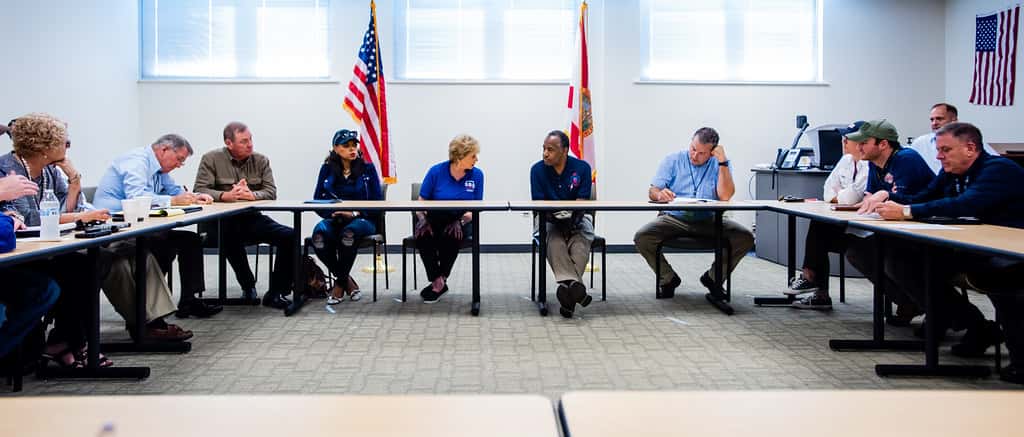
The Federal Emergency Management Agency approved more than $37.1 million in disaster recovery funding for Florida in September, bringing the total approved since January 20 to more than $835 million. The money supports nearly 3,200 state and local recovery projects through the state-managed Public Assistance program, addressing damage from multiple federally declared disasters including Hurricanes Ian and Milton. September's grants included $10 million for statewide debris removal tied to Hurricane Ian and $1.6 million for the Pasco County Mosquito Control District following Hurricane Milton.
What the funding covers
The Public Assistance program reimburses state, tribal, territorial, and local governments, along with certain nonprofit organizations, for disaster response and recovery work. FEMA reimburses at no less than a 75 percent federal share.
Eligible costs span a wide range: debris removal, emergency protective measures, roads and bridges, water control facilities, public buildings and contents, public utilities, and parks and recreational facilities.
Nearly 3,200 projects have been approved across Florida through the program, a figure that reflects how many distinct pieces of work a major hurricane generates across a state's infrastructure.
The $10 million approved in September for disaster debris removal related to Hurricane Ian illustrates how long recovery timelines run. Ian made landfall years ago, and debris-related reimbursement continues.
Why recovery takes this long
Public Assistance operates on a reimbursement model rather than an advance. Local governments perform the work and then submit documentation to be reimbursed, which means every project moves through an administrative process after the physical work is done.
That process requires detailed cost documentation, contractor records, and verification that the work was disaster-related and met program requirements. Larger projects involve engineering review and environmental compliance.
The state manages the program in Florida, with the Florida Division of Emergency Management administering projects between FEMA and local applicants. That structure adds a coordination layer intended to provide local governments with support.
The practical consequence is that a county may front millions of dollars in recovery costs and wait months or years for reimbursement. Cash flow management becomes a significant issue for smaller jurisdictions.
The specific September grants
The $1.6 million for the Pasco County Mosquito Control District covers emergency protective measures following Hurricane Milton. Mosquito control is a standard post-hurricane public health function, since standing water after a storm creates breeding conditions.
Mosquito-borne disease risk rises measurably after major flooding events, which is why control districts ramp up operations and why those costs qualify as emergency protective measures under the program.
The $10 million for statewide debris removal related to Hurricane Ian reflects the largest single category of post-hurricane public expense. Vegetative debris, construction and demolition material, and damaged household goods all require collection and disposal.
Debris removal costs scale with storm severity and with the density of development in the affected area. Ian's impact across Southwest Florida generated volumes that took extended periods to clear.
Florida's disaster funding position
The $835 million approved since January 20 covers multiple federally declared disasters, with Hurricane Milton the most recent major event driving new project approvals.
Florida receives more federal disaster assistance than most states as a function of its hurricane exposure, coastline, and population. Multiple active disaster declarations can run simultaneously, each with its own project portfolio.
Earlier in 2026, FEMA announced separate tranches for Florida including $97 million in April, $90 million and $89 million in June, $47 million in July, and $55 million in July for community resilience and recovery.
Those announcements represent batches of project approvals rather than new appropriations. The money flows from the Disaster Relief Fund, which Congress appropriates and which supports declared disasters nationally.
The quiet season and recovery capacity
The 2026 Atlantic hurricane season has passed its climatological peak without producing a single hurricane, an unusual outcome that has practical consequences for recovery work.
A season without a Florida landfall means recovery contractors, engineering firms, and local public works departments can focus on completing outstanding projects rather than responding to new damage. Competition for the same limited contractor capacity is one of the factors that slows recovery after consecutive damaging seasons.
It also means the Disaster Relief Fund faces less new demand from Florida, which affects how quickly pending project approvals move through the system nationally.
The season runs through November 30, and forecasters have cautioned against treating a quiet peak as a guarantee of a quiet finish. Late-season systems in the western Caribbean and Gulf remain a standard feature of the climatology.
The federal funding backdrop
Federal operations are funded under a continuing resolution running through December 11, signed September 2. The measure holds spending at current levels while Congress negotiates full-year fiscal 2027 appropriations.
The Disaster Relief Fund operates somewhat differently from ordinary discretionary accounts, with supplemental appropriations frequently used when balances run low. That structure has generally insulated disaster assistance from routine funding fights.
The December 11 deadline carries a separate Florida concern. The National Flood Insurance Program's authority expires the same day, and a lapse would halt new and renewal flood policies in a state that holds more of them than any other.
Public Assistance reimbursement and flood insurance are distinct programs serving different purposes. Public Assistance reimburses governments for public infrastructure; flood insurance indemnifies private property owners.
What it means for local governments
For Florida counties and municipalities still completing recovery work, continued project approvals determine cash flow and the pace at which remaining repairs can proceed.
The 75 percent minimum federal share means local governments and the state cover the remainder. That non-federal share is a real budget line for jurisdictions that absorbed substantial damage.
Mitigation funding, which pays for work that reduces future damage rather than restoring what existed, is available through related programs. Building back with improvements reduces future claims but requires additional documentation and approval.
Smaller jurisdictions face the greatest administrative burden relative to capacity. A small city's public works department managing dozens of Public Assistance projects is performing work that larger counties handle with dedicated grant staff.
What it means for residents
Public Assistance does not pay individuals. Homeowners and renters seeking federal assistance after a disaster apply through Individual Assistance, a separate program with different eligibility rules and much lower dollar limits.
The visible effect of Public Assistance for residents is infrastructure: repaired roads and bridges, restored public buildings, functioning utilities, and cleared debris. Those outcomes arrive on timelines set by the reimbursement process.
Residents in communities still completing recovery years after a storm are often frustrated by the pace, and the administrative structure is a substantial part of the explanation.
How a project moves through the system
Every Public Assistance project begins with damage identification and documentation, usually during joint inspections involving FEMA, state, and local personnel. That process establishes what was damaged, what it will cost to address, and whether the work qualifies under program rules.
Projects are then categorized. Emergency work, covering debris removal and protective measures, moves faster because it must be performed immediately. Permanent work, covering roads, buildings, and utilities, involves engineering design and often environmental and historic preservation review.
Procurement rules apply throughout. Local governments must follow federal procurement standards when hiring contractors for reimbursable work, and failures on that front are among the most common reasons reimbursement is later reduced or denied.
Closeout is the final stage, when final costs are reconciled against approved amounts. Projects can remain open for years, and audits after closeout can still result in funds being recovered if documentation proves insufficient.
Mitigation versus restoration
Public Assistance ordinarily pays to restore damaged facilities to their pre-disaster condition and capacity. Building something better or stronger generally requires separate mitigation funding, available through related programs.
That distinction produces a recurring tension. Restoring a facility exactly as it was means rebuilding something a storm already proved vulnerable, which invites the same damage in the next event.
Hazard mitigation programs exist precisely to address that, funding elevation, hardening, relocation, and drainage improvements. They require additional applications, cost-benefit analysis, and approval processes that extend timelines further.
For Florida communities that have absorbed damage from multiple storms, the calculation is straightforward in principle and difficult in practice: mitigation costs more up front and less over time, and the up-front money is the constraint.
Individual assistance and the coverage gap
Residents frequently conflate the Public Assistance totals announced in releases like September's with help available to households. They are separate programs. Individual Assistance serves households and carries dollar limits far below what the public infrastructure numbers suggest.
Individual Assistance is also explicitly not a substitute for insurance. It is designed to address urgent, unmet needs, and awards are typically a fraction of what a household loses in a major event.
That structure is why flood insurance matters so much in Florida. Standard homeowners policies exclude flood damage, the National Flood Insurance Program is the primary source of coverage, and its authority expires December 11 absent congressional action.
A household without flood coverage that sustains flood damage faces a gap that no federal disaster program is designed to fill. The Public Assistance figures describe money flowing to governments, not to the people living in the affected communities.
What's next
FEMA continues to approve Public Assistance projects for Florida on a rolling basis, and the Florida Division of Emergency Management administers the program between the federal agency and local applicants.
Recovery from Hurricanes Ian and Milton will continue generating project approvals for years. The program has no fixed end date for a given disaster, though deadlines apply to individual project submissions.
Whether the 2026 season ends without a Florida landfall will determine whether the state's recovery capacity stays focused on existing work or is redirected to new damage. Ten weeks remain in the season.
Spotted an issue with this article?
Have something to say about this story?
Write a letter to the editor