Florida's Space Coast Heads Into a Busy Fall as Artemis Hardware Stacks at Kennedy
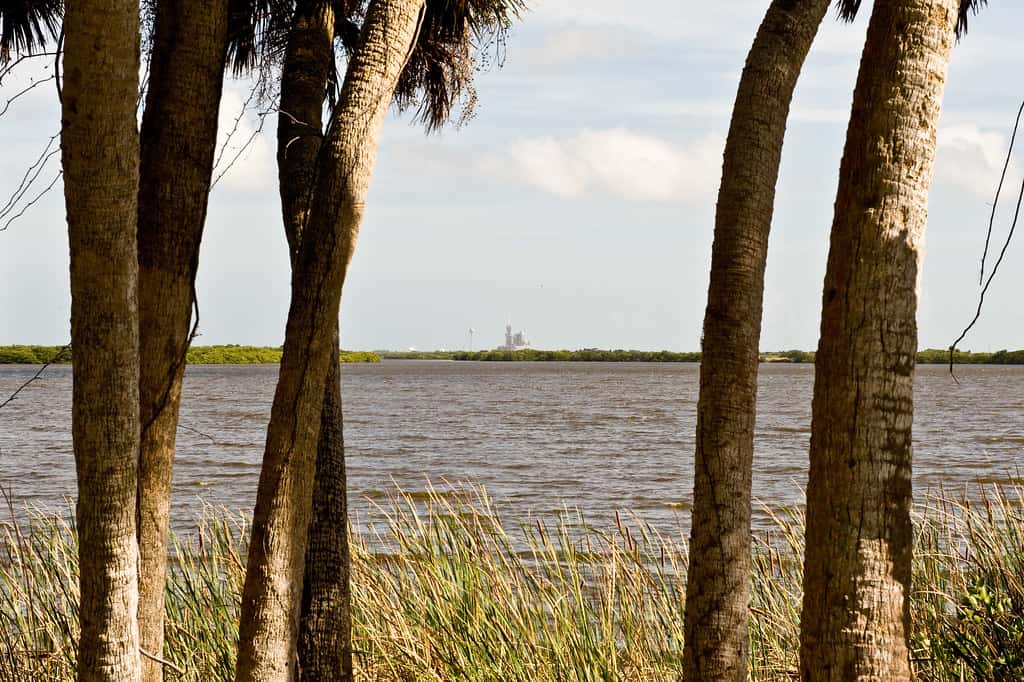
Florida's Space Coast is heading into a fall schedule that keeps Brevard County at the center of American spaceflight, with missions lining up from multiple launch providers at Cape Canaveral Space Force Station while NASA continues preparing hardware at Kennedy Space Center for the next phase of its lunar program.
Blue Origin has a New Glenn mission carrying a Blue Moon lunar lander pathfinder scheduled from Launch Complex 36, and United Launch Alliance has a Vulcan mission scheduled from the Cape carrying satellites for Amazon's broadband constellation. Launch schedules in this industry shift routinely, and both dates are subject to change on short notice.
The activity reflects how thoroughly the Space Coast's launch business has diversified. For decades the region's cadence depended on a small number of government programs. It now supports multiple commercial providers flying government, commercial and national security missions from adjacent pads.
Where Artemis stands
NASA flew Artemis II in April, sending astronauts Reid Wiseman, Christina Koch and Victor Glover along with Canadian astronaut Jeremy Hansen on a flight around the Moon, the first crewed lunar mission since Apollo 17 in 1972. The mission lasted close to ten days.
Hardware for the following mission has been moving into Kennedy Space Center through the year, with the Pegasus barge delivering the upper portion of the Space Launch System core stage for Artemis III to the turn basin wharf at Launch Complex 39 in April.
NASA has since updated the Artemis architecture and added a mission to the sequence. Under that revision, Artemis III is now targeted for 2027 as a mission testing systems and operational capability in low Earth orbit, with a lunar landing planned for Artemis IV in 2028, according to the agency's announcement describing the change.
Architecture revisions of that kind are common in large spaceflight programs and generally reflect the readiness of components developed by different contractors on different schedules. The landing system and the spacesuits are the elements that have historically paced the lunar landing timeline.
Why this matters to Brevard County
Brevard County's economy is built on the space program to a degree unusual for any American county. Kennedy Space Center, Cape Canaveral Space Force Station and Patrick Space Force Base together employ thousands directly, and the contractor and supplier base around them employs many times more.
The county has been through the consequences of dependence on a single program. The retirement of the space shuttle in 2011 eliminated thousands of jobs and produced a regional downturn that took years to work through, a period residents still reference when launch cadence is discussed.
What changed since is diversification. Commercial launch operations, multiple providers, and a mix of government and private customers mean the region's activity no longer rises and falls with a single NASA program. That structural change is the most significant economic development in the county since the shuttle era ended.
Launch cadence also drives tourism. Visitors plan trips around launch windows, hotels and restaurants along the coast fill for major missions, and the Kennedy Space Center visitor complex draws substantial attendance year round.
The providers operating from the Cape
SpaceX conducts the largest share of launches from the Space Coast, flying Falcon 9 missions at a cadence that would have been considered implausible a decade ago, carrying satellites for its own broadband constellation alongside commercial, NASA and national security payloads.
United Launch Alliance operates Vulcan, its newer vehicle, from Cape Canaveral, with a manifest that includes national security missions and commercial satellite deployments including Amazon's broadband constellation.
Blue Origin flies New Glenn from Launch Complex 36, a pad the company rebuilt for the vehicle. The company's Blue Moon lunar lander program connects it directly to NASA's Artemis architecture, and pathfinder missions are the step that precedes operational lunar delivery.
NASA's own Space Launch System flies from Launch Complex 39B at Kennedy, using the infrastructure originally built for Apollo and adapted across program generations.
The infrastructure question
Supporting this level of activity requires ground infrastructure that has been under sustained expansion. Launch pads, integration facilities, propellant systems, roads and the range safety apparatus that governs when launches may proceed all have finite capacity.
Space Florida, the state's aerospace development authority, has worked on infrastructure investment alongside federal agencies, and the state has treated launch capacity as economic development in the same category as port and airport capacity.
Range scheduling has become a genuine constraint. Multiple providers launching from adjacent pads require coordination of airspace, maritime exclusion zones and range safety resources, and the Space Force has invested in modernizing that apparatus to support higher cadence.
Local infrastructure faces its own pressures. Road capacity on launch days, housing for a growing workforce and the general strain of population growth in Brevard County are recurring subjects in county government.
What a launch means locally
For residents of Brevard and surrounding counties, launches have become routine in a way that would astonish earlier generations. A Falcon 9 ascent is visible across much of Central Florida, and sonic booms from returning boosters are a regular feature of life along the coast.
Major missions remain events. Crewed launches and first flights of new vehicles draw crowds to causeways and beaches, fill hotels and generate the kind of regional attention that routine satellite deployments do not.
The Kennedy Space Center visitor complex offers viewing opportunities for many launches, and public viewing areas along the Indian River and on Cocoa Beach serve visitors without tickets. Launch timing shifts frequently, which is the first thing anyone planning a trip around one learns.
The workforce pipeline
The industry's growth has created sustained demand for technical workers, and Florida institutions have positioned programs to supply it. Embry-Riddle Aeronautical University in Daytona Beach, the Florida Institute of Technology in Melbourne, and engineering programs at the state universities feed into the regional workforce.
Demand extends well beyond engineering degrees. Technicians, machinists, welders, quality inspectors, avionics specialists and propellant handlers are all in demand, and those roles are reached through technical programs and apprenticeships rather than four year degrees.
Eastern Florida State College and regional technical centers have built programs aimed at those roles, and the recent federal extension of Pell Grant eligibility to short term workforce programs may expand access to them.
The national stakes
American spaceflight policy has increasingly relied on commercial providers for capability that the government previously developed in house, and the Artemis architecture depends on commercial landers to deliver crew to the lunar surface.
That structure spreads risk and reduces cost but introduces dependencies. A lander that is not ready delays the mission regardless of whether the rocket and spacecraft are. The architecture revision that moved the landing to Artemis IV reflects exactly that kind of dependency.
International context matters as well. Other national space programs have stated lunar ambitions with their own timelines, and the pace of the American program has been discussed in those terms in Washington.
Why launch dates move
Anyone who follows the Space Coast learns quickly that a scheduled launch date is a target rather than a commitment, and the reasons are worth understanding for anyone planning around one.
Weather is the most common cause of delay, and the criteria are stricter than intuition suggests. Rules governing launch through or near certain cloud types exist because of lightning risk, and conditions that look acceptable from the ground can violate them. Upper level winds and conditions at downrange abort locations matter as well.
Technical issues account for many scrubs. Modern launch vehicles run automated checks through the countdown, and a sensor reading outside expected bounds stops the count regardless of whether the underlying condition is a genuine problem. Providers generally recycle to a later attempt rather than accept risk.
Range availability is the third factor. With multiple providers launching from adjacent pads, scheduling conflicts and range resource constraints can move a window even when the vehicle and the weather cooperate.
What launch cadence does to a county
The growth in launch activity has produced effects across Brevard County that extend past the aerospace workforce. Population growth has been substantial, housing costs have risen, and school enrollment and road capacity have become recurring subjects in county planning.
The composition of that growth matters economically. Aerospace and defense employment pays well above regional medians, which supports local business and tax base but also contributes to housing pressure for residents working in other sectors.
Environmental questions attend the growth as well. Launch operations occur adjacent to the Merritt Island National Wildlife Refuge and Canaveral National Seashore, and the coexistence of a major launch complex with protected habitat has required ongoing management that is unusual among industrial sites.
The commercial shift and what it replaced
The arrangement that governs American spaceflight today would have been unrecognizable in the shuttle era. NASA then designed, owned and operated its launch vehicles, with contractors building to government specification. Today the agency purchases transportation services from companies that own their vehicles and sell the same capability to other customers.
The shift was driven by cost. Government owned systems carried fixed costs that continued regardless of flight rate, while commercial providers spread development expense across a customer base that includes satellite operators, foreign governments and defense agencies alongside NASA.
The tradeoff is control. NASA specifies requirements and conducts oversight but does not direct engineering decisions the way it once did, and schedule depends on provider performance the agency cannot fully command.
For Florida, the practical result has been favorable. A single customer purchasing a handful of flights a year supported far less local activity than a competitive market flying at a cadence measured in dozens of missions annually.
What's next
The near term Space Coast schedule includes the New Glenn and Vulcan missions along with the continuing cadence of Falcon 9 flights. Launch dates in this industry are provisional until very close to the window, and weather, technical issues and range availability all move them routinely.
Artemis III preparation continues at Kennedy, with core stage processing, integration and eventual stacking in the Vehicle Assembly Building representing the visible milestones over the coming year.
For Brevard County, the practical significance is that the level of activity that rebuilt the regional economy after the shuttle era appears set to continue, supported by a customer base broad enough that no single program cancellation would repeat 2011.
Spotted an issue with this article?
Have something to say about this story?
Write a letter to the editor