Four Men Convicted in Julio Foolio Murder Set for Sentencing Monday in Tampa
Four men convicted in the 2024 murder of Jacksonville rapper Julio Foolio are scheduled to be formally sentenced Monday, June 22, 2026, at 1:30 p.m. in Tampa, closing one of the most closely watched criminal cases in recent Hillsborough County history. The defendants, Isaiah Chance, 23, Sean Gathright, 20, Rashad Murphy, 32, and Davion Murphy, 29, were found guilty of first-degree premeditated murder on May 8, 2026, after a jury deliberated for about eight hours. A week later, on May 15, the same jury recommended life in prison without the possibility of parole rather than the death penalty. Monday's hearing represents the final step in the trial, transforming the jury's verdict and recommendation into a formal sentence imposed by the court. The case has drawn national attention because of the prominence of the victim, whose real name was Charles Andrew Jones II, and the prosecution's portrayal of the killing as a coordinated, gang-related attack.
Jones was shot and killed on June 23, 2024, in a parking lot at a Home2 Suites in Tampa, a killing that occurred almost exactly two years before the scheduled sentencing. The proximity of the dates adds a somber resonance to Monday's hearing, which falls just before the second anniversary of the rapper's death. For followers of the case, the sentencing marks a significant moment of accountability in the courts.
The case has moved through the Hillsborough County court system over the course of a lengthy trial, culminating in the May verdict and the jury's subsequent recommendation. With the convictions secured, the focus now shifts to the formal imposition of sentence and the conclusion of the trial phase. What comes next is the sentencing hearing itself and the formal entry of the sentences against the four men.
The Killing of Julio Foolio
Charles Andrew Jones II, known professionally as Julio Foolio, was a Jacksonville rapper whose music and persona earned him a substantial following. His death on June 23, 2024, in Tampa drew immediate attention given his profile in the music world. According to prosecutors, he was shot and killed in a parking lot at a Home2 Suites in the city.
Prosecutors described the killing as a coordinated, gang-related attack, a characterization that shaped the case as it moved toward trial. That framing positioned the shooting not as a random act but as a planned assault, an allegation that the jury ultimately accepted in returning verdicts of first-degree premeditated murder.
The location of the killing, a hotel parking lot in Tampa, placed the case within Hillsborough County's jurisdiction even though Jones was based in Jacksonville. The crossing of those geographic lines reflected the mobility of the individuals involved and the reach of the case across Florida.
Jones's death reverberated beyond the courtroom, touching a community of fans and observers who followed the proceedings closely. The case became a focal point for discussions about violence in the music world and the broader toll of gang-related crime, even as the legal process moved methodically toward its conclusion.
The setting of the killing, a hotel parking lot in a busy Florida city, also drew attention to the vulnerability of public spaces. Prosecutors built their case around the theory that the attack was deliberate and organized, a portrayal that distinguished it from spontaneous violence and shaped the charges brought against the defendants. That framing would prove central as the case advanced toward trial in Hillsborough County.
The Trial and the Verdict
The trial in Tampa brought the case before a Hillsborough County jury, which heard the prosecution's account of a coordinated attack and the defense's challenges to that account. After the presentation of evidence and arguments, the jury retired to deliberate on the charges against the four defendants.
On May 8, 2026, after about eight hours of deliberation, the jury found all four men guilty of first-degree premeditated murder. The verdict represented a comprehensive outcome for the prosecution, with each defendant convicted on the most serious charge available. First-degree premeditated murder carries the gravest penalties under Florida law, setting the stage for the penalty phase that followed.
The defendants, Isaiah Chance, Sean Gathright, Rashad Murphy and Davion Murphy, ranged in age from 20 to 32 at the time of the verdict. Their convictions concluded the guilt phase of the trial and shifted the proceedings to the question of punishment, a separate stage in capital cases under Florida law.
The convictions marked a turning point in a case that had drawn sustained attention. With guilt established, the jury's focus turned to the weighty decision of whether to recommend the death penalty or life imprisonment, a determination that would shape the sentences the court ultimately imposed.
The roughly eight-hour deliberation reflected the care with which the jury approached its task. In a case involving four defendants and the most serious charge in Florida law, jurors were required to consider the evidence against each man and reach a unanimous conclusion on the question of guilt. Their decision to convict all four on first-degree premeditated murder underscored the strength the panel found in the prosecution's presentation.
The Penalty Phase and Life Recommendation
Following the guilty verdicts, the case entered the penalty phase, during which the jury considered whether to recommend the death penalty or life in prison without the possibility of parole. Florida law provides for this separate phase in first-degree murder cases where the death penalty is a possible outcome, allowing the jury to weigh aggravating and mitigating factors.
On May 15, 2026, the jury returned its recommendation: life in prison without parole rather than the death penalty. The recommendation signaled the jury's judgment that, despite the gravity of the crime, the appropriate punishment was a life sentence. In Florida, the jury's recommendation carries significant weight in the court's sentencing decision.
A recommendation of life without parole means that, if imposed, the defendants would remain incarcerated for the rest of their lives with no possibility of release through parole. It represents the most severe penalty short of death and reflects a determination that the men should never return to the community.
The penalty-phase recommendation set the parameters for Monday's sentencing hearing. With the jury having recommended life without parole, the court's formal imposition of sentence will give legal effect to that recommendation, completing the trial process for the four men.
The Co-Defendant's Sentence
The case involved more than the four men convicted of murder. A co-defendant, Alicia Andrews, was sentenced separately on May 22, 2026, to 15 years in prison. Her sentencing, distinct from the proceedings against the four men, reflected a different resolution of her role in the case.
The 15-year sentence imposed on Andrews stands apart from the life recommendation for the four convicted of first-degree murder. The difference underscores how cases involving multiple defendants can produce varied outcomes depending on the charges, the evidence and the legal posture of each individual.
Andrews's sentencing on May 22 came shortly after the jury's life recommendation for the four men, placing her resolution within the same general timeframe as the broader case. The separate handling of her case illustrates the way the court system addresses co-defendants individually even within a single overarching prosecution.
With Andrews already sentenced, the remaining step in the case is the formal sentencing of the four men convicted of murder. Monday's hearing will address those four defendants, bringing the prosecution's central thread to its conclusion.
The Tampa and Hillsborough Courts
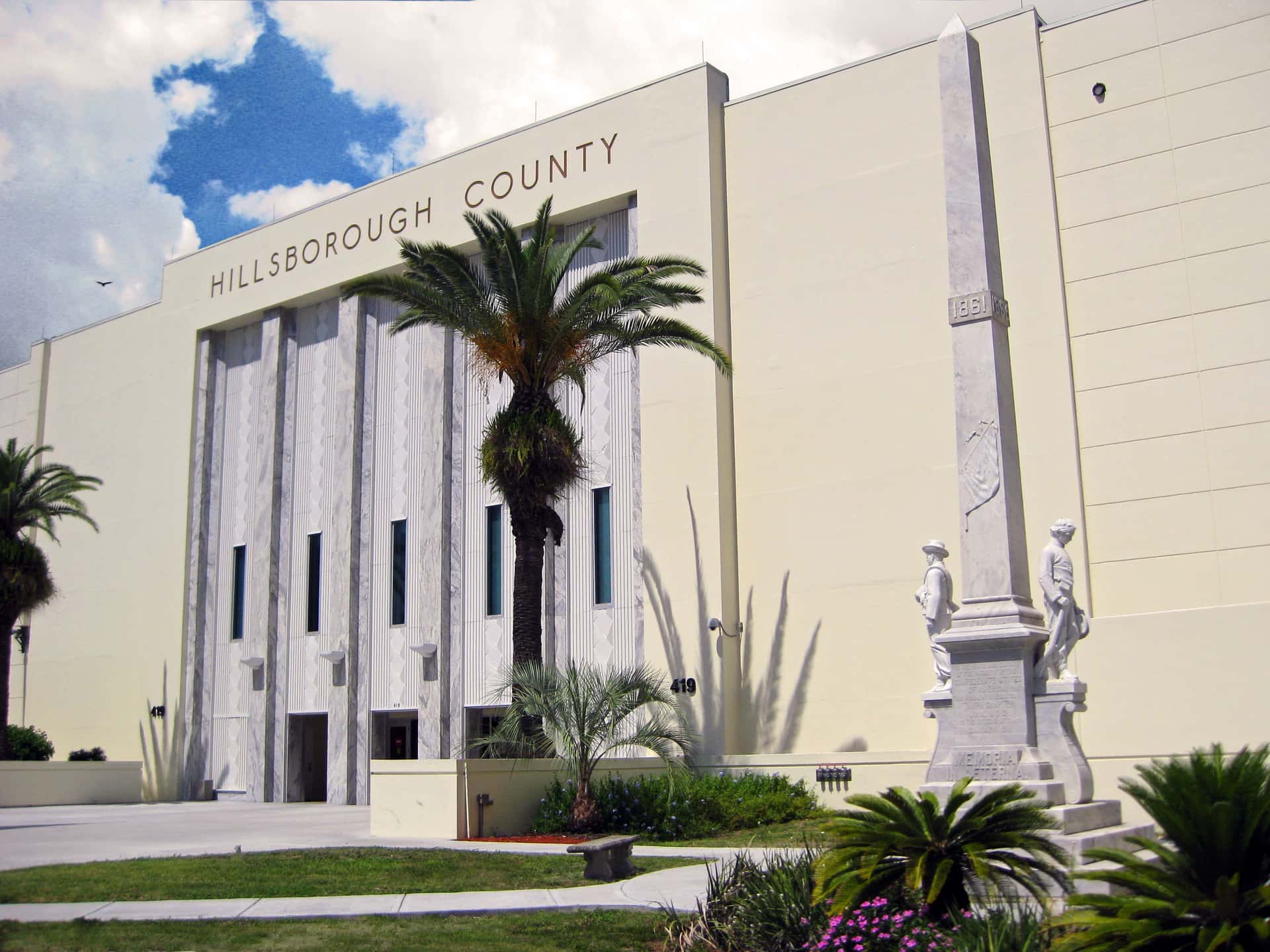
The case has unfolded within the Hillsborough County court system, which serves the Tampa Bay region as part of the Thirteenth Judicial Circuit. The courts there handle a high volume of criminal cases, including the most serious felonies, and the Julio Foolio prosecution stands among the more prominent matters to come before them.
Tampa's courthouse will host Monday's sentencing hearing, scheduled for 1:30 p.m. The formal sentencing of defendants convicted of first-degree murder follows a structured process in which the court imposes the sentences in accordance with the jury's verdict and recommendation and the requirements of Florida law.
The Hillsborough County State Attorney's office prosecuted the case, presenting the evidence that led to the convictions. The office's pursuit of first-degree murder charges and its handling of the penalty phase reflected the seriousness with which it treated the killing of a well-known artist within its jurisdiction.
The conclusion of the case in the Tampa courts will bring a measure of finality to a prosecution that has spanned years from the killing in June 2024 to the sentencing in June 2026. The proceedings have tested the local justice system's capacity to handle a high-profile, complex case from investigation through verdict and sentencing.
Cases of this magnitude place significant demands on the courts, from jury selection through the penalty phase and the management of multiple defendants. The Thirteenth Judicial Circuit's handling of the matter, from the trial in May to the sentencing in June, reflects the structured process Florida uses for its most serious prosecutions. The formal sentencing on Monday will represent the final courtroom step in that lengthy sequence, even as the case may continue through the appellate process that typically follows major convictions.
A High-Profile Case and Its Conclusion
The killing of Julio Foolio attracted attention far beyond Tampa, owing to his standing as a recognized figure in the music world. The case drew observers who followed each development, from the initial reports of the shooting through the trial and the jury's decisions. The sentencing on Monday represents the culmination of that long arc.
The prosecution's portrayal of the killing as a coordinated, gang-related attack placed the case within a broader narrative about violence connected to the music scene. The jury's verdicts of first-degree premeditated murder affirmed the prosecution's central theory, while the life recommendation reflected the jury's judgment on punishment.
For the four convicted men, the sentencing will formalize the consequences of the verdicts returned in May. The court's imposition of sentence will give legal effect to the jury's findings and recommendation, marking the end of the trial phase, even as the possibility of appeals remains a feature of any major criminal case.
What comes next is Monday's hearing, where the court will impose the sentences on Isaiah Chance, Sean Gathright, Rashad Murphy and Davion Murphy. The proceeding will close a case that has commanded attention since the summer of 2024, bringing the prosecution of Julio Foolio's killing to its formal conclusion in the Tampa courts.
Spotted an issue with this article?
Have something to say about this story?
Write a letter to the editor