Polk County Drug Task Force Charges Winter Haven Man With Fentanyl Trafficking

The Polk County Sheriff's Office says a 42-year-old Winter Haven man has been arrested and charged with trafficking fentanyl and MDMA following a task force investigation that began with a tip in June. Antonie Latimore was taken into custody in Winter Haven on July 31, according to the agency.
Latimore is charged with trafficking in fentanyl over 14 grams, trafficking in MDMA over 10 grams, maintaining a vehicle to traffic drugs and possession of drug paraphernalia, according to the sheriff's office. He is accused of the offenses and has not been convicted.
The investigation was conducted by the agency's High Intensity Drug Trafficking Area task force, which received information in June of 2026 alleging that Latimore was selling illegal narcotics in Polk County. Sheriff Grady Judd has publicly tied the case to a broader criticism of federal clemency decisions affecting previously convicted drug offenders.
The charges and what they carry
Trafficking charges in Florida are distinct from simple possession or sale charges and are defined by weight thresholds written into statute. Trafficking in fentanyl over 14 grams and trafficking in MDMA over 10 grams are both charged based on quantity rather than on evidence of a distribution network.
Florida's drug trafficking statutes carry mandatory minimum sentences tied to weight tiers. Those minimums remove judicial discretion at sentencing unless a defendant qualifies for a statutory exception, which is one reason trafficking charges are treated as substantially more serious than possession charges by defense counsel and prosecutors alike.
Maintaining a vehicle to traffic drugs is a separate offense addressing the use of a conveyance in furtherance of a drug offense. Possession of drug paraphernalia is a lesser charge that commonly accompanies drug arrests.
Latimore is entitled to the presumption of innocence. The charges reflect what the sheriff's office alleges, and the case will proceed through the Tenth Judicial Circuit, which covers Polk, Highlands and Hardee counties, with the State Attorney's Office determining what charges to formally file.
How HIDTA task forces work
The High Intensity Drug Trafficking Area program is a federal initiative administered through the Office of National Drug Control Policy that funds coordination among federal, state and local agencies in regions designated as significant drug trafficking centers.
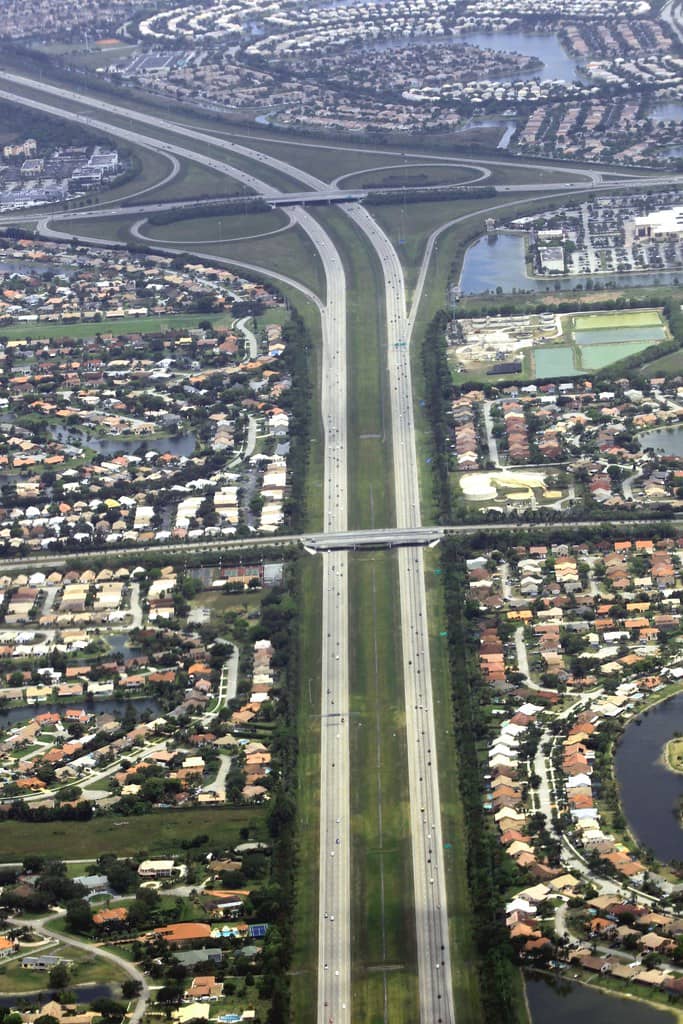
Central Florida's designation reflects the corridor's role in narcotics distribution. Interstate 4 connects the Tampa Bay and Orlando metros and runs through Polk County, and the corridor's traffic volume and connectivity make it a route of interest for investigators.
Task force structure allows local agencies to draw on federal resources, including investigative databases, laboratory capacity and funding for extended surveillance operations, that a county agency would not maintain independently.
The two-month timeline in this case, from a June tip to a July 31 arrest, is typical for an investigation that requires corroboration of an initial report before probable cause supports an arrest.
The fentanyl context in Florida
Fentanyl has driven Florida overdose mortality for several years. The synthetic opioid is substantially more potent by weight than heroin, which means small quantities represent large numbers of potentially lethal doses and which is why statutory weight thresholds for fentanyl trafficking are set low relative to other substances.
The Florida Department of Law Enforcement has operated dedicated fentanyl enforcement efforts, including the South Florida State Assistance for Fentanyl Eradication task force, which made a trafficking arrest in Doral earlier this year involving charges of armed fentanyl trafficking and possession with intent to sell within 1,000 feet of a school.
Enhancement provisions for offenses committed near schools are a recurring feature of Florida drug prosecutions and increase the severity of charges based on location rather than on conduct.
Public health responses have run alongside enforcement. Naloxone distribution, expanded access to medication-assisted treatment and drug take-back programs operate through the Florida Department of Health and county agencies.
The clemency criticism
Sheriff Judd used the arrest announcement to criticize federal clemency decisions, framing the case as involving a defendant who had previously received an early release. That framing connects a local arrest to a national policy debate about sentence commutations for drug offenses.
The underlying policy question is genuinely contested. Advocates for sentencing reform argue that mandatory minimums for drug offenses produced sentences disproportionate to conduct and that clemency corrects individual injustices. Law enforcement critics argue that early releases increase recidivism risk.
Individual cases are poor evidence for general propositions in either direction. A single defendant who reoffends does not establish a recidivism rate, and a single defendant who does not reoffend does not establish the opposite.
Judd has been among Florida's most publicly visible sheriffs and regularly holds press events tied to major arrests and operations, including large multi-agency undercover operations in Polk County that have produced arrest totals in the hundreds.
What it means for Polk County
Polk County sits between the Tampa Bay and Orlando metros and has absorbed substantial population growth as households priced out of the coastal markets moved inland. Lakeland's housing inventory currently runs roughly 69 percent above its pre-pandemic norms, the largest build of any Florida metro tracked.
That growth affects law enforcement demand. A county whose population is expanding faces increased calls for service across all categories, and drug enforcement is one component of a broader workload.
The county's position on the Interstate 4 corridor gives its sheriff's office a role in interdiction that a similarly sized county without that connectivity would not have.
Amendment 3, the property tax measure on the November ballot, has drawn opposition from the Florida Sheriffs Association on grounds that reduced local revenue would affect law enforcement staffing and response times. Polk County's sheriff's office, like others in Florida, is funded through county general revenue driven largely by property taxes.
How Florida's trafficking thresholds work
Florida's drug trafficking statute is unusual in that it defines trafficking by weight alone. A defendant charged with trafficking need not be shown to have transported, distributed or sold anything; possession of the threshold quantity is sufficient to support the charge.
That design has been the subject of long-running debate. Prosecutors argue that weight thresholds provide an objective standard and appropriately capture the scale of potential harm. Defense advocates argue that the structure sweeps in individuals with substance use disorders alongside actual distributors, since a person with a serious dependency may possess quantities that cross statutory lines.
The fentanyl thresholds are set particularly low because of potency. Fourteen grams of fentanyl represents an enormous number of potentially lethal doses, which is the policy rationale for treating that quantity as trafficking-level.
Mandatory minimum sentences attach at each weight tier and remove judicial discretion absent a statutory exception, typically substantial assistance to prosecutors. That structure gives prosecutors substantial leverage in plea negotiations, since the alternative to a negotiated resolution is a sentence the judge cannot reduce.
The public health dimension
Enforcement is one component of Florida's response to fentanyl, and public health measures operate alongside it. Naloxone, the opioid overdose reversal medication, has been distributed widely through the Florida Department of Health, emergency medical services agencies and community organizations.
Florida's Good Samaritan provisions offer limited protection from certain drug possession charges for individuals who seek medical assistance during an overdose, a policy designed to remove the fear of arrest as a barrier to calling for help.
Medication-assisted treatment using buprenorphine or methadone remains the most effective clinical intervention for opioid use disorder, and access varies substantially by county. Rural counties in particular face provider shortages that limit availability.
The combination of enforcement and treatment reflects a recognition that neither alone has proven sufficient. Overdose mortality trends respond to both supply-side interruption and demand-side treatment capacity, and Florida counties have pursued varying mixes of the two.
How a tip becomes an arrest
The two-month interval between the June tip and the July 31 arrest reflects a process that is more constrained than it may appear from the outside. An uncorroborated tip does not establish probable cause, and investigators must independently develop evidence before an arrest can survive judicial review.
That development typically involves surveillance, controlled purchases, analysis of communications records obtained through legal process, and coordination with prosecutors on what evidence would support the intended charges. Each step has legal requirements that, if skipped, create suppression risk later.
Search warrants require an affidavit establishing probable cause, reviewed and signed by a judge. Evidence obtained without a valid warrant or a recognized exception is subject to exclusion, which can end a prosecution regardless of what the evidence shows.
The arrest affidavit generated at the conclusion of that process becomes a public record and forms the factual basis prosecutors work from. It represents the investigating agency's account rather than an adjudicated set of facts, which is the reason careful reporting distinguishes between what an agency alleges and what a court has found.
What's next
The case will proceed through the Tenth Judicial Circuit. The State Attorney's Office will determine what charges to formally file, which may differ from the charges at arrest, and the case will then move through arraignment, pretrial proceedings and either a plea or trial.
Those stages are sequentially distinct. An arrest is not a charging decision, a charging decision is not a conviction, and a conviction is not a sentence. Each requires a separate action by a different actor in the system.
Trafficking charges carrying mandatory minimums generally shape plea negotiations substantially, since the statutory floor limits what a negotiated outcome can look like absent a qualifying exception.
The Polk County Sheriff's Office publishes news releases on its website, and further developments in the case would be documented in Tenth Judicial Circuit court records.
For Polk County residents, the case is one arrest within a sustained enforcement posture the agency has maintained for years. Whether that posture measurably affects local overdose mortality is a separate question from whether individual prosecutions succeed, and it is one the available county-level data answers only partially.
Spotted an issue with this article?
Have something to say about this story?
Write a letter to the editor