Off-Duty Flagler Sheriff Makes 125 MPH Arrest Under Florida's New Speeding Law
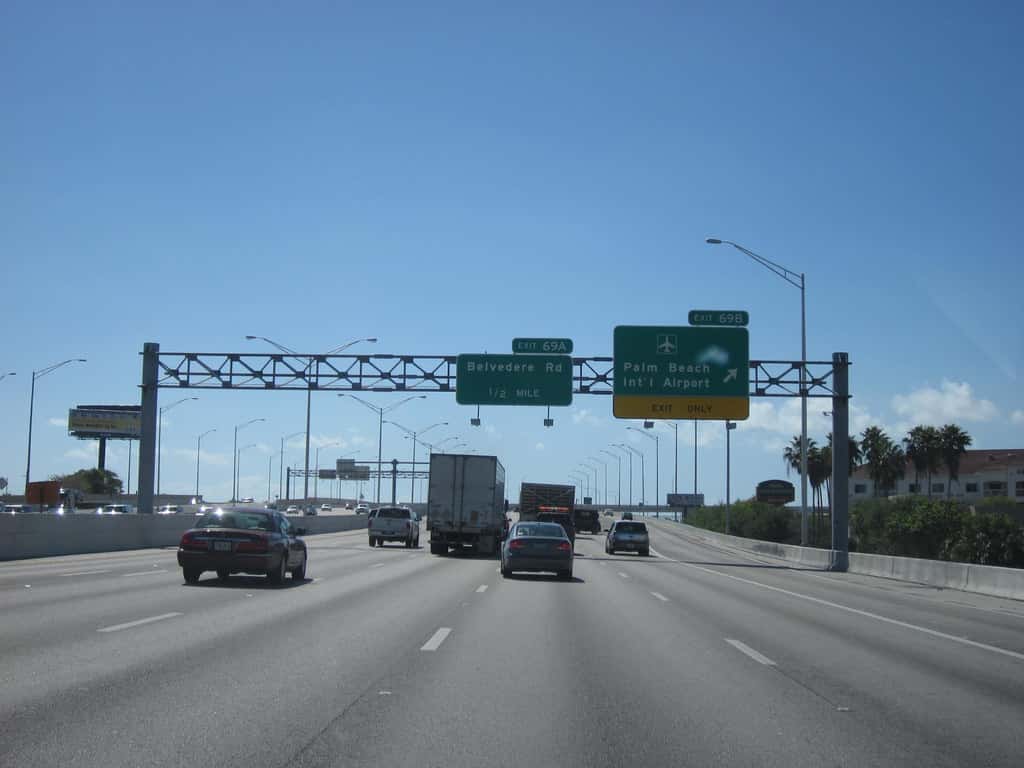
Flagler County Sheriff Rick Staly personally stopped and arrested a driver on Interstate 95 who the agency says reached speeds up to 125 mph, in an incident that has drawn attention as one of the more visible applications of Florida's dangerous excessive speeding law. According to the Flagler County Sheriff's Office, Staly was traveling south on I-95 in an unmarked agency vehicle when the vehicle passed him. The driver, identified by the agency as Arul Nayak, 22, of Palm Coast, was charged with reckless driving and with violating the state's super speeder provision. He is accused and presumed innocent unless and until convicted.
What the agency says happened
According to the sheriff's office account, Staly was on his way to a dinner meeting with his wife on Friday evening when a white 2016 Dodge Challenger with black racing stripes passed his unmarked patrol vehicle just south of the State Road 100 exit, shortly before 5 p.m.
The agency says Staly paced the vehicle between 115 and 125 mph across a stretch of nearly six miles while the driver moved through Friday evening traffic across three lanes. Pacing, in which a law enforcement vehicle matches a target vehicle's speed and reads its own calibrated speedometer, is a standard method of speed measurement in Florida and is admissible in court when the officer follows established procedure and the vehicle's speedometer has been certified.
Staly conducted the traffic stop and took the driver into custody without incident. According to the agency, Nayak was transported to the Volusia County Branch Jail and given a $500 bond. The agency also reported that the driver told the sheriff he had a final pilot's examination scheduled the following day and hoped to be released in time for it.
Florida's super speeder law
The dangerous excessive speeding statute, commonly called the super speeder law, applies to motorists driving 50 mph or more above the posted limit or at 100 mph or faster in a manner that threatens the safety of other people or property. It is a criminal offense rather than a civil infraction, which is the key distinction from an ordinary speeding ticket and the reason the statute produces arrests rather than citations.
Penalties on a first offense include a fine of up to $500 and up to 30 days in jail. Repeat offenses carry higher fines, longer potential jail exposure and license suspension. Because it is a criminal charge, a conviction produces a criminal record rather than only points on a driving history, which is a consequence many drivers do not anticipate when they are stopped.
The reckless driving charge filed alongside it is a separate offense involving willful or wanton disregard for the safety of persons or property. Prosecutors frequently pair the two when conduct involves both extreme speed and aggressive maneuvering through traffic, since the elements of each offense address different aspects of the driving behavior.
Why the law exists
The Legislature enacted the provision to address a category of driving that fell awkwardly between an infraction and a felony. A driver traveling at 125 mph on an interstate presented a serious danger to everyone around them, but absent a crash or injury the available charges did not always reflect the gravity of the conduct, and a speeding citation carried consequences comparable to going 15 mph over the limit.
Florida's interstate corridors, particularly I-95 along the Atlantic coast, I-75 through the Gulf side and the interior, and I-4 connecting Tampa and Daytona through Orlando, carry heavy volumes of both local commuter and long-distance traffic. Speed differentials on those roads are a persistent safety problem, since a vehicle traveling far above the flow of traffic gives other drivers almost no time to react to a lane change.
Stopping distance and crash energy both scale sharply with speed. A vehicle at 125 mph requires vastly more distance to stop than one at highway speed, and kinetic energy increases with the square of velocity, which means the energy involved in a collision at that speed is generally beyond what vehicle safety systems, crumple zones and restraint systems are designed to manage.
The enforcement picture
Enforcement of the statute falls primarily to the Florida Highway Patrol on interstates and to county sheriff's offices and municipal agencies on other roads. Because the charge is criminal, it requires a physical arrest or a notice to appear rather than a citation issued at the roadside and paid by mail.
That procedural difference has practical consequences for both drivers and agencies. An arrest requires transport and booking, which takes a deputy off the road for a period and consumes jail intake resources. Agencies weigh those costs when setting enforcement priorities, and the resource requirement is one reason the statute is applied selectively rather than to every qualifying violation.
The Flagler case drew attention in part because the arresting officer was the elected sheriff, working from an unmarked vehicle while off duty. The agency publicized the stop with the observation that a sheriff is never off duty, which is a common framing when an agency head takes enforcement action personally and which serves a public messaging function alongside the enforcement itself.
Florida road safety in context
Florida consistently reports among the highest traffic fatality totals in the country, a function of population, vehicle miles traveled, year-round driving conditions and a substantial visitor population unfamiliar with local roads. Speed is a contributing factor in a significant share of fatal crashes statewide.
The state has pursued a range of measures beyond the speeding statute, including move-over law expansions protecting stopped vehicles, school zone enforcement, and pedestrian and bicyclist safety initiatives in a state that ranks poorly on both. Enforcement is one component among engineering and education approaches.
Interstate 95 through Flagler and Volusia counties carries heavy through traffic between South Florida and points north, including a substantial share of drivers unfamiliar with the corridor. The stretch has been a focus of enforcement attention from both the Florida Highway Patrol and local agencies.
What Florida drivers should know
The threshold matters. The statute reaches conduct at 100 mph or above, or 50 mph or more over the posted limit, which means a driver on a 70 mph interstate crosses into criminal territory at 120 mph, while a driver on a 45 mph surface road crosses it at 95 mph. The lower absolute speed on a surface road can still trigger the criminal charge.
A criminal conviction carries consequences beyond the immediate penalty. It appears on background checks, can affect employment in positions requiring a clean record or a commercial driver's license, can complicate professional licensing in some fields, and can substantially raise insurance premiums for years afterward.
The insurance effect is particularly significant in Florida, where auto premiums already run well above the national average. A criminal driving conviction can shift a driver into a nonstandard insurance market with materially higher rates, and the increase persists on a driving record for a period set by each carrier's underwriting rules.
Flagler County and the I-95 corridor
Flagler County sits between St. Johns and Volusia counties along Florida's Atlantic coast, with Palm Coast as its largest city. Interstate 95 runs the length of the county, carrying both local commuters and long-distance traffic moving between South Florida and the Southeast.
The county has grown rapidly over the past two decades, transforming from a largely rural area into a suburban community while the road network absorbed the increase. That growth pattern has put more local traffic onto a corridor originally designed primarily for through movement.
Enforcement on that stretch is shared among the Florida Highway Patrol, which has primary responsibility for interstates, and county and municipal agencies that respond to crashes and assist with traffic control. Jurisdiction overlaps rather than dividing cleanly, which is why a county sheriff can make an interstate stop.
What happens after a criminal traffic arrest
A criminal traffic charge in Florida proceeds through county court rather than through the civil traffic infraction process. The defendant is arraigned, may be represented by counsel, and has the same procedural rights as any misdemeanor defendant including the right to a jury trial in most circumstances.
Outcomes vary considerably. First-time defendants without prior records are sometimes eligible for diversion programs that result in dismissal upon completion of conditions such as a driving course, community service and a period without further violations. Prosecutors have discretion over eligibility.
A withheld adjudication is another possible outcome, in which a judge imposes conditions without formally entering a conviction. That disposition avoids some collateral consequences, though the arrest record persists and the underlying case remains visible on a background check unless sealed or expunged under Florida's statutory criteria.
What's next
The case proceeds through the court system, where the state attorney's office will make the formal charging decision and the defendant will have the opportunity to contest the allegations. Charges filed at arrest are not final until prosecutors file a formal charging document, and outcomes in cases of this type range from dismissal through diversion to conviction.
Agencies across Florida continue to apply the statute, and its practical effect will become clearer as conviction data and enforcement volumes accumulate. Whether it changes driver behavior on the state's interstates is a question that will take multiple years of crash and citation data to answer, and evaluating it requires separating the statute's effect from broader traffic trends.
The Florida Press will continue covering traffic safety enforcement, Florida Highway Patrol crash investigations and the implementation of the state's newer traffic statutes across all 67 counties.
Florida's legislative session convenes in January, and traffic safety measures are a recurring subject. Whether lawmakers adjust the dangerous excessive speeding statute, expand penalties or leave it unchanged will depend partly on what enforcement data from its first period of application shows.
Drivers who believe they were stopped in error retain the same rights as any criminal defendant, including the ability to challenge the speed measurement method, the calibration of the measuring vehicle and the officer's observations. Those challenges are litigated in county court rather than resolved administratively.
Spotted an issue with this article?
Have something to say about this story?
Write a letter to the editor