Jacksonville Holds Its Millage Rate Steady While Weighing a $375 Million Revenue Risk
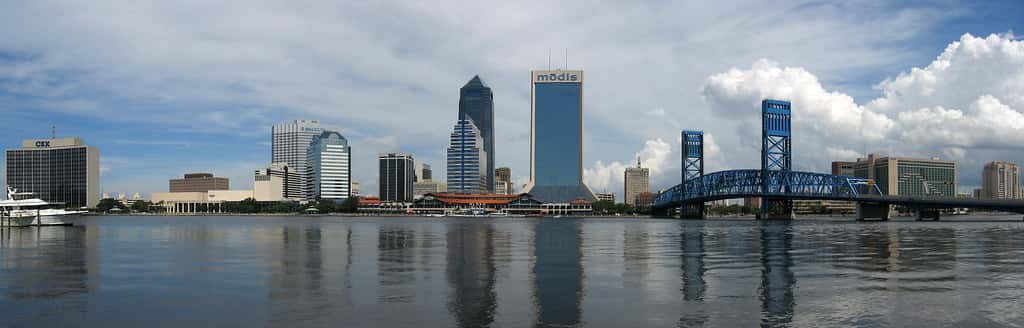
Jacksonville's City Council voted 17 to 1 on July 28 to hold the city's maximum millage rate steady at 11.1919, taking the first procedural step in the fiscal year 2026-27 budget process while a much larger question hangs over the consolidated government's finances.
The city's Council Auditor has estimated that a property tax overhaul advanced in Tallahassee would strip roughly $375 million in annual revenue from Jacksonville's budget, based on collections from the 2025-26 fiscal year. Florida voters will decide a related constitutional amendment in November.
For Jacksonville, which operates as a consolidated city-county government serving nearly all of Duval County, the stakes are unusually concentrated. A single budget covers municipal services, county functions, the sheriff's office, fire and rescue, libraries, parks and infrastructure for a population approaching a million residents.
What the millage vote does
Under Florida's truth-in-millage process, local governments must first adopt a proposed maximum millage rate, which is then printed on the notices county property appraisers mail to property owners each August. The rate can be lowered before final adoption but generally cannot be raised above the noticed figure without additional procedural steps.
Holding the maximum at 11.1919 preserves the council's flexibility. A property owner in Jacksonville pays $11.1919 in city tax for every $1,000 of assessed taxable value, meaning a home with $250,000 in taxable value after exemptions generates roughly $2,798 in city property tax.
Mayor Donna Deegan's administration and the council have aligned on holding the rate flat rather than raising or cutting it, a posture that lets rising assessed values carry revenue growth without a rate increase that would require additional votes and generate more political friction.
Property tax in Florida grows through two channels: new construction added to the roll and increases in assessed value on existing property, the latter limited on homesteaded property by the Save Our Homes cap.
The $375 million question
The Council Auditor's analysis, delivered earlier in 2026, projected the effect of a Florida House property tax reform resolution on Jacksonville's 2026-27 budget. The estimate of roughly $375 million in lost revenue represents a substantial share of the city's discretionary general fund spending.
The mechanism is the homestead exemption. The constitutional amendment on November's ballot would raise the homestead exemption for non-school property taxes to $150,000 on January 1, 2027, and to $250,000 on January 1, 2028. Because school district revenue is insulated, the entire reduction falls on municipal and county budgets.
Jacksonville's exposure is amplified by its housing stock. A consolidated government serving a large population of owner-occupied single-family homes at moderate assessed values loses a larger proportion of its base to a flat-dollar exemption increase than a jurisdiction where value is concentrated in commercial property, tourist accommodations or high-value non-homesteaded coastal real estate.
Statewide, a House staff analysis estimated the amendment would reduce annual revenue to non-school governments by roughly $4.6 billion initially, growing toward $8.4 billion per year.
The school tax referendum
Separately, the Jacksonville City Council has set up a November vote on Ordinance 2026-387, which would allow Duval County voters to decide whether to extend for four years a one mill ad valorem tax dedicated to boosting teacher pay.
The measure is distinct from the statewide constitutional amendment. It is a local referendum on a school district levy, and because school taxes are not affected by the homestead exemption expansion, the two questions operate on separate portions of a property owner's tax bill.
Teacher compensation has been a persistent pressure point for Duval County Public Schools, as it has for districts across Florida. The state has directed funding toward raising minimum teacher salaries in recent years, a policy that lifted starting pay but in many districts compressed the pay scale for veteran teachers, creating retention challenges.
A dedicated local millage gives a district a supplemental revenue source outside the state funding formula. Several large Florida districts operate similar levies, all of which require periodic voter reauthorization.
What Jacksonville would face
If the constitutional amendment passes with the required 60 percent, Jacksonville's budget planning for fiscal year 2027-28 would begin from a substantially reduced revenue base.
The city's options would be constrained. Florida law caps millage rates and requires supermajority council votes to exceed a rolled-back rate, and Jacksonville's current rate leaves limited statutory headroom. That leaves service reductions, fee increases, reserve drawdowns or some combination.
The largest line items in a Jacksonville budget are public safety. The Jacksonville Sheriff's Office and Jacksonville Fire and Rescue together account for a substantial majority of general fund spending, which means reductions of the scale contemplated would be difficult to achieve without affecting those departments.
Other pressure points include infrastructure maintenance, stormwater and drainage work in a city with significant flood exposure, library and parks operations, and the capital improvement program.
What it means for Jacksonville residents
For a homesteaded property owner, the amendment would mean a meaningfully smaller city and county tax bill beginning with the 2027 tax year and a larger reduction in 2028.
The offsetting question is service level. Residents who currently receive city services funded by property tax would need to weigh a lower bill against potential reductions in response times, maintenance frequency, facility hours or capital investment.
Renters would not receive the exemption directly, since it applies only to homesteaded primary residences, but would be affected by any service changes.
The November ballot in Duval County will carry both questions, the statewide constitutional amendment and the local school millage extension, alongside the races for governor, United States Senate and congressional and legislative seats.
What consolidation means for the budget
Jacksonville's government structure is unusual and shapes how a revenue reduction of this scale would be absorbed.
The city consolidated with Duval County in 1968, merging most city and county functions into a single government. The result is a jurisdiction covering roughly 840 square miles, the largest city by land area in the contiguous United States, with a single budget covering functions that elsewhere would be split between municipal and county government.
Four small beach communities and the town of Baldwin retain separate municipal governments within the county, but the overwhelming majority of Duval County residents are served by the consolidated government.
The structure eliminates the duplication that exists in most Florida counties, where residents inside city limits pay both county and municipal millage. It also concentrates risk: there is no second layer of government to absorb functions if one layer's revenue falls.
Jacksonville's independent authorities, including JEA for utilities and the Jacksonville Port Authority, operate with their own revenue streams outside the general fund, which insulates those functions from property tax volatility.
Where the money goes
Public safety dominates the Jacksonville budget, as it does in most Florida local governments.
The Jacksonville Sheriff's Office is a consolidated agency handling both municipal police functions and county sheriff duties, including corrections and court services. Jacksonville Fire and Rescue provides fire suppression and emergency medical services across the county's large geographic area, which requires a station network sized for distance rather than density.
Together those functions account for a substantial majority of general fund spending. A revenue reduction approaching $375 million could not be absorbed without affecting them, simply as a matter of arithmetic.
The remaining general fund supports public works, parks and recreation, the public library system, planning and development, and general government administration. Debt service on prior capital borrowing is a fixed obligation that cannot be reduced through operating decisions.
Jacksonville also carries pension obligations from its public safety retirement systems, a legacy liability that consumed a growing share of the budget until a dedicated funding mechanism was established.
The drainage and resilience problem
Jacksonville faces infrastructure obligations that make revenue reductions particularly consequential.
The city sits at the mouth of the St. Johns River, and substantial portions of it are low-lying and flood-prone. Hurricanes Matthew, Irma and subsequent storms produced significant flooding in neighborhoods along the river and its tributaries, and repetitive-loss properties are concentrated in older areas with aging drainage infrastructure.
Septic tank phase-out is another long-running obligation. Tens of thousands of properties in Jacksonville remain on septic systems, many in areas where soil conditions and water table depth make them a water quality problem. Converting those properties to sewer service is expensive and has been funded incrementally.
Stormwater and drainage improvements compete against those obligations, and both compete against road maintenance on a network sized for the largest city footprint in the country.
Federal disaster and mitigation funding has supported some of that work, including FEMA hazard mitigation grants that have flowed to Northeast Florida jurisdictions for drainage and elevation projects. Those programs require local cost shares, which come from the same general fund the amendment would reduce.
How residents can participate
Florida's budget process includes mandatory public participation points that most residents never use.
The truth-in-millage notice mailed by the property appraiser each August lists each taxing authority with jurisdiction over a parcel, the proposed rate, the resulting tax and the date, time and location of the public hearing at which that authority will adopt its rate.
Those hearings include public comment periods, and they occur before final adoption rather than after. A resident who wants to influence a millage decision has a defined opportunity to do so.
Jacksonville's Council Auditor publishes independent analyses of the mayor's proposed budget, and those documents are the most substantive public source on the city's financial position. Finance committee meetings, where the budget is reviewed department by department, are open and are where most substantive changes originate.
Residents can also review the city's comprehensive annual financial report, which documents actual revenues and expenditures against the adopted budget for the prior year.
What's next
Jacksonville's budget process continues through the summer under Florida's truth-in-millage timeline, with public hearings required before final adoption. Residents receive their proposed tax notices from the Duval County Property Appraiser in August, which show the proposed rates and the resulting bill under each taxing authority.
The council's finance committee reviews the mayor's proposed budget department by department before the full council takes final votes on the millage rate and the budget ordinance.
Residents can attend budget hearings, which include public comment periods, and can review the Council Auditor's published analyses, which provide the most detailed independent assessment of the city's financial position.
Spotted an issue with this article?
Have something to say about this story?
Write a letter to the editorComments
No comments yet. Be the first to weigh in.
Related Coverage

Uthmeier Asks Highlands County Judge to Bar OpenAI From Offering ChatGPT to Florida Minors
2h ago

Twelve New Florida Laws Take Effect Oct. 1, From Nitrous Oxide Limits to a Career Offender Registry
3h ago

Florida Rolls Out Redesigned Driver Licenses With Castillo de San Marcos, Manatee and Space Shuttle Discovery
10h ago

Florida Governor's Race Enters Final Five Weeks With Split Polls and No Debate Between Donalds and Jolly
2d ago