Jury Acquits George Pino in the 2022 Miami Boat Crash That Killed a Teenager
A Miami-Dade County jury on June 23, 2026, found prominent South Florida real estate broker George Pino not guilty of one count of manslaughter and one count of vessel homicide, closing the criminal chapter of a case that began nearly four years earlier on a busy Labor Day weekend. Jurors began deliberating Monday evening and returned the verdict after roughly two hours of discussion, according to court proceedings.
The charges stemmed from a crash on Sept. 4, 2022, when Pino was driving his 29-foot Robalo boat and struck a boat marker in the Cutter Bank channel in Miami-Dade County. The collision killed 17-year-old Luciana Fernandez, known to family and friends as Lucy, and left another passenger, Katerina Puig, known as Katy and now 21, with physical and neurological disabilities.
The acquittal ends a high-profile prosecution that drew sustained attention across South Florida, where boating is woven into daily life and the waterways of Biscayne Bay draw thousands of vessels on holiday weekends. The verdict does not resolve any civil claims that may arise from the crash, and the families of those harmed have spoken publicly about the outcome.
The Night of the Crash
The crash occurred during the Labor Day weekend of 2022, one of the busiest stretches of the year on South Florida's waterways. Authorities have said the boat Pino was operating struck a marker in the Cutter Bank channel, a navigational hazard that delineates safe passage through the bay's shallows and shifting bottom.
Markers like the one involved are a fixture of the region's channels, intended to guide vessels away from sandbars and other obstructions. The impact of a boat striking such a structure at speed can be severe, and in this case it proved fatal for one passenger and life-altering for another.
Lucy Fernandez was 17 at the time of her death. Katy Puig, who was also aboard, survived but was left with lasting physical and neurological injuries, according to the record presented during the case. The crash sent shock waves through the families and communities connected to the teenagers.
In the days and months that followed, investigators examined the circumstances of the collision, the operation of the vessel, and the conditions in the channel. The case eventually moved toward a criminal trial that would stretch the timeline of grief and legal proceedings across multiple years.
Investigations into fatal boating crashes in Florida typically draw on a range of evidence, including the physical damage to the vessel, the position of the marker, and accounts from those aboard and nearby. Reconstructing what happened on the water can be more complex than on a roadway, given the absence of fixed lanes and the influence of tides, currents, and visibility on a vessel's course.
The Charges and the Long Road to Trial
Pino faced one count of manslaughter and one count of vessel homicide. Both are serious felony charges under Florida law, and both required prosecutors to prove that the defendant's conduct rose to the level of culpable negligence that the law demands for a criminal conviction rather than a civil finding of fault.
The path from the 2022 crash to the 2026 verdict was a long one. High-profile cases of this kind often involve extensive pretrial litigation, expert analysis of the crash, and disputes over what evidence jurors should be permitted to hear. For the families involved, the years of waiting added to the weight of an already painful loss.
Throughout the proceedings, Pino was entitled to the presumption of innocence, the bedrock principle of the American justice system that places the burden squarely on the prosecution. That burden, proof beyond a reasonable doubt, is the highest standard in the law, and it framed the entire trial.
By the time the case reached a jury in June 2026, it had become one of the most closely watched boating-fatality prosecutions in recent South Florida memory, in part because of Pino's standing in the local real estate community and in part because of the youth of the victims.
Cases that carry public attention often face additional scrutiny at every stage, from jury selection to the presentation of evidence. The prominence of the defendant and the tragic circumstances of the crash combined to keep the case in public view across the years it took to reach trial, drawing observers well beyond the immediate families involved.
What Each Side Argued
Prosecutors argued that Pino made intentional choices about the speed and direction of his vessel that amounted to culpable negligence and that those choices caused Lucy Fernandez's death. Their theory rested on the idea that the operation of the boat went beyond an ordinary accident and crossed into criminal conduct.
The defense took a sharply different view. Pino's attorney, Howard Srebnick, argued that his client made a mistake and did not see the marker, and that a tragic mistake does not make a person a criminal. The defense framing drew the central legal distinction at the heart of the case: the difference between a devastating accident and a crime.
That distinction is often the deciding factor in cases built on negligence. Florida law requires more than carelessness to support a manslaughter or vessel homicide conviction. Prosecutors must show a degree of recklessness or disregard for safety that a jury is willing to label criminal beyond a reasonable doubt.
After deliberating for about two hours, the jury sided with the defense on both counts. The relatively short deliberation, following a trial that had taken years to reach, brought a swift end to the criminal case.
The contrast between the years of preparation and the brevity of the deliberation is a feature of many criminal trials, where jurors hear evidence over an extended period before reaching a decision in a comparatively short span. In this case, the jury weighed competing accounts of an accident and a crime before concluding that the state had not met its burden on either count.
The Verdict and Its Aftermath
When the verdict was read, Pino was seen crying and embracing his family in the courtroom, according to accounts of the proceedings. For the defendant and his relatives, the not-guilty finding marked the end of a prolonged legal ordeal.
For the families of Lucy Fernandez and Katy Puig, the outcome carried a very different meaning. The families of the victims have spoken about the not-guilty verdict, expressing the grief and frustration that often accompany a result that does not match a family's sense of justice.
An acquittal in a criminal case reflects only that the prosecution did not prove its charges beyond a reasonable doubt to the satisfaction of the jury. It is not, in the eyes of the law, an affirmative finding that no harm occurred or that no one bears responsibility in any sense.
The emotional contrast in the courtroom, relief on one side and anguish on the other, underscored the human stakes that had hung over the case since the night of the crash nearly four years earlier.
High-profile verdicts of this kind often leave communities divided in their reactions, and this case was no exception. The acquittal drew strong responses from those who had followed the proceedings closely, reflecting the deep emotions that a fatal crash involving young people inevitably stirs. The families most directly affected continue to carry the weight of the loss regardless of the legal outcome.
Boating Safety in South Florida's Busy Waterways
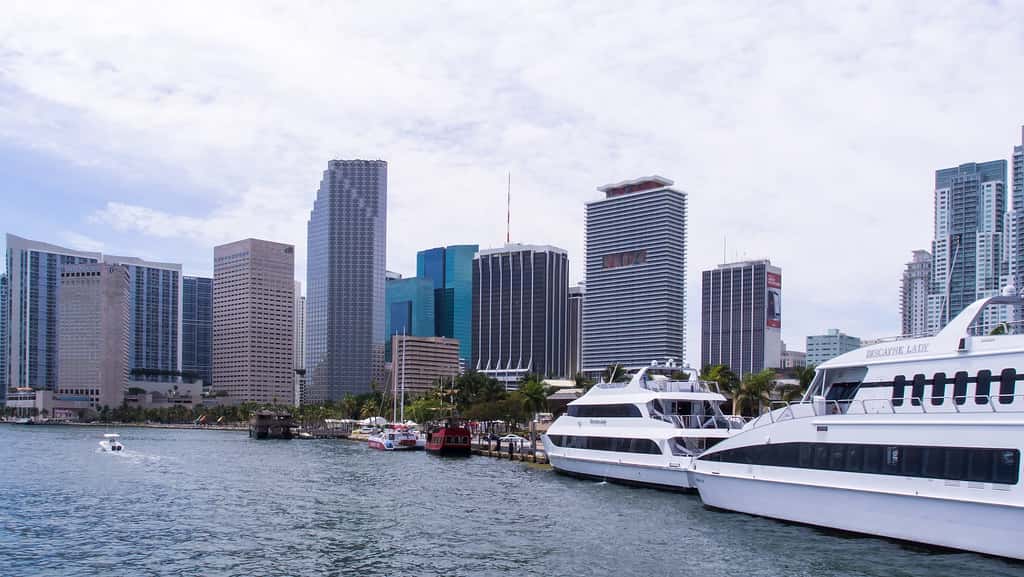
The case has unfolded against the backdrop of South Florida's intense boating culture. Biscayne Bay and the surrounding channels see heavy traffic, especially on holiday weekends, when recreational vessels of all sizes share narrow marked routes through shallow water.
Channel markers exist precisely because the bay's waters can be treacherous to those unfamiliar with them, or to anyone moving too fast to react. Navigational aids help operators avoid sandbars, submerged obstructions, and other vessels, but they require attention and appropriate speed to be effective.
Boating-safety advocates in Florida have long emphasized the importance of operating at safe speeds, maintaining a proper lookout, and understanding local waterways. The state's bays and channels can change with tides and conditions, and crowded holiday traffic compounds the challenge for even experienced operators.
While the criminal case turned on the specific facts before the jury, the broader conversation about boating safety in the region continues. Fatal and serious crashes on the water remain a persistent concern for families, regulators, and the boating community across South Florida.
Holiday weekends in particular tend to focus attention on the volume of vessels on the water and the conditions that can lead to collisions. Education campaigns, signage, and enforcement all play roles in the effort to reduce risk, though no measure can eliminate the possibility of a serious crash on crowded and complex waterways like those of Biscayne Bay.
Civil Litigation and What Comes Next
A not-guilty criminal verdict does not resolve any civil claims that may exist or arise from the 2022 crash. Criminal and civil proceedings operate under different standards of proof and serve different purposes, and an acquittal in one arena does not foreclose action in the other.
In civil litigation, plaintiffs generally must prove their case by a preponderance of the evidence, a lower standard than the proof beyond a reasonable doubt required for a criminal conviction. That difference means questions of fault and compensation can remain open even after a criminal jury has rendered its verdict.
Whether and how any civil matters proceed is a separate question from the criminal case decided this week. The families of those killed and injured may have legal avenues distinct from the prosecution that has now concluded with an acquittal.
Because the standards differ so significantly, it is not unusual for the criminal and civil tracks of a single incident to reach different conclusions. The acquittal resolves the question of criminal liability that was before the jury, but it does not speak to whether any civil responsibility exists, a matter that would be decided under separate rules and procedures if pursued.
For now, the criminal case is over. The verdict closes one of the longest-running and most closely followed boating-fatality cases in recent South Florida history, even as the loss of a 17-year-old and the lasting injuries to another young passenger continue to weigh on the families and communities involved.
Spotted an issue with this article?
Have something to say about this story?
Write a letter to the editor