Miami Beach's Savoy Hotel Faces Demolition Under State Preemption Law
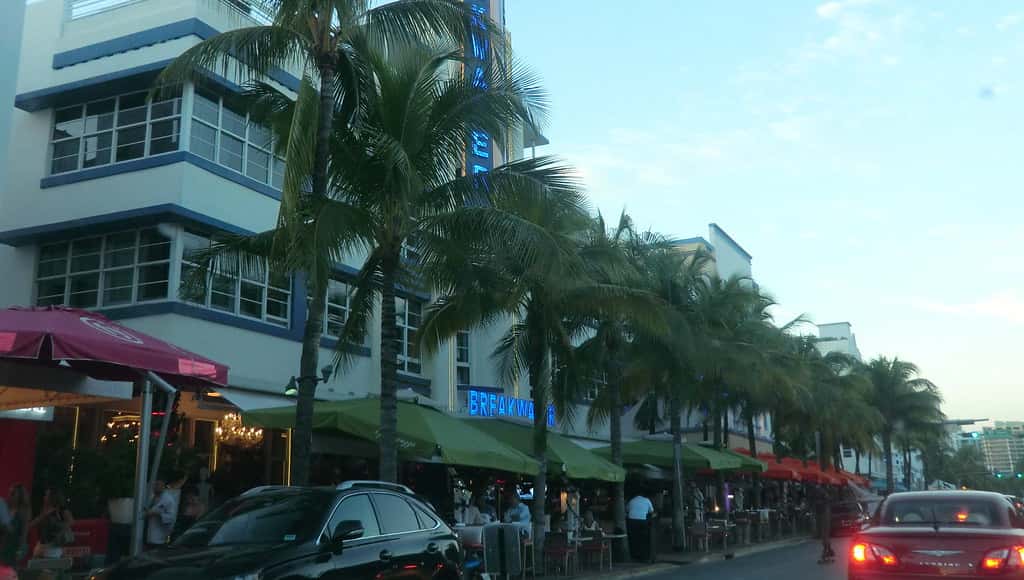
The Savoy Hotel, a low-rise Art Deco building from the 1930s at 425 Ocean Drive in Miami Beach, is facing demolition to make way for a roughly 480-foot residential tower, and city officials say a state preemption law passed in Tallahassee leaves them without the authority to intervene. New York-based Allied Partners has proposed a 38-story development with about 150 residences, including 60 workforce housing units, plus 76 hotel rooms, a beach club, retail space and pools.
The dispute is the clearest test yet of how Florida's affordable housing preemption statutes interact with local historic preservation, and it matters well beyond one block of Ocean Drive. Miami Beach built its identity and much of its tourism economy on a stock of small Art Deco and Mediterranean Revival buildings that would never be economical to construct today. If that stock can be converted to high-rise development by qualifying for a state housing incentive, the calculation changes for hundreds of properties across South Florida.
For residents and visitors, the practical question is what Ocean Drive and the broader South Beach corridor look like in a decade. For Floridians statewide, the question is broader: how much local control over land use remains after a decade of legislative preemption, and whether the workforce housing produced under these incentives is worth what is traded for it.
How the Live Local Act applies
Florida's Live Local Act and its subsequent amendments allow qualifying residential projects that include affordable or workforce housing components to bypass certain local zoning restrictions, including height and density limits, in areas zoned for commercial, industrial or mixed use. The statute was designed to address a genuine housing shortage by removing local approval as a veto point on multifamily construction.
The mechanism works by entitling a developer to the highest density and height allowed anywhere in the jurisdiction, rather than what the parcel's own zoning permits, provided a set share of units meet affordability thresholds. In a city like Miami Beach, where some parcels permit substantial height, that provision can transform what is buildable on a low-rise lot.
Subsequent legislation addressed demolition specifically. The demolition provision includes an exception for historic properties located within a historic district recognized by the National Register of Historic Places before January 1, 2000. That date is the crux of the Savoy dispute.
Why the exemption does not cover the Savoy
The Savoy sits in the South of Fifth neighborhood, just outside the Miami Beach Architectural District, which was listed on the National Register in 1979. Had the building fallen inside that boundary, it would have qualified for the historic exception. Sitting a short distance outside it, the building is treated by the statute as an ordinary structure.
This is the kind of outcome that follows from drawing a statutory line at a district boundary rather than at a building's individual significance. The Savoy is locally designated and architecturally of a piece with the buildings a few blocks north that are protected, but the statute asks a jurisdictional question rather than an architectural one.
Miami Beach officials have been blunt about the consequence, describing the preemption laws as irresponsible and noting that the city's own historic preservation board process, which has governed demolition on the beach for decades, does not apply. The exception language was written by a state senator from Hialeah, and its practical effect in Miami Beach has become a recurring source of friction between the city and the Legislature.
Not the first loss
The Savoy is not an isolated case. Demolition work is already underway at the Coral Reef Hotel and the Patrician Hotel, two long-standing Collins Avenue properties that anchored a stretch of mid-century resort development. Preservationists have described those two demolitions as the first losses under the new state preemption framework.
The cumulative pattern is what concerns preservation advocates more than any single building. Miami Beach's architectural districts are valuable in part because they are continuous. A streetscape of two- and three-story buildings with consistent setbacks and scale reads differently than the same buildings interspersed with towers, and the tourism value of the district depends on the continuity as much as on individual facades.
The Miami Design Preservation League and allied groups had flagged the Coral Reef and Patrician as at risk well before demolition began, and have been pressing for either a statutory amendment extending the historic exception or a broadening of the National Register district boundaries.
The housing argument
The case for the preemption statutes is not frivolous. South Florida has among the most severe housing cost burdens in the country, with a large share of renter households spending more than half of income on housing. Local approval processes in Miami Beach and comparable jurisdictions have historically been slow and, in practice, frequently produced denials for multifamily projects.
The Savoy proposal includes 60 workforce housing units, which is a real number in a city where new deed-restricted units are rare. Supporters of the framework argue that preservation of low-rise hotel buildings in a housing emergency amounts to prioritizing aesthetics over the ability of teachers, nurses and hospitality workers to live near their jobs.
Critics respond that the workforce housing produced under these incentives is modest relative to the market-rate units built alongside it, that income thresholds for workforce housing in Miami-Dade are set high enough that units often do not reach the lowest-income households, and that the affordability restrictions expire after a set term while the demolition is permanent.
What it means for the rest of Florida
Miami Beach is the highest-profile venue for this conflict, but it is not unique. Any Florida city with a stock of older commercial buildings on parcels adjacent to higher-density zoning faces the same arithmetic. St. Petersburg, Tampa's Ybor City, downtown Sarasota, West Palm Beach and parts of Jacksonville all contain historically significant buildings that sit outside National Register districts listed before 2000.
The practical lesson for local governments has been to pursue National Register district designations and boundary expansions aggressively, though that route cannot help buildings facing demolition applications now, since the statutory exception requires listing before January 1, 2000.
The other lever is Tallahassee. Amending the exception to cover locally designated historic properties, or to use an individual significance test rather than a district boundary test, would resolve most of these cases. That would require the Legislature to revisit a policy it has expanded rather than narrowed in recent sessions.
Where the project stands
Allied Partners' proposal is a development application, not an approved permit, and the specific figures reported for height, unit count and program remain subject to the review steps the statute does preserve, including building code, coastal construction and environmental requirements. Reporting has described the tower as roughly 480 feet with approximately 150 residences.
What the city cannot do, according to its own officials, is deny the project on historic preservation grounds or impose the height and density limits that would otherwise apply to the parcel. That is the precise nature of preemption: the local review process continues to exist for other purposes while losing its authority over the question that matters most here.
Preservation groups have signaled interest in litigation, and the legal questions around how the Live Local framework interacts with local historic designations have not been fully tested in Florida's appellate courts.
Why Miami Beach's architecture matters economically
The Miami Beach Architectural District, listed on the National Register in 1979, contains one of the largest concentrations of Art Deco and related interwar architecture anywhere. That listing was the product of a preservation campaign waged in the 1970s and 1980s against a development consensus that considered the buildings obsolete.
The campaign's success is why South Beach exists in its current form. The district's distinctive streetscape became the basis for a tourism and cultural economy that has drawn visitors, film production, fashion photography and residents for four decades, and the property values that followed vastly exceeded what demolition and redevelopment would have produced at the time.
That history is the preservationists' central argument. The buildings were saved when they appeared worthless, and the value they generated came precisely from their collective, continuous character rather than from any individual structure.
The counterargument is that preservation succeeded so completely that it now constrains a city facing a housing crisis, and that the district's boundaries were drawn when nobody imagined the land values that would follow.
The preemption decade
Land use preemption has been a consistent theme in Florida legislative sessions for more than a decade, extending well beyond housing. The Legislature has preempted local authority over short-term rental regulation, tree removal, plastic bag ordinances, firearms regulation, minimum wage and a range of other areas.
The pattern reflects a governing philosophy that treats a patchwork of local rules as a barrier to commerce and a uniform statewide standard as preferable. It also reflects the practical reality that business interests find lobbying one Legislature more efficient than lobbying 400 municipalities.
Cities have generally lost these fights. Florida's constitutional home rule provisions give municipalities broad authority in principle, but that authority yields to state law when the Legislature chooses to occupy a field, and courts have generally upheld preemption statutes.
Miami Beach has been among the more frequent objectors, in part because its regulatory approach differs sharply from the statewide norm and in part because its land values make it an attractive target for development that local rules would otherwise prevent.
What's next
The immediate sequence runs through Miami Beach's permitting process, where the city will process applications it has limited grounds to reject. Preservation advocates are expected to press for emergency designation measures and for boundary changes to the National Register district, though neither addresses the pre-2000 listing requirement.
The 2027 legislative session is the venue where the underlying statute could change. Miami Beach and other affected municipalities have lobbied for amendments in prior sessions without success, and the politics have generally favored the housing production argument over the local control argument.
Watch also whether the Coral Reef and Patrician demolitions, now visibly underway on Collins Avenue, shift public opinion. Abstract arguments about preemption land differently once residents and visitors see the gaps in the streetscape, and Miami Beach's tourism industry has historically been effective at making its preferences known in Tallahassee.
Spotted an issue with this article?
Have something to say about this story?
Write a letter to the editor