National Flood Insurance Program Expires September 30 and Florida Has the Most to Lose
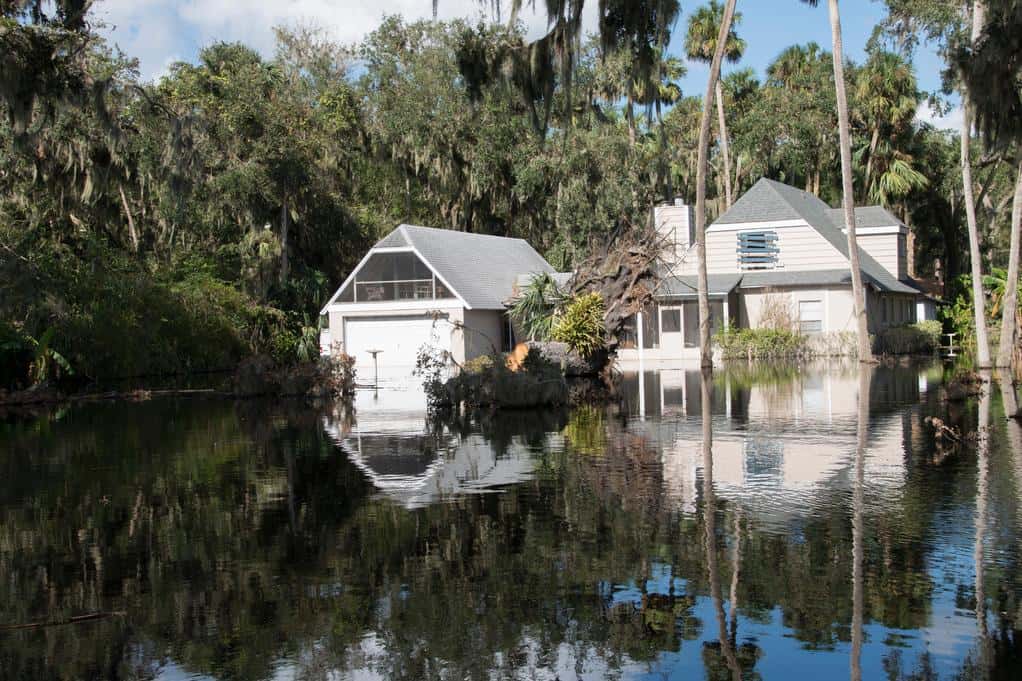
The National Flood Insurance Program's authority to write flood coverage expires at midnight on September 30 unless Congress acts. For Florida, which holds more flood policies than any other state, the deadline carries consequences that reach from individual closing tables to the pace of the entire residential real estate market.
A lapse would mean the program cannot issue new flood insurance policies or renew existing ones until reauthorization. Policies already in force remain active until their own expiration dates, and FEMA has said it will continue paying claims as long as funds remain available. The break falls on transactions, not on existing coverage.
Congress faces a companion deadline. Appropriations funding the federal government for fiscal year 2027 also expire September 30, and an extension of the flood insurance program is generally expected to ride on that legislation. The House passed a continuing resolution before its August recess funding the government at existing levels through early December, and Senate leaders have reported a bipartisan agreement aimed at avoiding an October shutdown.
Why a lapse hits closings
Federal law requires flood insurance for properties in designated special flood hazard areas that carry a mortgage from a federally regulated or insured lender. That requirement is a condition of the loan, not an optional protection, which means the transaction cannot close without a policy in place.
During a lapse, a buyer in a mapped flood zone who needs a new NFIP policy cannot obtain one. Depending on the property and the lender, private flood insurance may be an alternative, but private market availability varies significantly by location and building characteristics.
The historical record shows the scale. During the 2010 lapse, an estimated 1,400 or more home and business sale closings were delayed or canceled each day the program was unavailable nationwide. Florida's share of that disruption would be disproportionate given its policy count.
Florida's exposure
No state carries flood risk on the scale Florida does. The peninsula's low elevation, extensive coastline, high water table and concentration of development near the water combine to place a large share of the state's housing stock in mapped flood zones.
Flood risk in Florida also extends well inland. Storm surge dominates coastal risk, but sustained rainfall from tropical systems has produced severe inland flooding in recent years along river basins including the Peace, the Withlacoochee and the St. Johns, and urban drainage systems in several metropolitan areas reach capacity during heavy summer thunderstorms.
The distinction between flood coverage and standard homeowners insurance is the single most consequential thing Florida homeowners can understand. Homeowners policies do not cover flood damage. Rising water requires a separate flood policy, whether from the NFIP or a private carrier, and there is typically a 30 day waiting period before a new NFIP policy takes effect.
The timing problem
The September 30 expiration falls three weeks after the statistical peak of Atlantic hurricane season on September 10 and two months before the season ends on November 30. That places a potential lapse squarely inside the window when Florida is most likely to need the program.
The 2026 season has been quiet so far, with four named storms, no Atlantic hurricanes and a NOAA forecast maintaining a 75 percent probability of below normal activity. Neither of the two systems that reached the United States coast this year struck Florida.
A quiet season reduces the odds of a lapse coinciding with a disaster but does not eliminate them. October systems forming in the western Caribbean have a climatological tendency to track toward Florida, and a single storm in that window would arrive during the exact period the program's status is uncertain.
What it means for Floridians
Homeowners with existing NFIP policies should confirm their renewal dates now. A policy that renews in October during a lapse could not be processed until reauthorization, and while FEMA has historically allowed retroactive processing after past lapses, that has required specific administrative action.
Buyers under contract on properties in flood zones should raise the question with their lender and title company immediately. Contracts closing in early October carry the most risk, and contingency language addressing a financing failure caused by insurance unavailability is worth reviewing before it matters.
Homeowners outside mapped flood zones should understand that the maps describe probability, not certainty. A substantial share of NFIP claims come from properties outside designated high risk areas, and coverage is available to those owners at lower rates.
Local impact across the state
South Florida carries the largest concentration of NFIP policies, with Miami-Dade, Broward, Palm Beach and Monroe counties accounting for a substantial portion of the statewide total. Monroe County, covering the Florida Keys, has among the highest participation rates in the country.
Tampa Bay's exposure is driven by storm surge modeling that identifies the region as among the most vulnerable in the United States, given the shallow shelf offshore and the shape of the bay. Pinellas County in particular has extensive low elevation development.
Southwest Florida, including Lee and Collier counties, has processed enormous claim volumes following recent hurricane seasons, and rebuilding activity in those counties depends directly on flood coverage availability.
Northeast Florida and the Panhandle face the same structural issues at a smaller scale, with coastal communities in Duval, St. Johns, Bay and Escambia counties carrying significant policy counts.
What Congress is likely to do
The program has been extended repeatedly through short term reauthorizations attached to broader legislation, a pattern that has held for more than a decade. Comprehensive reform, which would address the program's debt, its rate structure and its approach to repetitive loss properties, has been discussed for years without resolution.
A House committee report on an NFIP extension act has moved through the process this Congress, indicating legislative activity on the question. Whether that produces a standalone extension or a provision attached to appropriations is the practical question.
Florida's congressional delegation has historically been active on flood insurance regardless of party, given the state's stake. Members from both parties have supported extensions while differing on reform proposals that would raise rates for high risk properties.
How flood maps work and why they change
FEMA produces Flood Insurance Rate Maps that designate special flood hazard areas, the zones where the one percent annual chance flood, commonly called the 100 year flood, is expected to reach. Those designations drive both the mandatory purchase requirement and, historically, the rate structure.
Maps are revised periodically as topography, development and hydrologic modeling improve. A map revision can move a property into or out of a special flood hazard area, with immediate consequences for whether a mortgage lender requires coverage.
Property owners can challenge a designation through a Letter of Map Amendment, which allows an owner to demonstrate through an elevation certificate that the structure sits above the base flood elevation even though the parcel falls within the mapped zone.
The maps describe probability, not certainty, and the terminology misleads. A 100 year flood is not an event that happens once a century; it is an event with a one percent chance in any given year, which over a 30 year mortgage produces a cumulative probability of roughly 26 percent.
Risk Rating 2.0 and what Florida pays
FEMA has moved the program from a zone based rating structure to a methodology that prices each property individually based on its specific flood risk, including distance to water, elevation, foundation type and replacement cost.
The change produced winners and losers. Properties that had been subsidized under the old structure saw increases, subject to statutory caps limiting annual premium growth, while some properties that had been overpaying relative to their risk saw decreases.
Florida's exposure under the new methodology is significant because the state has a large number of older coastal structures whose elevation and construction predate modern floodplain management standards.
Statutory rate caps mean the transition to full risk rates occurs over years rather than immediately, which is why some Florida policyholders continue to see annual increases even in a year when the program's overall structure is unchanged.
Private flood insurance in Florida
Florida has developed one of the more active private flood insurance markets in the country, driven partly by state legislation intended to encourage private carriers to write the coverage.
Private policies can offer higher coverage limits than the NFIP's statutory caps, which for residential structures are set at levels that fall short of replacement cost for many Florida homes. They can also offer coverage for additional living expenses that the NFIP does not provide.
The tradeoffs involve stability and eligibility. Private carriers can decline to renew, can adjust pricing more freely, and may not be available for older or higher risk structures. Lenders accept private flood policies that meet defined criteria, but the acceptance process can add time to a closing.
A lapse in NFIP authorization does not affect private policies, which is why the private market's growth reduces though does not eliminate the disruption a lapse would cause in Florida.
Homeowners weighing the two should compare coverage limits, exclusions, deductibles and the carrier's financial strength rather than price alone.
What's next
The four weeks between now and September 30 are the window. Congressional action on appropriations, which is where an extension would most likely ride, is expected in the second half of September.
Floridians with pending transactions should not wait for Washington. Confirming policy status, renewal dates and lender requirements in early September costs nothing and eliminates the worst outcome, which is discovering a problem on the day of a scheduled closing.
Insurance agents and title companies across the state have dealt with prior lapses and generally have procedures ready. Asking the question now is how a homeowner accesses that preparation.
Spotted an issue with this article?
Have something to say about this story?
Write us a letterComments
No comments yet. Be the first to weigh in.
Related Coverage

Supreme Court won't shield Seminole County print examiner sued by freed death row inmate Clemente Aguirre-Jarquin
18h ago

Nearly 177,000 Florida immigrants flagged as federal Medicaid cutoff for refugees and asylees takes effect
20h ago
Inflation hits 3.7% as gasoline jumps 9.1% in September: what it means for Florida
22h ago

In Miami Gardens, McMahon says new federal school choice tax credit won't drain Florida public schools
22h ago