New Arrest in Deadly I-4 DeBary Crash Renews Scrutiny of FHP's First Investigation
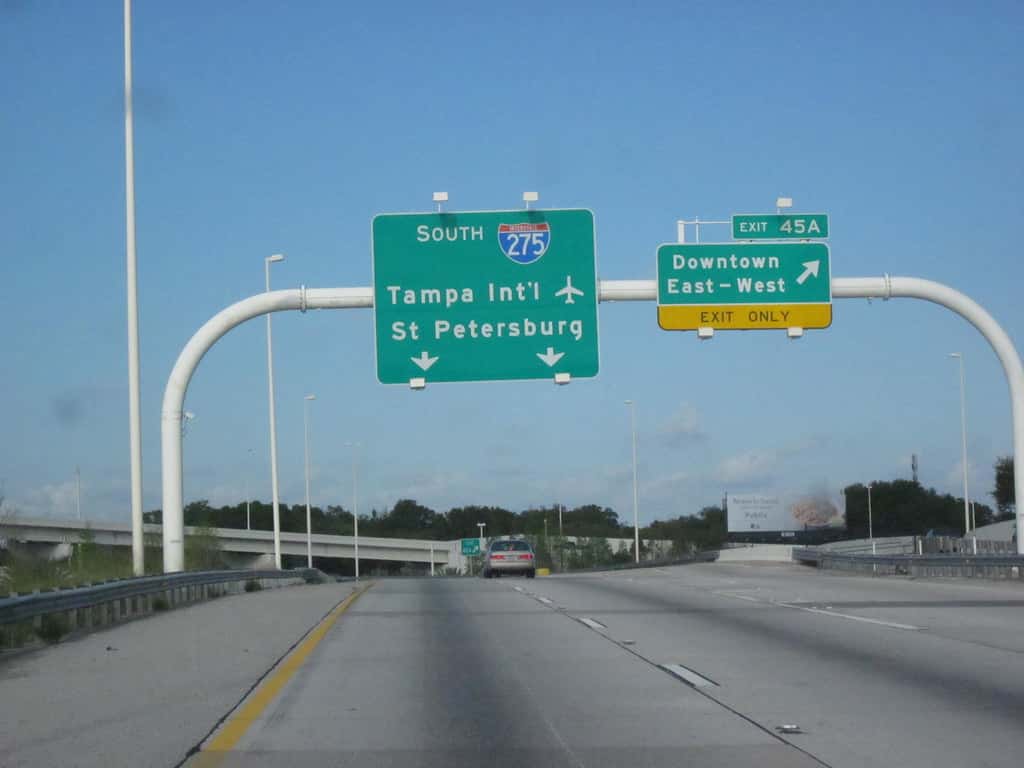
Florida authorities announced on Saturday the arrest of Alisa Montalvo in connection with a deadly chain-reaction crash on Interstate 4 near DeBary in Volusia County, a case that has already drawn intense scrutiny after the wrong person spent nearly two weeks in jail. Montalvo has been accused in relation to the October 4 crash that killed three people and critically injured another driver. The charges are unproven, and the case now moves into a court system that will determine what, if anything, can be established.
The arrest marks a significant turn in an investigation that has become a cautionary tale about the tools and testimony police rely on. Before Montalvo was accused, the Florida Highway Patrol had arrested and jailed a different driver, Lindsey Isaacs, only to see all charges against her dropped after a fresh review pointed investigators in another direction. The sequence has raised pointed questions about how the initial inquiry unfolded and why an innocent person was held for so long.
Under Florida law and the principles of the justice system, Montalvo is presumed innocent unless and until proven otherwise in court. Authorities have described the arrest as the product of a corrected investigation, but the allegations against her remain accusations that must be tested through the legal process. The history of this particular case, in which an earlier arrest collapsed entirely, only heightens the importance of that caution.
A Deadly Chain-Reaction Crash
The crash occurred on October 4 on Interstate 4 near DeBary, one of the busiest and most heavily traveled corridors in Central Florida. According to authorities, the collision was a chain-reaction event, the kind of multi-vehicle wreck that can unfold in seconds on a high-speed interstate and leave investigators to reconstruct a chaotic scene from wreckage and witness accounts. Three people were killed, and another driver was critically injured.
Interstate 4 has long been regarded as one of the more dangerous stretches of highway in the state, carrying enormous volumes of traffic between the Tampa Bay area and the Atlantic coast. Crashes along the corridor can be catastrophic, and the DeBary wreck ranks among the deadliest recent examples in Volusia County. The human toll, three lives lost and a fourth person gravely hurt, placed immediate pressure on investigators to identify who was responsible.
Reconstructing the cause of a chain-reaction crash is inherently difficult. Physical evidence can be scattered across multiple vehicles and lanes, and the sequence of impacts is not always obvious from the scene alone. Investigators frequently lean on eyewitness accounts and available technology to piece together what happened, and in this case those very methods would later come under scrutiny after they pointed to the wrong person.
The severity of the crash meant the investigation carried high stakes from the outset. Families of the three people killed were left waiting for answers, and the critically injured driver faced a long recovery. In that environment, the pressure to make an arrest can be considerable, a dynamic that criminal-justice observers say can sometimes contribute to investigative missteps when caution gives way to urgency.
The Wrongful Arrest of Lindsey Isaacs
In its initial investigation, the Florida Highway Patrol relied on a witness who reported seeing a black Dodge Durango cause the crash. Investigators then used license-plate readers to trace a black Durango to Flagler County, and they arrested Lindsey Isaacs, the owner of that vehicle. On the strength of that eyewitness description and the plate-reader trail, Isaacs was taken into custody and jailed.
Isaacs spent nearly two weeks behind bars before all charges against her were dropped. Her release came after the State Attorney requested a new review of the case, prompting a specialist team to reexamine the evidence and interview additional witnesses. Those witnesses reported seeing a maroon Dodge Durango in the area at the time of the crash, a detail that did not match the vehicle authorities had used to justify the arrest.
The discrepancy between a black Durango and a maroon one proved pivotal. What had initially appeared to be a solid identification, an eyewitness account corroborated by plate-reader data, unraveled once investigators broadened the pool of witnesses and reconsidered the physical description of the vehicle involved. The reversal cleared Isaacs entirely and redirected the investigation, but not before she had lost her freedom for nearly two weeks over a crash she was found to have no connection to.
The episode stands as a stark example of how an investigation can go wrong even when it appears methodical. Isaacs was not a random suspect; she was the registered owner of a vehicle that superficially matched a witness description and a plate-reader hit. That she was nonetheless jailed and later exonerated illustrates how thin the margin can be between a routine arrest and a serious injustice.
Questions About Plate Readers and Eyewitnesses
The Isaacs arrest has drawn attention to two investigative tools that carry both promise and peril: eyewitness testimony and automated license-plate readers. Eyewitness accounts, while often central to criminal cases, are well documented as fallible, particularly under the stress of a violent, fast-moving event like a highway crash. A witness who genuinely believed a Durango was black may simply have been mistaken about a color glimpsed in an instant of chaos.
License-plate readers, meanwhile, are increasingly common tools that can rapidly trace vehicles across a region. Their power lies in speed and scale, but that power is only as reliable as the description guiding the search. If investigators query the technology for a black Durango when the vehicle involved was maroon, the readers will faithfully return the wrong car, lending a veneer of technological certainty to a flawed premise. The DeBary case appears to illustrate exactly that risk.
Criminal-justice observers have long cautioned that combining a mistaken eyewitness description with a confident technological match can create a dangerous feedback loop. Each element seems to corroborate the other, hardening investigators' confidence in a conclusion that may be wrong from the start. The result can be an arrest that feels well supported on paper yet rests on a foundation that does not hold up to closer examination.
The corrective review that cleared Isaacs is itself an important part of the story. When the State Attorney requested a fresh look and a specialist team interviewed additional witnesses, the system ultimately caught its own error. That the mistake was identified and reversed is a meaningful check, even as the nearly two weeks Isaacs spent in jail underscore how much damage can occur before such a correction takes hold.
The New Arrest and Official Process
With Saturday's announcement, authorities have accused Alisa Montalvo in connection with the crash, presenting the arrest as the outcome of the reexamined investigation. Officials have not, in the account available, laid out the full evidentiary basis in public, and the specifics of the case against Montalvo will emerge through the formal court process. For now, the charges represent allegations, not findings of fact.
The presumption of innocence is central to what comes next. Montalvo is accused, not convicted, and the burden rests entirely with prosecutors to prove any charges beyond a reasonable doubt in a court of law. Given the history of this case, in which an earlier arrest was built on an identification that later collapsed, that burden carries added significance. The courts, not the initial investigative conclusions, will ultimately decide the matter.
The involvement of the State Attorney's office and a specialist review team suggests a more deliberate approach the second time around. The reported focus on additional witnesses and the maroon Durango indicates that investigators revisited the fundamental question of which vehicle caused the crash before moving forward. Whether that renewed diligence produces a case that withstands legal scrutiny remains to be seen, and Montalvo is entitled to a full and fair defense.
For the families of the three people killed, the new arrest reopens a painful chapter without yet providing resolution. A charge is not an answer, and the legal process ahead may be lengthy. The critically injured driver and the relatives of those who died will now watch a case proceed that has already demonstrated how uncertain such investigations can be, and how consequential it is to get them right.
Accountability and the FHP Investigation
Beyond the immediate case, the DeBary crash has become a focal point for broader questions about accountability in Florida law enforcement. The wrongful jailing of Lindsey Isaacs, followed by a new arrest built on a revised understanding of the evidence, invites scrutiny of how the Florida Highway Patrol conducted its initial inquiry and why the first conclusion proved so wrong. Those questions extend well beyond the fate of any single defendant.
Critics and criminal-justice advocates are likely to press for an accounting of the initial investigation's shortcomings. How much weight was placed on a single eyewitness? How was the plate-reader search structured, and were alternative vehicle descriptions considered before an arrest was made? The answers matter not only for Isaacs, who lost nearly two weeks of her life, but for the integrity of future investigations that rely on the same tools and methods.
At the same time, the case offers a measure of reassurance about the checks built into the system. The State Attorney's decision to request a new review, and the specialist team's willingness to interview additional witnesses and follow the evidence toward a maroon Durango, represent the mechanisms by which errors can be caught and corrected. That an innocent person was cleared, even after wrongful detention, reflects a process that ultimately declined to let a flawed conclusion stand.
The tension between those two truths, a serious initial failure and a functioning corrective review, defines the accountability story emerging from DeBary. Florida's use of plate readers and reliance on eyewitness accounts are not unique to this case, and the lessons drawn from it could shape how such tools are deployed and second-guessed in the future. For now, the episode stands as a reminder that the appearance of certainty in an investigation is not the same as the truth.
What's Next
The case against Alisa Montalvo now enters the court system, where prosecutors will be required to substantiate the charges and Montalvo will have the opportunity to mount a defense. As with any criminal proceeding, the coming weeks are likely to bring initial court appearances and the gradual disclosure of the evidence underpinning the arrest. Until that process runs its course, the allegations remain unproven.
Scrutiny of the Florida Highway Patrol's initial investigation is unlikely to fade. The wrongful arrest of Lindsey Isaacs has already drawn attention to the agency's reliance on eyewitness testimony and license-plate readers, and observers will watch for any review of how those methods were applied. Whether the case prompts changes in investigative practice, or a broader examination of accountability, will become clearer as the matter proceeds.
For the families of the three people killed and the driver who was critically injured, the path to resolution runs through the courts, and it may be a long one. The DeBary crash has already produced one arrest that collapsed and another that must now be tested against the law. What comes next will be decided not by the confidence of any initial conclusion but by the evidence, the defense, and the judgment of a legal system that has, in this case, already been forced to correct itself once.
Spotted an issue with this article?
Have something to say about this story?
Write a letter to the editorComments
No comments yet. Be the first to weigh in.
Related Coverage

Jacksonville officer charged with domestic battery, ninth JSO employee arrest of 2026
12h ago

Florida sets double execution for Oct. 13
14h ago
Brandon bank robbery: career offender charged after deputies say he confessed
16h ago

Two Former Pinellas Deputies Arrested, Accused of Using Flock and State Databases to Track a Teen Girl and a Woman
1d ago