NOAA Forecasts a Below-Normal 2026 Hurricane Season, but Florida Is Urged to Prepare Anyway
NOAA is predicting a below-normal 2026 Atlantic hurricane season, forecasting 8 to 14 named storms, 3 to 6 hurricanes, and 1 to 3 major hurricanes. The agency assigns a 55% chance to a below-normal season, a 35% chance to a near-normal one, and a 10% chance that activity ends up above normal. For Florida, the most hurricane-exposed state in the country, the outlook offers a measure of reassurance while doing nothing to lift the obligation to prepare.
The forecast for reduced activity rests largely on a developing El Nino, a Pacific climate pattern that tends to increase wind shear over the Atlantic and suppress storm formation. That suppressing influence is the dominant signal in NOAA's projection, but it is not the only force at work. Slightly warmer-than-normal waters across parts of the Atlantic and weaker trade winds act as counterweights that could support development if conditions align, which is why forecasters frame the season as below normal rather than quiet.
For Floridians, the practical takeaway is that a below-normal season is not a safe season. It takes only one storm reaching the coast to cause catastrophic damage, and a state defined by its vulnerability to wind and water cannot plan around averages. Federal forecasting from NOAA and the National Hurricane Center in Miami, federal readiness through FEMA and the Coast Guard, and federal programs such as the National Flood Insurance Program all sit at the center of how the state braces for what the season may bring.
Reading the NOAA Outlook
NOAA's ranges, 8 to 14 named storms, 3 to 6 hurricanes, and 1 to 3 major hurricanes, describe the agency's best estimate of total seasonal activity across the entire Atlantic basin. Named storms reach tropical-storm strength, hurricanes carry sustained winds at hurricane force, and major hurricanes rank among the most intense and destructive. The forecast counts storms basinwide, not landfalls, so even a below-normal tally says nothing about whether or where a storm might strike.
The probabilities sharpen the picture. With a 55% chance of a below-normal season, NOAA leans toward reduced activity but stops well short of certainty. The combined 45% chance that the season lands near or above normal underscores how much uncertainty remains months before the peak. Seasonal outlooks describe the odds, not a guarantee, and they are best read as a planning tool rather than a forecast of any individual storm.
That distinction matters most for a state like Florida. A below-normal season historically can still produce a devastating landfall, and the seasonal numbers offer no comfort to a community that finds itself in a storm's path. The outlook helps emergency managers and the public calibrate expectations, but it cannot substitute for the household-level preparation that experts say every coastal resident should complete before the season ramps up.
Why El Nino Points to a Quieter Season
The developing El Nino is the central reason NOAA expects suppressed activity. During El Nino, changes in atmospheric circulation tend to strengthen wind shear over the tropical Atlantic, the difference in wind speed and direction at different altitudes that can tear apart developing storms before they organize. Strong shear is hostile to hurricane formation, and a robust El Nino can hold a season's activity well below what warm ocean water alone would otherwise support.
That suppressing effect explains the tilt toward a below-normal season. But NOAA also flags counterweights that keep the forecast from skewing quieter still. Slightly warmer-than-normal waters across portions of the Atlantic supply the heat energy that fuels storms, and weaker trade winds can reduce the mixing that would otherwise cool the ocean surface. Together, those factors create conditions that could still support development if the El Nino proves weaker or slower to strengthen than expected.
The interplay of these forces is why forecasters speak in probabilities. A stronger El Nino would push the season toward the low end of NOAA's ranges, while warmer water and slack winds could nudge it higher. The agency's outlook captures that balance of competing signals, and it is precisely this uncertainty that leads officials to caution against treating a below-normal forecast as a reason to relax.
Federal Forecasting and Florida's Front Line
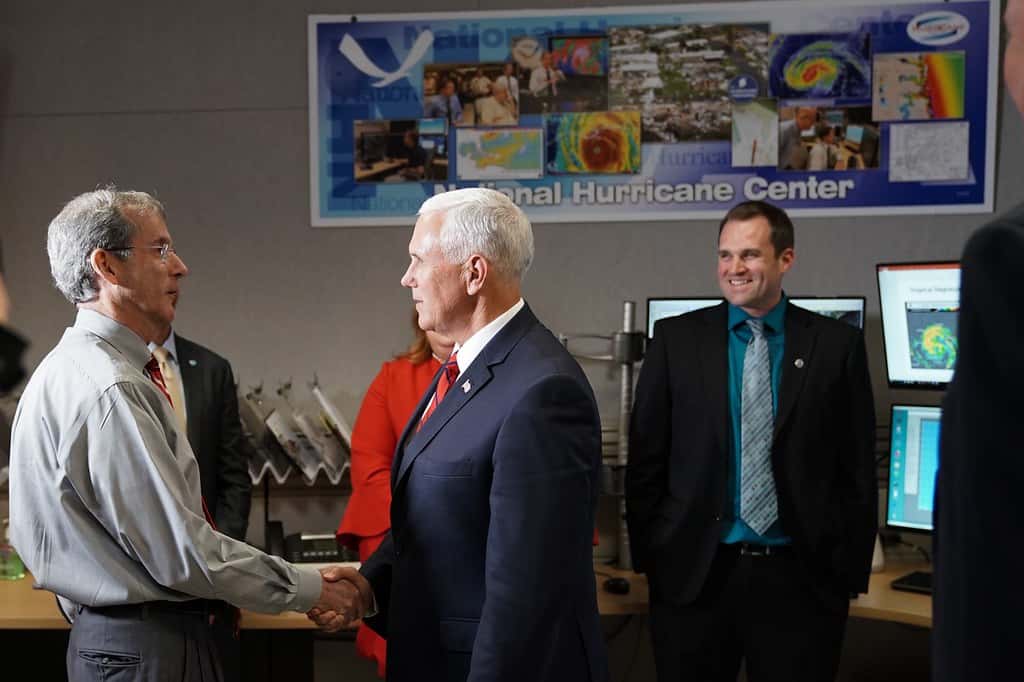
For Florida, federal forecasting is not abstract. The National Hurricane Center, based in Miami, issues the official forecasts, watches, and warnings that drive evacuation decisions, school and business closures, and emergency operations across the state. When a storm threatens, the center's track and intensity guidance becomes the backbone of how Florida communities respond, and its accuracy can shape the difference between an orderly preparation and a chaotic one.
NOAA, the parent agency, provides the satellites, models, and seasonal outlooks that underpin that work. The seasonal forecast released ahead of the peak gives state and local emergency managers a planning horizon, helping them position resources and shape public messaging. Florida's geography, a long peninsula flanked by warm water on three sides, makes it uniquely dependent on this federal forecasting infrastructure.
NOAA plans to update its outlook in early August, before the historical peak of the season in September. That update will fold in the latest readings on the El Nino's development and ocean temperatures, refining the picture as the most active stretch approaches. For Florida, the August update is a key checkpoint, offering a clearer sense of whether the season is tracking toward the quieter end of the range or tilting more active than the spring forecast suggested.
FEMA Readiness and the Coast Guard's Call to Prepare
On the readiness side, FEMA says it stands ready to support states through the season. The agency points to its training efforts over the past year, during which it says it trained more than a million state, local, tribal, and territorial first responders and emergency managers. That investment in the personnel who staff the front lines of disaster response is meant to ensure that when a storm strikes, the people coordinating shelters, rescues, and recovery are prepared to act. The training spans the full range of agencies that mobilize during a hurricane, from local fire and police departments to county emergency operations centers, building a deeper bench of qualified responders across the regions most likely to be hit.
The U.S. Coast Guard has added its own call for preparedness, urging residents in coastal and storm-prone areas to ready themselves before the season intensifies. The Coast Guard plays a central role in maritime rescue and response during hurricanes, and its preparedness messaging reflects the reality that the time to prepare is well before a storm appears on the forecast maps.
For Florida, federal readiness extends beyond training and rescue to disaster funding. When a major storm strikes, federal disaster declarations unlock the resources that help communities rebuild, and the coordination between FEMA and state agencies determines how quickly that aid reaches the ground. The federal posture entering the season, marked by a stated readiness to support states, is a key part of the safety net Floridians rely on when the forecast turns serious.
Insurance, Flood Coverage, and the 30-Day Clock
Officials are pressing residents to review their insurance now and to obtain flood coverage if they lack it. The advice carries particular weight in Florida, where flooding from storm surge and heavy rain causes some of the most severe and widespread damage during hurricanes. Standard homeowners policies typically do not cover flood damage, leaving a gap that many residents do not realize exists until water is already in their homes.
The National Flood Insurance Program, a federal program, is the primary source of flood coverage for most homeowners. A critical detail officials emphasize is the standard 30-day waiting period before a new flood policy takes effect. A resident who waits until a storm is approaching to buy coverage will find that the policy does not protect them for that storm. The waiting period is precisely why officials urge residents to act early in the season rather than at the first sign of a threat.
Reviewing existing policies is equally important. Coverage limits, deductibles, and exclusions can leave homeowners exposed even when they believe they are protected, and the gap between what a policy covers and what a storm destroys can be financially devastating. Officials encourage residents to confirm that their coverage matches their risk, factoring in both wind and flood, well before any storm enters the basin.
For Florida households, the insurance picture is complicated by the state's broader property-insurance market, where premiums rank among the highest in the nation. That cost pressure makes the decision to add flood coverage a real budgeting question for many families, but officials stress that the protection it provides against catastrophic loss is difficult to replace once a flood has occurred.
What's Next
The immediate priority for Floridians is preparation, regardless of the below-normal forecast. Reviewing insurance, securing flood coverage before the 30-day waiting period can interfere, assembling supplies, and confirming evacuation plans are the steps experts urge residents to complete now rather than later. A below-normal season still carries the risk of a single damaging landfall, and the time to prepare is before a storm forms.
The next major checkpoint is NOAA's early-August update, which will refine the outlook as the El Nino develops and the September peak nears. That update will tell Floridians whether the season is trending toward the quieter end of the forecast or shifting more active, and it will sharpen the planning picture for emergency managers across the state.
Through it all, federal forecasting from the National Hurricane Center in Miami, federal readiness through FEMA and the Coast Guard, and federal programs such as the National Flood Insurance Program will remain central to how Florida weathers the season. The forecast may point to fewer storms, but for the most hurricane-exposed state in the country, preparation is the only reliable defense against the one storm that matters most.
Spotted an issue with this article?
Have something to say about this story?
Write a letter to the editor