Flood Insurance Runs on a December Clock Again, and Florida Has the Most at Stake
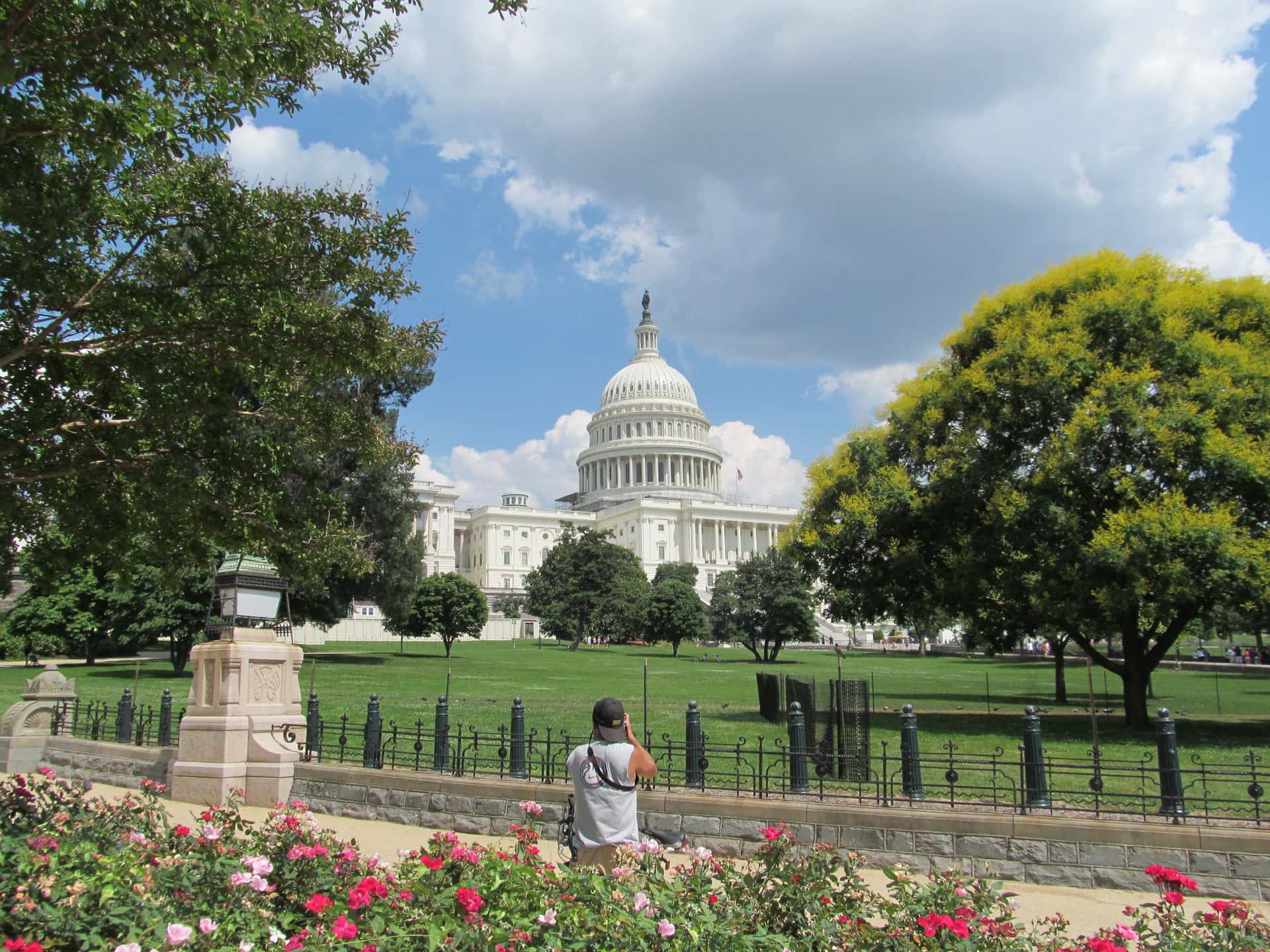
The National Flood Insurance Program, the federal program that writes the overwhelming majority of flood policies in the United States, is authorized through December 11 after Congress carried it forward in the continuing resolution that funded the government past the October 1 deadline. The stopgap measure, signed into law on September 2, extends federal funding at current levels to the same date.
Before that action, the program's authorization was set to lapse on September 30. The extension removes an immediate cliff and replaces it with a deadline in December, which is the pattern Congress has followed repeatedly. Short-term reauthorizations have been passed dozens of times since 2017, with the program never receiving the comprehensive overhaul that both parties have described as necessary.
No state has more at stake in that cycle than Florida. The state holds a substantial share of the nation's flood policies, its real estate transactions frequently require flood coverage as a condition of federally backed lending, and its exposure to both storm surge and rainfall flooding is unmatched in the continental United States.
What happens when authorization lapses
A lapse does not cancel existing policies. Policies in force remain in effect until their expiration date, including a 30-day grace period, and FEMA continues paying claims as long as it has funds available. That distinction is important and frequently misreported.
What a lapse does stop is the issuance of new and renewal policies. That is where the damage occurs, because federally backed mortgages in designated flood zones require flood insurance as a condition of closing. Without the ability to write a new policy, transactions in those zones cannot close.
Estimates from the real estate industry during prior lapse scares have put the number of affected transactions nationally in the thousands per day. Florida, with its transaction volume and its flood zone coverage, absorbs a disproportionate share of that.
Why flood is separate from homeowners insurance
Standard homeowners policies in Florida, from Citizens Property Insurance and from private carriers alike, exclude flood damage. That exclusion is universal in the American property insurance market and is not specific to Florida or to any individual carrier.
The reason is that flood risk is spatially correlated in a way that defeats standard insurance economics. Ordinary insurance works by pooling risks that are independent of each other. Flood risk is the opposite: when it floods, it floods everyone in an area at once, which means a private insurer writing flood policies in a single region faces correlated catastrophic losses.
The federal program exists to solve that problem by pooling risk nationally and by accepting losses that a private market would not. Private flood insurance has grown in recent years, particularly in Florida, where several carriers now write it, but the federal program remains the backbone.
Florida's specific exposure
Florida's flood risk comes from multiple directions. Storm surge from tropical systems is the most dramatic and the deadliest, and it affects coastal communities along both the Gulf and Atlantic coasts. Rainfall flooding affects inland areas, and Florida's flat terrain and high water table mean water drains slowly.
Sea level rise has added a third dimension, with high-tide flooding in South Florida occurring more frequently than it did decades ago. Communities in Miami-Dade, Broward, and Monroe counties have invested substantially in pumps, raised roads, and drainage improvements in response.
The state's development pattern compounds all of this. Florida's population growth has pushed development into areas that were historically wetland, and the conversion of absorptive landscape into impervious surface increases runoff and flood depth in adjacent areas.
The program's financial problem
The National Flood Insurance Program carries substantial debt to the Treasury, accumulated primarily through catastrophic loss years. The program was designed to be self-supporting through premiums, and it has not been for a long time.
Efforts to move premiums toward actuarial levels have proven politically difficult. Rate increases that reflect true risk fall heavily on coastal homeowners, many of whom bought property when flood insurance was substantially cheaper, and the political backlash to rate reform has stalled it repeatedly.
FEMA's risk rating methodology, which prices policies based on property-specific characteristics rather than broad flood zone designations, moved the program toward more accurate pricing. It also produced significant increases for some properties, with the largest increases phased in over years to limit immediate shock.
The reform debate
Long-term reauthorization proposals have generally involved some combination of rate reform, mitigation investment, means-tested affordability assistance, and expanded private market participation. Each element has constituencies opposed to it.
Rate reform raises costs for existing policyholders. Affordability assistance requires appropriations. Expanded private participation raises concerns about adverse selection, since private insurers writing lower-risk properties would leave the federal program with a worse risk pool.
Mitigation, meaning elevating structures, buying out repetitive loss properties, and improving drainage, has the broadest support and the clearest return on investment. Studies have consistently found that mitigation spending returns multiples of its cost in avoided losses. It also requires money up front.
Florida's congressional position
Florida's House delegation is the third largest in the chamber, which gives the state substantial nominal influence over flood insurance legislation. The delegation has historically been engaged on the issue across party lines, since flood exposure is geographic rather than partisan.
Legislation introduced in recent Congresses has included proposals for automatic extension mechanisms that would prevent lapses during funding disputes, an approach that addresses the symptom rather than the underlying financing problem but that would eliminate the recurring disruption to real estate transactions.
The recurring nature of the deadline has itself become an argument for structural change. A program that requires congressional action several times a year to continue operating imposes costs on markets that have to plan around uncertainty.
The shutdown history
The program's vulnerability was demonstrated during a prior funding lapse, when authorization expired alongside government funding and flood insurance issuance stopped. Legislation was subsequently introduced to retroactively restore coverage for affected policyholders.
Federal employees experienced a lengthy Department of Homeland Security shutdown earlier in 2026 that ended on April 30, and a February spending package that ended a brief partial shutdown extended the flood program to September 30. The September continuing resolution carried it to December 11.
That sequence illustrates how thoroughly the flood program's fate has become entangled with general appropriations fights, which are about matters entirely unrelated to flood risk.
What homeowners should do
The most important practical point is the waiting period. New flood policies through the federal program generally take effect 30 days after purchase, which means coverage cannot be obtained once a storm is approaching. Homeowners without coverage who want it need to act well ahead of any threat.
Florida's 2026 hurricane season has been extraordinarily quiet, with no Atlantic hurricane forming through the climatological peak in September, the longest such stretch in the modern satellite era. That quiet is precisely when coverage decisions should be made rather than deferred.
Renters should know that contents coverage is available to them independently of whether the building owner carries flood insurance. Standard renters policies do not cover flood damage to personal belongings, and many renters do not realize the gap exists until after a loss.
The private flood market
Florida has been among the more active states for private flood insurance, with state law facilitating its development and several carriers now offering it. Private policies can offer higher coverage limits than the federal program's caps and may price more competitively for certain properties.
They come with tradeoffs. Private carriers can decline to renew, which the federal program does not do, and coverage terms vary in ways that require careful comparison. A homeowner switching from federal to private coverage may also lose grandfathered rating benefits that cannot be recovered.
For homeowners in lower-risk zones or with newer construction, private options are frequently worth examining. For repetitive loss properties and older coastal structures, the federal program often remains the only realistic option.
Local impact across the state
Monroe County, encompassing the Florida Keys, has among the highest flood insurance participation rates in the country, a function of near-universal flood zone designation. Any disruption to the program affects transactions there almost immediately.
Southwest Florida communities from Fort Myers through Naples carry heavy exposure from recent storm surge events and substantial ongoing rebuilding, much of which involves elevation requirements tied to flood zone designation and to the program's rating structure.
Inland counties are not exempt. Rainfall flooding in Central Florida during past storms has produced significant losses in areas outside designated high-risk zones, where homeowners frequently carry no flood coverage because it was not required at closing.
What it means for Floridians
For homeowners with existing policies, the December 11 date does not threaten coverage already in force. Policies run to their expiration regardless of what Congress does.
For buyers and sellers with closings scheduled around mid-December, the deadline is worth tracking. Transactions in flood zones requiring new policies cannot close during a lapse, which can cascade through connected transactions.
For everyone else, the recurring nature of the deadline is the story. A program that Florida depends on more than any other state operates on renewals measured in weeks, and that has been true for nearly a decade.
What's next
Congress faces the December 11 deadline for both general appropriations and the flood program. Lawmakers pushed the fight over full-year fiscal 2027 appropriations past the November midterm elections deliberately, which means the December negotiation will occur with a newly elected Congress waiting in the wings.
Whether flood insurance is again carried forward on a short-term basis or receives longer treatment depends largely on how that appropriations fight resolves. History strongly favors another short-term extension.
For Florida, the more consequential question is whether any Congress takes up comprehensive reform. The program's financial structure, its rate adequacy, and its mitigation funding all remain unaddressed, and each December deadline that passes without action defers the problem rather than resolving it.
Spotted an issue with this article?
Have something to say about this story?
Write a letter to the editor