Red Tide Absent From Florida Waters as FWC Reports a Clear Week
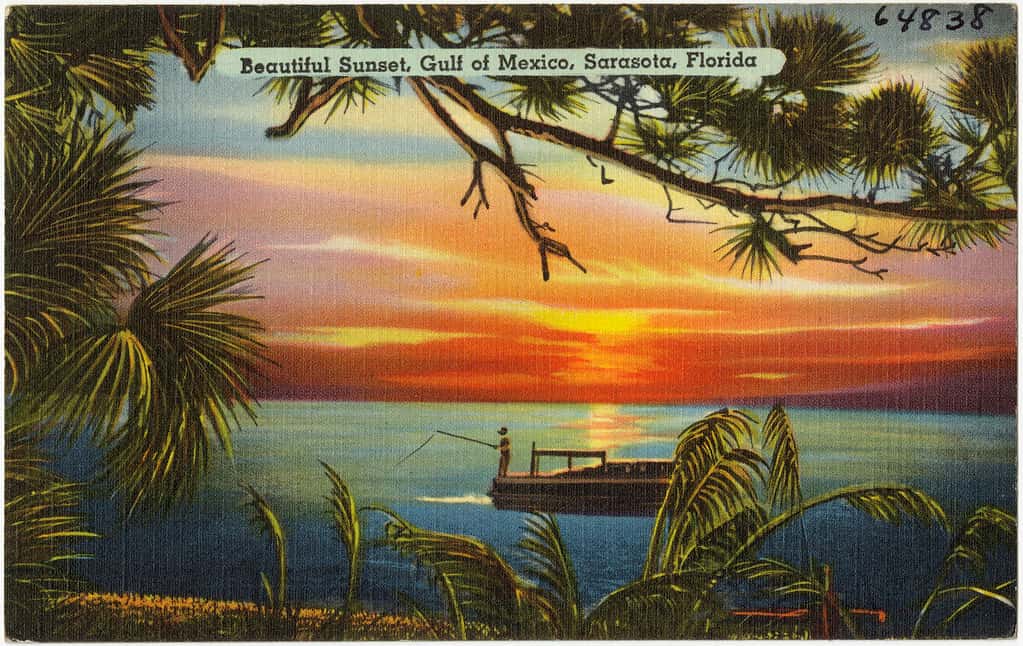
Florida's coastal waters are clear of red tide. The Florida Fish and Wildlife Conservation Commission reported that the organism responsible for the state's harmful algal blooms, Karenia brevis, was not observed in samples collected statewide over the past week, with no red tide-related fish kills reported to the agency's Fish Kill Hotline and no respiratory irritation suspected of being linked to red tide reported by coastal communities.
That is about as clean a status report as Florida's red tide monitoring produces, and it arrives at a point in the calendar when blooms have historically been building. Red tide in Florida typically initiates offshore in late summer or early autumn and moves inshore with currents and winds, which makes September a month coastal communities watch closely.
The commission's weekly status report is the authoritative public source on bloom conditions, drawing on samples collected by agency staff, partner institutions, and volunteers along both coasts. A week with no detections statewide means no bloom is currently present, not that the season is over.
What red tide actually is
Karenia brevis is a single-celled marine alga native to the Gulf of Mexico. It is not an introduced species and not new. Spanish accounts from the 1500s describe fish kills consistent with red tide along Florida's Gulf coast, and the phenomenon is documented in the scientific record going back well over a century.
The organism produces neurotoxins called brevetoxins. At low concentrations the alga is present in Gulf waters more or less continuously and causes no problems. Blooms occur when cell counts rise by orders of magnitude, at which point the toxins become concentrated enough to kill fish, sicken marine mammals and sea turtles, and, when wave action aerosolizes them, cause respiratory irritation in people onshore.
The respiratory effect is the one most Floridians encounter. Brevetoxins carried in sea spray produce coughing, throat irritation, and watery eyes in healthy people, and can trigger serious symptoms in people with asthma or chronic obstructive pulmonary disease. The effect is highly localized and depends on wind direction, which is why one beach can be unusable while another a few miles away is fine.
Why blooms happen when they do
The science on bloom initiation and intensification is more settled on some points than others, and it is worth separating them. Blooms initiate offshore, typically 10 to 40 miles out, in waters that are not receiving direct nutrient runoff from land. That much is well established, and it means the common framing that red tide is caused by fertilizer runoff is not accurate as a statement about initiation.
What nutrient loading does affect is intensification and duration once a bloom moves inshore. A bloom that reaches nearshore waters carrying elevated nitrogen and phosphorus from agricultural runoff, stormwater, wastewater, and septic systems has more fuel available, and the research supports the conclusion that nutrient enrichment can make an existing bloom worse and longer-lasting.
That distinction drives Florida's policy response. The state cannot prevent offshore initiation. It can affect what happens when a bloom arrives, which is why water quality investment, septic-to-sewer conversion, and stormwater treatment are treated as red tide mitigation even though they do not stop blooms from forming.
What a bad bloom costs Florida
The 2017 to 2019 bloom along the southwest Gulf coast is the reference case, and the numbers are severe. That bloom persisted for more than a year and killed nearly 200 manatees along with large numbers of sea turtles, dolphins, and fish. Beaches in Lee, Collier, Sarasota, and Manatee counties were fouled with dead fish for extended stretches.
The economic damage ran through tourism, which is the dominant industry in those counties. Hotel cancellations, restaurant closures, and charter fishing losses compounded over months, and the reputational effect extended past the bloom itself as booking behavior lagged the actual conditions.
Manatees are the most visible casualty and the most politically salient. Florida's manatee population has been under pressure from multiple directions, including the seagrass die-off in the Indian River Lagoon that produced a starvation-driven mortality event on the Atlantic side. Red tide exposure on the Gulf side compounds a population already stressed by habitat loss.
What it means for Floridians right now
The practical situation is good. There is no red tide anywhere in Florida waters, which means beaches on both coasts are clear of bloom-related hazards this week and charter operations, beach tourism, and coastal restaurants face no bloom-related disruption.
Residents and visitors who want to verify conditions before a beach trip can check the commission's red tide status page, which is updated weekly and includes a map broken out by region and county, along with sample-level cell counts. Mote Marine Laboratory operates a complementary beach conditions reporting system with more frequent updates at individual beaches on the southwest coast.
It is worth noting that a clear red tide report does not address the separate bacteria advisories that county health departments issue. Those are a different hazard with a different cause, and they are tracked through the state's Healthy Beaches program rather than through the wildlife commission.
The monitoring system behind the report
Florida's red tide monitoring is more extensive than most states' harmful algal bloom programs, which is a function of how much economic activity depends on knowing the answer. The commission's Fish and Wildlife Research Institute in St. Petersburg processes samples and issues the weekly status report, and the sampling network draws on agency staff, university partners, local governments, and trained volunteers.
Satellite imagery supplements the water sampling by detecting chlorophyll signatures offshore, which can provide early warning of a bloom moving toward the coast. Aerial and drone surveys add resolution during active events. The combination gives Florida a reasonably good picture of where a bloom is and where it is heading, though bloom behavior remains difficult to forecast more than a few days out.
Research into mitigation has advanced but has not produced a deployable solution at scale. Approaches tested have included clay flocculation, ozone treatment in enclosed waters, and various compounds intended to kill the organism selectively, each with tradeoffs around cost, ecological side effects, and the sheer volume of water involved in a coastal bloom.
What a bloom does to a coastal economy
The wildlife and public health effects of red tide get the coverage, but the economic mechanism is what makes a bloom a civic emergency in southwest Florida. The region's economy rests on beach tourism, waterfront real estate, and recreational fishing, and all three collapse simultaneously when a bloom comes ashore.
Hotel cancellations arrive within days of the first news coverage, and they arrive for dates weeks out because visitors planning a beach trip will simply choose somewhere else. Restaurants that depend on visitor traffic see the effect immediately. Charter fishing operations lose bookings and also lose the fish.
The recovery lags the bloom. Booking behavior responds to memory rather than to current conditions, and a destination that spent a month in national coverage for dead fish on the beach carries that association into the following season. Tourism development councils in affected counties have spent substantial money on recovery marketing after major blooms for exactly this reason.
Why beach cleanup is harder than it sounds
During a significant fish kill, local governments face an immediate and unglamorous problem: tons of decomposing fish on public beaches in Florida heat. The cleanup is expensive, labor-intensive, and has to be repeated daily while the bloom persists.
Disposal is its own complication. The volume can overwhelm normal waste handling, and the material is not something that can simply be pushed back into the water, because it will wash ashore again and because decomposition consumes oxygen and worsens conditions for surviving marine life.
The state has at various points made emergency funds available to coastal counties for red tide cleanup, and local governments have developed response plans that can be activated quickly. Those plans sit unused in a year like this one, which is the best possible outcome for the departments that maintain them.
The difference between red tide and blue-green algae
Floridians frequently conflate two distinct phenomena, and the distinction matters for understanding both the cause and the response. Red tide is marine, caused by Karenia brevis, and occurs in salt water along the coast, primarily on the Gulf side. Blue-green algae blooms are freshwater, caused by cyanobacteria, and occur in Lake Okeechobee, in the canals and rivers connected to it, and in other inland water bodies.
Their causes differ substantially. Blue-green algae blooms are strongly driven by nutrient loading from agricultural and urban runoff combined with warm, stagnant water, which makes them more directly a consequence of land management than red tide is. Their toxins are different, and the health effects differ accordingly, with cyanobacteria producing liver and neurological toxins.
The two can interact. Discharges from Lake Okeechobee carrying nutrients and freshwater algae into the coastal estuaries have been associated with worsening marine conditions, and severe episodes in which both were present simultaneously have produced some of the worst water quality events in the state's recent history. That interaction is a principal argument for the Everglades restoration projects intended to store and treat water south of the lake.
What's next
The commission will issue its next weekly status report on schedule, and residents in coastal counties should treat that as the source of record rather than anecdotal accounts. Conditions can change quickly when winds shift.
Bloom risk remains elevated through autumn regardless of the current clear status. Offshore initiation is not observable from the beach, and a bloom can move inshore over a matter of days once currents carry it in. October and November have historically produced significant Gulf coast blooms.
The state's broader water quality program, including Everglades restoration and nutrient reduction projects in priority water bodies such as the Indian River Lagoon and Biscayne Bay, continues to receive substantial funding, and those investments are the long-horizon lever on bloom severity rather than on bloom occurrence.
Spotted an issue with this article?
Have something to say about this story?
Write us a letterComments
No comments yet. Be the first to weigh in.
Related Coverage

Extreme Drought Vanishes From Florida Map After a Week of Rain
3h ago

Record Sargassum Season Fades as Key West and UM Researchers Prepare for the Next Wave
5d ago
Florida's New Stormwater Pollution Credit Rules Draw Fire From Environmentalists and Industry Alike
6d ago
Lead pellets from shot iguanas linked to first known crocodile poisoning death in Florida
Oct 7