Rubio's State Department Designates Two More Mexican Cartels as Terrorist Groups, With Florida in the Crosshairs of the Drug Trade
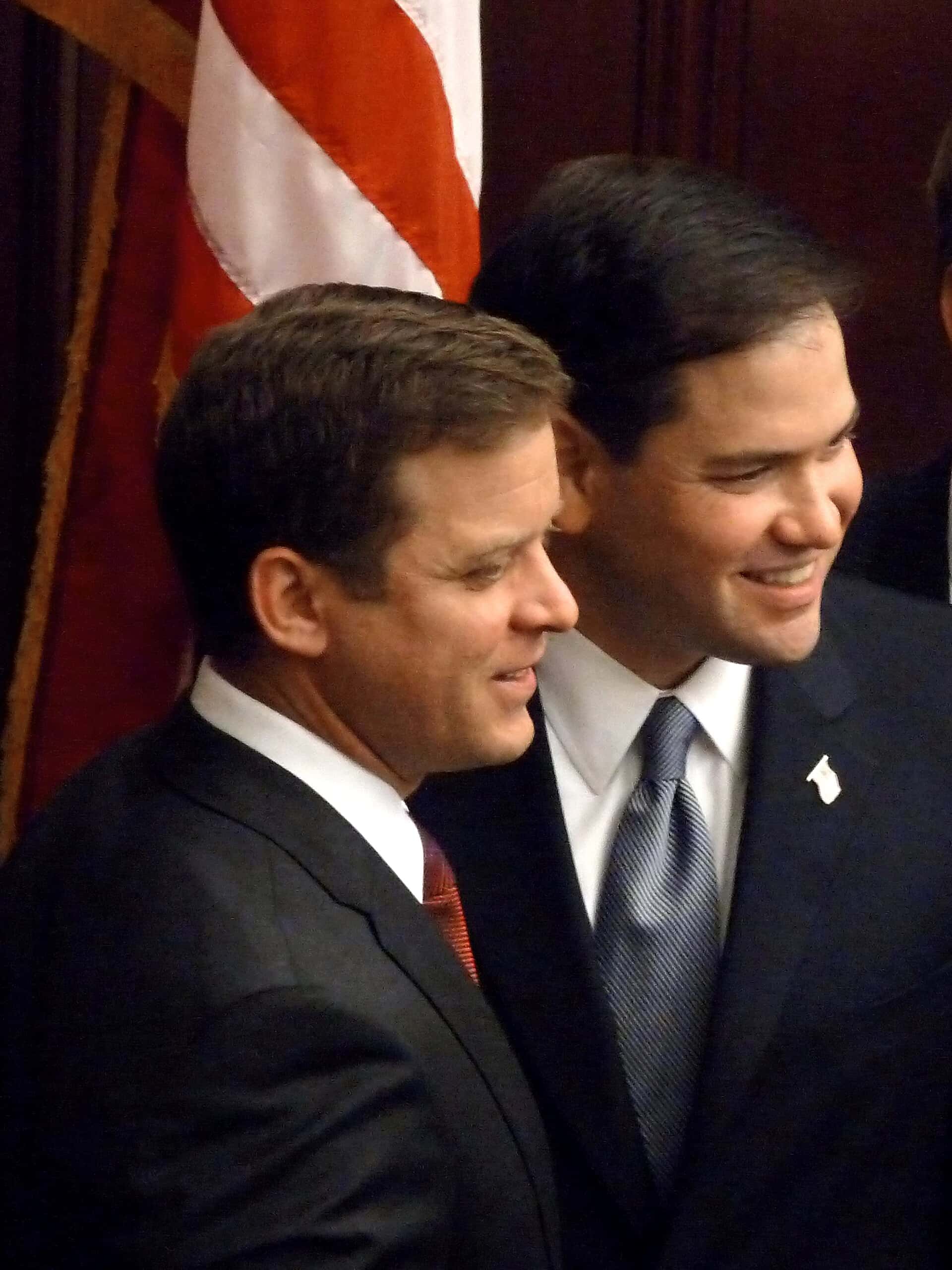
Secretary of State Marco Rubio, who represented Florida in the U.S. Senate before joining the Trump administration, announced on July 16, 2026, that the State Department is designating two more Mexican criminal organizations, the Juarez Cartel and Los Viagras, as Foreign Terrorist Organizations and Specially Designated Global Terrorists. The department said the designations are intended to cut the groups off from the U.S. financial system and deny them the resources they use to move narcotics and carry out violence.
The announcement came the same day Rubio convened a Ministerial on the Resurgence of Political Terrorism in Washington, a gathering the department said drew representatives from dozens of countries. It built on an inaugural Counterterrorism Law Enforcement Workshop held in May 2026 that, according to the department, convened 14 countries to coordinate against transnational criminal and terrorist networks.
For Florida, the stakes are not abstract. Rubio is a Floridian, the state's seaports and airports are entry points for narcotics that cartels traffic, and Florida is home to one of the nation's largest diasporas from Latin America, communities with deep ties to the countries where these organizations operate. Drug overdoses have cut through Florida families for years, giving the designations a public-health dimension alongside the national-security framing the administration has emphasized.
The Designations Announced
In its July 16 release, the State Department said the Juarez Cartel and Los Viagras are being added to the list of Foreign Terrorist Organizations and Specially Designated Global Terrorists. The department described both groups as violent narco-trafficking organizations responsible for attacks against Americans, Mexican security forces, and civilians. It cited a 2019 massacre in the Mexican state of Sonora, in which nine U.S. citizens, including children, were killed, attributing the killings to a faction linked to the Juarez Cartel.
The practical effect of the designations, the department said, is to block the groups' access to the U.S. financial system, freeze any property they hold in the United States, and make it a crime for U.S. persons to knowingly provide them material support. The State Department said the action denies the cartels resources they would otherwise use to finance operations that reach into American communities.
The two groups join a roster of Mexican organizations the administration has already designated, including the Sinaloa Cartel and the Cartel Jalisco Nueva Generacion. The federal government formalized the additions through a notice in the Federal Register dated July 16, 2026, the standard mechanism for putting a designation into legal effect.
A Ministerial on Political Terrorism
Alongside the cartel action, Rubio hosted a ministerial in Washington that the department framed around what it called the resurgence of political terrorism. According to news accounts of the event, Rubio and White House adviser Stephen Miller addressed diplomats from dozens of countries and urged them to confront what the administration described as a growing threat from what it characterized as far-left political violence.
The State Department, in materials tied to the event, characterized part of the threat as emanating from what it labeled far-left terrorist and aligned groups. Those characterizations are the department's own framing. Rubio, according to reports of his remarks, argued that U.S. counterterrorism doctrine had a blind spot when it came to extremist violence associated with the political left, and he tied that argument to a new visa restriction policy announced the same day.
The visa policy, the department said, targets members of what it described as far-left terrorist and aligned organizations, along with people who have supported or incited terrorism or violence. The administration presented the ministerial, the cartel designations, and the visa restrictions as parts of a single push against transnational threats, though the three actions address different actors and legal authorities.
Building on a May Workshop
The July ministerial followed an inaugural Counterterrorism Law Enforcement Workshop that the department said took place in May 2026 and convened 14 countries. The department described that earlier session as an effort to align law enforcement agencies across borders on tracking financing, disrupting logistics networks, and sharing intelligence about groups the United States has designated.
Cartels operate as transnational enterprises, moving product, money, and personnel across multiple countries, which is why the administration has emphasized multilateral coordination. The designations announced in July give partner governments a common legal reference point, since a Foreign Terrorist Organization label carries specific consequences under U.S. law and can shape how allied financial systems treat the groups.
For a border and port state like Florida, that cross-border coordination matters. Narcotics that reach Florida often transit multiple jurisdictions before arriving, and disruptions upstream can affect what ultimately reaches the state's communities. The department cast the workshop and the ministerial as building blocks toward a broader enforcement architecture.
Why Florida Feels the Cartel Threat
Florida sits at the end of several trafficking routes. The state's deepwater seaports, its international airports, and its long coastline make it a target for organizations that move narcotics into the United States. Federal drug enforcement assessments have repeatedly identified Mexican cartels, including the Sinaloa Cartel and the Cartel Jalisco Nueva Generacion, as the primary producers and traffickers of the synthetic opioids driving the nation's overdose crisis.
Federal officials note that the large majority of fentanyl interdicted in the United States is stopped at official ports of entry, often concealed within lawful commerce. That pattern underscores why enforcement resources concentrate on ports and cargo screening, functions that touch Florida directly given the volume of trade and travel moving through the state. The designations add a legal tool aimed at the financing behind that movement.
State officials have paired federal action with their own programs. Florida's State Assistance for Fentanyl Eradication effort has, according to state figures, produced thousands of arrests and seizures of fentanyl and other drugs since it began in 2023. The cartel designations operate at a different level, targeting the organizations rather than street-level distribution, but the administration has argued the two approaches reinforce one another.
Florida's Latin American Communities
Florida is home to one of the largest and most diverse Latin American diasporas in the United States, with communities tracing roots to Cuba, Venezuela, Colombia, Mexico, Central America, and beyond. Those communities maintain family, cultural, and economic ties to the countries where cartels operate, which means policy shifts in Washington resonate in Florida neighborhoods in ways they may not elsewhere.
Rubio, the son of Cuban immigrants and a longtime figure in Florida politics, has often framed his foreign policy around the Western Hemisphere. His prominence gives Florida audiences a direct connection to the decisions coming out of the State Department, and his standing within the state's political landscape ensures the designations will be closely followed by constituencies that have long pressed Washington on security in the region.
At the same time, advocates for immigrant communities have historically urged caution that aggressive enforcement framing not spill over into the treatment of law-abiding residents who share nationality with people the government is targeting. The designations focus on the organizations themselves, but the broader immigration and enforcement climate in Florida shapes how such announcements are received.
Overdoses and the Public-Health Stakes
The human toll of the drug trade has landed heavily on Florida families. For years, fentanyl and other synthetic opioids drove a rising count of overdose deaths across the state, cutting across geography, age, and income. State officials have more recently pointed to a decline in fentanyl and opioid deaths, citing data that showed a significant year-over-year drop, which they attributed to enforcement, treatment, and prevention efforts.
Even with that reported decline, the underlying supply chain remains a concern, and the administration has tied the cartel designations to the goal of choking off the financing and logistics that keep synthetic opioids flowing. The department argued that treating the organizations as terrorist entities expands the tools available to disrupt their operations before product reaches U.S. streets.
Public-health experts have generally cautioned that supply-side enforcement works best when paired with treatment access and overdose-reversal resources, since demand and addiction persist regardless of which organization controls distribution. For Florida families who have lost relatives to overdoses, the designations represent one piece of a response that also runs through hospitals, treatment programs, and first responders.
Critics and the Debate
The administration's broader framing has drawn criticism, particularly the emphasis on what it characterized as far-left political terrorism. According to reporting on the ministerial, multiple former officials questioned whether the threat the administration described rises to the level posed by other extremist movements, and some critics argued the framing risks politicizing counterterrorism policy to target political opponents.
Those criticisms attach mainly to the political-terrorism ministerial and the visa policy rather than to the cartel designations, which have drawn a broader base of support given the documented violence associated with the organizations. Still, opponents of the administration have argued that bundling the announcements together blurs the line between organized criminal enterprises and domestic political disputes.
Supporters counter that the cartels meet any reasonable definition of a terrorist organization given their record of mass violence, and that the designations simply align U.S. law with that reality. The State Department has defended all three actions as complementary responses to threats it says have been underestimated. The characterizations on each side reflect the arguments of their proponents rather than settled fact.
What's Next
With the designations formalized, federal agencies will move to implement the financial and legal consequences, including efforts to identify and freeze assets and to pursue anyone providing the groups material support. The visa restriction policy will be applied by consular officials going forward, and the administration has signaled it intends to continue expanding the list of designated organizations.
For Florida, attention will turn to whether the enforcement architecture translates into measurable disruption of the narcotics reaching the state's ports and communities. State and federal agencies will continue their interdiction work, and officials are likely to point to seizure and overdose data as evidence of progress or its absence in the months ahead.
The political debate over the administration's political-terrorism framing is likely to persist, with critics and supporters continuing to contest how the threat is defined. Floridians, given Rubio's prominence and the state's exposure to the drug trade, will remain closely connected to how the policy develops, both in Washington and in the communities where the consequences are felt.
Spotted an issue with this article?
Have something to say about this story?
Write us a letterComments
No comments yet. Be the first to weigh in.
Related Coverage

Wholesale inflation jumps 1.3% in September as gas soars: what it means for Florida
5h ago

NASA leaders to update Artemis acceleration and 2028 Moon landing plan at Kennedy on Oct. 23
7h ago

Jacksonville woman gets 15 months in federal prison for punching trooper during ICE operation
9h ago

Eight states sue OpenAI over ChatGPT's harm to children, following Florida's lead
13h ago