SpaceX Launches Spy Satellites From Cape Canaveral as Launch Cadence Surges
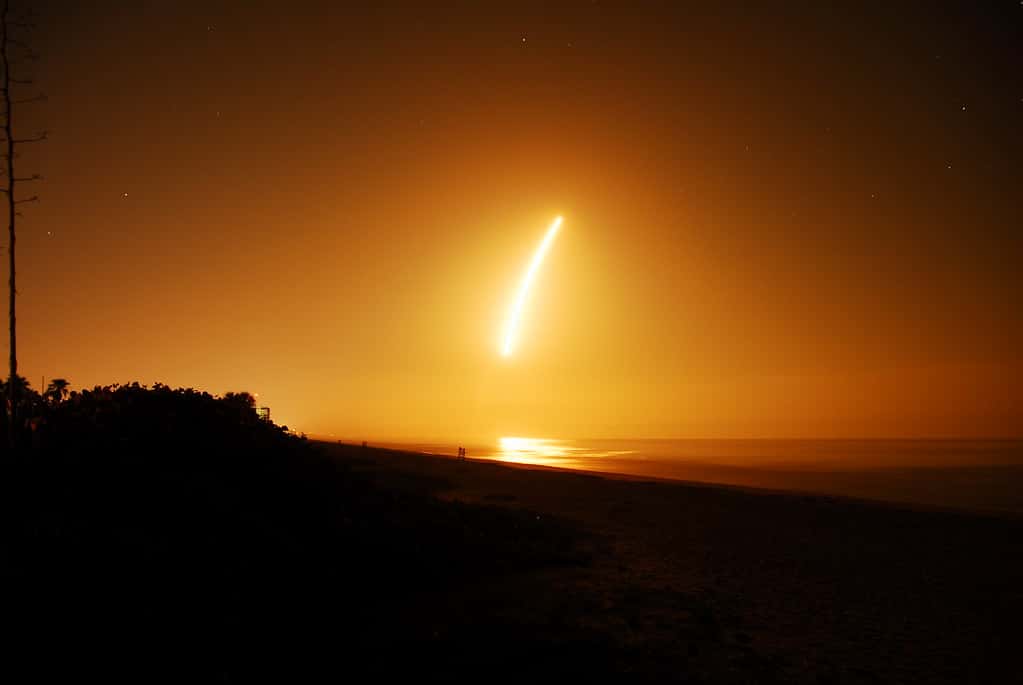
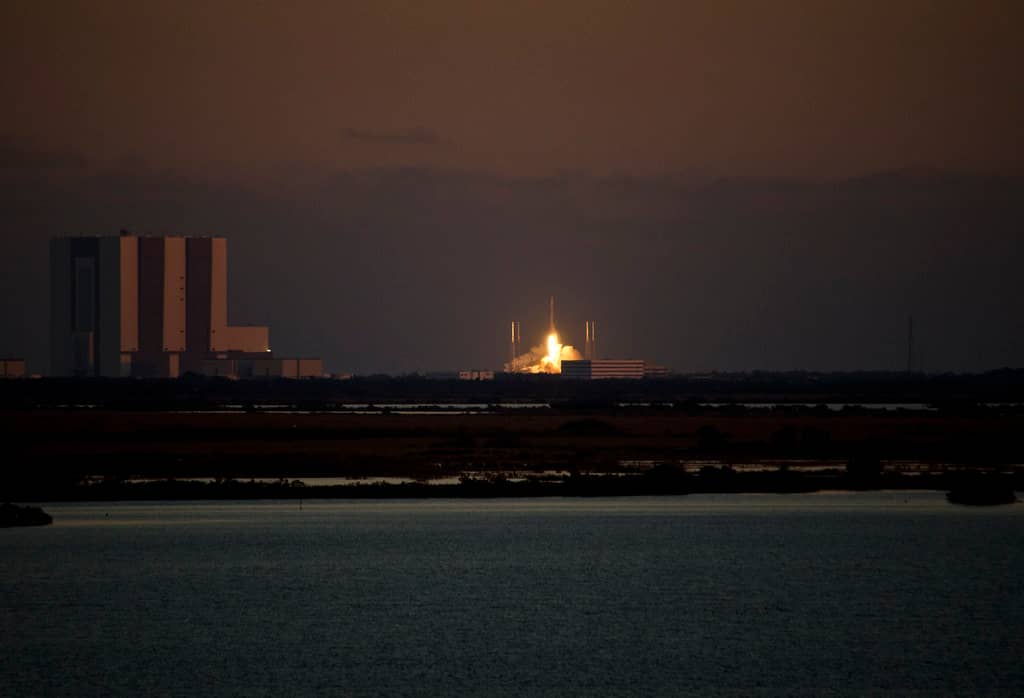
SpaceX launched a Falcon 9 rocket carrying intelligence-gathering satellites for the National Reconnaissance Office from Florida's Space Coast on June 18, 2026, adding a national-security mission to an already crowded schedule at Cape Canaveral. The launch, like all NRO missions, was wrapped in secrecy, with payload details kept limited because the satellites support classified intelligence work for the United States.
For Florida, and for Brevard County in particular, the flight is one thread in a much larger story: the Space Coast is moving at a pace that few places on Earth can match, sending rockets aloft for commercial, civil, and national-security customers in rapid succession. The NRO launch underscores Florida's central role not only in commercial spaceflight but also in the nation's intelligence and defense infrastructure, a position that brings jobs, investment, and strategic weight to the region.
The mission also arrives amid a stretch of launches that illustrates just how dense the Space Coast calendar has become. Around the same window, SpaceX has Starlink missions on the manifest, including one batch delayed to roughly June 23 to 24, while United Launch Alliance prepares to fly an Atlas V rocket carrying internet satellites for Amazon. The result is a near-constant drumbeat of activity along Florida's eastern shore.
A Classified Mission From Florida
The Falcon 9 lifted off from Cape Canaveral carrying satellites for the National Reconnaissance Office, the agency responsible for designing, building, and operating the country's spy satellites. Because NRO missions are classified, the agency and its launch partners release only limited information about the payloads, and details such as the precise capabilities and final orbits of the satellites are not made public.
That secrecy is standard for national-security launches, and it reflects the sensitive role these satellites play in gathering intelligence. What is publicly known is that the mission flew from Florida, on a SpaceX rocket, as part of the ongoing relationship between the company and the government for delivering critical payloads to orbit. The launch added to the steady flow of such missions that have made the Space Coast a hub for both commercial and defense-related spaceflight.
For the personnel who support these launches, from the engineers and technicians at the pads to the range and safety teams, a classified mission carries the same operational demands as any other, with the added requirements that come with handling sensitive payloads. The successful flight from Cape Canaveral reinforced Florida's standing as a trusted launch site for the most sensitive cargo the country sends to space.
The NRO has increasingly turned to a higher tempo of launches to build out its satellite networks, and Florida has been a primary departure point for that effort. Each mission from the Space Coast adds to a constellation of capabilities that the agency uses to support national security, even as the specifics remain out of public view.
The Space Coast Cadence
The NRO launch is best understood not in isolation but as part of a launch cadence that has reached remarkable levels. The Space Coast, anchored by Cape Canaveral Space Force Station and Kennedy Space Center, now hosts launches at a frequency that would have seemed implausible only a decade ago, with multiple providers and mission types crowding the calendar.
SpaceX drives much of that volume through its Starlink program, which deploys batches of internet satellites on a recurring basis. One such batch was delayed to around June 23 to 24, a reminder that even with a high tempo, individual launches shift as weather, technical reviews, and range scheduling dictate. The Starlink missions, combined with national-security and commercial flights, keep the Falcon 9 fleet busy out of Florida.
United Launch Alliance adds another dimension to the cadence. The company is preparing to fly an Atlas V rocket from Space Launch Complex 41 at Cape Canaveral carrying a batch of 29 Amazon Leo satellites, part of the Project Kuiper effort to build a broadband internet constellation. The mission is described as among the last of the Atlas V flights booked by Amazon, marking a notable point in the venerable rocket's history as newer vehicles take on more of the workload.
Taken together, these missions paint a picture of a launch corridor operating at near-industrial scale. Multiple rockets, multiple customers, and multiple purposes converge on a relatively small stretch of Florida coastline, and each flight requires the coordination of ranges, recovery operations, and the supporting workforce that makes the cadence possible.
Brevard County and the Space Economy
The relentless pace of launches translates directly into economic activity for Brevard County and the surrounding Space Coast. The region has built much of its modern identity around the launch industry, and the volume of missions sustains a workforce of engineers, technicians, manufacturing staff, and support personnel whose livelihoods are tied to the rockets that lift off from Cape Canaveral and Kennedy Space Center.
A high launch cadence means steady demand for the people and facilities that prepare, fuel, and fly rockets, as well as those who recover and refurbish reusable boosters. That demand ripples outward into the local economy, supporting businesses that serve the workforce and reinforcing the area's reputation as a place where the space industry is not a single employer but an entire ecosystem.
The diversity of customers strengthens that economy further. National-security missions for the NRO, commercial internet deployments for Starlink and Project Kuiper, and civil space efforts each draw on the same regional infrastructure, spreading the benefits of the launch boom across multiple lines of business. For Brevard County, the result is an economy increasingly anchored by the cadence overhead.
That stability has encouraged longer-term investment in the region as well. Companies tied to the launch industry have expanded facilities along the Space Coast, and the steady flow of missions has helped attract suppliers, contractors, and skilled workers who see Florida as a durable base of operations rather than a temporary posting. The high tempo also supports the recovery and refurbishment operations that reusable rockets require, adding still more activity to the local industrial base. Each new mission, including the recent NRO flight, reinforces the perception that the cadence is here to stay, which in turn shapes hiring and capital decisions across Brevard County.
Florida's National-Security Role
The NRO launch highlights a dimension of Florida's space economy that often receives less attention than its commercial side: the state's role in national security. Cape Canaveral Space Force Station is a military installation, and the Space Force oversees the range from which these missions fly, embedding defense functions directly into the Space Coast's daily operations.
By serving as a departure point for the nation's spy satellites, Florida occupies a strategic position in the country's intelligence architecture. The satellites the NRO places in orbit support a range of national-security needs, and the fact that they ascend from Florida ties the state to capabilities that operate far from public view. That role brings both responsibility and significance to the Space Coast's launch infrastructure.
The blend of national-security and commercial activity is a defining feature of the modern Cape. Within the same stretch of days, the same coastline can host a classified intelligence mission and a commercial internet deployment, a juxtaposition that captures Florida's dual importance to defense and to the broader space economy.
The Space Force's stewardship of the range also means that the same teams responsible for safely conducting commercial launches handle the most sensitive national-security flights. That shared infrastructure creates efficiencies, but it also places a premium on reliability and security, since a single corridor must serve customers with very different requirements. As the cadence climbs, the demands on that infrastructure grow, and Florida's ability to meet them keeps the state at the center of both the defense and commercial sides of American spaceflight. The recent NRO mission, flown without incident from the Cape, demonstrated that capacity in practice.
The Commercial Internet Race
Beyond the NRO flight, the Space Coast schedule reflects the intensifying race to build broadband internet constellations in low Earth orbit. SpaceX's Starlink program and Amazon's Project Kuiper both rely on repeated launches to assemble large networks of satellites, and both turn to Florida to get their hardware into space.
The upcoming ULA Atlas V mission carrying 29 Amazon Leo satellites is part of that buildout, and its description as among the last Atlas V flights booked by Amazon signals a transition point. As the Atlas V approaches the end of its service for these missions, the work of deploying internet constellations is shifting toward newer rockets, even as Florida remains the launch site of choice.
For consumers, the competition among constellations promises expanded access to high-speed internet from space, particularly in areas underserved by traditional networks. For Florida, the race means more launches, more payloads, and a continued central role in deploying the satellites that will shape how millions of people connect. The state's launch corridor sits at the heart of that effort.
A Workforce Riding the Cadence
The people who make the Space Coast's launch tempo possible form a deep and increasingly specialized workforce, and the steady flow of missions has given that workforce a measure of stability uncommon in the broader aerospace industry. From propulsion technicians to range controllers, the roles tied to launch operations draw on skills that are honed through repetition, and a busy calendar keeps those skills sharp while creating openings for new workers to enter the field.
Educational institutions across central Florida have aligned programs with the needs of the launch industry, helping to supply the technicians and engineers that providers require as the cadence climbs. That pipeline connects the region's schools and training programs directly to the pads at Cape Canaveral and Kennedy Space Center, reinforcing a local ecosystem in which talent is cultivated and retained rather than imported for single missions.
For Brevard County, the result is an economy in which the workforce and the launch schedule reinforce one another. A higher tempo sustains more jobs, and a deeper talent base in turn supports the reliability that customers, including national-security agencies like the NRO, expect from a Florida launch site.
What's Next
The immediate calendar points to more activity in short order. SpaceX is expected to proceed with its delayed Starlink batch around June 23 to 24, weather and technical reviews permitting, while ULA prepares its Atlas V flight with the Amazon Leo satellites from Space Launch Complex 41. Each launch will add to a cadence that shows little sign of slowing.
For the NRO, the June 18 mission is one entry in an ongoing effort to expand the nation's intelligence capabilities from orbit, and additional national-security launches from Florida are likely to follow as the agency continues building out its networks. The classified nature of those missions means the public will see the rockets rise without learning the full scope of what they carry.
For Brevard County and the wider Space Coast, the trajectory is one of sustained growth tied to the launch industry. As long as commercial, civil, and national-security customers keep choosing Florida, the state will remain a focal point of American spaceflight, with its economy, its workforce, and its strategic value rising along with every rocket that clears the pad.
Spotted an issue with this article?
Have something to say about this story?
Write a letter to the editor