Federal Medicaid Cuts Squeeze Florida's Rural Hospitals as Reductions Take Hold
Federal Medicaid spending reductions enacted in recent legislation are reaching Florida hospitals, with rural facilities feeling the effects most acutely. The reductions began on October 1, 2025, the start of the federal fiscal year, and hospitals began receiving lower federal support for uncompensated care at that point. The Congressional Budget Office has projected federal Medicaid spending cuts of $911 billion over ten years. For Florida, one of the states that did not expand Medicaid under the Affordable Care Act, the reductions land on a system that already absorbs a substantial volume of care for which it receives no payment.
How the reductions work
The most direct mechanism affecting hospitals is the reduction in Disproportionate Share Hospital payments, which supplement facilities that serve a high proportion of Medicaid and uninsured patients. Those payments were designed to offset the gap between what such hospitals spend on care and what they collect for it.
Reductions in that program hit hardest at facilities with the thinnest operating margins, which in Florida means rural hospitals and safety net facilities in urban areas. Hospitals with substantial commercial insurance volume can absorb the change more readily because commercial reimbursement rates exceed Medicaid rates by a wide margin.
Additional provisions affect eligibility verification requirements, work requirements in some contexts, and financing mechanisms that states have used to draw federal matching funds. Each operates on a different timeline, and their combined effect accumulates over the ten-year window the Congressional Budget Office analyzed.
Why Florida is particularly exposed
Florida did not expand Medicaid under the Affordable Care Act, which means the state's health systems cannot rely on the expanded coverage that reduced uncompensated care volume in expansion states. Adults who would qualify for coverage in expansion states often fall into a coverage gap in Florida, earning too much for traditional Medicaid and too little for meaningful subsidy.
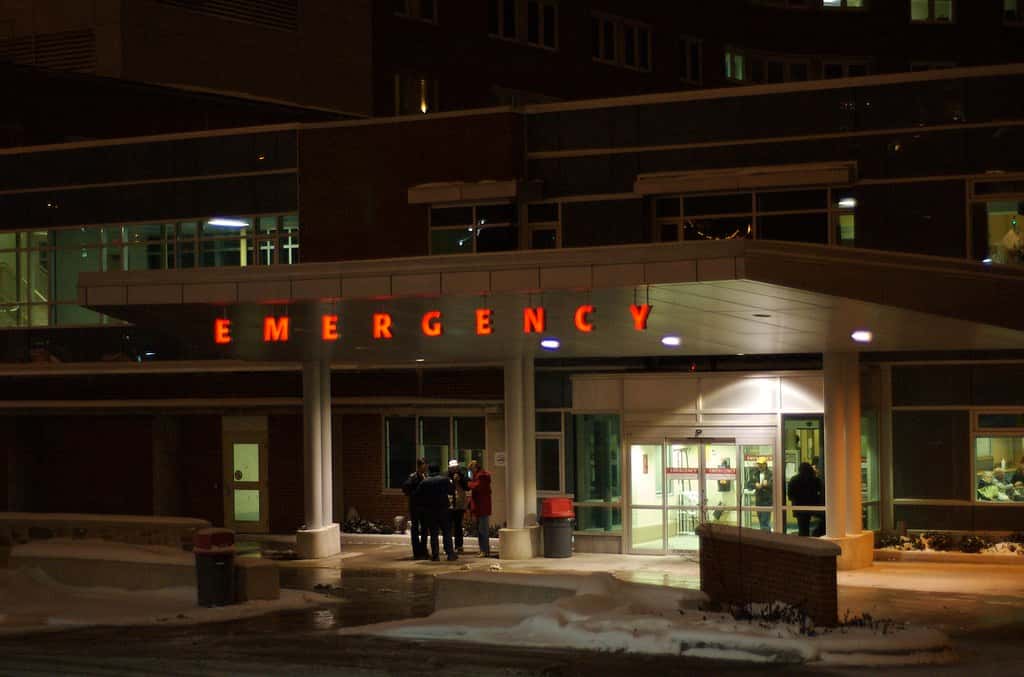
The practical result is that Florida hospitals treat a larger uninsured population than hospitals in comparable expansion states, and they absorb the cost. Emergency departments are legally obligated to screen and stabilize patients regardless of ability to pay, which means uncompensated care is not a discretionary expense.
Analysts have noted that large states with significant Medicaid populations, including Texas, California, New York, and Florida, stand to lose hundreds of millions of dollars annually in hospital support if the reductions proceed as scheduled. Florida's non-expansion status compounds that exposure.
What is happening at Florida facilities
Reporting from Highlands County described reductions in Medicaid dollars and marketplace-related payments affecting local hospitals, with HCA Florida Highlands Hospital among the facilities experiencing the change. Both HCA Florida Healthcare and AdventHealth operate facilities in the county, and the effects of the federal legislation have begun appearing in rural health systems.
Rural hospitals face a distinct financial structure. They serve smaller populations, which means fixed costs are spread across fewer patients, and they typically carry a higher share of Medicare and Medicaid patients relative to commercially insured patients. That payer mix makes them more sensitive to changes in public program reimbursement than urban facilities.
Service line reductions are the typical first response when rural hospitals face financial pressure. Obstetrics units close frequently because they require specialized staffing around the clock for relatively low volume. Behavioral health and certain surgical services follow. Full closures occur but are less common than service reductions.
The Rural Health Transformation Program
Congress included $50 billion over five years for a Rural Health Transformation Program in the 2025 reconciliation legislation, intended to offset some of the effects on rural providers. The program is administered through the Centers for Medicare and Medicaid Services, which has been distributing funds to states.
Analysts have cautioned that the program's structure limits its ability to backfill losses. Federal guidance emphasizes investments in technology and new activities rather than operational support, and it caps payments to providers at 15 percent of the funds awarded to each state. States have generally approached the funding as temporary support for new initiatives rather than as a replacement for reduced reimbursement.
Comparisons between a state's rural health fund allotment and its Medicaid spending reductions can be misleading, as health policy researchers have noted, because the two operate on different timelines, reach different recipients, and carry different restrictions on use.
What it means for Florida patients
The most immediate patient effect of rural hospital financial pressure is distance to care. When a rural facility closes an obstetrics unit, expectant mothers travel farther for delivery, and that distance correlates with worse outcomes in obstetric emergencies where minutes matter.
Emergency care access follows the same pattern. Rural residents in counties without a full-service hospital face longer transport times, and time to definitive care is the primary determinant of survival in cardiac events, stroke, and major trauma.
Patients with coverage may also experience changes. Hospitals under financial pressure reduce service lines that require subsidy, which can mean traveling to a regional facility for services that were previously available locally, regardless of the patient's insurance status.
The state policy dimension
Florida hospitals secured Medicaid funding through state mechanisms earlier this year as federal scrutiny of state financing arrangements intensified. States use various financing tools, including provider taxes and intergovernmental transfers, to generate the state share that draws federal matching funds, and federal policy changes have restricted some of those approaches.
Florida's decision not to expand Medicaid has been debated in the Legislature repeatedly, and the state's position has remained consistent across multiple sessions. That policy question is likely to feature in the 2026 election cycle given the financial pressure on the hospital system.
The state budget for fiscal year 2026-2027, signed at $117.6 billion in late June, includes health care appropriations that interact with federal funding streams. State-level decisions about supplemental payment programs affect how much of the federal reduction reaches individual facilities.
How hospitals absorb reimbursement changes
Hospital finance operates on thin margins even in favorable conditions, and rural facilities frequently run at or near break-even. When a revenue source declines, administrators face a limited set of options: reduce costs, reduce services, seek additional revenue, or draw down reserves.
Cost reduction typically begins with administrative functions and supply chain renegotiation, which preserve clinical capacity. Once those options are exhausted, staffing becomes the target, and staffing reductions in a hospital affect clinical services because personnel costs represent the majority of operating expense.
Reserves buy time rather than solving the problem. A facility drawing on reserves to cover operating losses is on a defined timeline, and the length of that timeline determines how long a community retains services while alternatives are sought.
The coverage landscape for Florida residents
Florida residents obtain coverage through employer plans, the federal marketplace, Medicare, Medicaid, and military and veterans programs. The state has consistently had among the highest marketplace enrollment in the country, reflecting both its large self-employed population and the absence of Medicaid expansion.
Marketplace subsidy levels determine affordability for that population, and changes to subsidy structure affect Florida enrollment more than most states because of the volume of enrollees. Households evaluating coverage should review options during open enrollment rather than assuming continuity from the prior year, since plan availability and pricing change annually.
Uninsured residents retain access to emergency care and to federally qualified health centers, which operate across Florida and provide primary care on a sliding fee scale. Those centers absorb a share of the demand that would otherwise reach hospital emergency departments, and their capacity is itself dependent on federal funding streams.
What communities can do
Local governments in rural Florida counties have limited tools but not none. Some counties operate hospital taxing districts that provide local support to facilities serving their residents, and those districts can adjust millage within statutory limits to address funding gaps.
Partnership and affiliation arrangements offer another path. Independent rural hospitals increasingly affiliate with larger systems, which provides access to shared services, purchasing power, and capital that a standalone facility cannot generate. Those arrangements involve tradeoffs in local control.
Telehealth has expanded access for services that do not require physical presence, particularly behavioral health and chronic disease management. It does not substitute for emergency capacity or inpatient care, but it reduces the volume of routine visits that would otherwise require travel to a distant facility.
What's next
The reductions phase in over multiple years, meaning the effects observed so far represent an early portion of the total. Hospital financial reports and closure announcements over the coming years will indicate how the system adapts.
Rural Health Transformation Program allocations will continue moving to states, and how Florida directs its share will determine which facilities and which initiatives receive support. State decisions on that allocation are a meaningful lever within federal constraints.
For residents of rural Florida counties, the practical guidance is to understand what services are available locally and where the nearest facility offering higher-level care is located. Emergency medical services agencies maintain transport protocols that route patients to appropriate facilities, and knowing the regional landscape matters most in circumstances where planning is not possible.
Hospital financial disclosures and state health agency reporting will document how Florida facilities absorb the reductions over the coming years. Communities concerned about their local hospital's status can follow those disclosures, attend hospital district board meetings where such districts exist, and engage with state legislators who determine how Florida structures its supplemental payment programs. Those state-level decisions represent the most accessible point of influence for residents, since the federal reductions themselves were established in law and would require congressional action to change.
The broader question facing Florida is whether the state adjusts its own health policy in response to the federal changes or absorbs them within the existing framework. That question has been debated in the Legislature across multiple sessions without resolution, and the financial pressure now reaching hospitals gives it renewed urgency. The 2027 legislative session, and the gubernatorial and legislative elections that precede it, will determine who makes that decision and under what political conditions.
Spotted an issue with this article?
Have something to say about this story?
Write a letter to the editor