DeSantis Opens Florida Pavilion at Farnborough Airshow on UK Trade Mission
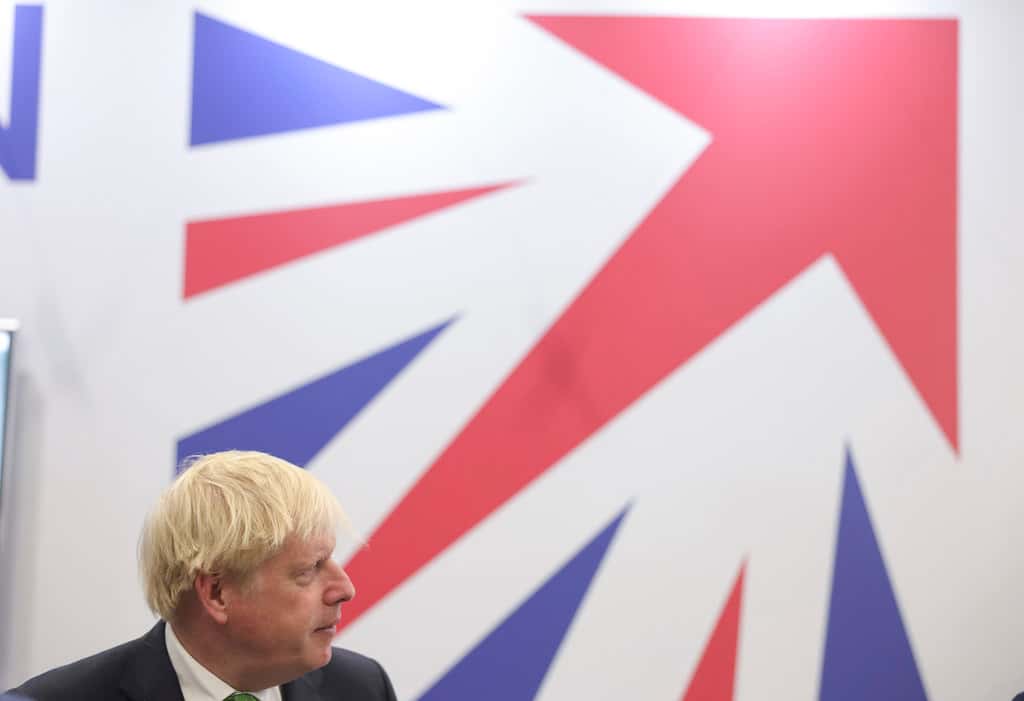
Gov. Ron DeSantis opened the Florida Pavilion at the 2026 Farnborough International Airshow on the first day of a business development leadership mission to the United Kingdom, according to a release from the Executive Office of the Governor. The trip places Florida's aerospace and defense sector in front of one of the largest gatherings of aviation manufacturers, suppliers, and government buyers in the world.
What the mission involves
Farnborough is one of the two dominant international airshows in the global aviation calendar, alternating years with the Paris Air Show. It functions less as a public spectacle than as a commercial marketplace, where airframe manufacturers announce orders, suppliers court contracts, and national and regional delegations promote their industrial bases to prospective investors.
State pavilions at events like Farnborough serve a specific purpose. They give small and mid-sized companies from a single jurisdiction a shared physical presence and a credible institutional backdrop that individual firms would struggle to afford or arrange on their own. For a supplier from Melbourne or Jacksonville, a slot in a state pavilion offers proximity to buyers who would not otherwise take a meeting.
The governor's office framed the trip as a business development leadership mission, the standard format for these delegations, which typically pair the state's chief executive with economic development officials and a roster of participating companies.
Why aerospace matters to Florida
Aerospace and aviation occupy an unusually large place in Florida's economy relative to most states. The sector spans commercial launch operations on the Space Coast, aircraft maintenance and repair operations clustered around several of the state's airports, defense manufacturing, avionics and components suppliers, and a substantial pilot and technician training industry anchored by institutions including Embry-Riddle Aeronautical University in Daytona Beach.
The Space Coast in Brevard County has drawn the most attention in recent years because of the sharp increase in orbital launch activity from Cape Canaveral Space Force Station and Kennedy Space Center. That growth has produced spillover demand across the region for manufacturing space, engineering talent, and the supply chain that feeds launch operations.
Less visible but economically significant is the maintenance, repair, and overhaul segment. Florida's combination of favorable weather, available hangar capacity, and proximity to Latin American and Caribbean carriers has made the state a hub for aircraft servicing work, which employs skilled technicians at wage levels above the state's median.
The state has also positioned itself to compete for advanced air mobility and uncrewed systems work, categories that did not meaningfully exist a decade ago and where the eventual industrial geography is still being determined.
The economic development context
Trade missions of this kind are a long-standing tool of state economic development in the United States, and their results are notoriously difficult to measure in the short term. Announcements made at or around an airshow frequently reflect deals that were substantially negotiated beforehand, and genuine new relationships formed at such events may take years to produce a facility or a hiring commitment.
That does not make the missions valueless. The consistent argument from economic development professionals is that presence matters in site selection, and that a state absent from the room competes at a disadvantage against jurisdictions that show up. The counterargument, made regularly by fiscal critics in Florida and elsewhere, is that public spending on overseas promotion is difficult to justify against measurable returns.
Florida's incentive structure has shifted over the past decade, with the state moving away from some of the discretionary cash incentive programs that were common in earlier eras. That change has increased the relative weight of what the state can offer without direct subsidy: tax structure, workforce, logistics infrastructure, and sector-specific assets such as launch capacity.
What it means for Floridians
For most residents, the immediate effect of a trade mission is negligible. The relevant question is whether the aerospace and defense sector continues to add the kind of jobs that pay above the state's median wage, in a Florida economy where tourism, hospitality, retail, and healthcare support services account for a large share of total employment and cluster in lower wage bands.
Florida's persistent economic challenge is not job creation in aggregate. The state has added population and jobs consistently. The challenge is wage composition, particularly as housing and insurance costs have risen faster than pay in many occupations. Sectors like aerospace manufacturing matter disproportionately because of where their wages sit relative to those costs.
Workforce development is the constraint most frequently cited by employers in the sector. Aerospace manufacturing and aviation maintenance require credentialed technicians, and the pipeline runs through Florida's state college system, technical centers, and university engineering programs. Whether that pipeline scales with demand is a more consequential variable for the industry's Florida footprint than any single trade mission.
Local impact across the state
The benefits of aerospace growth are not evenly distributed. Brevard County has absorbed the most direct effect from launch activity, with associated pressure on housing and infrastructure that local officials have had to manage alongside the economic gains.
The Panhandle hosts substantial defense aviation activity around Eglin Air Force Base and Tyndall Air Force Base, the latter rebuilt after Hurricane Michael. Northeast Florida combines naval aviation at Jacksonville and Mayport with a growing commercial maintenance presence.
Central Florida's cluster centers on simulation and training, a specialization built around the concentration of defense simulation programs in the Orlando area. South Florida's aviation economy is oriented toward the Latin American and Caribbean market, with maintenance and cargo operations that reflect Miami's role as a hemispheric hub.
How Florida built its aerospace position
The state's current standing in aerospace was not inevitable, and the path there included a genuine crisis. When the Space Shuttle program ended in 2011, Brevard County lost thousands of high-wage jobs in a compressed period. The regional economy contracted, housing values fell, and the assumption that federal spaceflight would anchor the Space Coast indefinitely proved unreliable.
The recovery came from commercial operators rather than a restored government program. Launch cadence from Cape Canaveral Space Force Station and Kennedy Space Center now substantially exceeds anything achieved during the shuttle era, driven primarily by commercial satellite deployment alongside NASA missions and national security launches.
That transition changed the character of the industry in Florida. Where the shuttle program concentrated employment in a relatively narrow set of government and prime contractor roles, the commercial launch economy has produced a broader supplier base and a more diversified set of employers.
The lesson state officials drew, and which underlies missions like the Farnborough trip, is that aerospace investment must be actively courted rather than assumed. Other states and countries compete for the same facilities and the same suppliers.
The competition Florida faces
Florida's launch advantages are difficult to replicate, but the broader aerospace manufacturing and maintenance sectors are genuinely contested.
Texas has pursued aerospace aggressively, with substantial commercial space activity and a large existing aviation manufacturing base. California retains enormous aerospace engineering capacity despite decades of predictions about its decline. Alabama's Huntsville corridor holds deep rocket propulsion expertise and major federal facilities. Georgia, Washington, and Kansas each anchor significant aircraft manufacturing.
Internationally, the United Kingdom, France, and Germany host the European aerospace primes and their supplier networks, and countries across Asia and the Middle East have invested heavily in maintenance and repair capacity aimed at capturing work that historically flowed to North American and European facilities.
Florida's pitch in that environment rests on a specific combination: no state personal income tax, a large and growing population supplying workforce, port and airport logistics infrastructure, established aerospace clusters with existing supplier depth, and unmatched launch access. What the state cannot offer at the scale some competitors do is the discretionary cash incentive package, following its move away from several of those programs.
The workforce constraint
Employers across Florida aerospace identify workforce availability as their binding constraint more consistently than any other factor, and the issue is not unique to the state.
Aviation maintenance technicians require FAA airframe and powerplant certification, a credential that takes substantial training time. The existing technician workforce nationally skews older, with retirements outpacing entrants in many years. Aerospace manufacturing requires machinists, welders, composite technicians, and quality inspectors whose training pipelines have thinned across decades of declining vocational education emphasis.
Florida's response has run through the state college system and its technical centers, which operate aviation maintenance and advanced manufacturing programs across multiple regions. Embry-Riddle Aeronautical University in Daytona Beach supplies engineering and professional pilot graduates at scale. The state university system's engineering programs feed the design and systems side.
Whether that pipeline expands fast enough to match employer demand is the question that will determine how much aerospace growth Florida actually captures. A company evaluating a facility location weighs available workforce heavily, and no trade mission compensates for an inability to staff a plant.
What's next
Any commitments announced during or following the mission would be expected to surface through the governor's office or through Enterprise Florida's successor economic development structures in the weeks after the delegation returns. Deals of consequence are typically announced with a company, a location, a job count, and a capital investment figure, and those specifics are the reasonable standard against which to judge the trip.
The broader test is longer term. Florida's aerospace position depends on sustained launch demand at the Cape, continued federal defense investment at the state's installations, and the capacity of the state's education system to supply technicians and engineers. Those variables operate on multi-year timelines and are largely insulated from any single promotional event.
For now, the mission signals that the state intends to keep competing for aerospace and defense investment against other jurisdictions making similar pitches at the same venues.
Spotted an issue with this article?
Have something to say about this story?
Write a letter to the editor