SpaceX Sets Another Booster Record as the Space Coast Keeps Launching
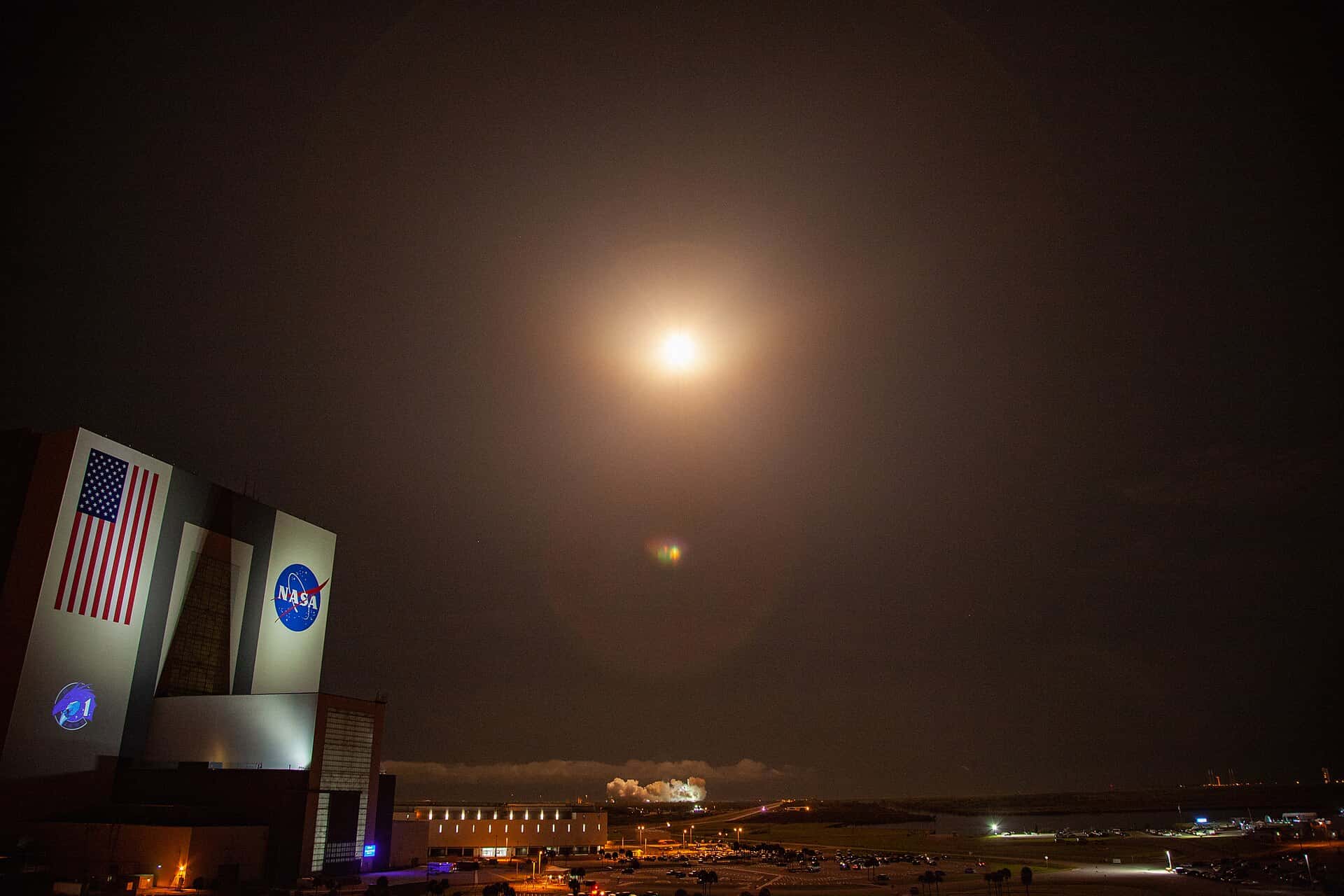
SpaceX is maintaining a record launch cadence from Florida's Space Coast, and the company added another milestone on June 8, 2026, when a Falcon 9 lifted off from Cape Canaveral Space Force Station carrying 29 Starlink internet satellites. The flight was notable not only for its payload but for its hardware: the rocket's first-stage booster flew for a record 35th time before landing on a droneship in the Atlantic. The achievement extended SpaceX's long campaign to push the limits of rocket reusability and reinforced Cape Canaveral's status as the busiest launch site in the world.
The June 8 mission was the latest in a near-constant stream of launches from Brevard County. Just days earlier, on June 4, another Falcon 9 launched 29 Starlink satellites from Space Launch Complex 40, part of the steady deployment of the satellite internet constellation that has become the backbone of SpaceX's flight schedule. The pace of these missions has made the Space Coast a hub of activity that few regions in the country can match.
For Florida, the significance extends well beyond the spectacle of rockets climbing over the Atlantic. The cadence supports thousands of jobs, drives tourism, and anchors a regional economy that has come to define itself around the launch industry. The 35th flight of a single booster is, in that sense, both an engineering landmark and a marker of the economic engine humming along the coast.
The back-to-back nature of the June flights illustrates how routine the extraordinary has become at the Cape. Two missions within days of each other, each carrying 29 Starlink satellites, would once have been the headline event of a season. In 2026, they form merely a typical stretch of a calendar packed with launches, a sign of how thoroughly the operational rhythm has matured. The June 8 booster record sits atop that rhythm as a reminder that even within the routine, the company continues to push past its own marks.
A Booster's Record 35th Flight
The centerpiece of the June 8 launch was the booster itself. Flying for a record 35th time, the first stage represented years of refinement in SpaceX's approach to reusing the most expensive component of an orbital rocket. After lifting the 29 Starlink satellites toward orbit, the booster separated and guided itself back to a droneship stationed in the Atlantic, completing the kind of precision landing that has become routine yet remains a remarkable feat of engineering.
Each additional flight of a booster chips away at the cost of reaching orbit, and the 35th flight pushes the demonstrated lifespan of the hardware further than before. Reusability has been central to SpaceX's strategy from the start, and milestones like this one validate the premise that boosters can be flown, recovered, refurbished, and flown again many times over.
The droneship landing is a critical piece of that equation. For missions that require it, recovering the booster at sea allows the rocket to expend more of its energy lifting the payload, while still preserving the hardware for future use. The repeated success of these landings has transformed what was once an experimental ambition into a dependable part of the company's operations.
The record also carries strategic weight. A fleet of boosters capable of dozens of flights apiece allows SpaceX to sustain a launch tempo that would be impossible with expendable rockets. That capability is what makes the relentless cadence from the Space Coast feasible, and the 35th flight is a tangible illustration of how far the reuse model has advanced.
The Relentless Cadence from the Cape
The June 8 and June 4 launches were not isolated events but part of a rhythm that has come to characterize Cape Canaveral. With Starlink missions deploying batches of satellites at regular intervals, the launch schedule has reached a density that keeps the region's facilities in near-continuous use. Each mission adds satellites to the constellation while demonstrating the operational reliability that underpins the entire enterprise.
The June 4 flight from Space Launch Complex 40 carried 29 Starlink satellites, mirroring the payload of the June 8 mission. The repetition is by design: a standardized payload and a proven launch profile allow SpaceX to turn missions around quickly and predictably. That predictability is the foundation of the cadence that has made the Space Coast the world's busiest spaceport.
Cape Canaveral's infrastructure has been built and adapted to support this volume. The combination of launch complexes, recovery operations, and processing facilities allows the region to handle a flight rate that would have seemed implausible only a decade ago. The result is a launch environment that operates more like an industrial cadence than a series of singular events.
For observers in Brevard County, the frequency of launches has become part of daily life. The sight and sound of rockets climbing over the coast, once rare and remarkable, now punctuate the calendar with regularity. That normalization is itself a sign of how thoroughly the launch industry has embedded itself in the region.
What Comes Next on the Manifest
SpaceX's upcoming schedule includes a mission that differs from the steady stream of Starlink flights. On the manifest is the SXM-11 mission, the 12th high-powered digital audio radio satellite built for SiriusXM, which is headed to geostationary transfer orbit. The mission represents a different class of payload and a different destination, broadening the picture of what launches from the Cape support.
Geostationary transfer orbit missions like SXM-11 send their payloads on a path toward a much higher orbit than the relatively low-altitude Starlink satellites. Satellites bound for that region serve broadcast and communications functions that depend on a fixed position relative to the ground, making them a distinct category of payload with its own technical demands.
The SiriusXM mission underscores that the Space Coast's activity is not limited to SpaceX's own constellation. Commercial customers continue to rely on Cape Canaveral for access to orbit, and missions like SXM-11 demonstrate the breadth of the launch business operating from the region. The mix of internal and commercial payloads contributes to the overall cadence.
Each commercial mission also reinforces the economic case for the Space Coast. Customers choosing to launch from Cape Canaveral bring business to the region's facilities and the workforce that supports them, adding to the diversity of activity that flows through Brevard County's launch infrastructure.
The Space Coast Economy
The relentless launch cadence translates directly into economic activity for Brevard County and the surrounding region. The launch industry supports a workforce spanning engineering, manufacturing, operations, and the many supporting services that a high-tempo spaceport requires. The jobs tied to this activity have become a defining feature of the local economy.
Beyond direct employment, the launch industry draws visitors eager to witness rockets lift off, contributing to tourism that benefits hotels, restaurants, and local businesses. The spectacle of frequent launches has turned the Space Coast into a destination, and the steady schedule means there is almost always activity to draw spectators.
The growth of the launch business has also spurred investment in the region's infrastructure and attracted companies that want to be near the action. As the cadence has increased, so too has the gravitational pull of the Space Coast as a center for the broader space economy, reinforcing a cycle of activity and investment.
For Florida, the Space Coast represents a strategic asset that combines economic value with national importance. The region's role as a gateway to orbit positions the state at the center of a growing industry, and the milestones achieved there, including the record booster flight, are markers of that prominence.
The World's Busiest Launch Site
Cape Canaveral's designation as the world's busiest launch site is the product of the cadence on display in early June. The combination of frequent Starlink missions, commercial flights like the upcoming SXM-11, and the reusability that makes such volume possible has concentrated an extraordinary share of global launch activity along the Florida coast.
That status carries strategic significance beyond the economic dimension. A spaceport operating at this tempo provides reliable access to orbit, a capability that matters for commercial communications, satellite internet, and national interests alike. The concentration of activity at Cape Canaveral makes it a focal point of the modern space age.
The reusability milestones, including the 35th flight of a booster, are what enable the Cape to sustain its leading position. Without the ability to fly hardware repeatedly, the cadence that defines the site would be impossible. The engineering achievements and the launch tempo are inseparable, each making the other feasible.
As long as the cadence holds, Cape Canaveral's place at the top of the global launch hierarchy appears secure. The early June flights, capped by a record-setting booster, illustrate the combination of frequency and innovation that has elevated the Space Coast to its position of prominence.
What's Next
The immediate horizon includes the SXM-11 mission for SiriusXM, a geostationary transfer orbit flight that adds variety to a schedule otherwise dominated by Starlink deployments. The mission will test the Cape's ability to interleave different classes of payloads within its busy manifest, a routine challenge for a site operating at this tempo.
Beyond that specific flight, the expectation is for the cadence to continue. The steady rhythm of Starlink launches, punctuated by commercial missions, shows no sign of slowing, and each flight offers another opportunity for SpaceX to extend its reusability records. The 35th booster flight is unlikely to stand as the ceiling for long.
For Brevard County, the continued cadence means sustained economic activity, ongoing employment, and a steady flow of visitors drawn to the spectacle. The region's fortunes remain closely tied to the launch schedule, and the early June pace suggests that activity will remain robust through the summer.
The broader trajectory points toward a Space Coast that keeps pushing the boundaries of how often and how efficiently rockets can reach orbit. The milestones achieved in early June, from the record booster flight to the relentless Starlink deployments, are signposts on that path, and the manifest ahead promises more to come.
Spotted an issue with this article?
Have something to say about this story?
Write us a letterComments
No comments yet. Be the first to weigh in.
Related Coverage

Trump and Melania Trump vote early in West Palm Beach as GOP sets Oct. 30 Daytona Beach rally
2h ago

Miami magistrate orders Trump to sit for BBC deposition by Dec. 11 or risk losing his $10 billion lawsuit
4h ago
Advocates Say ICE Plans to Deport Gravely Ill Krome and Broward Detainees to Africa; DHS Denies It
7h ago
ACA Open Enrollment for 2027 Opens Nov. 1: What Florida, the Nation's Largest Marketplace, Faces
7h ago