Supreme Court Lets Trump End TPS for Haitians and Syrians, a Decision That Lands Hard on Florida
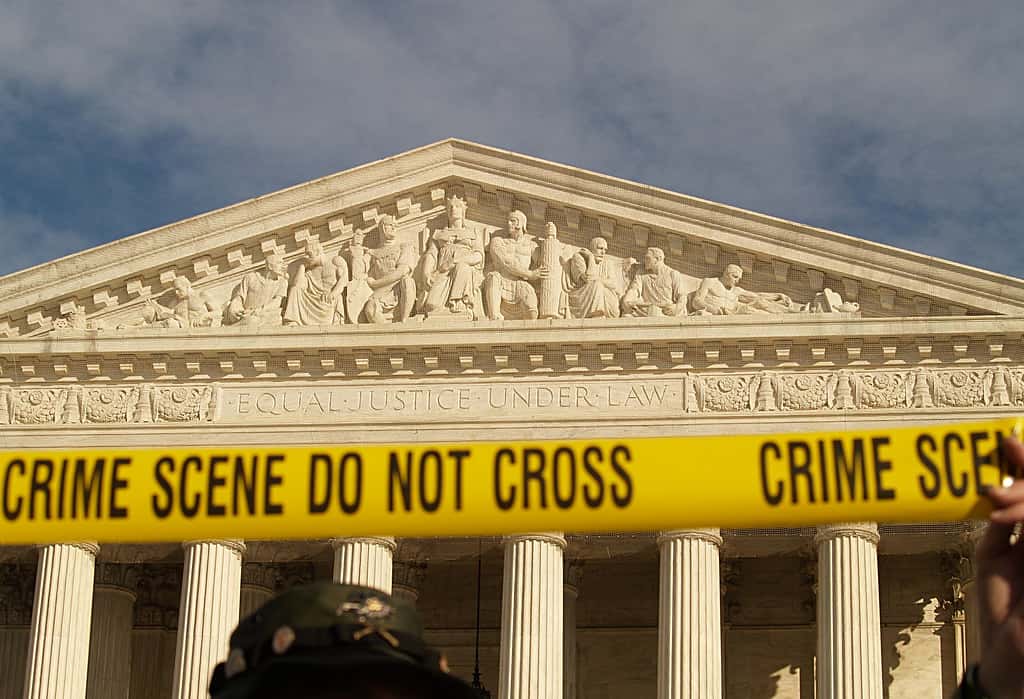
The U.S. Supreme Court has cleared the way for the federal government to end Temporary Protected Status for hundreds of thousands of Haitian and Syrian nationals, a decision that lands with particular force in Florida, home to the largest Haitian community in the United States. In a 6-3 ruling along ideological lines in the case of Mullin v. Doe, the court's conservative majority found that the Department of Homeland Security has broad discretion to extend or terminate the humanitarian protection, allowing the administration to proceed with its plan to strip status from an estimated 350,000 Haitians and roughly 6,000 Syrians.
For Florida, where Haitian American communities are deeply rooted in South Florida and beyond, the ruling carries immediate and far reaching consequences. Tens of thousands of residents who have lived and worked legally in the United States face the loss of their work permits and deportation protections, throwing their futures into uncertainty and raising difficult questions for families, employers and communities across the state.
What the court decided
The Supreme Court ruled on June 25, 2026, that the administration may move forward with ending Temporary Protected Status for Haitian and Syrian nationals. By a 6-3 vote, the majority concluded that the Department of Homeland Security holds broad discretion in deciding when to extend or terminate the form of humanitarian relief, siding with the administration's authority over the program.
Temporary Protected Status, known as TPS, is a designation that allows nationals of certain countries to remain in the United States legally when conditions in their home countries, such as armed conflict or disaster, make return unsafe. The status provides work authorization and shields recipients from deportation, but it is temporary by design and subject to periodic review and renewal by the federal government.
The court's decision focused on the scope of executive discretion rather than on conditions in Haiti or Syria themselves. The majority found that the law grants the executive branch wide latitude to make decisions about the program, a conclusion that allows the termination to proceed while leaving the human consequences to play out among the affected populations.
Why Florida is at the center
No state will feel the ruling more than Florida. South Florida is home to one of the largest Haitian American populations in the country, with vibrant communities in Miami-Dade and Broward counties and a long history of Haitian migration and settlement. The decision therefore strikes at the heart of communities that are woven into the fabric of the region.
The affected population is significant in scale and contribution. Nationally, analyses have estimated that nearly 190,000 Haitian TPS holders were employed, contributing billions of dollars to the economy and paying billions in taxes. A large share of those workers and their families live in Florida, where they fill roles across industries including health care, hospitality, construction and service sectors that are central to the state's economy.
The loss of work authorization for so many residents has ramifications that extend well beyond the individuals directly affected. Employers who depend on these workers, families with mixed immigration status, and communities anchored by Haitian institutions all stand to be affected, making the ruling a matter of broad concern across South Florida and the state as a whole.
Concerns about conditions in Haiti
The decision comes against a backdrop of severe instability in Haiti. The country has been wracked by violence, with reports of thousands of people killed in gang attacks and more than a million displaced. Advocates and human rights experts have warned that conditions in Haiti are dangerous, raising alarm about the prospect of large numbers of people losing protection from removal.
Those concerns were central to the arguments of opponents of the termination, who contended that ending protections amid such turmoil would place vulnerable people at risk. The court's ruling, however, turned on the legal question of executive authority rather than on an assessment of safety conditions, leaving advocates to press their concerns through other channels.
Immigration attorneys and advocacy organizations have expressed serious worry about the practical effects of the decision, both for the individuals who could face return to a country in crisis and for the communities in Florida and elsewhere that will absorb the disruption. The human dimension of the ruling is likely to remain a focus of debate and legal activity in the months ahead.
What it means for Floridians
For affected Haitian residents of Florida, the ruling creates urgent and personal stakes. Work permits tied to TPS are set to expire and deportation protections will end, leaving individuals to navigate an uncertain legal landscape. Many will seek guidance from immigration attorneys about whether other forms of relief may be available to them, though options vary by individual circumstance.
The economic implications ripple outward. Florida industries that employ TPS holders could face workforce disruptions, and the loss of income and stability for affected families could affect local economies, particularly in communities with large Haitian populations. The full economic impact will depend on how the termination is implemented and on what alternatives, if any, affected individuals can pursue.
Community organizations across South Florida are likely to mobilize to provide information and support to those affected, as they have during previous immigration policy shifts. The ruling adds to a climate of uncertainty for immigrant communities in Florida, a state that has been at the center of national immigration debates and policy.
Understanding Temporary Protected Status
Temporary Protected Status is a humanitarian designation created by Congress decades ago to provide a safe harbor for nationals of countries experiencing conditions that make return dangerous, such as armed conflict, natural disaster or other extraordinary circumstances. When a country receives a TPS designation, its nationals already in the United States can apply to remain legally, obtaining work authorization and protection from deportation for the duration of the designation.
The program is, as its name indicates, temporary. Designations are made for limited periods and are subject to review, with the executive branch deciding whether to extend or terminate them based on its assessment of conditions. This built in impermanence has long been a source of uncertainty for recipients, many of whom have lived in the United States for years, building families, careers and community ties while their status remained subject to periodic renewal.
Haiti's TPS designation reflected the profound instability the country has endured, including the aftermath of natural disasters and ongoing violence and political turmoil. Over the years, hundreds of thousands of Haitians built lives in the United States under the protection, with a substantial concentration settling in Florida. The Supreme Court's ruling on the executive's authority to end the designation therefore strikes at a population deeply established in the state.
The economic and social stakes
The end of TPS for Haitian nationals carries significant economic implications, both for the affected individuals and for the communities and industries that rely on their labor. Analyses have found that Haitian TPS holders contribute substantially to the economy through their work and taxes, filling roles across sectors that are important to Florida, including health care, hospitality, construction and other service industries.
For Florida employers, the loss of work authorization for a large segment of the workforce could create staffing challenges in industries already navigating labor demands. The disruption would extend beyond individual workers to the businesses that depend on them, with ripple effects through local economies, particularly in South Florida communities where Haitian residents are concentrated.
The social dimension is equally significant. Haitian Americans have built vibrant communities, institutions and cultural life in Florida over decades, and the prospect of large numbers of people losing legal status creates anxiety and uncertainty that extends to families with mixed immigration status, including U.S. citizen children. Community organizations are likely to play a central role in helping affected residents navigate the changes and understand their options.
The broader legal significance
Beyond its immediate human consequences, the ruling reinforces a principle with broad implications: that the executive branch holds wide discretion over humanitarian immigration programs like TPS. By concluding that the relevant agency has broad authority to decide when to extend or terminate the protection, the court affirmed the power of the executive to make such determinations with limited judicial second guessing.
That principle could affect other protected populations in the future. TPS designations exist for nationals of various countries, and the reasoning in this case suggests that decisions to terminate other designations would likewise fall largely within executive discretion. The ruling thus has significance beyond the specific populations directly affected, shaping the legal landscape for humanitarian immigration relief more broadly.
For advocates, the decision narrows the avenues available to challenge terminations through the courts, shifting the focus toward other forms of relief for individuals and toward the political process for any broader changes. The ruling underscores how much authority over immigration policy rests with the executive branch, a dynamic that has made immigration a recurring flashpoint in national politics and in states like Florida that sit at its center.
What's next
With the Supreme Court allowing the termination to proceed, attention turns to implementation and to the timelines on which protections and work authorizations will end. The practical details of how and when the changes take effect will shape the experience of affected individuals and the communities around them.
Legal advocates may continue to pursue avenues to assist affected populations, and the broader debate over immigration policy is certain to continue, in Florida and nationally. The ruling reinforces the significant authority the executive branch holds over programs like TPS, a principle that could affect other protected populations in the future.
For Florida's Haitian community and the broader state, the decision marks a consequential moment. A population that has contributed to Florida's economy and culture now faces profound uncertainty, and the coming months will reveal how individuals, families, employers and communities respond to a ruling that reshapes the legal status of hundreds of thousands of people with deep ties to the Sunshine State.
Spotted an issue with this article?
Have something to say about this story?
Write a letter to the editor