Supreme Court Set to Take Up ICE Bond Hearings That Affect Florida Detainees
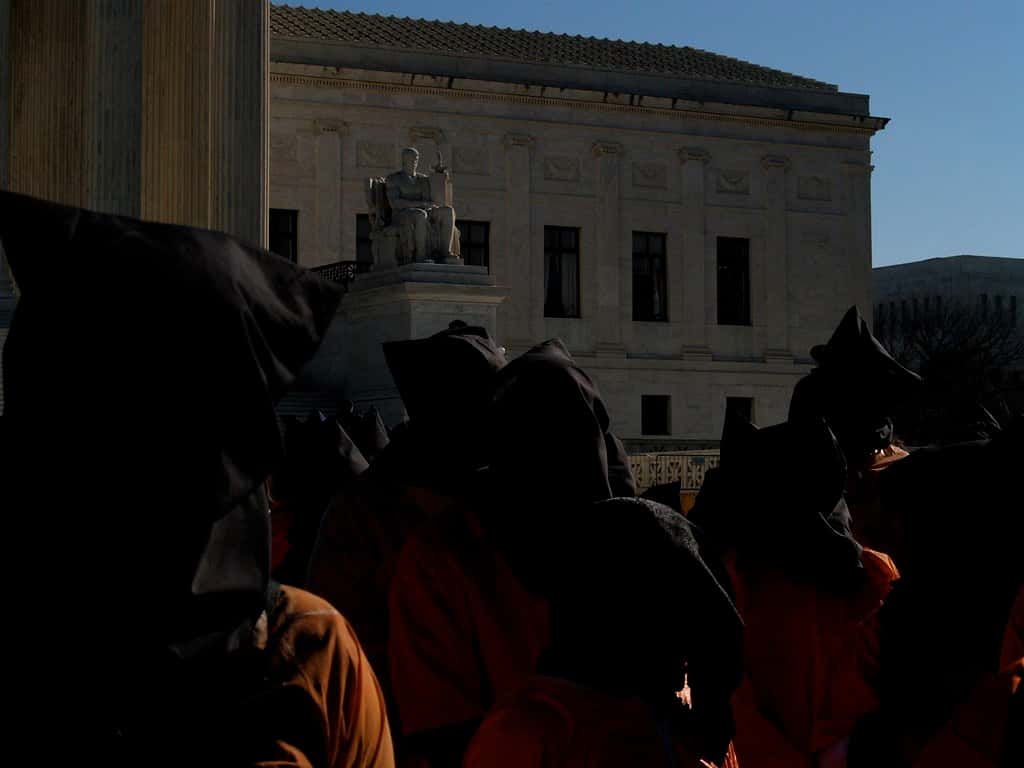
A legal question with direct consequences for thousands of people held in Florida immigration detention facilities is expected to reach the United States Supreme Court when its term opens in October. Federal appeals courts have split over whether immigrants detained by Immigration and Customs Enforcement are entitled to bond hearings before an immigration judge, and the Eleventh Circuit, which covers Florida, Georgia and Alabama, has had the question under submission since oral argument in March. Florida operates several of the largest immigration detention facilities in the country, including the Krome Detention Center in Miami-Dade County and facilities in Glades County and Baker County, which makes the outcome unusually consequential for the state.
What a bond hearing is
A bond hearing is a proceeding before an immigration judge at which a detained person can ask to be released while their removal case proceeds. The judge considers flight risk and danger to the community, and may set a monetary bond, release the person on conditions, or order continued detention.
Immigration proceedings are civil rather than criminal, which means the constitutional protections that attach to criminal defendants, including the right to appointed counsel and the Eighth Amendment's excessive bail provision, do not apply in the same way.
Detention pending removal proceedings can last months or years, because immigration court backlogs run into the millions of cases nationally. A person held without a bond hearing may spend an extended period in custody without ever having a judge evaluate whether detention is necessary.
Whether a bond hearing is available depends on which statutory provision authorizes the detention. Some provisions are read to permit discretionary release, and others are read to require mandatory detention with no hearing at all.
The circuit split
Federal appeals courts have reached different conclusions on how to categorize certain detentions and on whether due process requires a hearing after prolonged custody even where the statute appears to mandate detention.
Circuit splits are the primary reason the Supreme Court takes cases. When federal law means one thing in one part of the country and something different elsewhere, the Court's role is to resolve the inconsistency and produce a uniform national rule.
The practical result of an unresolved split is that a detainee's access to a bond hearing can depend on which federal circuit holds the facility where they are housed. Two people with identical circumstances can receive different treatment based on geography.
The Eleventh Circuit has been sitting on its own decision since March. That court's eventual ruling would govern Florida directly, though a Supreme Court decision would supersede it.
Florida's detention footprint
Florida holds a significant share of the national immigration detention population. Krome, in western Miami-Dade County, is among the oldest and largest facilities in the ICE system. Facilities in Glades County and Baker County hold detainees under agreements with county jails.
The state also operated the Everglades detention facility widely known as Alligator Alcatraz for roughly a year before closing it in the summer of 2026. That facility's construction, operation and closure have generated ongoing litigation and a substantial unresolved bill, with the Division of Emergency Management now seeking additional state funding tied largely to immigration costs.
Florida's role in immigration enforcement extends beyond detention. State law now requires all 67 counties to maintain formal enforcement partnership agreements with federal immigration authorities, giving local law enforcement expanded authority to assist directly with immigration enforcement.
A joint state and federal enforcement operation conducted between April 2025 and January 2026 resulted in more than 10,400 arrests of unauthorized immigrants statewide, according to state law enforcement data.
Why the outcome matters practically
Detention capacity is finite and expensive. Facilities operate at a per-detainee daily cost, and detention populations are constrained by bed space and appropriations. A ruling expanding access to bond hearings would likely reduce detention populations, while a ruling restricting access would increase them.
For individuals, the difference is between fighting a removal case from inside a detention facility and fighting it from home. Detained respondents have far lower success rates in immigration court, in large part because access to counsel, evidence and witnesses is dramatically harder from custody.
For families, prolonged detention of a household earner produces immediate financial consequences. Detention is not conditioned on ability to support dependents, and there is no equivalent of a public defender in immigration court.
For county jails housing detainees under federal agreements, detention population levels affect revenue. Several Florida counties receive per-diem payments for holding federal detainees.
The broader legal landscape
The Supreme Court has addressed immigration detention several times over the past two decades, generally deferring substantially to congressional authority over immigration while recognizing outer constitutional limits on indefinite detention.
The Court has held that detention of a person who cannot be removed because no country will accept them cannot continue indefinitely. It has been less receptive to arguments that prolonged detention during active proceedings requires periodic review.
The current composition of the Court and its recent immigration decisions suggest a general orientation toward executive authority in this area, though the specific statutory question at issue may not track ideological lines.
How the Court frames the question will matter. A narrow statutory holding would resolve the split without establishing broad constitutional principles. A due process holding would have wider application.
What it means for Floridians
For Florida's immigrant communities, which are among the largest and most diverse in the country, the ruling would determine how immigration enforcement is experienced in practice. Florida is home to substantial Cuban, Haitian, Venezuelan, Nicaraguan, Colombian, Mexican and Central American populations, along with immigrants from across the Caribbean.
Employers in agriculture, construction, hospitality and health care have reported workforce disruption from enforcement activity. Detention policy affects labor availability in those sectors directly.
For attorneys practicing immigration law in Florida, the ruling would reshape case strategy. Bond practice is a substantial portion of the work in a state with this much detention capacity.
For county governments, the fiscal and operational effects run through jail contracts and through the enforcement partnership agreements state law now requires.
The immigration court backlog
The reason detention duration has become a constitutional question at all is the size of the immigration court backlog. Pending cases nationally number in the millions, and the average case takes years to reach a merits hearing.
Immigration courts are administrative tribunals within the Justice Department rather than Article III courts. Immigration judges are Justice Department employees, and the system's capacity is determined by hiring and appropriations rather than by judicial branch structure.
Florida hosts immigration courts in Miami and Orlando, with the Miami court among the busiest in the country. Detained dockets are prioritized over non-detained dockets, which means detained cases move faster, but faster in this context still frequently means months.
Backlog reduction has been a stated priority across multiple administrations without durable success, because case intake has consistently outpaced adjudication capacity. Detention policy interacts with that reality directly: the longer cases take, the longer detention lasts under a mandatory detention regime.
Access to counsel
Unlike criminal defendants, people in immigration proceedings have no right to appointed counsel. They may retain an attorney at their own expense or find pro bono representation, but if they cannot, they proceed alone against a government attorney.
Representation rates correlate strongly with outcomes. Studies have consistently found that represented respondents succeed at substantially higher rates than unrepresented ones, and that detained respondents are far less likely to obtain counsel than non-detained ones.
The practical obstacles for detained individuals are logistical. Facilities are frequently located far from population centers where immigration attorneys practice, phone access is limited and expensive, and preparing a case requires gathering documents from outside.
Nonprofit legal service organizations operate in Florida's major metropolitan areas and provide free representation to a limited number of people. Capacity falls far short of demand, and the gap is largest for detained cases, which require the most attorney time.
How detention capacity is funded
Immigration detention operates through a mix of federally owned facilities, contracts with private operators and agreements with county jails that hold detainees for a per-day fee. Florida hosts examples of all three arrangements.
County agreements create a direct fiscal relationship between local governments and federal immigration enforcement. Jails with excess capacity can generate revenue by housing federal detainees, and several Florida counties have done so for years.
Congressional appropriations set the total number of detention beds the agency can fund, and enforcement activity is ultimately constrained by that number regardless of policy preferences. Increases in enforcement without corresponding bed funding produce releases on supervision rather than additional detention.
Florida's own venture into detention, the Everglades facility that closed in the summer of 2026, was funded through state emergency accounts with the expectation of federal reimbursement. That reimbursement has been partial so far, which is why the state is now seeking additional legislative appropriations.
What's next
The Supreme Court's term begins in October. Whether it grants review in a bond hearing case, and which case it selects, will become clear as the Court issues orders in the early weeks of the term.
The Eleventh Circuit could rule at any time. A decision from that court would take effect in Florida immediately, subject to any subsequent Supreme Court ruling.
People with pending immigration cases should work with counsel rather than relying on general reporting, since outcomes depend heavily on the specific statutory basis for detention in each case. Free and low-cost legal services organizations operate in most Florida metropolitan areas.
The larger context is that immigration enforcement policy is being contested simultaneously in Congress, in the federal courts and in state legislatures. Florida has been among the most active states on the legislative side, and the courts are now working through the consequences.
Spotted an issue with this article?
Have something to say about this story?
Write us a letterComments
No comments yet. Be the first to weigh in.
Related Coverage

Mortgage Rates Ease to 7.32% in First Weekly Dip Since August as Florida Home Sales Slow
2h ago

FEMA Sends Florida $94 Million for Hurricane Repairs and Storm Hardening as Panhandle Awaits Isaias Decision
5h ago

DeSantis' map was built to flip four Florida House seats to the GOP. Here's where the races stand
5h ago

Blue Origin Seeks FAA Approval for Up to 50 New Glenn Launches a Year From Cape Canaveral
7h ago