Two Charged in Alleged Six-Year Abuse of Four Children in a Semi-Truck
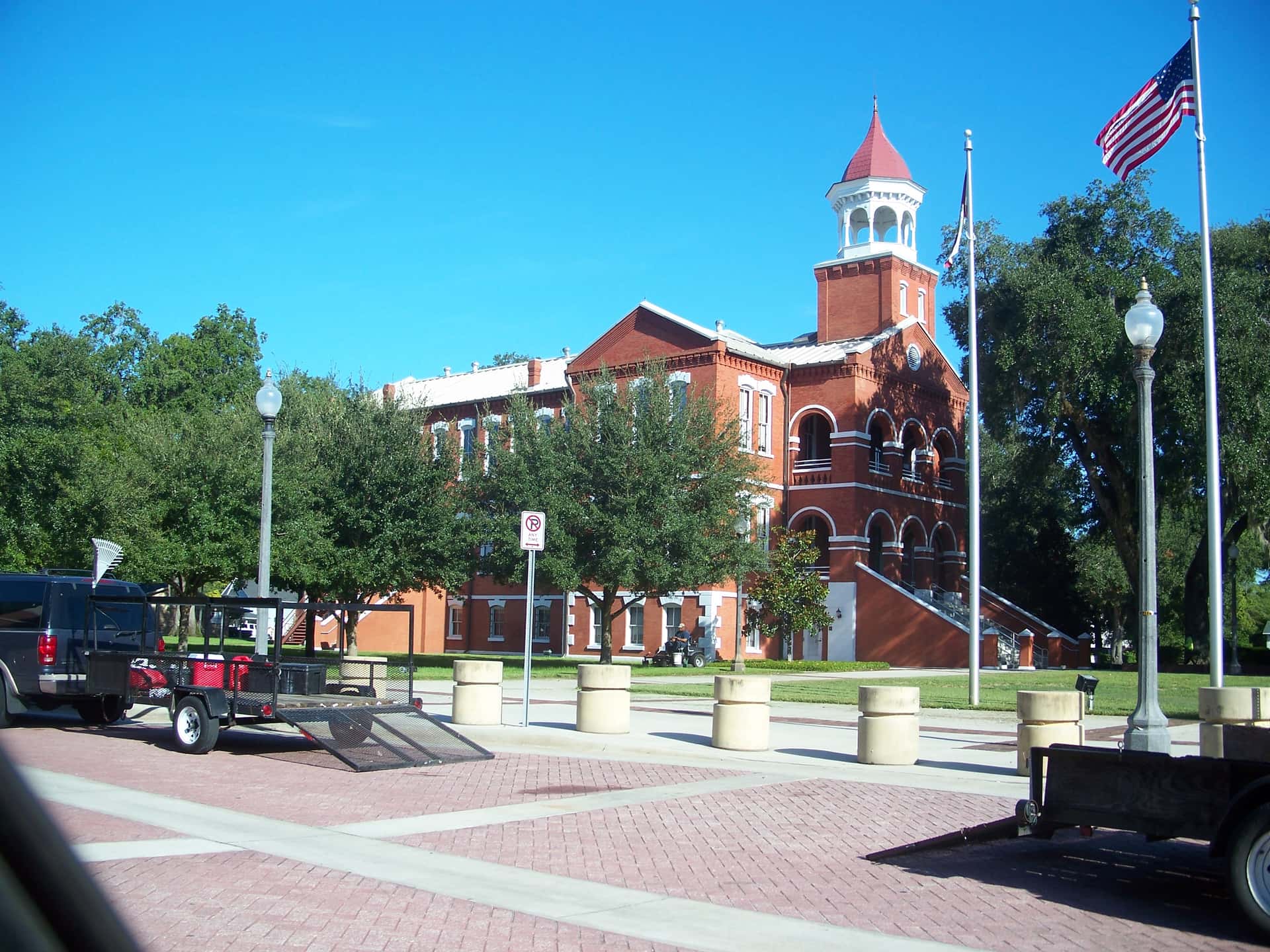
Florida Attorney General James Uthmeier announced charges against two women accused of sexually abusing, molesting, and neglecting four children who investigators say lived in a commercial semi-truck for roughly six years, in a case built by state investigators working with the Osceola County Sheriff's Office.
The Attorney General's Office identified the defendants as Tamra Marshon Stewart, 37, of Jacksonville, and Keysha Monique Epps, 51, of Atlanta. The alleged conduct spans January 2020 through April 2026. According to investigators, Epps worked as a commercial truck driver running routes between Atlanta and Miami with stops across Florida, including Orlando.
Uthmeier announced the charges at a news conference at the Osceola County Sheriff's Office in Kissimmee, joined by FDLE Commissioner Mark Glass and Osceola County Sheriff Christopher Blackmon. Both defendants are presumed innocent, and the allegations have not been tested in court.
What investigators allege
The case description provided by the Attorney General's Office involves four children who investigators say lived in a semi-truck over a period of years while enduring alleged sexual abuse, beatings, and severe neglect.
The alleged circumstance is what makes the case procedurally unusual. A child living in a commercial vehicle that moves continuously between states falls outside nearly every system designed to notice that a child is in trouble. There is no school attendance record to flag absences, no consistent pediatric care, no neighbors, and no fixed address for a child protective services agency to visit.
The interstate route alleged in the case, running between Atlanta and Miami with stops across Florida, spans multiple jurisdictions. That creates the coordination problem that mobile-environment abuse cases typically present, because no single local agency has continuous jurisdiction over the conduct.
Florida's Office of Statewide Prosecution, which operates within the Attorney General's Office, exists in part to handle cases that cross judicial circuit boundaries. A case with alleged conduct in Orlando, Miami, and points between is exactly the kind of matter that structure is designed for.
Why the case reached the Attorney General
Most criminal prosecution in Florida is handled by elected State Attorneys in each of the state's 20 judicial circuits. The Attorney General's Office takes cases that cross circuit lines, that involve organized criminal activity, or that fall within specific statutory grants of authority.
Child exploitation has become a defined enforcement priority for the office. Uthmeier has announced multiple child exploitation prosecutions in 2026, including charges against eight members of what the office described as an international child pornography ring and a separate operation that produced arrests and deportations.
FDLE Commissioner Mark Glass's presence at the announcement indicates state law enforcement resources were committed to the investigation. FDLE provides investigative capacity, forensic laboratory support, and multi-jurisdictional coordination that individual county agencies often cannot assemble.
Sheriff Christopher Blackmon's participation reflects Osceola County's role. Local agencies typically originate cases like this through an initial report, with state resources brought in as the scope becomes clear.
The broader child protection picture in Florida
The case comes during a period of heavy state enforcement activity on child exploitation. In late August, the Attorney General's Office and FDLE announced Operation Statewide Shield, a five-day multiagency operation that the state said recovered 163 missing children, with three men arrested during the operation.
FDLE also arrested a 76-year-old Summerland Key man in late August on 11 counts of possession of child sexual abuse material, working with Homeland Security Investigations. Earlier in August, the agency joined the Attorney General in announcing the arrest of a Palm Beach County clerk of court on child sexual abuse charges.
Separately, in Pasco County, the sheriff's office fired and arrested a corporal last week on charges of lewd and lascivious molestation and unlawful sexual activity with a minor.
Florida operates the Florida Abuse Hotline at 1-800-96-ABUSE, staffed around the clock, which is the primary intake point for child abuse reports statewide. Reports from the public remain a significant source of cases that no institutional system would otherwise detect.
The charges and the process
Florida law provides several distinct offenses covering the conduct alleged here. Sexual battery on a child under 12 by an adult is a capital felony. Lewd and lascivious molestation is graded by the ages of the victim and the offender. Aggravated child abuse, covering willful torture, malicious punishment, or aggravated battery on a child, is a first-degree felony. Child neglect resulting in great bodily harm is also a first-degree felony.
Charging decisions in cases involving alleged conduct over a span of years typically produce multiple counts, because each alleged incident and each affected child can constitute a separate offense.
The defendants will proceed through arraignment, discovery, pretrial motions, and either a negotiated resolution or trial. Cases of this complexity, particularly those involving multiple child witnesses and conduct across several years and jurisdictions, routinely take well over a year to reach resolution.
Florida law provides protections for child victims testifying in criminal proceedings, including provisions that in certain circumstances allow testimony outside the physical presence of the defendant.
What it means for Florida
For the four children, the immediate question is placement and services. The Florida Department of Children and Families becomes involved in cases like this, and children removed from an abusive environment enter a dependency process that runs parallel to the criminal case.
For Floridians generally, the case illustrates a specific gap. Children who are not enrolled in school, who do not have a consistent medical provider, and who do not live at a fixed address are effectively invisible to every system designed to protect them. That gap is not easy to close, because the same absence of records that hides abuse also protects legitimate family privacy.
For the trucking industry, which employs a large workforce in Florida and moves an enormous share of the state's freight, the case is an outlier rather than a pattern. Nothing about the allegations implicates commercial trucking as an industry.
Anyone who suspects child abuse in Florida can report it to the Florida Abuse Hotline at 1-800-96-ABUSE. Reports can be made anonymously, and Florida law requires certain professionals to report suspected abuse.
How Florida's Office of Statewide Prosecution works
Most Americans assume state criminal cases are handled by a local prosecutor, and in Florida that is usually correct. The state's 20 judicial circuits each have an elected State Attorney with jurisdiction over crimes committed within that circuit.
That structure creates a gap for criminal conduct that crosses circuit lines. A scheme operating in Miami-Dade, Orange, and Duval counties falls partly within three separate prosecutorial jurisdictions, none of which has authority over the whole of it.
The Office of Statewide Prosecution, established by constitutional amendment and operating within the Attorney General's Office, exists to close that gap. It has jurisdiction over specified categories of crime occurring in two or more judicial circuits, including racketeering, drug trafficking, fraud, and certain offenses against children.
Statewide prosecutors work with FDLE and local agencies rather than replacing them, and a case typically originates locally before the scope becomes apparent and state resources are engaged.
The alleged Atlanta-to-Miami route in this case, with stops across Florida, describes conduct that would be difficult for any single circuit to prosecute in full.
The visibility problem in mobile environments
Child protection systems in the United States depend heavily on institutional contact. Schools notice absences and injuries. Pediatricians notice developmental concerns and unexplained trauma. Neighbors notice things. Mandatory reporting laws obligate teachers, doctors, childcare workers, and others to report suspected abuse.
A child who has no consistent contact with any of those institutions is outside that entire system. Homeschooling, frequent relocation, and mobile living arrangements all reduce institutional contact, and while the overwhelming majority of families in those circumstances are not abusive, the small number who are become very difficult to detect.
Florida, like most states, has limited oversight of homeschooling and no mechanism for tracking children who are not enrolled anywhere. That is a deliberate policy choice reflecting parental rights considerations rather than an oversight, and changing it would involve tradeoffs that legislatures across the country have consistently declined to make.
The practical result is that cases involving children outside institutional contact typically surface through a tip from a relative, a chance encounter, or the child eventually reaching an adult who reports. Public reporting to the Florida Abuse Hotline is often the only path available.
The hotline operates 24 hours a day at 1-800-96-ABUSE, accepts anonymous reports, and is the intake point for the Florida Department of Children and Families.
What's next
The case proceeds through the Florida court system with the Attorney General's Office prosecuting. Arraignment will be the first substantive court date, followed by the ordinary progression of a felony case.
Whether additional charges are filed as the investigation continues is an open question. Cases involving alleged conduct across multiple states can also draw federal interest, particularly where interstate transportation is an element.
Both defendants are charged and presumed innocent. The allegations described here come from the Attorney General's Office and investigators, and they remain allegations until a court resolves them.
The case is one of several child exploitation prosecutions Florida has announced in recent weeks, part of an enforcement emphasis that has produced a steady stream of arrests across the state. Whether that reflects more crime, more detection, or more resources devoted to finding it is not a question the arrest announcements answer.
For readers who want to act on this rather than only read about it, the Florida Abuse Hotline is the mechanism that exists for exactly the circumstances this case describes. Reports do not require certainty, and callers are not expected to have investigated anything. A concern that a child is being harmed is sufficient reason to call, and in cases involving children outside school and medical systems, a call from a member of the public is frequently the only way the case ever surfaces.
Spotted an issue with this article?
Have something to say about this story?
Write us a letterComments
No comments yet. Be the first to weigh in.
Related Coverage

Kissimmee Mayor Jackie Espinosa Arrested on Grand Theft, Fraud Charges Over $50,000 in City COVID Relief Grants
5h ago
Driver Who Sped Through Ironman Jacksonville Course While Fleeing Police Pleads Guilty, Gets 10 Years in Prison
7h ago

DeSantis Signs Death Warrant for Thomas Overton in Florida Keys Killings of Pregnant Teacher and Husband, Setting Up Record 20th Execution of 2026
7h ago

Lauderhill Police Officer Accused of Taking Over Dead Man's Home After Welfare Check, Using His Identity on Permit
1d ago