Florida Universities Weigh Armed Guardians Under New Campus Safety Regulation
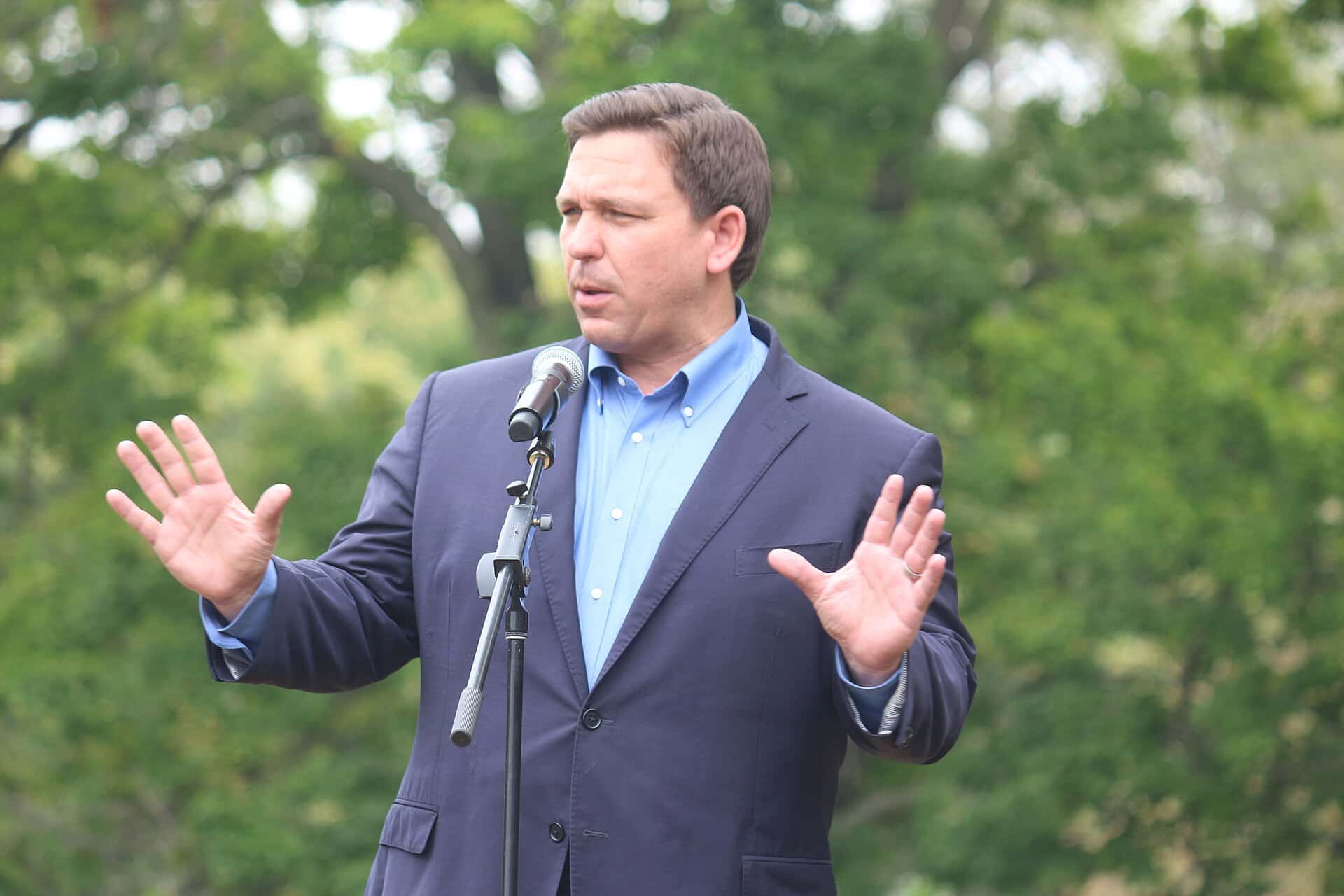
The Florida Board of Governors has begun reviewing a proposed regulation that would set a common campus safety standard across the state's 12 public universities and, for the first time, contemplate extending the School Guardian Program to higher education. The measure, designated Regulation 3.0015, covers threat assessment procedures, mental health resources, and the possibility of trained faculty and staff serving as armed guardians on campus.
The regulation follows House Bill 757, which Governor Ron DeSantis signed earlier in 2026 to expand school safety measures at Florida colleges and universities. Board action on a proposed regulation is the mechanism by which the statutory direction becomes operational policy for the State University System, and the board discussed the draft language at its early September meeting.
The board is expected to take formal action at its November meeting, with final approval currently anticipated in January 2027. That timeline means nothing changes on Florida campuses this fall, and the intervening months give universities, faculty groups, campus police departments, and student organizations an opening to weigh in before the language is fixed.
What the regulation would require
The core of Regulation 3.0015 is standardization. Florida's public universities currently run campus safety operations with considerable institutional variation, reflecting differences in campus size, urban or rural setting, existing police department capacity, and local relationships with sheriff's offices and city police. The proposed regulation would establish a consistent floor across all 12 institutions.
Threat assessment is the first pillar. Behavioral threat assessment teams are now standard practice at large universities, but the composition of those teams, the thresholds that trigger review, the records they keep, and the coordination with law enforcement differ from campus to campus. A uniform regulation would define what every institution must have in place.
Mental health resources are the second pillar. Counseling center capacity has been a persistent pressure point at Florida universities, as it has nationally, with demand outrunning staffing at many institutions. Writing mental health service expectations into a system regulation converts what has been a budgeting question into a compliance question, which typically changes how institutions prioritize it.
The third pillar, and the one drawing the most attention, is the potential extension of the Guardian Program to university campuses. That would allow eligible faculty or staff who complete the required training to be armed while on campus.
The Guardian Program and how it would translate
Florida created the Coach Aaron Feis Guardian Program after the 2018 shooting at Marjory Stoneman Douglas High School in Parkland. The program authorizes school districts and charter schools to designate trained personnel, including certain school employees, to carry firearms on campus after completing a sheriff-administered training and screening process. Participation is optional for districts, and the program has been adopted unevenly across Florida's 67 county school systems.
Applying that framework to universities raises questions the K-12 version did not have to answer. A university campus is a very different environment from an elementary school. It is typically open to the public, spread across hundreds of acres, populated overwhelmingly by adults, and served in most cases by a sworn university police department with full arrest powers. The rationale for arming non-police staff is less obvious when a dedicated police force is already present.
The proposed language, as described in the board's discussion, would permit rather than require university participation. That preserves institutional discretion, which is consistent with how the K-12 program operates, and it means that whether any Florida campus actually fields armed guardians would be decided institution by institution.
Faculty organizations at Florida universities have historically opposed proposals to allow firearms on campus outside of sworn law enforcement, and the November board meeting is the likely venue for that opposition to be stated formally.
Why the board is acting now
The immediate driver is statutory. House Bill 757 directed an expansion of school safety measures at colleges and universities, and the Board of Governors is the body that implements such direction for the university system through regulation. The board also created a broader safety and technology agenda earlier in 2026, including a Task Force on Artificial Intelligence and Cybersecurity that is addressing separate campus policy questions.
The broader context is a national pattern of campus violence that has kept university safety near the top of state legislative agendas for several years. Florida institutions have not been exempt from that pattern, and the state's response since Parkland has consistently favored hardening measures, standardized threat assessment, and expanded armed presence over other approaches.
There is also a practical alignment issue. Florida high schools now operate under a detailed safety statute with defined threat assessment requirements and mandated reporting. Students moving from those schools into the university system have been moving into an environment governed by looser and more variable rules. Regulation 3.0015 narrows that gap.
The regulation's development through the ordinary board process, with a discussion meeting followed by action months later, gives it a longer runway than most Florida education policy changes have received recently.
What it means for Florida students and families
For students currently enrolled, the near-term answer is that nothing changes. The regulation is in draft, action is scheduled for November, and final approval is not anticipated until January 2027. Campus safety operations this academic year continue under existing institutional policy.
For families evaluating Florida universities, the threat assessment and mental health provisions are the parts most likely to affect day to day student experience. Counseling access, in particular, is a concrete service that students use, and a regulation that sets minimum expectations could improve availability at campuses where wait times have been long.
The guardian provision is the part that will shape how the regulation is perceived, and reasonable people in Florida disagree sharply about it. Supporters argue that an armed staff member can shorten response time in the minutes before police arrive. Opponents argue that adding firearms to a campus environment introduces risks of accidental discharge, escalation, and misidentification during a police response that outweigh the theoretical benefit, particularly on campuses already served by sworn officers.
Because participation would be optional, students and families may ultimately find that the answer differs by institution, which is worth asking about during campus visits once the regulation is final.
Local impact across the state
Florida's public universities range from large research institutions with their own accredited police departments to small campuses that rely more heavily on local law enforcement. The University of Florida, Florida State University, the University of South Florida, and the University of Central Florida all operate substantial university police departments with hundreds of sworn and civilian personnel.
Smaller institutions face a different calculation. New College of Florida in Sarasota, Florida Polytechnic University in Lakeland, and the University of West Florida in Pensacola operate at a scale where a standardized threat assessment and mental health requirement may require new hiring rather than reallocation of existing staff. The cost of compliance is not uniform across the system.
Urban campuses have another wrinkle. Florida International University in Miami and the University of South Florida in Tampa sit inside dense metropolitan areas with continuous public access to campus grounds. Perimeter control is not a realistic tool at those institutions, which places more weight on threat assessment and response than on access restriction.
How the board handles that variation, whether through uniform requirements or through a tiered structure keyed to institutional size, is one of the details that the November meeting should clarify.
How behavioral threat assessment actually works
Threat assessment is the least visible and probably most consequential part of the proposed regulation, and it is widely misunderstood. It is not a profiling exercise or a system for identifying dangerous-seeming people. It is a structured process for evaluating specific concerning behavior and intervening before it escalates.
A typical team includes representatives from student affairs, counseling services, campus police, legal counsel, and academic administration. Reports arrive from faculty who notice a change in a student's writing or behavior, from roommates, from residence life staff, or from family members.
The team's job is to gather information, assess whether the person poses a genuine risk of violence, and determine what intervention is appropriate. In the overwhelming majority of cases, the answer involves mental health support, academic accommodation, or conduct intervention rather than law enforcement action.
The evidence base for this approach comes substantially from post-incident analyses showing that people who commit targeted campus violence usually communicate their intent beforehand in some form, and that the failure is typically one of information not reaching anyone positioned to act on it.
Standardizing that process across 12 institutions, as the regulation proposes, addresses the coordination failures that have characterized past incidents at institutions nationally.
The mental health capacity question
Writing mental health service expectations into a regulation raises an immediate practical problem: counseling centers at Florida universities, like counseling centers nationally, have faced demand that outstrips staffing for years.
The standard measure is the ratio of counselors to students, and professional associations recommend ratios that many institutions do not meet. The result at understaffed centers is wait times that can run weeks for an initial appointment and session limits that cap ongoing care.
Threat assessment depends on that capacity. A team that identifies a student in crisis and refers them to a counseling center with a four-week wait has not accomplished much. The intervention has to be available at the moment the concern is identified.
Meeting a regulatory requirement therefore means hiring, and hiring means appropriations. The Board of Governors can set a standard, but funding it runs through the Legislature's budget process, and the regulation's development timeline extending to January 2027 gives lawmakers a session in which to address it.
Institutions have also expanded telehealth counseling and stepped-care models that reserve in-person clinical time for the highest-need cases, approaches that stretch capacity without additional licensed staff.
What's next
The Board of Governors is scheduled to take action on Regulation 3.0015 at its November meeting. Under the board's regulation development process, that action would advance the language toward final approval currently anticipated in January 2027.
Public comment periods accompany board regulation development, and faculty senates, student governments, and campus police leadership at the 12 institutions are the constituencies most likely to file substantive responses. Those filings become part of the record the board considers.
Separately, the Board of Governors is reviewing language on artificial intelligence disclosure in course syllabi through its Task Force on Artificial Intelligence and Cybersecurity, a parallel track that will reach campuses on its own timeline. Together, the two efforts represent the most significant revision to Florida university operating regulations in several years.
Spotted an issue with this article?
Have something to say about this story?
Write us a letterComments
No comments yet. Be the first to weigh in.
Related Coverage

OCPS Rejects Special Magistrate's Plan as School Board Takes Up Teacher Contract Impasse
23h ago
Judge Recommends Reprimand, Not Suspension, for Gainesville High Teacher Targeted by State Officials Over 'Dictator' Superlative
1d ago

Appeals Court Rules Escambia School Board Members Can Be Deposed Over Library Book Removals
1d ago
Orange County Public Schools Lost About 8,000 Students in a Year, and Roughly 5,000 Were Immigrants, District Data Show
1d ago