Artemis III Hardware Converges on Kennedy Space Center for 2027 Moon Mission
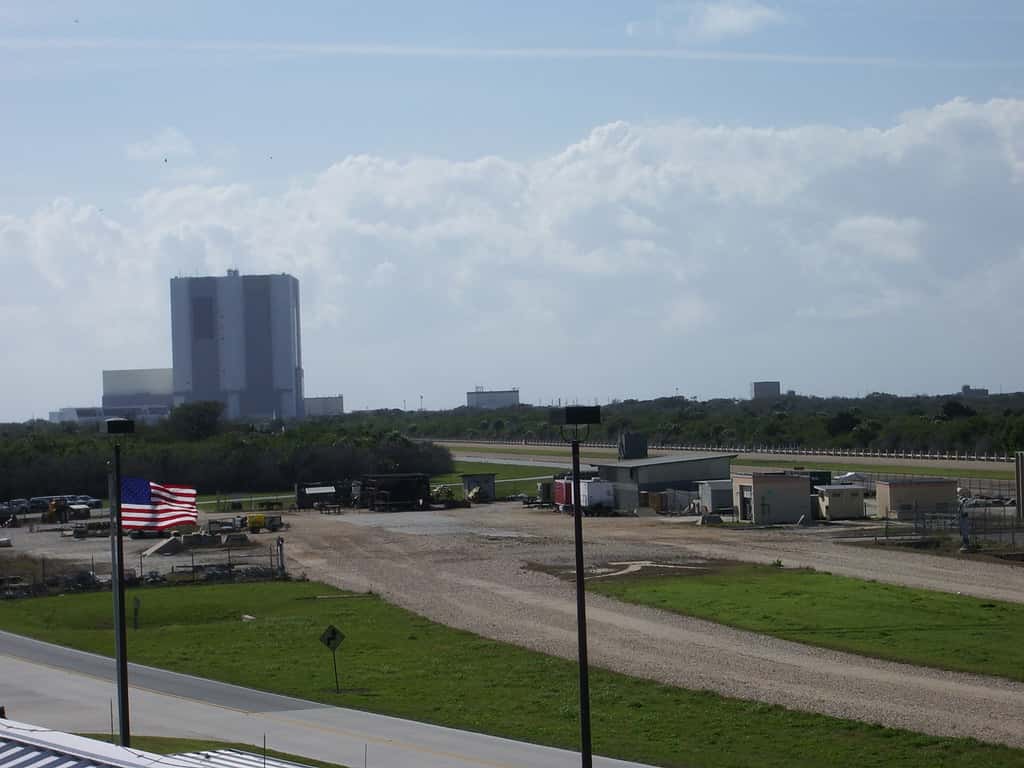
The major pieces of NASA's Artemis III mission are arriving at Kennedy Space Center on Florida's Space Coast, marking a concrete step toward the agency's planned 2027 return of astronauts to the Moon. The mission is designed to launch four astronauts aboard the Orion spacecraft atop the Space Launch System rocket from Kennedy, placing Florida at the center of the effort to put crew back on the lunar surface.
NASA announced the Artemis III crew on June 9, 2026, naming Randy Bresnik as commander, Luca Parmitano as pilot, and Frank Rubio and Andre Douglas as mission specialists. The crew announcement, paired with the steady flow of flight hardware into Florida, signaled that the mission is moving from planning into the physical assembly phase at the state's storied launch complex.
For Florida, and for Brevard County in particular, the convergence of hardware carries direct economic and civic weight. Kennedy is the launch site, the assembly point, and a major regional employer, and a crewed Moon mission of this profile channels jobs, contracts, and national attention to the Space Coast. As NASA moves the mission's building blocks into place, the state reaffirms its long-held role at the heart of American human spaceflight.
Hardware Arrives on the Space Coast
According to NASA, the Artemis III core stage arrived at Kennedy in April 2026, delivering the central structural element that anchors the Space Launch System rocket. The core stage houses the propellant tanks and main engines and serves as the backbone around which the rest of the vehicle is assembled, making its arrival a foundational milestone for the mission.
Solid rocket booster segments began arriving by rail in June 2026, NASA said, and are being stored in the Rotation, Processing and Surge Facility before they are stacked in the Vehicle Assembly Building. The twin solid rocket boosters flank the core stage and provide much of the thrust needed to lift the rocket off the pad, and their segment-by-segment delivery reflects the methodical sequence that precedes stacking.
A large weather-cover structure recently arrived at Kennedy to protect the core stage, an addition that speaks to the care required in shielding sensitive flight hardware from Florida's demanding coastal climate. Heat, humidity, salt air, and summer storms all pose challenges to hardware staged near the Atlantic, and protective measures are part of the routine of preparing a vehicle on the Space Coast.
Each of these arrivals moves the mission closer to the point where the pieces come together as a single rocket. The staging of the core stage, the booster segments, and the protective structures at Kennedy turns the 2027 timeline from a schedule on paper into hardware on the ground in Florida.
Engines and the Path to Stacking
Refurbished RS-25 engines are scheduled for delivery from Stennis Space Center by July 2026, according to NASA. The RS-25 engines, drawn from the heritage of the space shuttle program and refurbished for the Space Launch System, mount to the base of the core stage and provide sustained thrust alongside the solid rocket boosters during ascent.
The engines' journey from Stennis, the agency's rocket propulsion test center, to Kennedy illustrates the multi-site nature of the Artemis program, in which components built and tested across the country converge on Florida for final assembly. Kennedy functions as the destination where those distributed efforts are integrated into flight-ready vehicles.
The Vehicle Assembly Building, one of the most recognizable structures at Kennedy, is where the stacking will take place. The booster segments held in the Rotation, Processing and Surge Facility will be moved into the assembly building and stacked, and the core stage and other elements will be integrated to form the complete rocket ahead of rollout to the pad.
This assembly phase concentrates skilled technical work at Kennedy. The processes of receiving, inspecting, protecting, and stacking major flight hardware require a specialized workforce, and the sequence now underway represents the kind of hands-on integration effort that defines the operational rhythm of the Space Coast during an active mission campaign.
Meet the Artemis III Crew
NASA's June 9, 2026, crew announcement gave the mission four faces. Randy Bresnik will serve as commander, Luca Parmitano as pilot, and Frank Rubio and Andre Douglas as mission specialists. The four will fly aboard the Orion spacecraft, the crew capsule that sits atop the Space Launch System and carries astronauts on the journey toward the Moon.
The crew's composition reflects the collaborative character of the Artemis program, which draws on a range of spaceflight experience for a mission of significant complexity. Commanding a lunar mission, piloting the Orion spacecraft, and carrying out the specialist roles each demand extensive preparation, and the naming of the crew allows that training to intensify around the specific individuals who will fly.
The announcement also gave the public a human anchor for the mission. A return of astronauts to the vicinity of the Moon is a milestone that resonates beyond the technical community, and identifying the crew connects the hardware arriving in Florida to the people who will ride it. For audiences on the Space Coast, where spaceflight is woven into local identity, the crew becomes part of the community's shared investment in the mission.
With the crew named and hardware arriving, training and integration proceed in parallel. The people and the machine advance toward the same 2027 target, and Kennedy stands as the place where the two ultimately come together for launch.
Testing Rendezvous and the Human Landing System
Artemis III is designed to test rendezvous and docking with a commercial Human Landing System, the spacecraft that would carry astronauts down to the lunar surface. NASA has contracted the development of landing systems to commercial partners, with Blue Origin and SpaceX each developing spacecraft for the effort.
The rendezvous and docking objective places Artemis III at the intersection of NASA's government-led launch and crew transport and the commercial sector's contribution of the landing hardware. Demonstrating that Orion can meet and connect with a Human Landing System is a central technical goal, and it reflects the layered architecture NASA has adopted for returning crew to the Moon.
The involvement of Blue Origin and SpaceX ties the mission to the broader commercial space economy that has grown up around Florida's launch infrastructure. Both companies maintain a significant presence connected to the Space Coast's launch operations, and their role in the landing system links the region's commercial and governmental space activity within a single mission.
For Kennedy and the surrounding area, the mix of NASA and commercial elements reinforces the Space Coast's position as a hub where public and private spaceflight converge. The rendezvous and docking test embodies that convergence, pairing the agency's flagship rocket and capsule with commercially developed hardware in pursuit of a shared destination.
What It Means for the Space Coast Economy
The Artemis program is a major economic force in Brevard County, where Kennedy Space Center anchors a regional economy built around spaceflight. The arrival and assembly of Artemis III hardware translate into work for engineers, technicians, and support staff, and into activity for the network of contractors and suppliers that serve the launch complex.
A crewed Moon mission of this visibility also draws attention and investment to the broader Space Coast. The region's identity is tied to human spaceflight, and an active Artemis campaign reinforces the case for continued investment in facilities, workforce, and the surrounding infrastructure that supports launch operations along Florida's Atlantic coast.
Kennedy's role as both the assembly point and the launch site concentrates the mission's economic benefits in Florida. The core stage, the boosters, and the engines all funnel to the state for integration, and the launch itself will originate from Florida soil, keeping the highest-profile moments of the mission within the state's borders.
The steady drumbeat of hardware arrivals through the first half of 2026 offers a tangible sign of that economic engine at work. Each delivery represents contracts fulfilled, work performed, and momentum sustained across a supply chain and workforce that extend well beyond the gates of the space center.
Florida at the Center of the Moon Program
Kennedy Space Center's central place in Artemis III continues a legacy that stretches back through the history of American human spaceflight. The center has served as the departure point for the nation's most ambitious crewed missions, and the Artemis program renews that role for a new generation aimed at the Moon.
The concentration of the Space Launch System's assembly at Kennedy underscores how much of the mission's critical work happens in Florida. The Vehicle Assembly Building, the processing facilities, and the launch pads form an integrated complex purpose-built for exactly the kind of large-scale integration that Artemis III now requires.
Florida's involvement also carries symbolic weight. As the launch site for a mission intended to advance the return of astronauts to the Moon, the state links its identity to a national endeavor watched around the world. The images of a rocket rising from the Space Coast carry Florida's name into a global story about space exploration.
That prominence brings both opportunity and responsibility. Hosting a mission of this scale means managing the demands of assembling and launching complex hardware safely and on schedule, a task that draws on the deep base of spaceflight expertise the state has cultivated over decades. Artemis III places that expertise at the forefront once again.
What's Next
With the core stage, booster segments, and other elements arriving, attention turns to the delivery of the refurbished RS-25 engines from Stennis by July 2026 and to the stacking of the rocket inside the Vehicle Assembly Building. Those steps will transform the individual components now staged at Kennedy into an integrated Space Launch System rocket ahead of the 2027 mission.
The Artemis III crew, named in June 2026, will continue training for their roles aboard Orion, including preparation for the rendezvous and docking objectives that involve the commercially developed Human Landing System. The progress of the Blue Origin and SpaceX landing spacecraft will factor into the mission's readiness as the target date approaches.
For the Space Coast, the coming months bring a continued flow of hardware, assembly work, and public attention. As NASA advances toward the planned 2027 launch, Florida remains the stage on which the mission takes physical shape, and the state's role at the center of the Moon program is set to stay in the national spotlight.
Spotted an issue with this article?
Have something to say about this story?
Write us a letterComments
No comments yet. Be the first to weigh in.
Related Coverage

Isaias Shuts Pensacola and Okaloosa Airports as Airlines Waive Fees and Tolls Lift on Panhandle Bridges
15h ago

Ex-CIA official pleads guilty in $194 million fraud, will forfeit $102 million in Palm Beach and Hobe Sound real estate
16h ago

11th Circuit voids septic permit ban in Indian River Lagoon manatee case after federal 'harm' rule rollback
16h ago

Trump ties disaster aid to midterm campaign as Hurricane Isaias nears Florida Panhandle
1d ago