Cruise Earnings Show a Split Industry as Florida Ports Carry the Volume
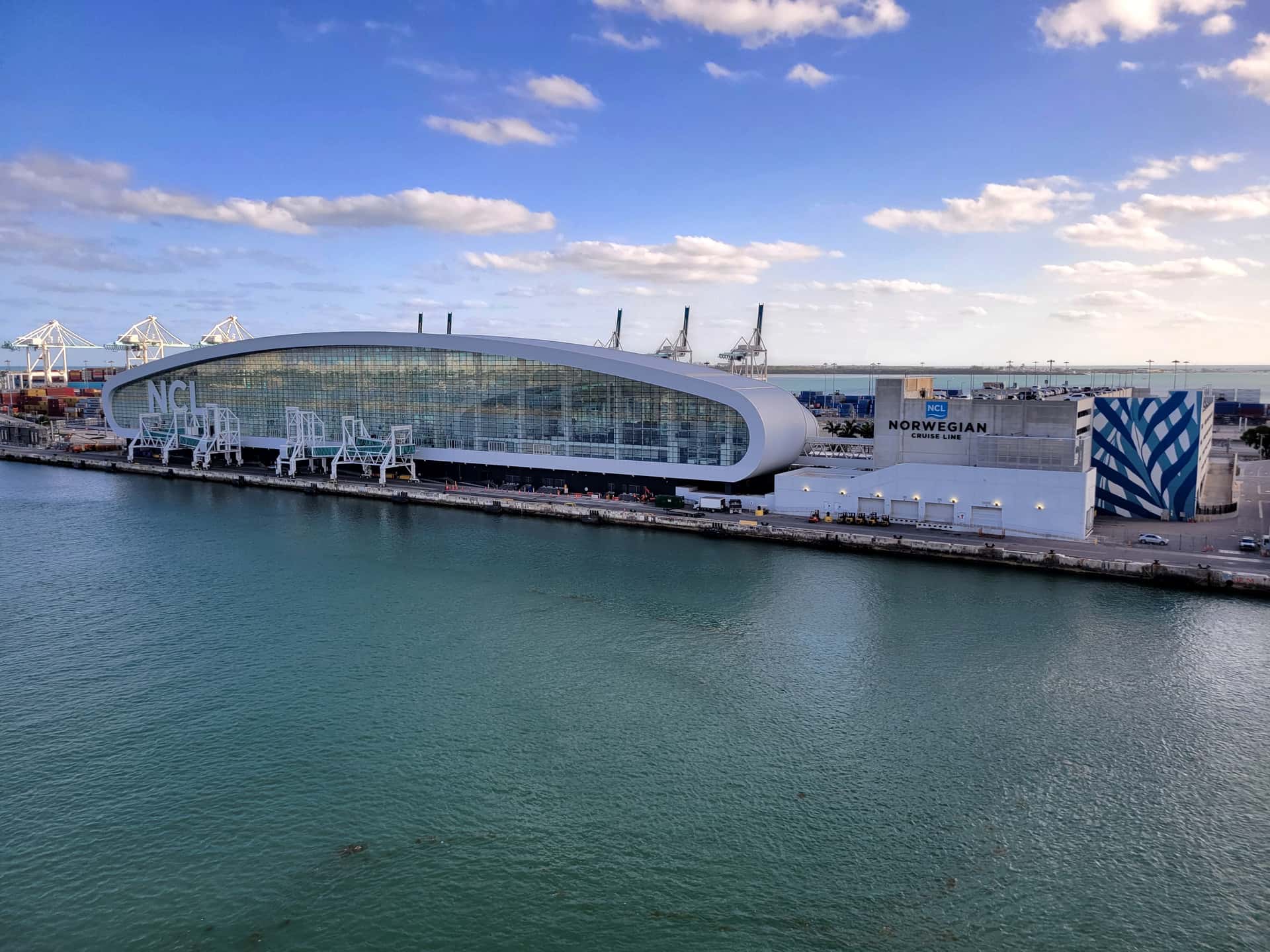
The cruise industry reported second-quarter results in late July that revealed a widening divergence among the major operators, a development with direct consequences for Florida, where the world's busiest cruise ports are located. Royal Caribbean Group reported results above expectations on July 28 and raised its full-year guidance, while Norwegian Cruise Line Holdings beat quarterly estimates on July 30 but trimmed its full-year adjusted earnings forecast. Florida's ports handle the majority of North American cruise embarkations, making the industry's financial health a matter of state and local economic significance rather than merely a corporate story.
What Royal Caribbean reported
Royal Caribbean Group reported second-quarter earnings per share of $4.20 and adjusted earnings per share of $4.21, with revenue rising 6 percent year over year. Adjusted earnings came in 8 percent above the company's own guidance, driven by strong close-in demand, lower costs, and favorable performance from joint ventures.
The company raised its full-year adjusted earnings per share outlook to a range of $17.73 to $17.87, representing approximately 14 percent growth year over year. Raising guidance mid-year signals confidence in booking trends through the remainder of the year, since companies generally avoid revising upward unless forward visibility supports it.
Close-in demand, meaning bookings made relatively near the sailing date, is a metric operators watch carefully. Strong close-in demand at healthy pricing indicates that the company is filling capacity without discounting, which is the difference between volume growth and profitable volume growth.
What Norwegian reported
Norwegian Cruise Line Holdings reported second-quarter total revenue of $2.6 billion, up 4.9 percent, with GAAP net income of $223 million and earnings per share of $0.48. Adjusted EBITDA reached $666 million and adjusted net income $222 million, each exceeding the company's guidance.
Despite beating quarterly expectations, the company reduced its full-year adjusted earnings per share outlook to approximately $1.50. Management indicated the company remains below its optimal booked position for the next twelve months, citing softer demand at the Norwegian Cruise Line brand tied to company-specific execution challenges as well as the ongoing conflict in the Middle East.
Norwegian also described cost actions including consolidation of technology vendors and salary and benefit savings, generating approximately $100 million in additional expected annualized run-rate savings, primarily across capital expenditures and general and administrative expense.
Why the divergence matters
The contrast between the two reports indicates that the cruise industry's current conditions are not uniform. Royal Caribbean's outperformance alongside Norwegian's guidance reduction suggests that demand exists but is not distributed evenly across brands, itineraries, and price points.
Geopolitical disruption in Europe and the Middle East has affected itineraries for operators with significant deployment in those regions. Redeploying ships away from affected areas carries costs, and cancellation and rebooking of affected sailings creates revenue disruption even when passengers ultimately sail elsewhere.
Brand-specific execution issues, as Norwegian described, are distinct from industry-wide demand conditions. That distinction matters for Florida because industry-wide weakness would affect port volumes broadly, while brand-specific problems shift market share among operators that all sail from Florida ports.
The Florida port economy
PortMiami has long described itself as the cruise capital of the world, and Port Everglades in Fort Lauderdale and Port Canaveral in Brevard County together with PortMiami handle a substantial majority of North American cruise passenger volume. Port Tampa Bay and Jacksonville add capacity on a smaller scale.
The employment associated with cruise operations extends well beyond the ports themselves. Provisioning, fuel, maintenance, ground transportation, pre- and post-cruise hotel stays, airport operations, and the corporate headquarters presence that Royal Caribbean, Carnival, and Norwegian all maintain in South Florida together represent a substantial share of the regional economy.
Port revenues fund infrastructure investment, and cruise passenger volume drives a meaningful portion of those revenues. Terminal construction and expansion projects across Florida ports have been financed on assumptions about future passenger growth, which means sustained volume changes affect capital planning.
What it means for Florida travelers
For consumers, an environment where one major operator is filling ships at strong pricing while another is below its optimal booked position typically produces promotional activity at the operator with capacity to fill. Travelers with schedule flexibility often find the best value in those circumstances.
Florida residents hold a structural advantage in cruise travel because they can drive to embarkation ports rather than flying. That eliminates the airfare component that represents a substantial share of total cruise vacation cost for passengers from other regions, and it also removes the risk of missing a sailing due to flight disruption.
Booking considerations include travel insurance, which becomes more relevant during hurricane season since itinerary changes and weather-related disruptions are common between June and November. Cruise lines routinely alter itineraries to avoid storms, and those changes generally do not entitle passengers to refunds under standard terms.
Hurricane season and cruise operations
Atlantic hurricane season overlaps with a substantial portion of the cruise calendar, and operators manage storm risk by rerouting ships rather than canceling sailings when possible. Modern forecasting gives operators several days of lead time to adjust itineraries.
Forecasters have projected a below-normal Atlantic season for 2026, with NOAA calling for 8 to 14 named storms and conditions across the basin currently suppressing development. A quiet season reduces itinerary disruption and supports normal port operations through the peak fall booking period.
Port closures during storm approaches affect embarkation and disembarkation schedules, and passengers whose sailings are affected face travel complications that extend beyond the cruise itself. Florida ports coordinate closure decisions with the Coast Guard based on wind conditions and vessel traffic.
The corporate presence in South Florida
The three largest cruise operators all maintain their headquarters in South Florida. Carnival Corporation is based in Doral, Royal Caribbean Group in Miami, and Norwegian Cruise Line Holdings in Miami, which concentrates the industry's corporate employment in a single metropolitan area to a degree unusual for any global industry.
Those headquarters employ substantial professional workforces in finance, marketing, revenue management, information technology, and operations. Those positions pay well above the regional median and represent a category of employment that South Florida has worked to expand.
The concentration also means that industry conditions affect the local economy through channels beyond port activity. Corporate cost reduction programs, such as the vendor consolidation and salary savings Norwegian described, reach South Florida directly because that is where the affected functions are located.
Shipbuilding orders and future capacity
Cruise capacity is set years in advance through shipbuilding orders placed with a small number of European shipyards. Vessels ordered today deliver several years out, which means the industry's capacity growth over the near term is already determined regardless of current demand conditions.
New ships generally enter service at premium pricing and drive revenue growth for the operators that deploy them. They also require homeports capable of handling their size, and Florida ports have invested in terminal capacity specifically to accommodate the largest vessels in the industry.
Private destination development has become a parallel investment. Operators have built or expanded exclusive destinations in the Caribbean and Bahamas, which improve margins by capturing onboard-style spending ashore and by reducing dependence on port fees at third-party destinations. Those itineraries generally originate from Florida ports.
What passengers should verify before booking
Passenger rights on cruises differ substantially from airline travel, and the governing terms appear in the ticket contract each passenger accepts at booking. Those contracts address itinerary changes, cancellation, liability limits, and the venue in which disputes must be brought, and most passengers never read them.
Itinerary changes are the provision most likely to matter. Operators reserve broad discretion to alter ports of call for weather, mechanical, or geopolitical reasons, and passengers generally are not entitled to refunds when a substitute port is provided. Travelers booking a cruise specifically for a particular destination should understand that risk.
Travel insurance addresses some but not all of those scenarios. Policies vary widely in what they cover, particularly regarding named storms, and coverage purchased after a storm has been named typically excludes it. Florida residents booking during hurricane season should confirm terms before purchase rather than after.
What's next
Carnival Corporation, headquartered in Doral, reported earlier in the cycle, and the next round of quarterly results will indicate whether the divergence observed this quarter persists. Booking commentary in those reports typically provides more forward information than the quarterly results themselves.
Wave season, the winter booking period when a disproportionate share of annual cruise reservations are made, will be the next major test of demand. Operators position pricing and promotional activity heading into that window based on their booked position, which is why the current gap between operators matters for what consumers will see.
For Florida's ports, passenger volume statistics published periodically will show whether the industry's financial divergence translates into changes in embarkation activity. Port operations depend on aggregate volume rather than on which operator carries it, which provides some insulation from brand-specific weakness.
Florida's ports will publish passenger volume figures on their own reporting schedules, and those numbers are the measure that matters most for the state's economy. Corporate earnings describe how profitably operators are carrying passengers; port statistics describe how many passengers move through Florida terminals and therefore how much local economic activity the industry generates. Those two measures can diverge, and for state and local officials planning terminal capacity and infrastructure investment, volume is the number that drives decisions regardless of which operator's brand carries it.
Wave season pricing typically becomes visible in late December and January, and the offers operators put forward then will reveal how each reads its booked position. An operator confident in demand holds pricing and sells into it; an operator below its target discounts to fill capacity. Consumers watching that behavior across the three major lines will get a clearer read on the industry's actual condition than any single quarterly report provides, because pricing decisions reflect what management sees in its own booking data rather than what it chooses to emphasize on an earnings call.
Spotted an issue with this article?
Have something to say about this story?
Write a letter to the editor