Capital Murder Trial Opens in the 2020 Frostproof Fishing Killings
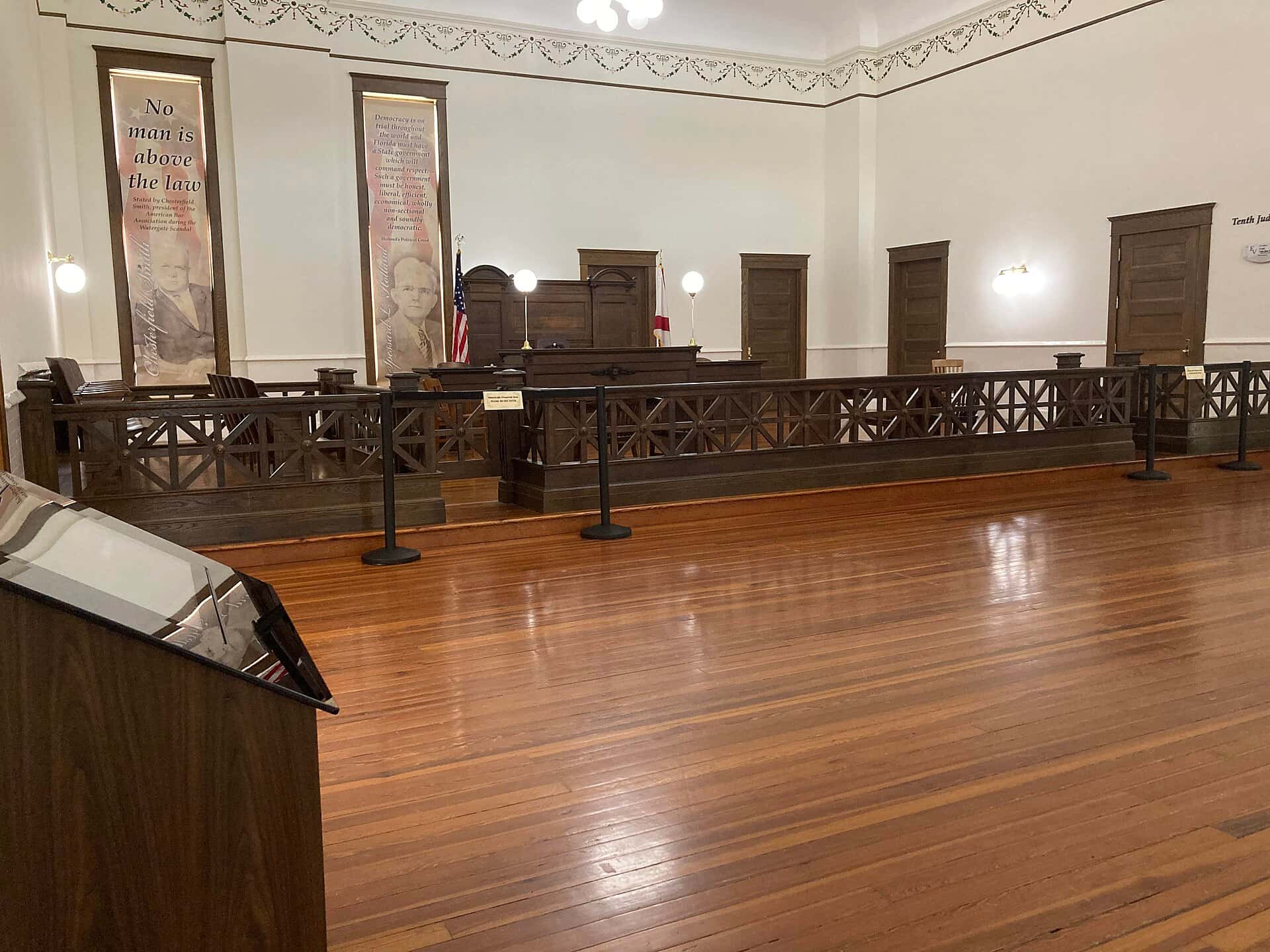
A Polk County jury has begun hearing evidence in the capital murder trial of Tony Wiggins, known as TJ, who is accused of shooting three friends during a night fishing trip near Frostproof more than six years ago. The trial opened with opening statements after jury selection concluded the previous week, and proceedings are expected to run about five weeks.
Wiggins faces three counts of first-degree murder along with charges of tampering with physical evidence and being a felon in possession of a weapon. He has pleaded not guilty, and prosecutors are seeking the death penalty. He is presumed innocent unless and until a jury finds otherwise.
The case dates to July 2020, when 23-year-old Damion Tillman, 30-year-old Keven Springfield, and 27-year-old Brandon Rollins were killed along Lake Streety Road in Frostproof while heading out for a night of catfishing. The deaths of three young men in a rural Polk County community drew national attention at the time.
What prosecutors allege
According to the state's theory presented in opening statements, Wiggins got into an altercation with the victims at a Dollar General in Bartow over the sale of a car engine. Prosecutors allege he then followed the three men to nearby Lake Streety, where they were ambushed and shot multiple times.
These are allegations that the state must prove beyond a reasonable doubt. The defense will present its own case, and jurors hear the full body of evidence before reaching any conclusion. Opening statements are not evidence; they are each side's description of what it expects the evidence to show.
Two other people were arrested in connection with the case at the time. The disposition of co-defendants' cases and what role, if any, they play in the trial are matters that develop through the proceedings.
Why the trial took six years
A six-year interval between arrest and trial in a capital case is long but not extraordinary, and the reasons are structural rather than anecdotal.
Capital cases carry procedural requirements that non-capital felonies do not. Defendants are entitled to qualified capital-certified counsel. Mitigation investigation, the defense work of developing a defendant's life history for the penalty phase, is extensive and takes years on its own. Forensic testing, expert retention, and expert depositions on both sides compound the timeline.
The pandemic added a substantial delay to Florida criminal dockets generally. Jury trials were suspended for extended periods beginning in 2020, and the backlog took years to work through. A case charged in July 2020 landed at the worst possible moment in that respect.
Jury selection in a capital case is itself a lengthy process. Prospective jurors are questioned individually about their views on the death penalty in a procedure that determines whether they can follow the law as instructed regardless of personal belief. In a rural county where a triple homicide received saturation coverage, pretrial publicity adds another layer of questioning.
How Florida's capital sentencing works now
If Wiggins is convicted of first-degree murder, the case moves to a separate penalty phase in which the same jury hears evidence about aggravating and mitigating circumstances and makes a sentencing recommendation.
Florida changed that standard in 2023. Under the current law, a jury can recommend a death sentence with a vote of at least 8 to 4, replacing the unanimity requirement that had been in place. Florida is among the few states that does not require a unanimous jury recommendation for a death sentence.
The judge makes the final sentencing determination. Under the current framework, a judge may impose life imprisonment notwithstanding a jury's death recommendation, but may not impose death without one.
Florida has an active death penalty and has carried out executions in 2026. The state's death row population is among the largest in the country.
What it means for Polk County
Frostproof is a small city in southern Polk County, part of a rural stretch of citrus country and lakes between Lakeland and Lake Wales. A triple homicide in a community of that size is not an abstraction; the victims and their families are known to their neighbors.
The Polk County Sheriff's Office handled the investigation and was publicly prominent in it from the outset. Cases that draw national coverage in small communities carry a particular weight, and a trial that reopens them six years later reopens that too.
The Tenth Judicial Circuit, which covers Polk, Highlands, and Hardee counties, will host proceedings expected to run roughly five weeks. Capital trials consume substantial court resources, and a five-week trial affects the circuit's broader docket.
Covering a capital case responsibly
A few principles apply to reporting on any trial and apply with particular force in a capital case. The defendant is presumed innocent. Allegations described in charging documents and in opening statements are claims, not findings. Guilt is determined by a jury after hearing all evidence, and a verdict has not been reached.
The victims' families are entitled to consideration as well. Three young men were killed, and their relatives have now waited six years for a proceeding that will require them to hear the details again.
Court proceedings in Florida are generally open to the public, and filings in the case are accessible through the Polk County Clerk of the Circuit Court. Coverage that relies on the record rather than on secondhand accounts is the standard this case deserves.
What a capital jury is asked to do
Jurors in a capital case carry a burden that other jurors do not, and the structure of their task is worth explaining because it is widely misunderstood. The trial proceeds in two phases with the same jury.
The guilt phase works like any criminal trial. The state must prove each element of each charge beyond a reasonable doubt, and the jury returns a verdict on each count. A first-degree murder conviction in Florida requires proof of premeditation, or that the killing occurred during the commission of certain felonies.
If the jury convicts on first-degree murder, the penalty phase follows. The state presents aggravating circumstances defined by statute, such as whether the murder was especially heinous, whether it was committed for financial gain, or whether the defendant had prior violent felony convictions. The defense presents mitigating circumstances, which can include anything about the defendant's background, character, or the circumstances of the offense.
Jurors weigh those against each other and vote. Under Florida's current law, a recommendation of death requires at least eight of twelve votes. The judge then imposes sentence, and may impose life despite a death recommendation but cannot impose death without one.
Polk County and the case that changed a community
Frostproof sits in the southern part of Polk County, in a landscape of citrus groves, cattle ranches, and lakes that looks little like the Florida most visitors see. The city's population is small enough that the three victims were known widely in the community, and the case drew national coverage that a triple homicide in a larger metropolitan area might not have.
The Polk County Sheriff's Office led the investigation and was publicly visible throughout, with regular briefings during the initial weeks. That visibility served an investigative purpose, since public attention generates tips, and it also shaped how the case has been understood locally for six years.
The Tenth Judicial Circuit covers Polk, Highlands, and Hardee counties, and a five-week capital trial occupies courtroom and personnel resources that affect the rest of the docket. Other cases get continued. That is a routine cost of capital litigation and one reason prosecutors weigh capital charging decisions carefully.
Where Florida's death penalty stands
Florida has one of the largest death row populations in the country and has carried out executions in 2026. The state's capital sentencing law has been revised repeatedly over the past decade, often in response to appellate rulings.
The unanimity requirement that Florida adopted after federal and state court decisions in the mid-2010s was reversed by the Legislature in 2023, returning the state to a non-unanimous standard with a minimum of eight jurors. Florida is now among a small number of states that permit a death sentence without a unanimous jury recommendation.
That change is expected to generate appellate litigation for years, and any death sentence imposed under it carries that uncertainty. For the families of victims, the prospect of extended appellate proceedings after a trial that already took six years to begin is part of what the process asks of them.
What five weeks of trial involves
A five-week estimate for a capital trial reflects the volume of evidence the state intends to present and the pace at which capital proceedings move. Both sides litigate objections more carefully than in a routine felony case, because appellate review of a death sentence is automatic and exhaustive, and an error that would be harmless elsewhere can undo a verdict here.
Witness lists in a case of this scale run long. Investigators, medical examiners, forensic analysts, and civilian witnesses each testify on direct and cross, and expert testimony on ballistics, digital evidence, and forensic pathology takes time to lay foundation for.
Jurors serve throughout, and courts in capital cases take unusual measures to protect the panel from outside information. In a county where the case has been covered for six years, instructions about avoiding media coverage carry more practical difficulty than they would in a case nobody remembers.
What's next
The trial continues with the state's case in chief, followed by the defense. A verdict would come at the conclusion of the guilt phase, with a penalty phase to follow only if the jury returns a first-degree murder conviction.
The five-week estimate is an estimate. Capital trials frequently run longer than projected, and the timeline depends on the volume of witnesses and any mid-trial legal issues that arise.
Court schedules and filings are public through the Tenth Judicial Circuit and the Polk County Clerk of the Circuit Court, which remain the authoritative sources for the case's status.
Spotted an issue with this article?
Have something to say about this story?
Write a letter to the editorComments
No comments yet. Be the first to weigh in.
Related Coverage

Boca Raton Man Charged in an Alleged $3 Million Betting Operation
1h ago
Suspended Osceola Sheriff Heads Toward November Racketeering Trial
18h ago

FDLE Undercover Operations Lead to Child Exploitation Arrests
1d ago

Jacksonville Police Target Street Takeovers With Arrests and Impounds
2d ago