Eleventh Circuit Strikes Down Stop WOKE Act Limits on Florida University Teaching
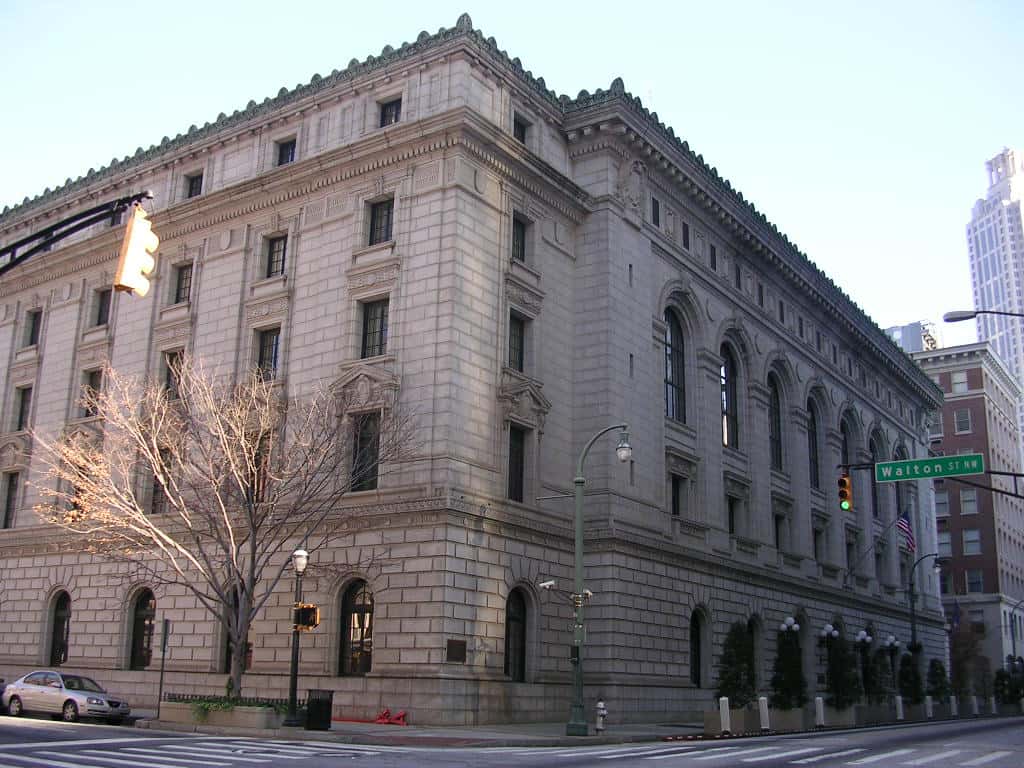
The U.S. Court of Appeals for the Eleventh Circuit has struck down the higher education provisions of Florida's Individual Freedom Act, the 2022 law commonly known as the Stop WOKE Act, holding that teaching at public universities is protected by the First Amendment.
The decision in Pernell v. Lamb, issued July 7, rejected the state's central legal argument: that professors at public universities become government mouthpieces because the state pays their salaries, and that the state may therefore control what they say in the classroom.
The case was brought by the American Civil Liberties Union, the ACLU of Florida, the Legal Defense Fund, and the law firm Ballard Spahr on behalf of Florida educators and students. The ruling applies to the law's application in higher education and leaves the statute's workplace and K-12 provisions on separate footing.
What the law required
The Individual Freedom Act, signed in 2022, restricted how a set of specified concepts related to race and gender could be taught in Florida classrooms and presented in workplace training. The statute enumerated concepts that could not be advanced in a manner that endorsed them, including propositions about whether individuals bear responsibility for actions committed by members of their race or sex.
In the higher education context, the law reached instruction at Florida's public colleges and universities, a system that includes the University of Florida, Florida State University, the University of Central Florida, the University of South Florida, Florida International University, Florida A&M University, Florida Atlantic University, and the rest of the State University System, along with the Florida College System.
Faculty who challenged the law argued that its terms were vague enough that instructors could not determine what was permitted, producing a chilling effect in which professors avoided entire subjects rather than risk violating an unclear standard.
Students who joined the litigation argued that the restrictions deprived them of instruction they had enrolled to receive.
The government speech question
The state's principal defense rested on the government speech doctrine. Under established First Amendment law, when the government itself speaks, it may choose what to say, and the Free Speech Clause does not require it to be neutral. A state may promote public health messages without giving equal time to contrary views.
Florida argued that instruction at a state university is government speech because the state employs the professors, funds the institution, and sets curricular requirements. If that characterization held, the state would have broad latitude to dictate classroom content.
The Eleventh Circuit rejected it, holding that public university teaching is protected by the First Amendment and declining to treat professors as state mouthpieces by virtue of their employment.
The reasoning connects to a longstanding line of Supreme Court cases recognizing academic freedom as a First Amendment concern, with the Court having described the university classroom as a setting where the exchange of ideas carries particular constitutional weight.
What it means for Florida campuses
The immediate effect is on instruction at Florida's public colleges and universities, which collectively enroll hundreds of thousands of students. Faculty who had narrowed course content to avoid potential violations face a changed legal landscape.
Practical implementation typically lags a ruling. Universities operate through compliance offices, general counsel guidance, and departmental practice, and institutional guidance takes time to be revised and communicated. Faculty generally look to their institution's counsel rather than to a court opinion directly.
The ruling addresses higher education specifically. Florida's K-12 curriculum requirements operate under different legal frameworks, since courts have historically afforded states substantially greater authority over primary and secondary curriculum than over university instruction. The workplace training provisions of the Individual Freedom Act have been litigated separately.
Florida's public universities have been the subject of considerable policy attention in recent years across governance, tenure review, general education requirements, and program approval, and this ruling addresses one element within a broader picture.
Why the Eleventh Circuit matters
The Eleventh Circuit hears federal appeals from Florida, Georgia, and Alabama, making it the appellate court whose rulings govern federal law questions in Florida. Its decisions bind federal district courts across the three states.
The court hears a substantial volume of cases arising from Florida given the state's size and the range of litigation its policies generate. Recent Eleventh Circuit decisions affecting Florida have spanned constitutional challenges to state law, immigration matters, and claims arising from confiscated Cuban property under the Helms-Burton Act.
Appeals from the Eleventh Circuit go to the U.S. Supreme Court, which accepts a small fraction of petitions. A state that loses at the circuit level may seek en banc review by the full court of appeals before petitioning the Supreme Court.
The national context
Florida's law was among the earliest and most prominent state measures restricting instruction on race and gender concepts, and comparable legislation has been enacted in a number of other states. Courts examining those statutes have reached varying conclusions depending on the specific statutory language and the setting.
The distinction between higher education and K-12 has been significant across these cases. The legal frameworks differ, with universities receiving stronger First Amendment protection for instructional content.
Vagueness has been a recurring basis for challenges. Laws that restrict speech must give people reasonable notice of what is prohibited, and statutes that enumerate concepts without defining how they apply to classroom discussion have faced difficulty on that ground.
What it means for students and families
For students at Florida's public universities, the practical question is course content and whether instructors will address subjects they had been avoiding. Change of that kind tends to be gradual, following institutional guidance rather than the ruling itself.
For prospective students and their families, Florida's higher education policy environment has become a factor in enrollment decisions in a way it was not previously, with both applicants and faculty candidates weighing it.
Faculty recruitment and retention is the dimension with the longest-running consequences. Universities compete nationally for faculty, and the policy environment affects where scholars choose to work. Florida State University reported a record fundraising year at $235.4 million and secured an $88 million Navy research contract, indicators that its research standing remains strong.
The vagueness problem
Beyond the government speech question, challenges to laws of this kind frequently turn on vagueness, a due process doctrine holding that a law restricting conduct must give ordinary people fair notice of what it prohibits.
The difficulty in applying an enumerated-concepts statute to classroom instruction is that teaching frequently involves presenting ideas in order to examine them. A history course covering the intellectual justifications advanced for segregation must describe those arguments to analyze them. Whether describing an idea constitutes advancing it is precisely the kind of question a professor cannot answer confidently in advance.
That uncertainty produces what courts call a chilling effect: the rational response to an unclear prohibition is to avoid the vicinity of it entirely. Faculty testimony in cases of this type has commonly described exactly that response, with instructors removing readings, dropping course units, or declining to teach certain subjects.
The chilling effect is legally significant because it means the practical reach of a statute exceeds what its text prohibits. A law that formally bans a narrow category of speech can suppress a much broader one if people cannot determine where the line falls.
What Florida's university system looks like now
Florida's State University System enrolls more than 400,000 students across 12 institutions, and the Florida College System adds a network of state colleges serving hundreds of thousands more. It is among the largest public higher education systems in the country.
Governance runs through the Board of Governors, which oversees the State University System, and individual boards of trustees at each institution. Trustees are appointed by the governor and by the Board of Governors, giving the executive branch substantial influence over institutional leadership.
That structure has been consequential over the past several years, as governance changes have reshaped leadership at several institutions. New College of Florida in Sarasota underwent the most publicized transformation, with a reconstituted board and a change in institutional direction that drew national attention.
The system's research output remains significant. The University of Florida is a member of the Association of American Universities, and Florida State University has continued to secure major federal research funding, including an $88 million U.S. Navy contract running through 2031 for shipboard power systems research.
What faculty and students face practically
For faculty, the immediate question is what institutional guidance follows the ruling. Universities communicate legal developments through general counsel offices and provost communications, and those documents rather than the opinion itself govern day-to-day practice.
Course content decisions for the fall semester were largely made before the ruling issued in early July, since syllabi and reading lists are typically finalized months ahead. Any effect on instruction is therefore more likely to appear in spring courses than in the term beginning in August.
For students, the effect is on what is taught and how openly classroom discussion proceeds. Students in fields where the restricted concepts are most relevant, including history, sociology, political science, education, and law, are the population most directly affected.
Graduate students and early-career faculty occupy the most exposed position, since they have the least job security and the most to lose from a compliance dispute. That asymmetry is part of why academic freedom protections are generally understood to matter most for those without tenure.
What's next
The state may seek en banc review by the full Eleventh Circuit or petition the U.S. Supreme Court, though neither route has favorable odds given how few petitions either court grants.
Institutional guidance from Florida's universities will determine how the ruling translates into practice on campuses, with the new academic year beginning in August providing the first test.
The Legislature convenes for its 2027 regular session in the coming months, and legislative responses to adverse court rulings on state statutes are common. Whether lawmakers attempt to redraft the higher education provisions in a form intended to survive First Amendment review is a question for that session.
Spotted an issue with this article?
Have something to say about this story?
Write us a letterComments
No comments yet. Be the first to weigh in.
Related Coverage

Poll watchers, DOJ monitors and Florida law: what voters can expect at the polls on Nov. 3
14h ago

María Corina Machado returns to Venezuela after nearly a year in exile, stirring hope and doubt in Doral
16h ago

Free national park entry on Theodore Roosevelt's birthday: what it means at the Everglades, Dry Tortugas and Florida's other park sites
17h ago
Deportations fall short of Trump's 1 million goal, report finds, as Florida leads the push on local immigration arrests
19h ago