The Fed's First Rate Hike Since 2023 Lands Hard on Florida's Housing Market
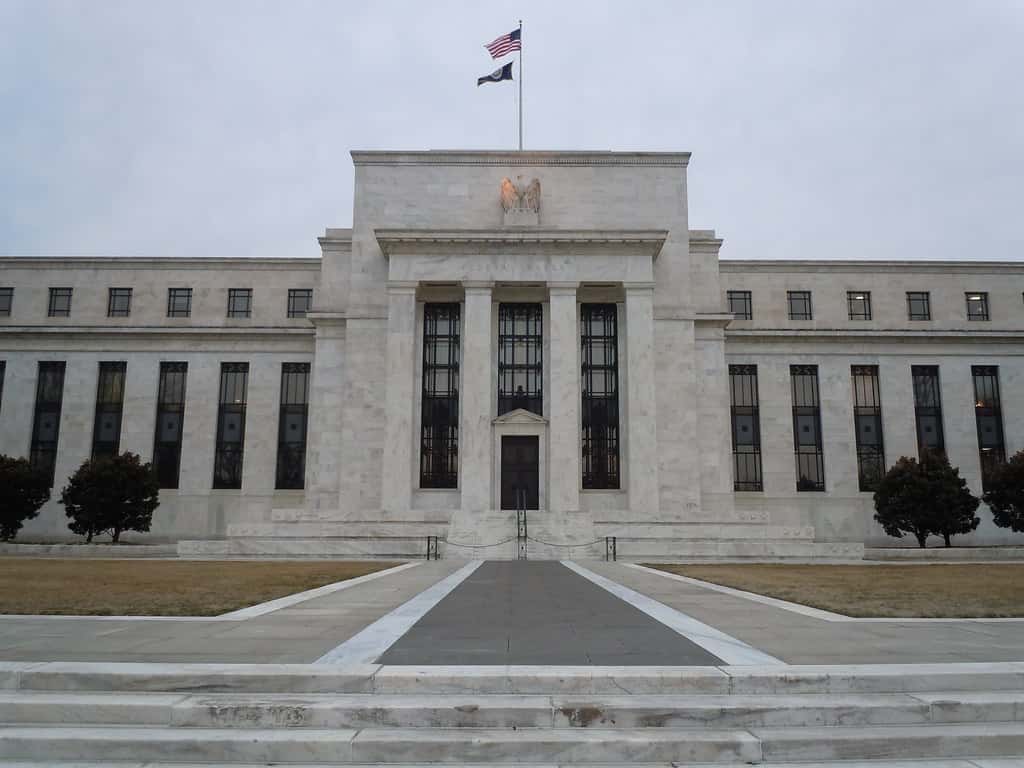
The Federal Reserve raised its benchmark interest rate by a quarter percentage point on September 16 to a target range of 3.75 to 4 percent, the first increase since 2023. The Federal Open Market Committee voted 12-0, citing inflation that remains elevated above the 2 percent target. For Florida, where the 30-year fixed mortgage rate had already reached 7.19 percent and housing inventory is falling, the decision tightens an affordability squeeze that has already slowed transactions across the state.
What the Fed decided
The quarter-point increase moves the federal funds target range to 3.75 to 4 percent. The unanimous 12-0 vote signals institutional consensus rather than a contested decision, which typically indicates policymakers are responding to data they read the same way.
Policymakers pointed to inflation that remains above the 2 percent target, describing the move as supporting a more timely return to that goal. That framing positions the increase as a corrective rather than the start of an aggressive tightening cycle.
The Summary of Economic Projections released alongside the decision marked up the expected path for the funds rate relative to the June projections. A large majority of submitting officials favored at least one additional increase during 2026.
That forward guidance matters more for Florida borrowers than the September move itself. Markets price in expectations, and a projected path pointing higher keeps upward pressure on longer-term rates including mortgages.
Why mortgage rates were already rising
The 30-year fixed mortgage rate had climbed to 7.19 percent before the Fed acted, up roughly 38 basis points since the Jackson Hole symposium in late August and more than a full percentage point from a year earlier.
Mortgage rates do not track the federal funds rate directly. They follow the 10-year Treasury yield and the spread that mortgage-backed securities investors demand, both of which respond to inflation expectations and the anticipated path of policy rather than to any single decision.
That is why the pressure on mortgage rates preceded the September meeting. Markets had already adjusted to the likelihood of tightening, and the decision confirmed rather than created the move.
The contrast with fall 2025 is stark. Rates dropped below 6.5 percent during that period, and buyers who financed then are carrying payments substantially lower than what the same purchase would cost today.
The Florida housing impact
Florida's August housing data shows a market absorbing this pressure. The statewide median single-family price reached $415,000, up just 1.2 percent year over year, while closed sales dipped slightly.
Inventory is the more revealing figure. End-of-month supply fell 13 percent from August 2025 and dropped below where it stood two years ago, leaving the state at a 4.3 month supply against the six months generally considered balanced.
Falling inventory in a rising rate environment reflects the lock-in effect. Homeowners carrying mortgages below 4 percent will not list, because moving means refinancing their housing cost at more than 7 percent.
The combined result is a market where prices hold firm while volume falls. Buyers face high financing costs and limited choice simultaneously, which is the least favorable configuration for anyone trying to enter the market.
What it costs a Florida buyer
The arithmetic is direct. On a $400,000 loan, the difference between a 6.4 percent rate and a 7.19 percent rate amounts to several hundred dollars per month in principal and interest, and tens of thousands of dollars over the life of the loan.
Qualification thresholds shift accordingly. Lenders evaluate debt-to-income ratios using the actual payment, so a higher rate reduces the loan amount a given household qualifies for even when income has not changed.
Florida buyers face an additional layer that borrowers in most states do not. Property insurance premiums and, for condominium purchasers, association fees are included in the qualifying payment calculation, which compresses purchasing power further.
Citizens Property Insurance approved rate reductions for 2026, a statewide average decrease of 2.6 percent for personal lines with larger reductions for roughly three in five policyholders. Those reductions help at the margin without offsetting a full percentage point of mortgage rate increase.
Beyond housing: the Florida economy
Florida's economy is unusually sensitive to interest rates because of the weight construction, real estate, and the financial services tied to both carry in state employment. Higher rates slow all three.
The state's unemployment rate stood at 4.5 percent in August, above the 4.1 percent national average, though it declined for a third consecutive month. Additional tightening works against that improvement.
Business borrowing costs rise alongside consumer rates, which affects expansion decisions across sectors. Small businesses, which account for a substantial share of Florida employment, are particularly sensitive to credit conditions.
Savers see the other side of the trade. Higher rates improve returns on deposits, money market funds, and Treasury securities, which matters in a state with a large retiree population holding fixed-income assets.
The cruise and tourism exception
Not every Florida sector is under pressure. PortMiami welcomed its 10 millionth cruise passenger of fiscal 2026 on September 14, surpassing the prior record by more than 1.4 million travelers.
Carnival Corporation has reported record quarterly revenue of $6.2 billion with occupancy above 100 percent across its brands. Cruise demand has proved resilient to the rate environment in a way that housing has not.
Part of the explanation is that cruise vacations are generally not financed. A discretionary purchase paid from savings or current income responds to consumer confidence and pricing rather than to borrowing costs.
Orlando's theme park market presents a more mixed picture, with one major operator reporting attendance softness across the broader market beginning in June while another reported combined attendance up 3 percent over the summer.
What the Fed is watching
Inflation remains the stated driver. The committee's language pointed to price pressures that have not returned to target, and the projected path suggests officials expect to need further action.
Labor market conditions are the counterweight. Tightening too aggressively risks pushing unemployment higher, and Florida's rate at 4.5 percent is already above the national figure.
The committee meets on a scheduled calendar through the remainder of 2026, and each meeting brings the possibility of another adjustment. Markets will price expectations between meetings based on inflation and employment data.
For Florida households, the practical signal is the projected path rather than any single decision. A majority of officials favoring at least one more increase means mortgage rates are unlikely to retreat meaningfully in the near term.
What Floridians can do
Buyers who need to transact have options that do not depend on rates falling. Adjustable-rate products, rate buydowns negotiated with sellers, and shopping multiple lenders can all reduce the effective cost, though each carries tradeoffs worth understanding before committing.
Existing homeowners with low-rate mortgages generally have no reason to act. Refinancing into a higher rate makes sense only in specific circumstances, and home equity products carry rates that track the same environment.
Savers should review where cash is held. The gap between rates on ordinary savings accounts and money market or Treasury alternatives has widened, and the difference on meaningful balances is substantial.
Buyers should obtain insurance quotes before making an offer rather than during the closing process. In Florida, that single figure can change whether a property is affordable at all.
How a rate hike travels to a Florida mortgage
The federal funds rate is an overnight rate at which banks lend reserves to one another, and it has no direct mechanical connection to a 30-year mortgage. The transmission runs through expectations: when the Fed signals a tightening path, investors demand higher yields on longer-dated Treasury securities, and mortgage rates track those yields plus a spread.
That spread widens when investors perceive more uncertainty about prepayment or credit risk. In periods of volatility, mortgage rates can rise even when Treasury yields are flat, which is part of why the relationship between Fed decisions and what a Florida buyer is quoted at a closing table is imprecise.
The practical consequence is that borrowers should watch the 10-year Treasury yield and the projected policy path rather than individual Fed announcements. By the time a decision is made public, mortgage markets have generally already moved.
It also means a single hike does not necessarily raise mortgage rates and a pause does not necessarily lower them. What moves the 30-year rate is the market's view of where inflation and policy are heading over years, not where the funds rate sits this month.
Who this hits hardest in Florida
First-time buyers bear the sharpest effect, because they have no existing equity to carry into a purchase and no low-rate mortgage to protect. A household that was approved for a given price point in 2025 now qualifies for meaningfully less without any change in income.
Buyers in coastal and condominium markets face compounding pressure, since insurance premiums and association fees enter the qualifying calculation alongside principal and interest. Two properties at identical prices can carry very different monthly obligations depending on building age, location, and reserve requirements.
Move-up buyers are constrained differently. They hold equity that helps with a down payment, but selling means surrendering a low-rate mortgage, which often makes the move financially irrational even when the household has outgrown its home.
Retirees and cash buyers are the least affected, and in a state with Florida's demographics that is a meaningful share of the market. Cash transactions proceed regardless of mortgage rates, which is part of why Florida prices have held firmer than transaction volume would suggest.
What's next
The Federal Open Market Committee meets again later in 2026, and the projections released in September indicate further tightening is more likely than not. Each meeting will be read closely by mortgage markets.
Florida Realtors releases monthly housing data, and September figures will indicate whether the inventory decline and volume softness continue under the new rate level.
The interaction between falling supply and falling demand is the variable to watch. Florida prices have held firm because inventory has fallen faster than sales. If that relationship reverses, the price stability of the past two years would come under genuine pressure.
Spotted an issue with this article?
Have something to say about this story?
Write us a letterComments
No comments yet. Be the first to weigh in.
Related Coverage

María Corina Machado returns to Venezuela after nearly a year in exile, stirring hope and doubt in Doral
2h ago

Free national park entry on Theodore Roosevelt's birthday: what it means at the Everglades, Dry Tortugas and Florida's other park sites
3h ago

Deportations fall short of Trump's 1 million goal, report finds, as Florida leads the push on local immigration arrests
5h ago

Cubans facing deportation are being sent to Mexico and other third countries as Supreme Court prepares to weigh the practice
6h ago