FBI Most Wanted COVID Fraud Fugitive Returned to Miami in $32 Million Case
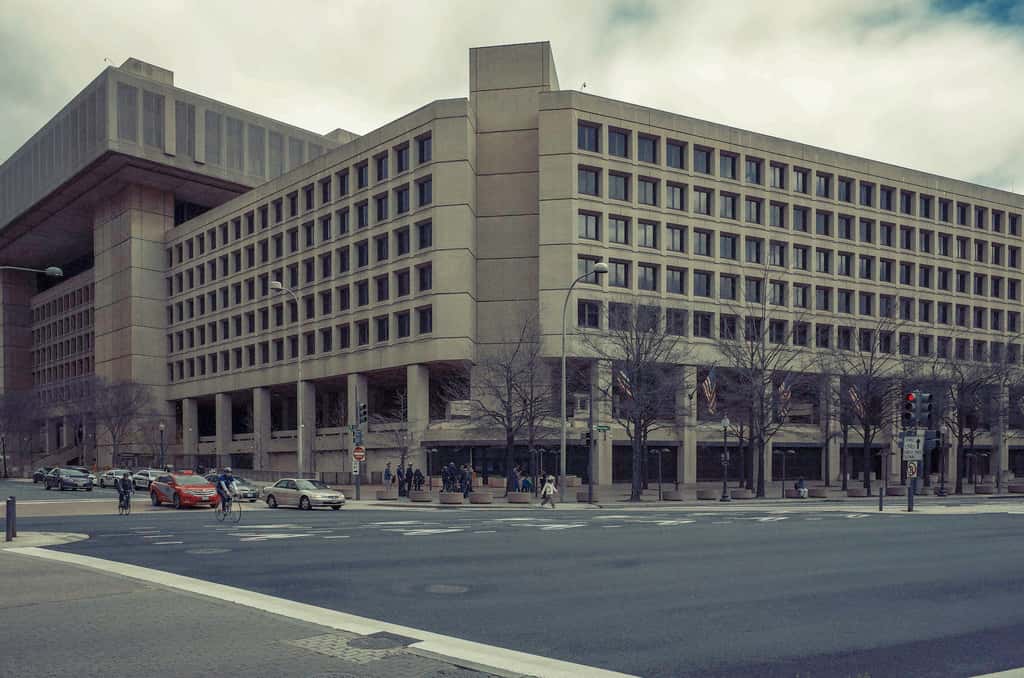
A woman named to the FBI's Most Wanted Fraudsters list was returned to the Southern District of Florida over the weekend to face federal charges connected to a scheme that allegedly obtained more than $32 million in COVID-19 relief funds through fraudulent applications.
According to the U.S. Department of Justice, Elaine Escoe, 41, was returned from Jamaica on Saturday after Jamaican authorities captured her following a tip from the FBI. She had been living under a false identity at the time of her arrest, according to federal officials.
Escoe was charged by indictment in 2025 with conspiracy to commit wire fraud, conspiracy to commit money laundering, and multiple substantive counts of wire fraud and money laundering. She is presumed innocent of all charges unless and until proven guilty in court.
The allegations
Federal prosecutors allege that the scheme involved submitting more than 90 fraudulent applications supported by fabricated documents, and that Escoe demanded kickbacks of up to 50 percent of the loan proceeds from applicants.
The programs allegedly targeted span most of the major federal pandemic aid initiatives. The Paycheck Protection Program provided forgivable loans intended to keep employees on payroll. The Economic Injury Disaster Loan program offered working capital to businesses affected by the pandemic. The Restaurant Revitalization Fund and the Shuttered Venue Operators Grant were designed for sectors that faced extended closures.
These programs shared a common design feature that prosecutors nationally have identified as central to the fraud they attracted: they were built to disburse money quickly during an economic emergency, which meant verification occurred largely after funds were released rather than before.
That design was a deliberate policy choice. Congress and the administering agencies judged that speed mattered more than screening during a period when businesses were closing within weeks. The cost of that choice has been an enforcement caseload that federal prosecutors expect to work through for years.
How the case reached this point
A federal arrest warrant was issued in May 2025. Escoe failed to appear for a scheduled court appearance and fled to Jamaica, according to the Justice Department. She was subsequently named to the FBI's Most Wanted Fraudsters list, a designation the bureau uses to generate public tips in significant financial crime cases.
Federal officials said she was living under the false identity Harley Newman when Jamaican authorities located her. The FBI has indicated a tip led to the capture.
Her return involved a coordinated effort among the FBI, the U.S. Marshals Service, the State Department's Diplomatic Security Service Regional Security Office at the U.S. Embassy in Kingston, the Jamaica Constabulary Force, and the Jamaica Fugitive Apprehension Team.
The multi-agency composition reflects the mechanics of returning a fugitive from abroad. Locating a person is one agency's function, the diplomatic and legal process of securing their return is another's, and physical transport is a third.
Why South Florida is a center of these cases
The Southern District of Florida has handled a disproportionate share of pandemic fraud prosecutions nationally. Several structural factors explain the concentration.
The district covers Miami-Dade, Broward, and Palm Beach counties along with the Keys and several other counties, an area with an enormous number of small businesses, which were the intended recipients of these programs. Volume alone produces cases.
South Florida also has a well-documented history as a center for health care fraud, identity theft, and financial crime, which means the region had existing networks with the technical knowledge to exploit rapid-disbursement programs. Federal prosecutors and investigators in the district correspondingly built expertise in these cases well before the pandemic.
Proximity to the Caribbean adds a flight dimension. Individuals facing charges have relatively easy geographic access to jurisdictions from which extradition or return is more complex than a domestic arrest.
The scale of pandemic fraud nationally
Federal watchdogs have estimated that fraud across pandemic relief programs reached into the tens of billions of dollars, though precise figures remain contested and depend on definitions of what constitutes fraud versus improper payment.
The Justice Department established a COVID-19 Fraud Enforcement Task Force to coordinate the response, and Congress extended the statute of limitations for certain pandemic fraud offenses to ten years, recognizing that the caseload could not be worked through within the ordinary five-year window.
Enforcement has ranged from individual cases involving relatively small sums to organized schemes involving dozens of applications and tens of millions of dollars. The allegations in this case place it in the latter category.
Recovery of stolen funds is generally partial. Money that has been spent, transferred abroad, or converted into assets that have lost value is difficult to recoup, which is part of why prosecutors emphasize forfeiture in these cases.
What comes next in the case
A defendant returned to the district makes an initial appearance before a magistrate judge, at which the charges are read and questions of detention or release pending trial are addressed. A defendant who previously failed to appear and fled the country faces a considerably more difficult argument for pretrial release.
The case then proceeds through arraignment, discovery, pretrial motions, and either a plea or a trial. Federal financial fraud cases involving extensive documentary evidence typically require substantial time in the discovery phase, since the evidence consists of application records, financial transactions, and communications.
The charges carry significant potential penalties. Wire fraud and money laundering are each punishable by substantial prison terms under federal law, and sentences in cases of this magnitude are driven heavily by loss amount under the federal sentencing guidelines.
What this means for Floridians
The direct effect of pandemic relief fraud on ordinary Floridians is fiscal. The programs were funded by federal borrowing, and money diverted through fraudulent applications is money that did not reach businesses that needed it and that taxpayers will service through debt.
There is a secondary effect on the businesses that received legitimate aid. Widespread fraud within these programs has complicated forgiveness processing and audit procedures for recipients who applied properly, adding administrative burden to businesses that did nothing wrong.
The enforcement response also carries a policy lesson that Florida will encounter again. The state receives large federal disaster relief disbursements after hurricanes, distributed under similar time pressure. The tension between rapid aid delivery and fraud prevention is a recurring problem in any emergency program, and how agencies balance it after the pandemic experience will shape future disaster response.
How international returns actually work
Returning a fugitive from another country is a legal process rather than a law enforcement operation, and its mechanics explain why the agency list involved in this case was so long.
Extradition proceeds under treaty. The United States maintains extradition treaties with a large number of countries, and each specifies which offenses are covered and what procedures apply. A request originates with the Justice Department, moves through the State Department, and is presented to the foreign government through diplomatic channels.
The receiving country then applies its own legal process. Courts there determine whether the request meets treaty requirements, whether the alleged conduct constitutes a crime under local law, and whether any bar to surrender applies. That review can take months or longer when contested.
Some returns occur through mechanisms other than formal extradition, including deportation or removal by the host country when the individual is present unlawfully or has used false documentation. The reference to a false identity in this case is the kind of circumstance that can open such a route.
The Diplomatic Security Service's regional security office at a U.S. embassy is the entity that coordinates between American agencies and host country authorities on the ground, which is why it appeared alongside the FBI and the Marshals Service.
The Most Wanted Fraudsters list
The FBI maintains several public wanted lists, of which the Ten Most Wanted Fugitives list is the best known. The Most Wanted Fraudsters list serves a narrower function, focusing on financial crime defendants who have fled.
The purpose is tip generation. Financial crime fugitives generally do not present the public safety threat that drives publicity for violent offenders, but they are often difficult to locate through investigative means alone because they leave a smaller physical trail.
Publicity works differently for this category. A fugitive living under an assumed identity abroad may be recognized by someone in their community who would never have encountered a law enforcement bulletin through official channels.
The bureau credited a tip with leading to this capture, which is the outcome the list is designed to produce.
What pandemic fraud cases look like in court
Prosecutions of this type rest heavily on documentary evidence rather than testimony. The application records submitted to lenders and agencies, the bank records showing where funds moved, and the electronic communications surrounding the applications constitute the core of the government's case.
That evidentiary profile has consequences for how cases resolve. Documentary cases are difficult to contest on the facts, which is part of why a substantial share of pandemic fraud prosecutions have ended in guilty pleas rather than trials.
Where defenses succeed, they typically concern intent rather than conduct. A defendant who submitted an inaccurate application may argue the errors were negligent rather than knowing, or that they relied on a preparer's representations.
Allegations involving fabricated supporting documents and demands for kickbacks, as prosecutors have described here, are aimed directly at that intent question, since neither is consistent with inadvertent error.
What's next
The case proceeds in the U.S. District Court for the Southern District of Florida. Court records will reflect the schedule as it develops.
The FBI's Most Wanted Fraudsters list remains active, and the bureau has attributed this capture to a public tip, which is the mechanism the list is designed to generate.
Pandemic fraud prosecutions are expected to continue for years given the extended statute of limitations, meaning cases arising from applications submitted in 2020 and 2021 will continue reaching Florida courtrooms well into the coming decade.
Spotted an issue with this article?
Have something to say about this story?
Write us a letterComments
No comments yet. Be the first to weigh in.
Related Coverage

Poll watchers, DOJ monitors and Florida law: what voters can expect at the polls on Nov. 3
10h ago

María Corina Machado returns to Venezuela after nearly a year in exile, stirring hope and doubt in Doral
12h ago

Free national park entry on Theodore Roosevelt's birthday: what it means at the Everglades, Dry Tortugas and Florida's other park sites
13h ago
Deportations fall short of Trump's 1 million goal, report finds, as Florida leads the push on local immigration arrests
15h ago