Fed Holds Rates as Three Officials Push for a Hike: What It Means in Florida
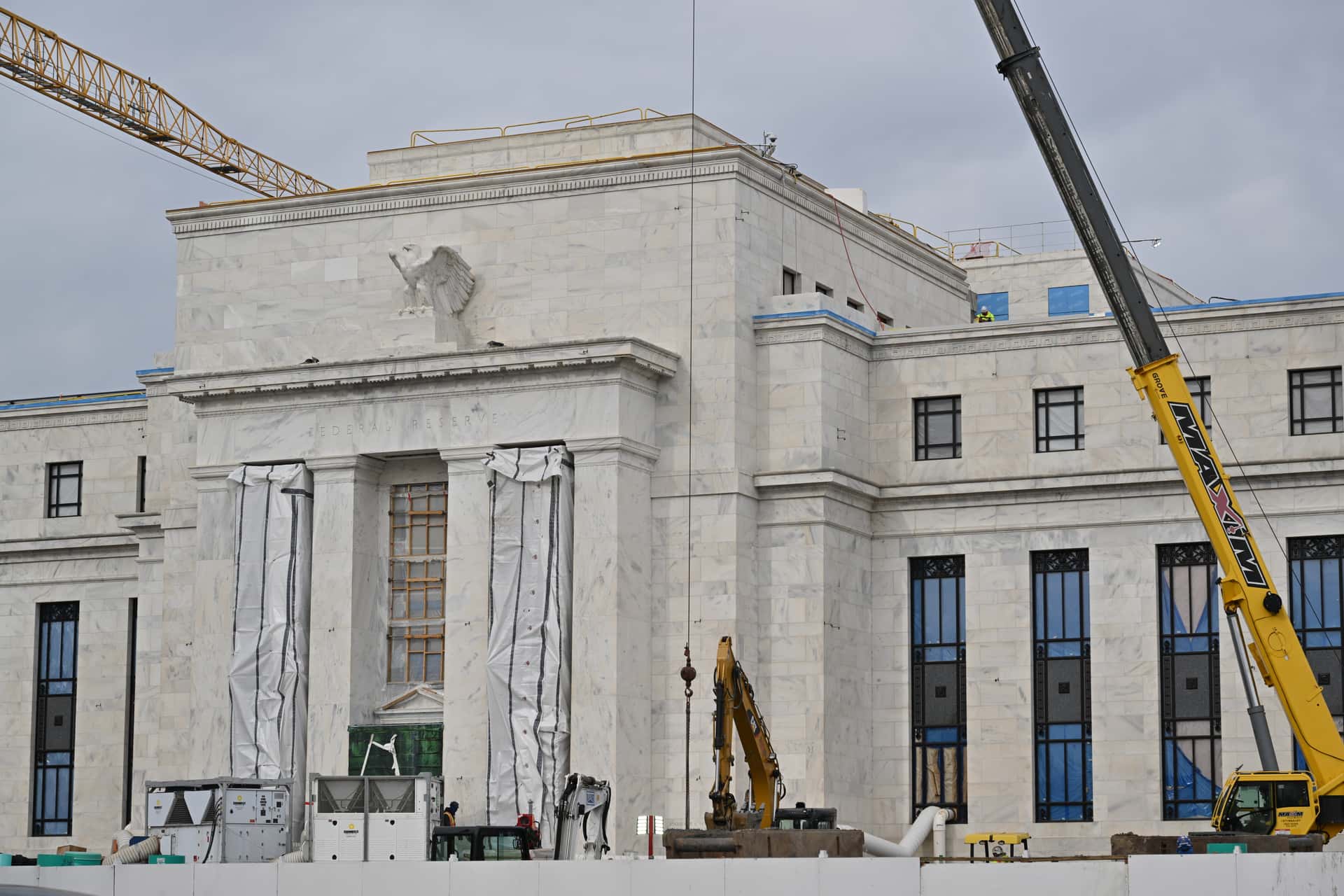
The Federal Reserve held its benchmark interest rate steady at a range of 3.50 to 3.75 percent on Wednesday, the fifth consecutive meeting without a change, but the vote was 9 to 3 and all three dissenters wanted rates raised rather than cut. For Florida, where housing affordability and property insurance costs dominate household budgets, the direction of that dissent matters more than the decision itself.
What the Fed did and did not do
Cleveland Fed President Beth Hammack, Minneapolis Fed President Neel Kashkari and Dallas Fed President Lorie Logan each dissented in favor of raising the target range by a quarter percentage point. The post-meeting statement recorded that preference explicitly. Three dissents pointing in the same direction is the most since September 2016.
The underlying reason is inflation. Prices have run above the Federal Reserve's 2 percent target for more than five years, and the three dissenting presidents have signaled that the committee's patience has become a credibility problem.
Fed Chair Kevin Warsh, presiding over his second meeting as chair, welcomed the disagreement publicly. He told reporters that he had asked for a good family fight and got one. He also stated plainly that there is no soft inflation target and no soft implicit target on this committee's watch, and he has said he has no tolerance for elevated inflation.
Markets currently price two quarter-point increases in 2026 with no further movement through 2027, and there is a broad expectation that the Fed moves at its September meeting. Warsh has deliberately stepped back from the forward guidance his predecessors offered routinely, which leaves markets with less to work from and has produced visible unease in the bond market.
The mortgage rate connection
Mortgage rates do not track the federal funds rate directly. The 30-year fixed rate follows the 10-year Treasury yield plus a spread, and that yield reflects market expectations for the path of policy and inflation over a decade rather than the current overnight rate.
Freddie Mac's Primary Mortgage Market Survey put the 30-year fixed rate at 6.58 percent in its July 23 release, up from 6.55 percent the prior week. Rates on July 29 for 30-year fixed purchase mortgages were being quoted in the range of roughly 6.8 percent by some trackers, which reflects the difference between survey averages and daily quoted rates including points and borrower-specific pricing.
The critical point for Florida buyers is that an environment in which the Fed's own regional presidents are pushing for increases is not an environment in which mortgage rates fall meaningfully. Buyers who have been waiting for rates to return to the 5 percent range are, on current expectations, waiting for something the market is not pricing.
What this means for Florida housing
Florida's single-family market has absorbed high rates better than most. Closed sales rose 9.3 percent year over year in June, pending sales and median prices rose as well, and the state has now posted ten consecutive months of growth in those measures. The statewide single-family median stood at $432,000 with a 4.5-month supply.
At a $432,000 price with 20 percent down and a 6.58 percent rate, principal and interest run roughly $2,200 a month. Florida property insurance and, in many communities, association dues sit on top of that. Property taxes in Florida are assessed at the county level and reset on sale, which means a buyer's tax bill frequently exceeds the seller's substantially.
The condominium segment is a different market entirely. Inventory stands at an 8.1-month supply, pending condo sales are down roughly 21 percent, and values in major markets have fallen between 4.7 and 9.9 percent, with steeper declines in some coastal submarkets. That decline is driven by post-Surfside reserve funding requirements and milestone inspection mandates rather than by interest rates, but high rates compound the problem by shrinking the buyer pool further.
Beyond housing: what else Florida feels
Florida has no personal income tax, which makes state government unusually dependent on sales tax collections. Sales tax revenue is a direct function of consumer spending, which is a direct function of consumer confidence and disposable income. Sustained high rates and above-target inflation both pressure that channel.
Tourism is the clearest transmission path. Comcast executives told investors on July 23 that Universal Orlando attendance softened in June and weakened further into the third quarter, attributing the slowdown partly to higher fuel prices and weaker consumer sentiment. Posted wait times across Walt Disney World have declined as well.
Small business borrowing is another. Florida has one of the highest rates of new business formation in the country, and new firms depend disproportionately on credit lines, equipment financing and Small Business Administration lending, all of which price off short-term rates.
Construction is a third. Florida's homebuilding sector is large, and both construction lending and buyer financing are rate-sensitive. Builders have responded to the rate environment with mortgage rate buydowns, which are effectively price reductions delivered through the financing rather than the sticker.
What Floridians can actually do
For prospective buyers, the practical guidance in a plateau environment is to shop lenders aggressively, since the spread between the best and worst available quotes on the same borrower profile routinely exceeds a quarter point. Rate locks with float-down provisions provide protection in either direction.
For condominium buyers specifically, the diligence checklist matters more than the rate. Obtain the association's milestone inspection status, its structural integrity reserve study, its current reserve funding level and any pending special assessments before signing. More than 1,400 Florida condominium buildings appear on Fannie Mae's list of projects ineligible for conventional financing, and confirming a building's status before making an offer avoids a failed closing.
For savers, the flip side of elevated rates is that money market funds, Treasury bills and certificates of deposit continue to offer real returns. Florida's large retiree population is on the receiving end of that, and a higher-for-longer path is favorable for fixed-income holders in a way it is not for borrowers.
Why three dissents is unusual
The composition of Wednesday's vote is the part of the decision most worth dwelling on, because Federal Reserve dissents are rare and dissents in this configuration are rarer still.
The Federal Open Market Committee operates by strong norm toward consensus. The chair typically builds agreement before a vote, and a decision drawing three dissents in the same direction signals that the internal disagreement exceeded what the chair could reconcile. The last comparable episode was September 2016.
The direction matters as much as the number. Dissents in recent decades have more often come from officials wanting easier policy than tighter. Three regional presidents pushing for a rate increase, with inflation above target for more than five years, indicates that the committee's hawkish wing believes the credibility cost of continued patience now exceeds the growth cost of tightening.
Beth Hammack of Cleveland, Neel Kashkari of Minneapolis and Lorie Logan of Dallas each vote as regional presidents on a rotating basis, and each has previously signaled concern about persistent inflation. Their dissent does not change the policy rate, but it does shape market expectations for September.
Warsh's public framing, that he asked for a good family fight and got one, treats the disagreement as a feature of the process rather than as a failure of leadership. That is a defensible position and also a departure from the consensus-management style of recent chairs.
The forward guidance question
Warsh has deliberately reduced the forward guidance the Federal Reserve provides, and the consequences of that choice are visible in the bond market.
Forward guidance, the practice of signaling the likely future path of policy, became a central tool after 2008 when the policy rate reached its lower bound and the committee needed additional means of influencing longer-term rates. It persisted well past that period, with the committee's projections and the chair's press conference language routinely moving markets.
The case against it is that guidance commits the committee to a path it may need to abandon, and that abandoning it damages credibility more than never offering it. The case for it is that markets price more efficiently with better information, and that reduced guidance introduces volatility without corresponding benefit.
The practical effect for Florida borrowers runs through the 10-year Treasury yield, which prices off expectations about the policy path over a decade. Greater uncertainty about that path generally widens the term premium, which pushes long rates, and therefore mortgage rates, higher than they would otherwise be.
Bond market participants have responded to the reduced guidance with visible unease, and the questions being put to the chair have centered on what the committee intends to do about inflation rather than on the current decision.
What higher-for-longer means in a state with no income tax
Florida's fiscal structure gives the interest rate environment a channel into state government that most states do not share.
The state levies no personal income tax. General revenue depends overwhelmingly on sales and use tax collections, supplemented by corporate income tax, documentary stamp taxes on real estate transactions, and insurance premium taxes. That composition makes state revenue unusually sensitive to consumption and to real estate transaction volume.
Documentary stamp taxes deserve specific mention. Florida levies a tax on deeds and on new mortgage obligations, and those collections rise and fall directly with real estate transaction volume. A high-rate environment that suppresses transactions reduces that revenue line, and the state's revenue estimating conference tracks it closely.
Sales tax collections capture both resident consumption and visitor spending, which is why tourism softness reaches the state budget quickly. Comcast reported that Universal Orlando attendance weakened in June and further into the third quarter, and Walt Disney World posted wait times declined, both consistent with lighter visitor volume.
Florida entered this period with substantial reserves, and the state's budget position has been strong. The mechanism is worth understanding nonetheless, because it explains why Florida's fiscal outlook is more closely tied to consumer conditions than that of a state with a broad income tax base.
What's next
The Federal Open Market Committee meets again in September. Market pricing currently anticipates an increase, though Warsh's reduced forward guidance means the meeting carries more uncertainty than has been typical.
Between now and then, the incoming inflation and employment data will drive expectations. Consumer price index and personal consumption expenditures releases, along with monthly employment reports, are the series that move mortgage rates most.
The Florida Press will report on the September decision and on the monthly Florida housing figures as they are released.
Spotted an issue with this article?
Have something to say about this story?
Write a letter to the editor