Lake City Woman Charged With DUI Manslaughter After Gainesville Cyclist Killed
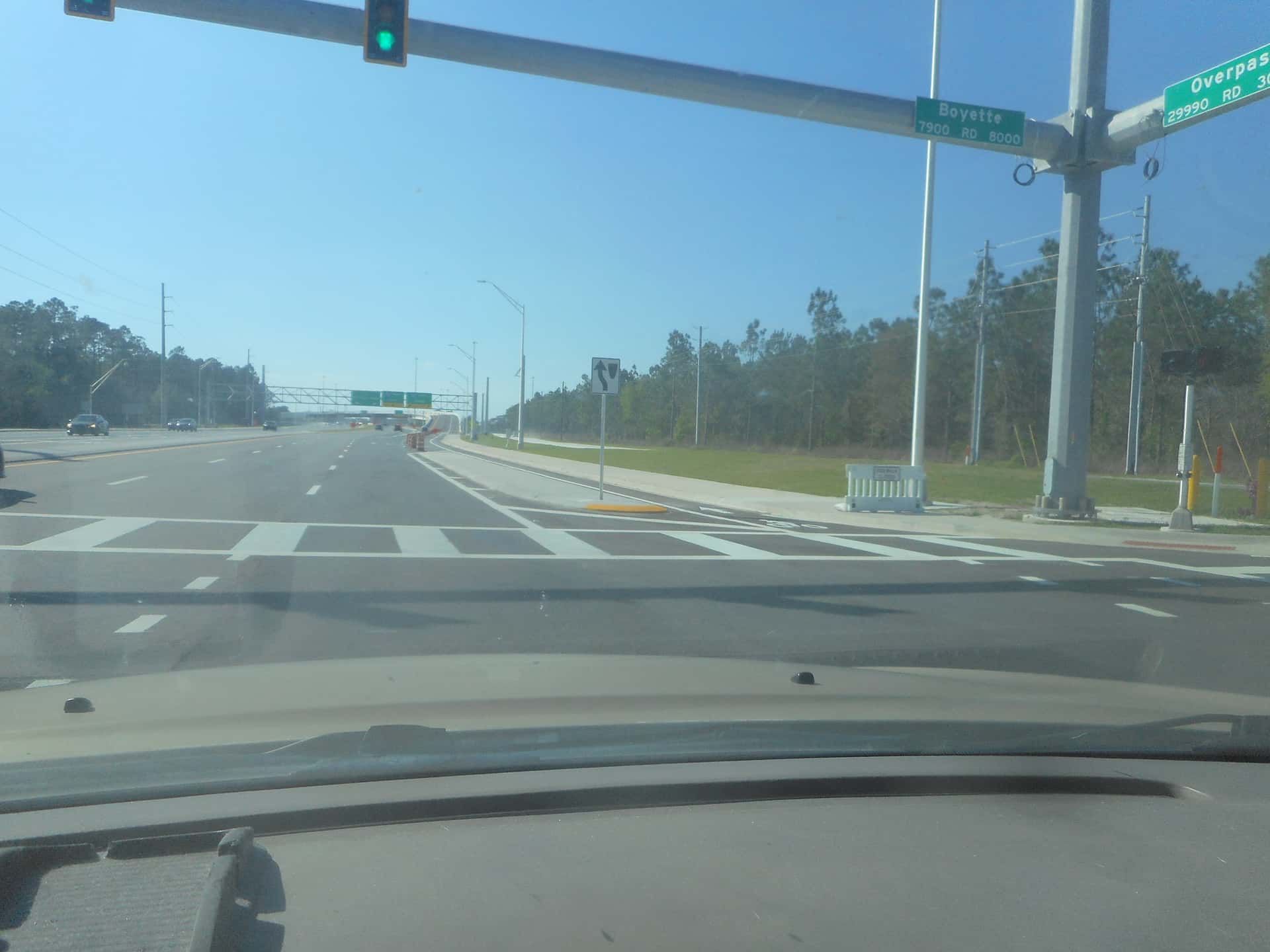
The Florida Highway Patrol has charged a 30-year-old Lake City woman with DUI manslaughter after a 68-year-old bicyclist was struck and killed on Tower Road in Gainesville, according to the agency. Troopers said Shateria Glenn had three young children in her sport utility vehicle at the time of the crash, including a 1-year-old boy, a 3-year-old girl and another young girl.
The charge is an allegation. Glenn is accused and has not been convicted, and she is entitled to the presumption of innocence and to a defense as the case moves through the Eighth Judicial Circuit in Alachua County.
The cyclist died after being hit while riding on Tower Road, a corridor on Gainesville's west side that carries substantial traffic alongside bicycle and pedestrian activity. The Florida Highway Patrol investigated the crash and filed the charge.
What DUI manslaughter requires
DUI manslaughter is a distinct offense under Florida law, separate from both DUI and from vehicular homicide. It requires the state to prove that the defendant was driving under the influence and that the impaired driving caused or contributed to causing the death of another person.
The offense is a second-degree felony in Florida, carrying substantial prison exposure, and Florida's sentencing framework provides a minimum mandatory term upon conviction. The specific sentence depends on the scoresheet calculation and on the court's discretion above the minimum.
Causation is a genuine element that the state must establish. Impairment alone is insufficient; prosecutors must connect the impairment to the death, and defense litigation in these cases frequently focuses on whether the crash would have occurred regardless of the driver's condition.
Proving impairment relies on a combination of evidence: officer observations, field sobriety performance, breath or blood testing, and in some cases toxicology conducted after the fact. Each category is subject to challenge on procedural and scientific grounds.
The presence of children in the vehicle
Troopers reported that three young children were in the vehicle at the time of the crash. Under Florida law, the presence of a minor passenger during a DUI offense is an aggravating circumstance that can enhance penalties, and separate charges involving child endangerment are available to prosecutors.
The children are not identified, and Florida practice along with standard journalistic ethics protects the identity of minors in criminal matters. Their condition following the crash has not been detailed in the information released by the agency.
Cases involving minors in the vehicle frequently generate referrals to the Florida Department of Children and Families, which conducts its own assessment separate from the criminal proceeding. That process operates under a different legal standard and on its own timeline.
For charging purposes, the aggravating circumstance affects the scoresheet calculation and the prosecutor's leverage in plea negotiations. Whether additional counts are filed is a decision for the State Attorney's Office for the Eighth Judicial Circuit.
Cyclist safety in Florida
Florida has consistently ranked among the most dangerous states in the country for bicyclists and pedestrians, a distinction that reflects road design, development patterns and vehicle speeds more than any single factor. The state's metropolitan areas appear repeatedly near the top of national danger rankings.
The design problem is structural. Much of Florida's road network was built around automobile throughput, with wide multilane arterials carrying high speeds through areas that have since developed residential and commercial density. Cyclists and pedestrians use those corridors because there is no alternative route.
Gainesville has invested more than many Florida cities in bicycle infrastructure, driven partly by the University of Florida's large student population and the resulting high rate of cycling. Even so, the city's arterial roads present the same conflict between vehicle speed and vulnerable road users.
Speed is the variable that determines survivability. Collision research consistently shows that pedestrian and cyclist fatality risk rises sharply above roughly 30 miles per hour, which is why traffic engineers increasingly treat speed management rather than user education as the primary intervention.
Impaired driving in Florida
Impaired driving remains a persistent contributor to Florida's traffic fatalities. The Florida Highway Patrol conducts enforcement operations throughout the year, with heightened activity around holidays, and the agency publicizes DUI arrests in part as deterrence.
Florida's legal threshold is a blood alcohol concentration of 0.08% for drivers 21 and older, with lower thresholds for commercial and underage drivers. Impairment by controlled substances, including prescription medication, is equally covered by the statute.
Penalties escalate with prior offenses and with aggravating circumstances including injury, death and minor passengers. Florida also imposes administrative license suspension separate from the criminal case, a parallel process that begins immediately upon arrest.
The state has expanded ignition interlock requirements and mandatory education programs over successive legislative sessions. The persistent difficulty in impaired driving enforcement is that the behavior is common and detection depends substantially on chance encounters with patrol officers.
The Florida Highway Patrol's role
The Florida Highway Patrol has primary jurisdiction over traffic crash investigation on state roads and highways and works alongside municipal and county agencies elsewhere. Its traffic homicide investigators handle fatal crashes specifically.
Traffic homicide investigation is a specialized discipline involving scene reconstruction, vehicle inspection, and analysis of event data recorders that modern vehicles carry. Investigators calculate speeds, impact angles and sequences from physical evidence.
That reconstruction work forms the evidentiary foundation for charges. In a DUI manslaughter prosecution, the reconstruction establishes how the crash occurred while the impairment evidence establishes the driver's condition, and both are necessary.
The Florida Highway Patrol has investigated several fatal crashes involving DUI allegations in recent weeks across multiple counties, including cases in Orange and Madison counties. The volume reflects both the frequency of the underlying behavior and the agency's statewide jurisdiction.
What happens next in the case
The State Attorney's Office for the Eighth Judicial Circuit, which covers Alachua and surrounding counties, will review the Florida Highway Patrol's investigation and make a formal filing decision. The charges filed may differ from the charge at arrest.
Arraignment follows the filing, at which the defendant enters a plea and the question of representation is resolved. Defendants who cannot afford counsel are represented by the public defender's office for the circuit.
Discovery in a DUI manslaughter case is extensive, involving the crash reconstruction report, toxicology results, officer reports and body camera footage where available. Pretrial litigation frequently addresses the admissibility of impairment testing and the methodology of the reconstruction.
Cases of this severity proceed to trial more often than routine criminal matters, because the sentencing exposure reduces the incentive to plead. Resolution, whether by plea or verdict, typically takes a year or more.
The victim and the community
A 68-year-old cyclist died in this crash. The identity of the victim has not been the focus of the agency's public information, and families in fatal crash cases are entitled to privacy as they navigate both grief and a criminal proceeding that will extend for months.
Fatal crashes involving cyclists frequently prompt local advocacy for infrastructure changes on the corridor where they occurred. Gainesville's cycling community is organized and has pressed for protected bike lanes and intersection redesign on the city's arterials.
Alachua County and the city have pursued Vision Zero style commitments aimed at eliminating traffic deaths, an approach that emphasizes road design over user behavior. Implementation depends on capital funding and on state cooperation where the roads in question are state maintained.
For the family of the person who died, the criminal case is only one part of what follows. Civil liability, insurance claims and the practical consequences of a sudden death proceed on separate tracks from the prosecution.
Tower Road and Gainesville's arterial problem
Tower Road runs north and south through Gainesville's western suburbs, connecting residential subdivisions to commercial corridors and serving as a through route for drivers avoiding busier arteries. Like many Florida suburban roads, it was designed for vehicle capacity and has absorbed bicycle and pedestrian use that its geometry does not accommodate well.
The conflict is common across the state. A road with multiple travel lanes, posted speeds above 40 miles per hour, frequent driveway curb cuts and either narrow or absent bike lanes creates repeated conflict points between cyclists and turning or merging vehicles. Engineers describe these corridors as high injury networks because crashes concentrate on them.
Gainesville's cycling volume is unusually high for a Florida city of its size, driven by the University of Florida's student population, a relatively compact urban core and a climate that permits year-round riding. Higher volume produces more exposure, and exposure combined with arterial design produces crashes.
Remedies exist and are well understood: protected bike lanes physically separated from traffic, reduced posted and design speeds, intersection treatments that shorten crossing distances, and lighting improvements. Each requires capital funding and, on state-maintained roads, coordination with the Florida Department of Transportation.
What's next
The case proceeds to the State Attorney's Office for a charging decision and then into the Eighth Judicial Circuit's docket. Court dates will be set from there, and the timeline for a DUI manslaughter case with extensive forensic evidence typically extends well into next year.
Glenn remains presumed innocent, and the DUI manslaughter charge is an allegation the state must prove beyond a reasonable doubt. The presence of children in the vehicle is an aggravating circumstance that may affect additional charges and sentencing exposure if there is a conviction.
For cyclists in Gainesville and across Florida, the practical guidance remains unchanged and inadequate to the underlying problem: use lights and reflective equipment, ride predictably, and choose lower-speed routes where they exist. The evidence consistently indicates that road design and vehicle speed determine outcomes more than anything a cyclist can control.
Spotted an issue with this article?
Have something to say about this story?
Write a letter to the editor